Trendy Enthusiast

Seventies Fashion Mens: The Ultimate Guide to 70s Male Style (+ How to Wear It Today)

Seventies Fashion Mens

Here’s a truth most style guides won’t tell you: seventies fashion for men was the most self-expressive decade in the entire history of menswear. Not the 60s. Not the 80s. The 70s.

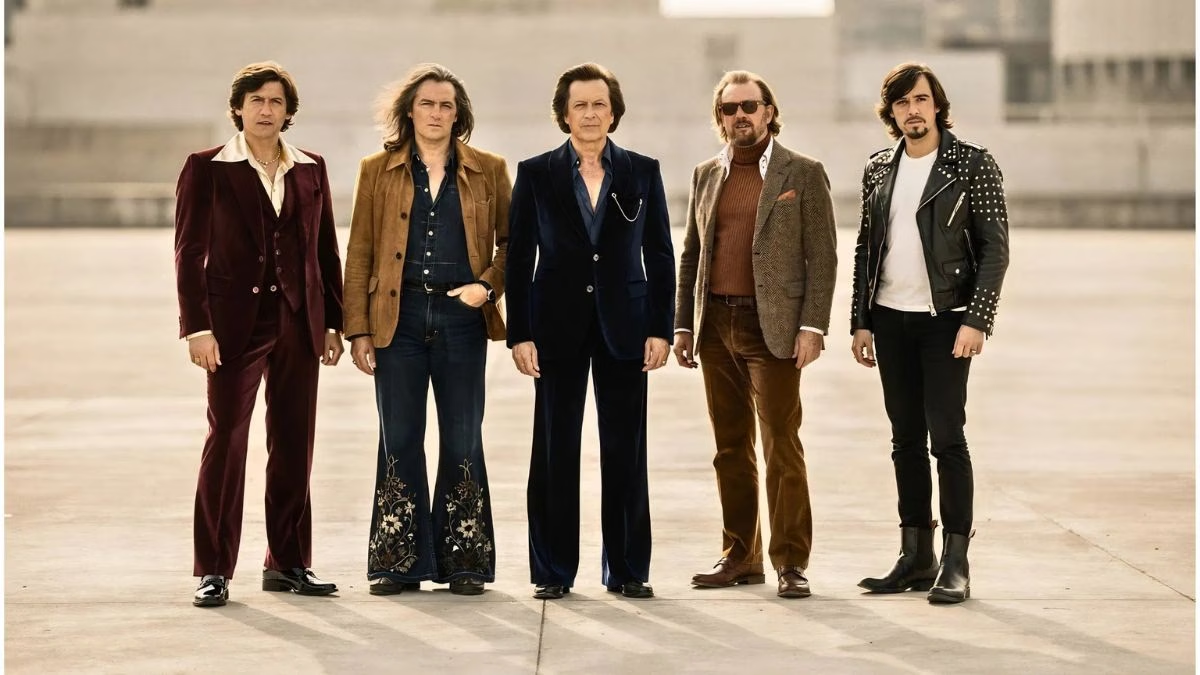
While the 1960s gave men permission to experiment, the 1970s handed them the keys to the wardrobe and said: “go wild”. Wide lapels. Flared trousers. Earth tones and electric colors sharing the same outfit. Platform boots that added literal inches to a man’s stature. And through it all, an effortless confidence that modern men are desperately trying to rediscover.

In this guide, you’ll get a complete breakdown of seventies fashion mens i.e what it looked like, why it worked, how each subculture defined its own style, and most importantly, how to pull these looks into 2026 without looking like you raided a Halloween costume shop. Let’s get into it.

What Was 70s Men's Fashion, Really?

To understand seventies fashion mens, you have to understand the cultural storm that produced it. By 1970, men had just watched the hippie movement, the sexual revolution, the Vietnam War protests, and the moon landing all happen within a single decade. The old rules felt not just boring but actively dishonest.

What emerged was fashion as personal declaration. Men used clothing to signal which tribe they belonged to: the disco king, the rock rebel, the laid-back bohemian, the sharp-suited businessman who’d loosened his tie just enough. There was no single 70s look for men – there were five or six simultaneously, each as distinct as a fingerprint.

What united them all was a commitment to proportion, personality, and presence. The 70s man dressed to be noticed. Wide silhouettes. High contrast. Accessories that punctuated rather than whispered. It was the decade that proved menswear could be theatrical without being feminine, relaxed without being sloppy.

The Key Pieces of Seventies Fashion Mens

These are the wardrobe staples that defined the era. If you’re building a 70s-inspired wardrobe  or just want to understand the decade – start here.

Flared & Bell-Bottom Trousers

Seventies Fashion Mens

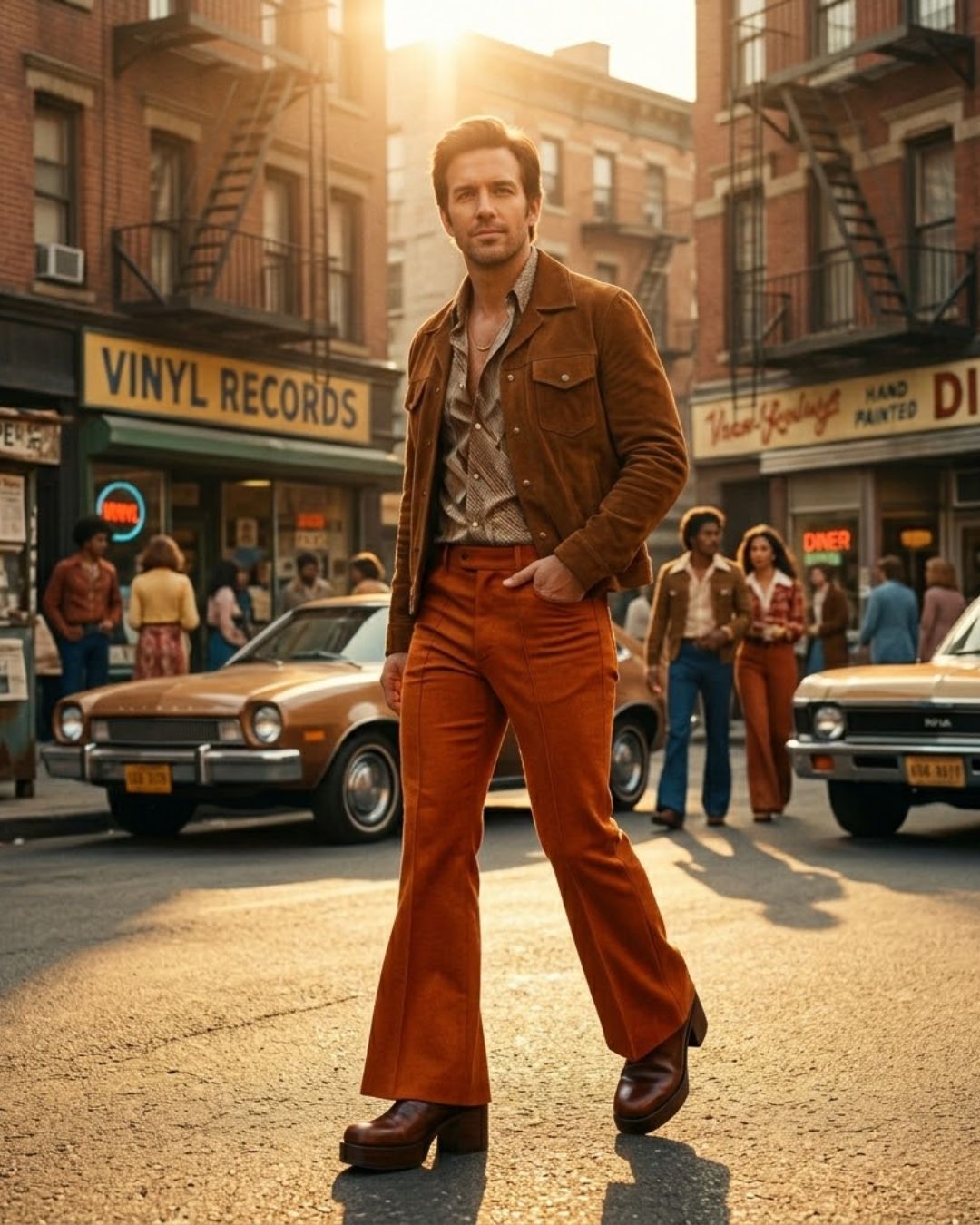
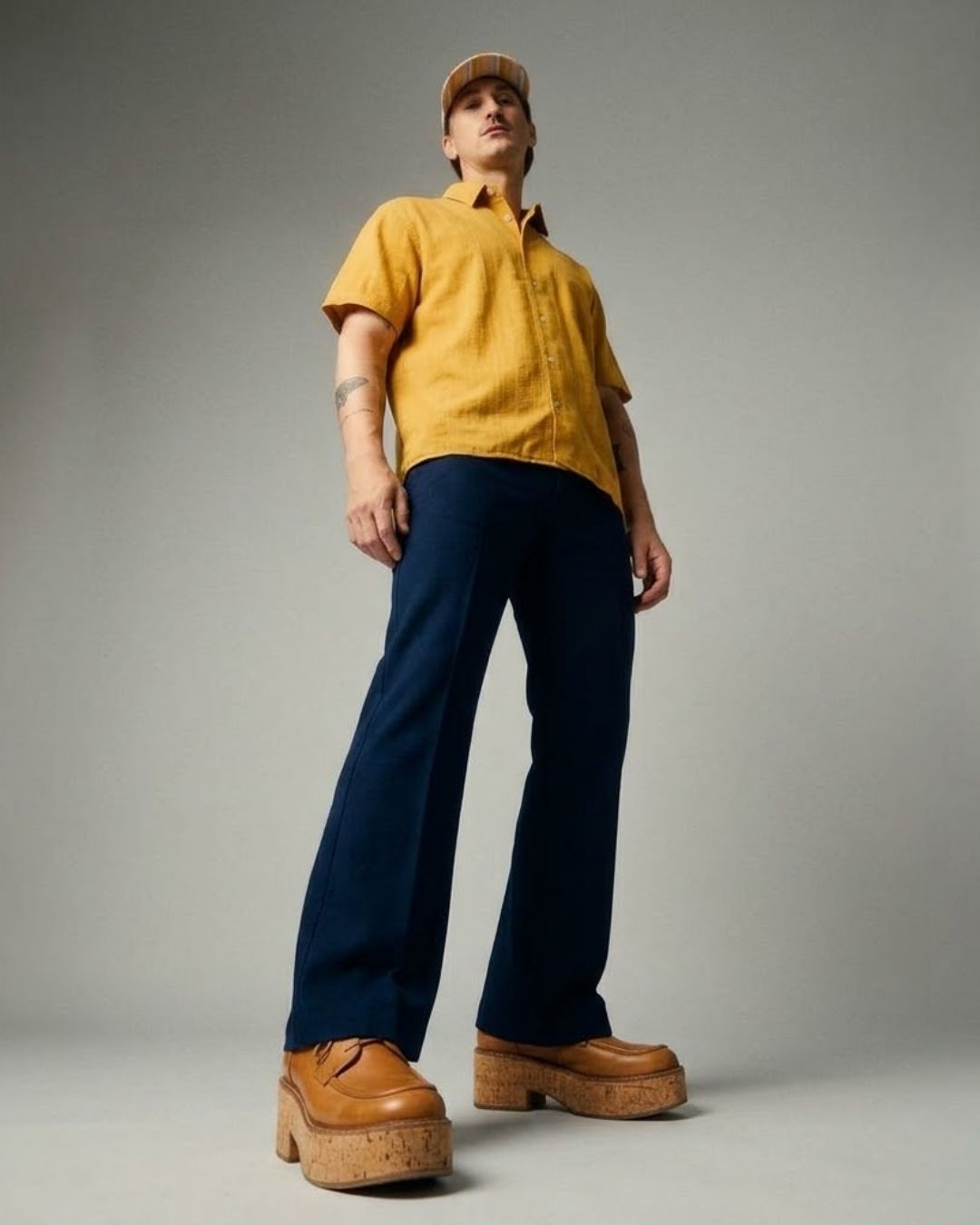
The single most iconic piece of 70s male fashion. Flared trousers were worn by virtually every man regardless of subculture – the difference was fabric (denim for casual, polyester for disco, tweed for intellectual). The flare started at the knee and widened dramatically toward the hem, creating a long, lean silhouette when paired with platform shoes. Bell-bottoms were the extreme version: flared from the hip, often used in denim. Modern equivalent: wide-leg trousers in a mid-rise cut.

The Wide-Lapel Suit

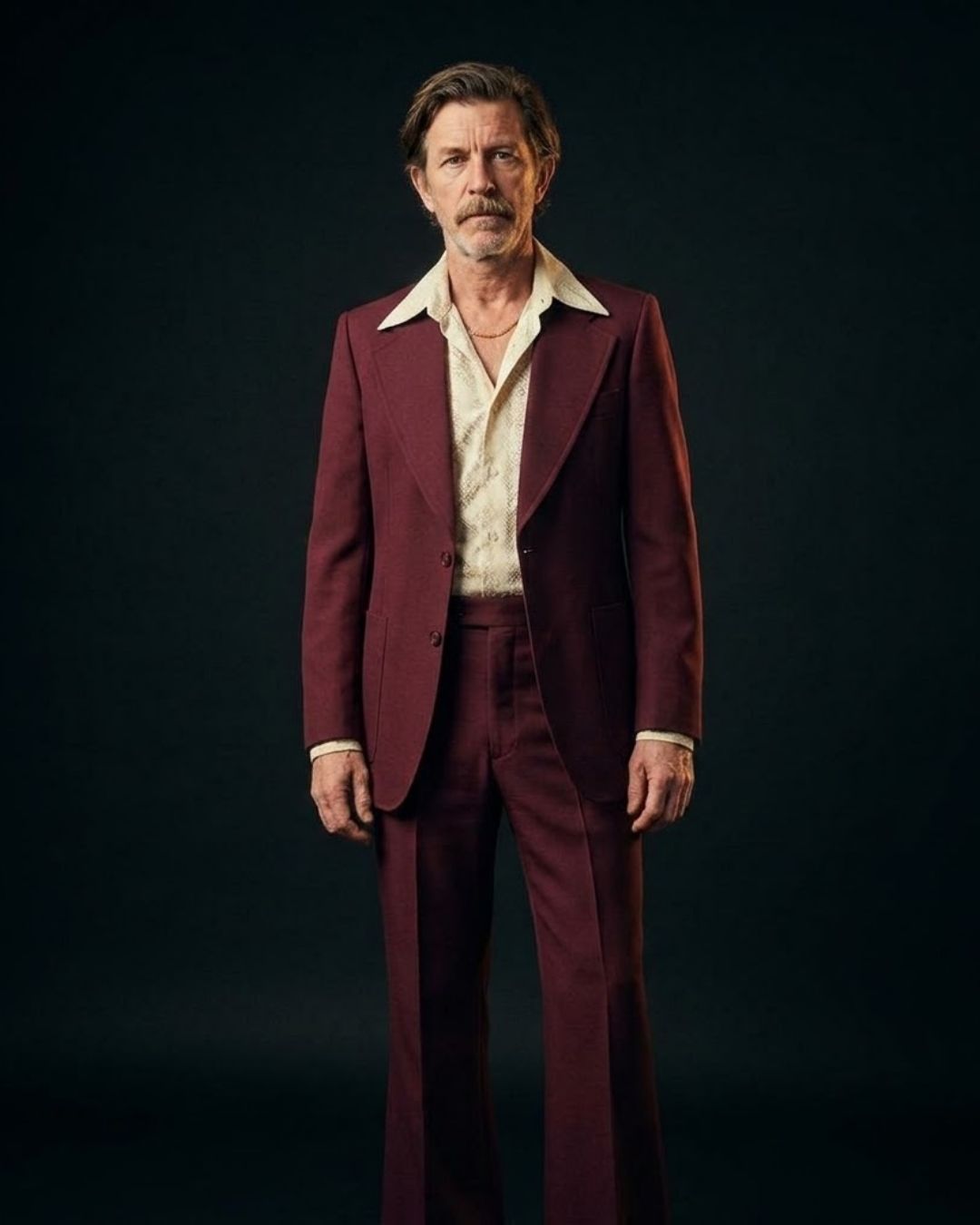
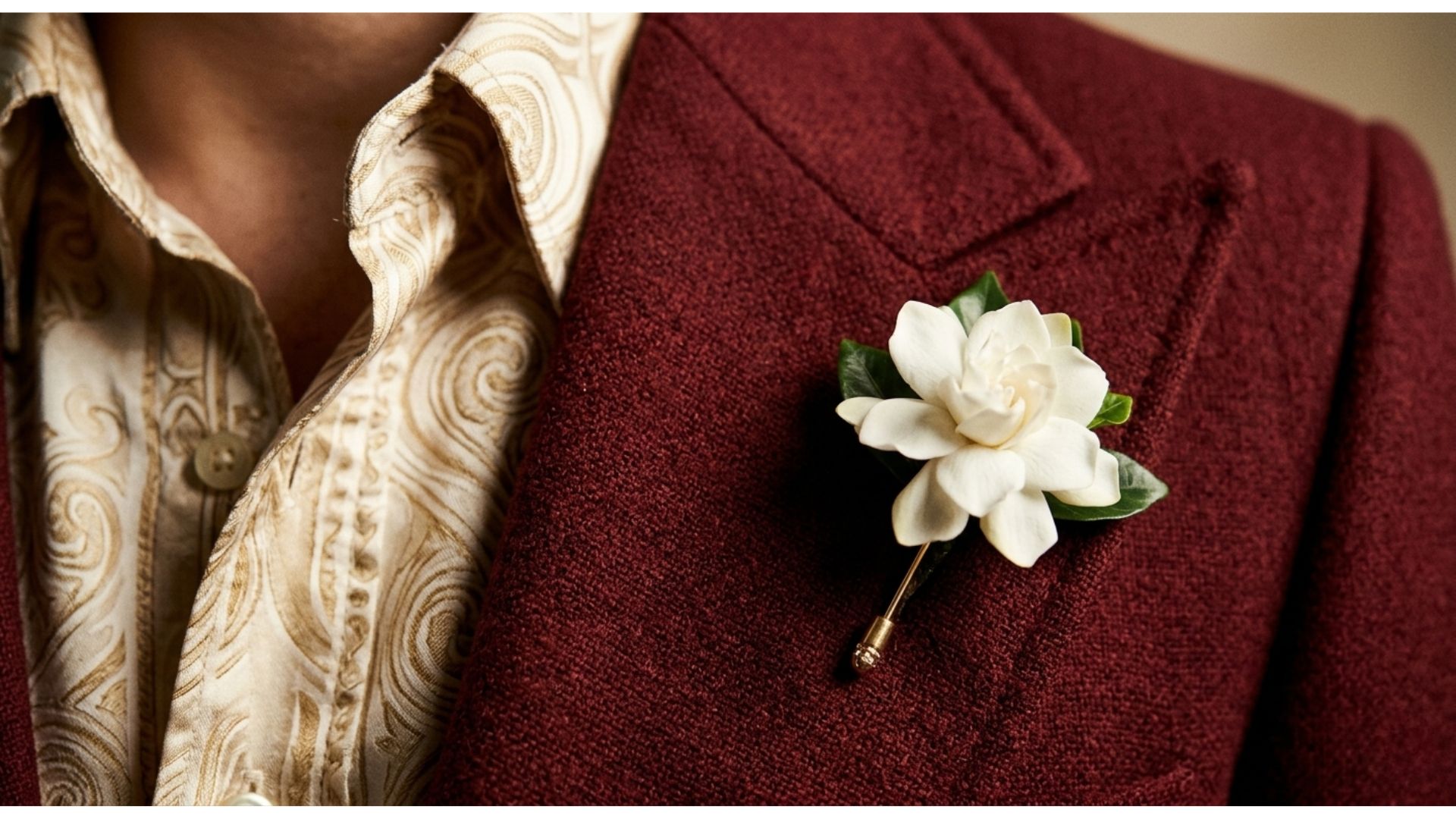
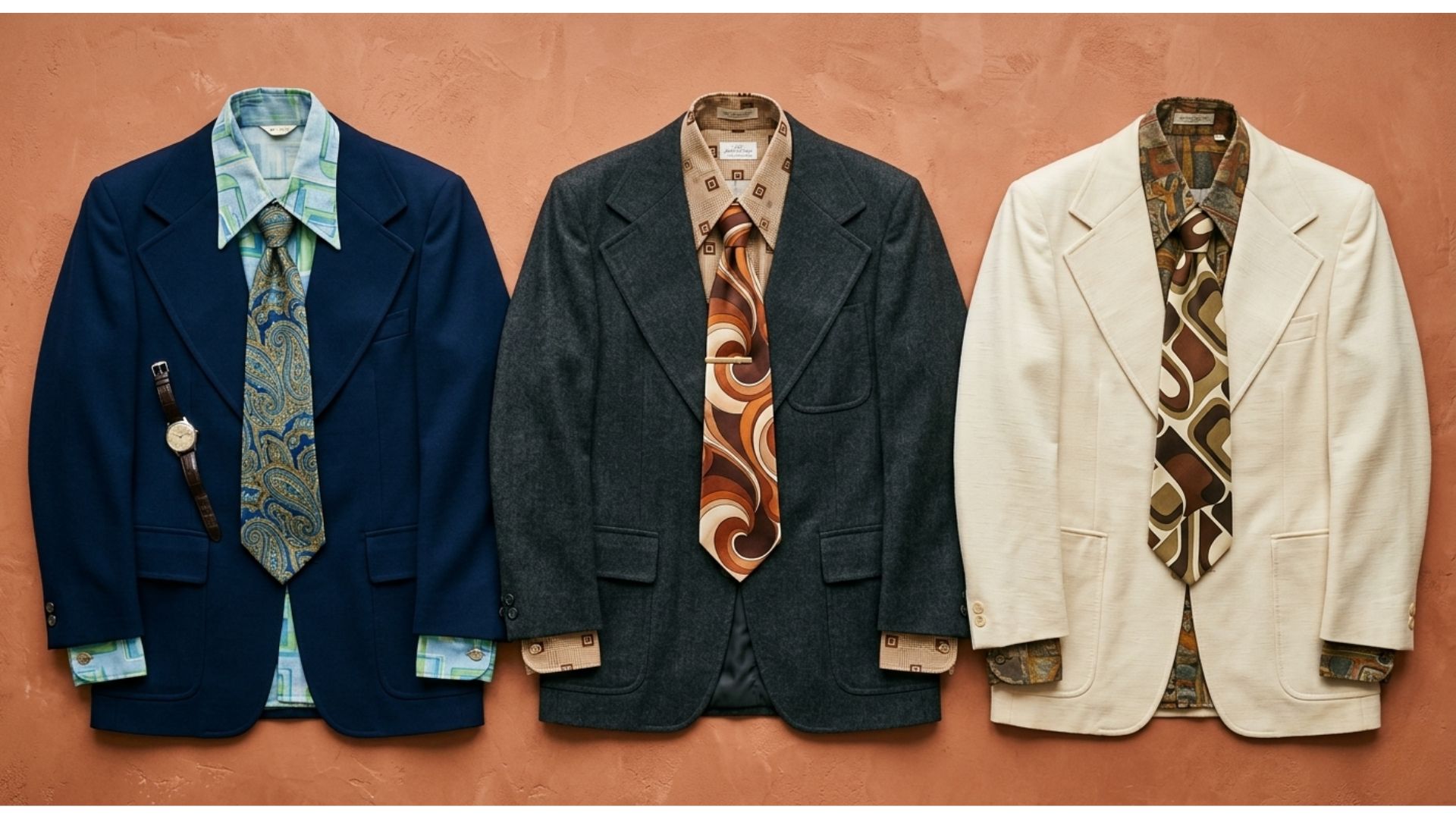
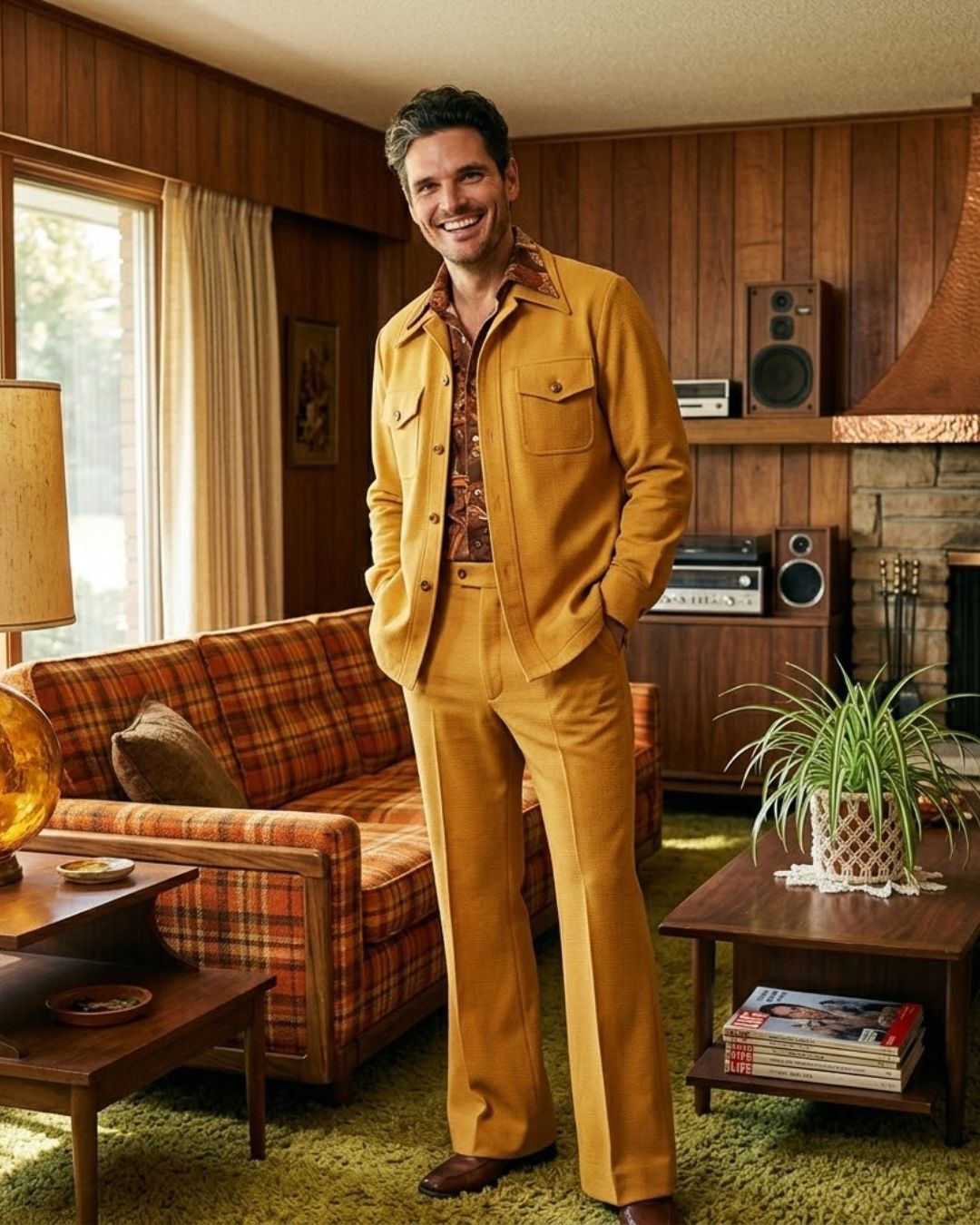
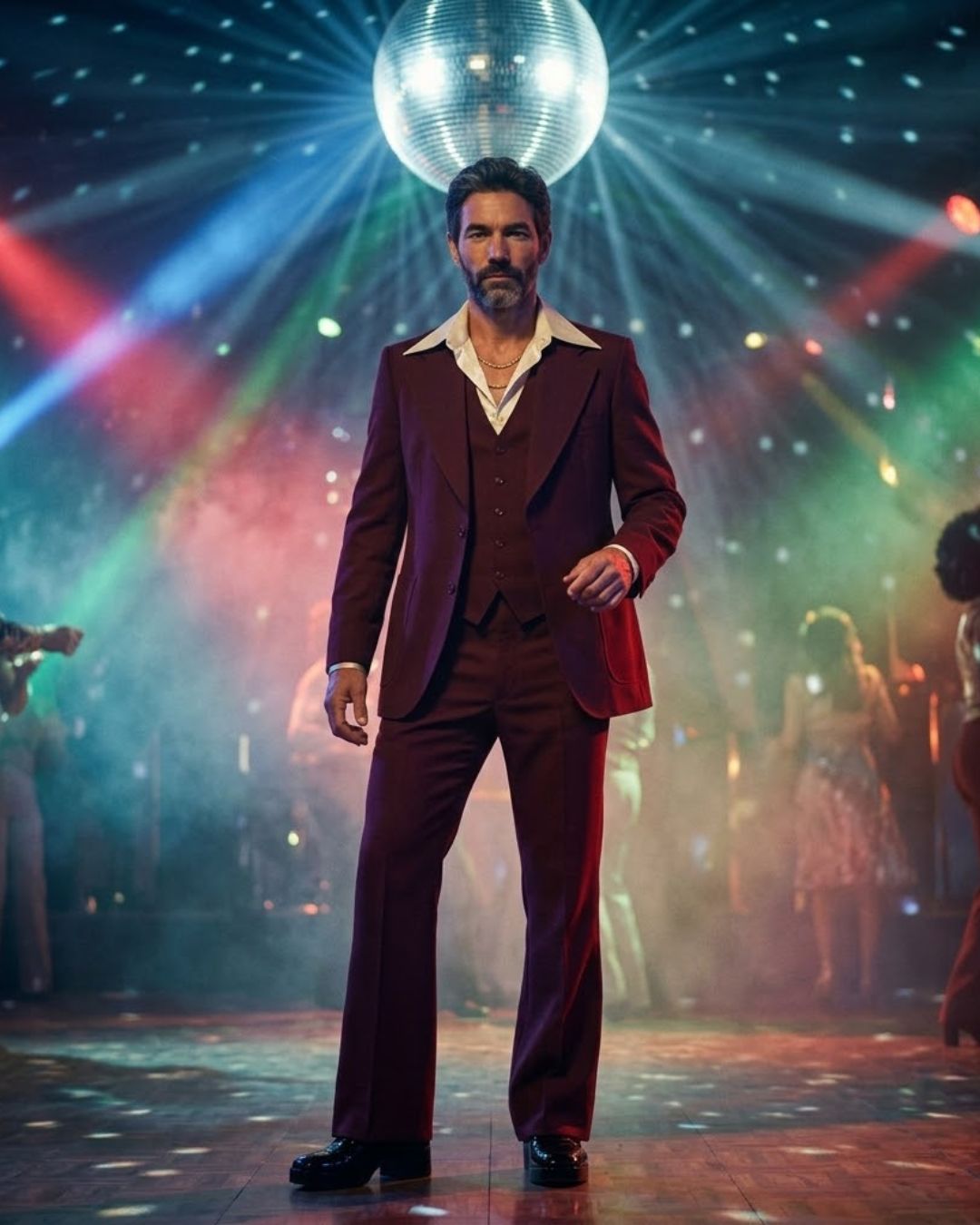
70s suits bear almost no resemblance to the slim-cut suits men wear today. Lapels could be 4–5 inches wide. Jacket shoulders were slightly padded but natural. Trousers were high-waisted and flared. The whole effect was bold, theatrical authority – especially when paired with a patterned shirt open at the collar. Colors ranged from classic navy and charcoal to rich burgundy, caramel, and even cream.

The Open-Collar Shirt

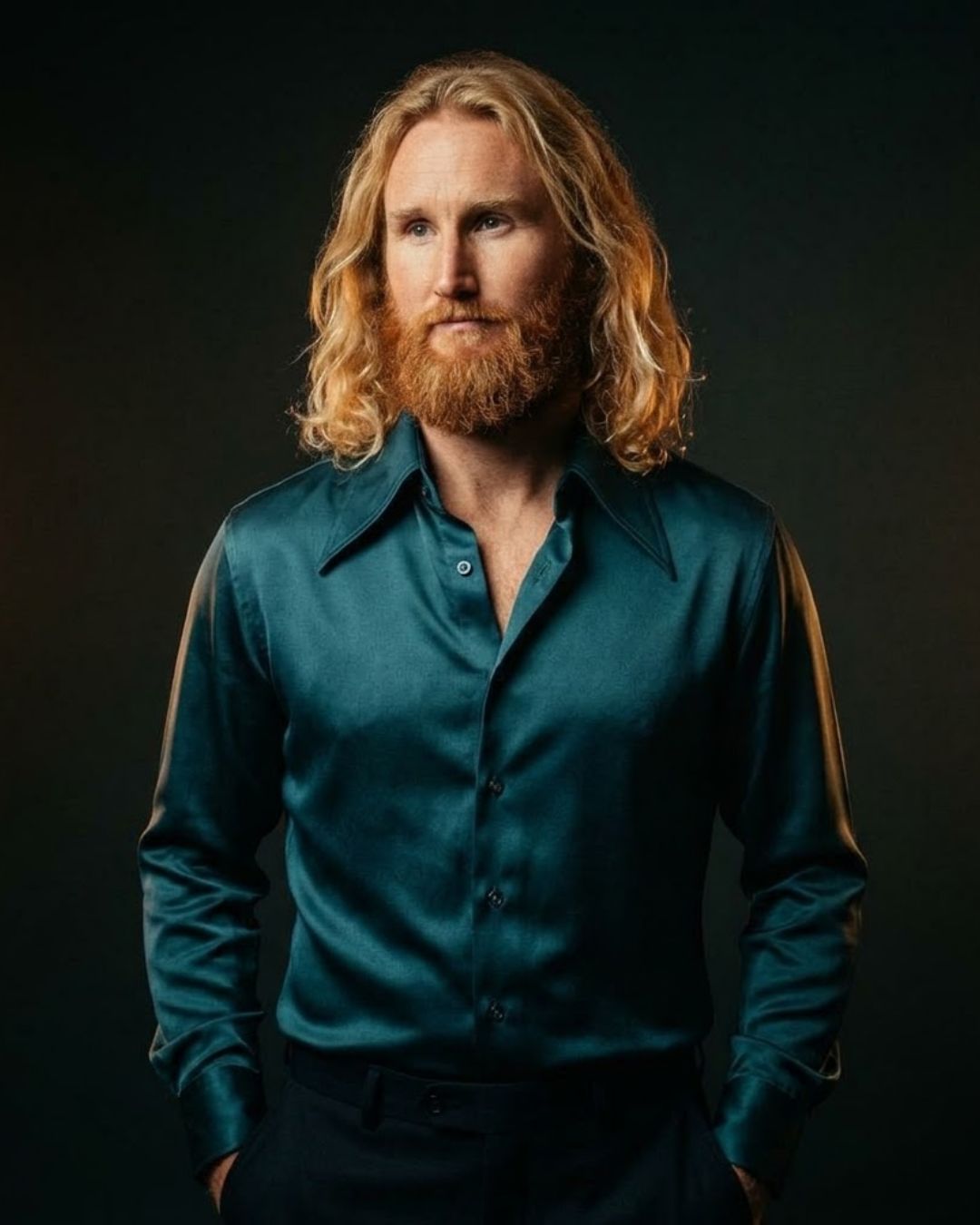
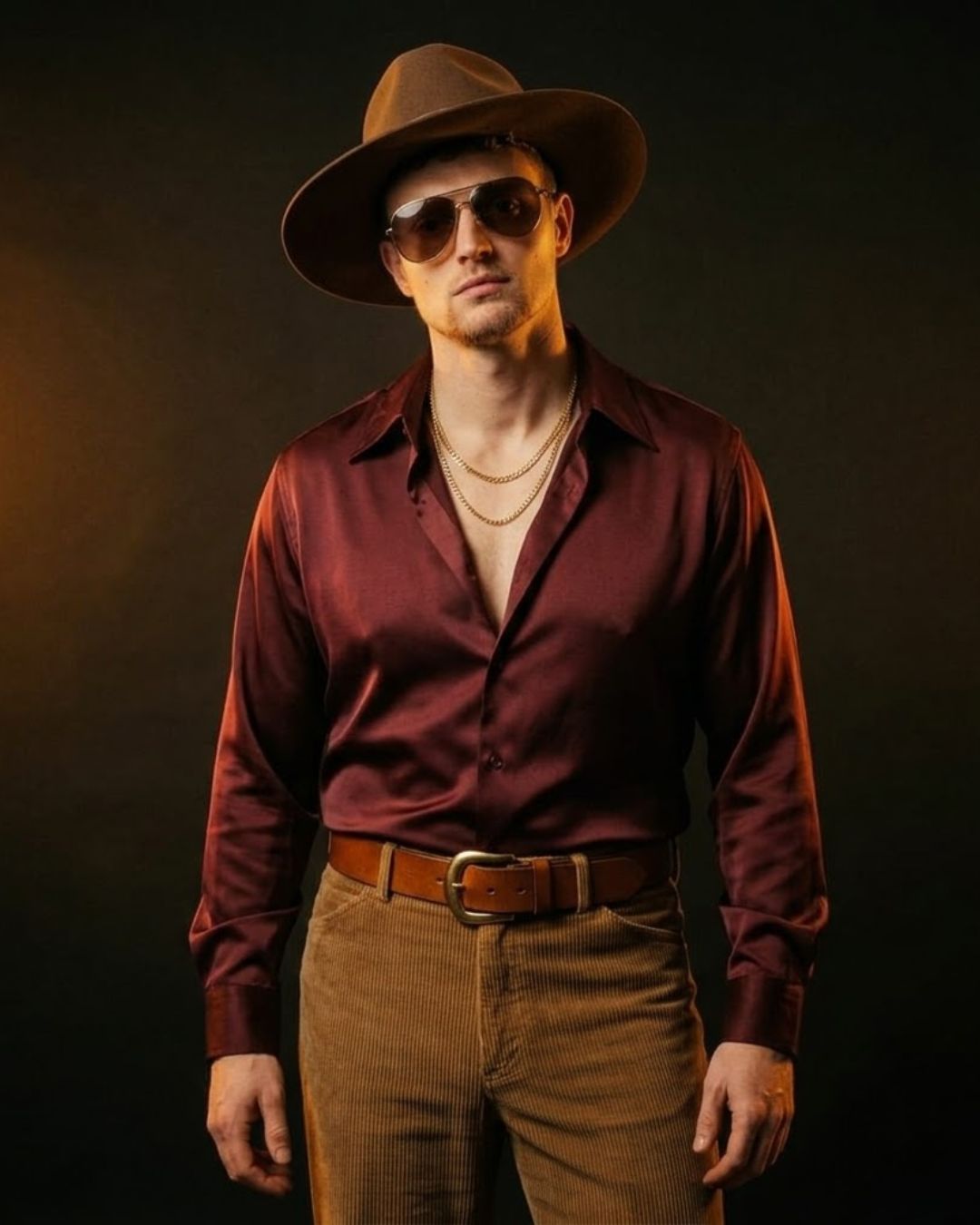
In the 70s, the top two (sometimes three) buttons of a shirt were always undone. This wasn’t casual sloppiness; it was a deliberate style choice. Shirts featured oversized collars (the so-called “pointed collar” or “disco collar”) that swept dramatically across the chest when worn open. Fabrics leaned into polyester blends, satin, and rayon for that characteristic slight sheen.

Platform Shoes & Heeled Boots

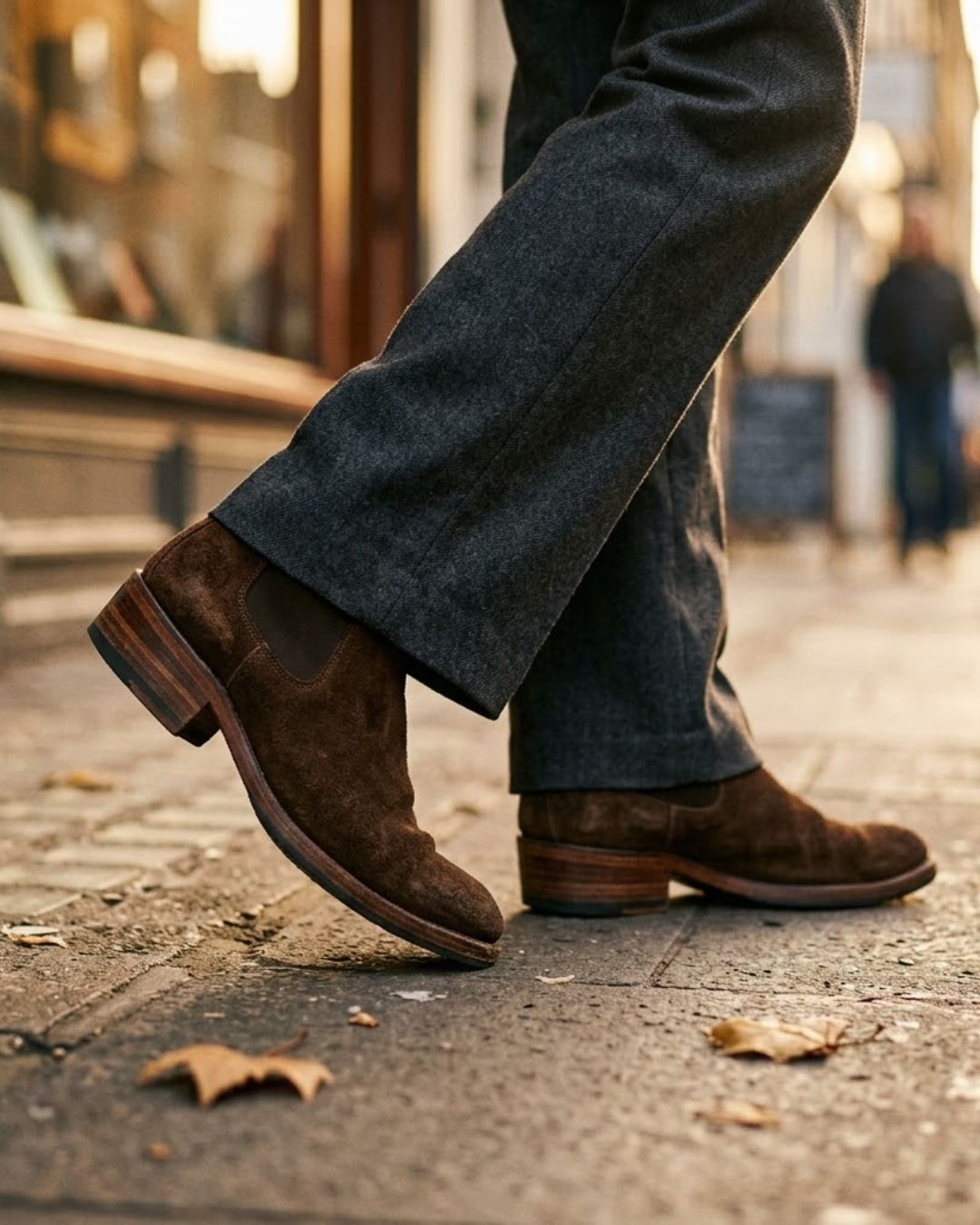
Footwear in the 70s was anything but understated. Platform shoes added 2–4 inches of height via thick soles in cork, wood, or rubber. Heeled boots especially in suede or patent leather were paired with flared trousers for a streamlined leg line. Cuban heel boots (think Chelsea boot with a stacked heel) were particularly popular among rock and soul music fans.

The Leisure Suit

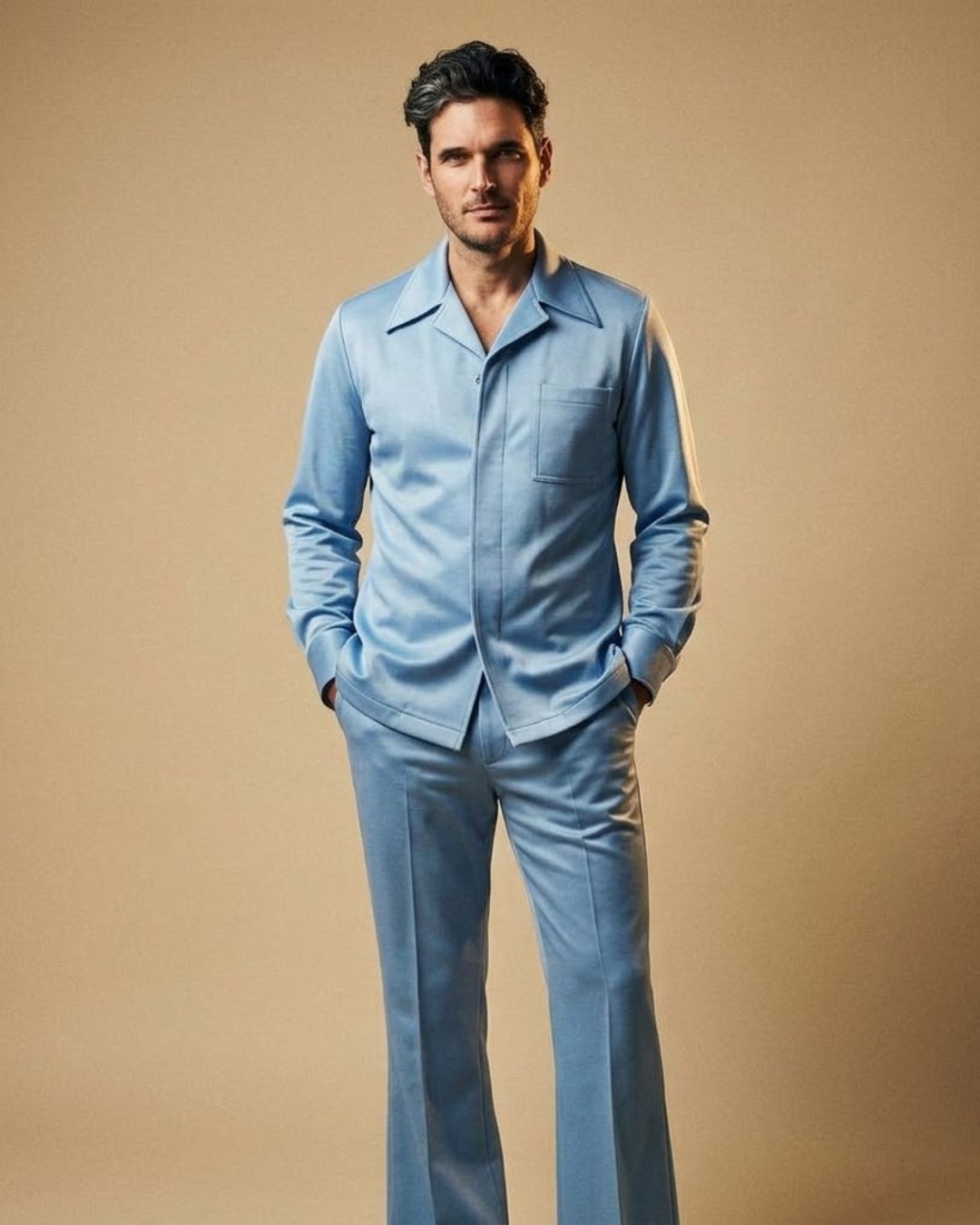
The leisure suit is simultaneously the most ridiculed and most fascinating artifact of 70s men’s fashion. Essentially a matching shirt-and-trouser set made from polyester, it was marketed as the “casual alternative to a business suit.” Often came in pastel colors, earth tones, or even powder blue. 

Turtlenecks & Knit Tops

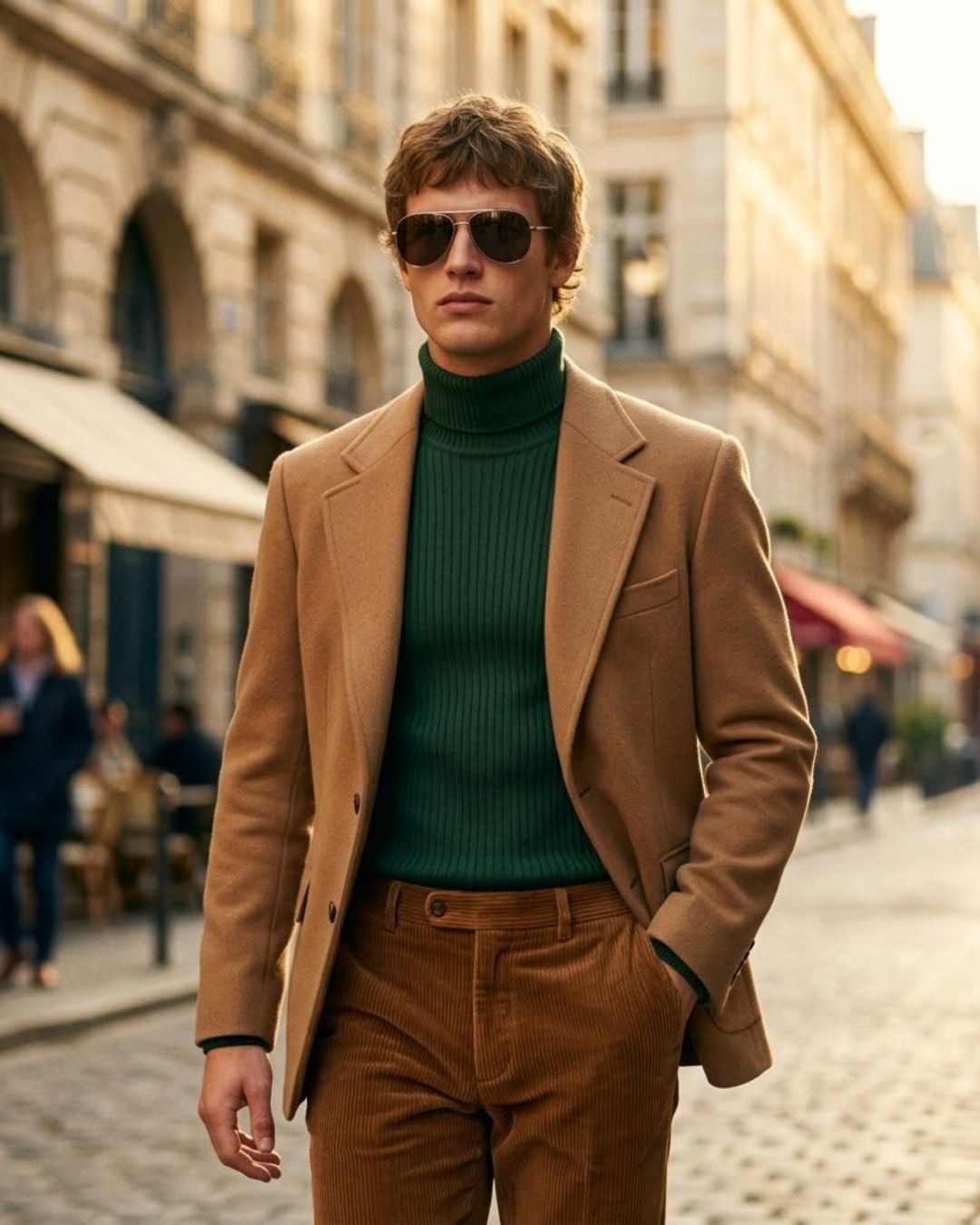
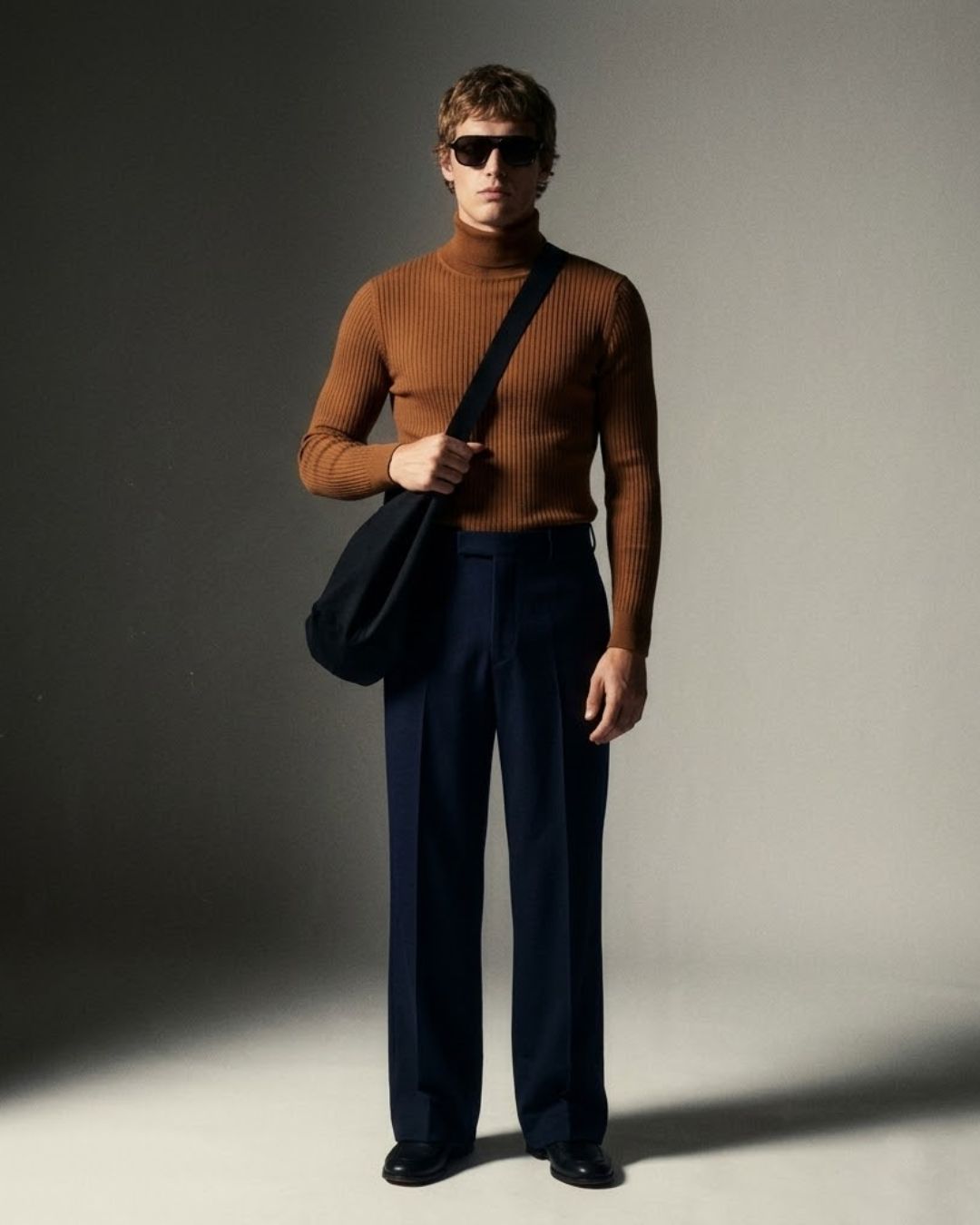
The ribbed turtleneck was the 70s man’s answer to the casual-smart balance. Worn under blazers, with wide trousers, or solo tucked into high-waisted jeans. Steve McQueen made this look immortal. Colors were typically rich and earthy: rust, cognac, forest green, navy.

Denim - Everywhere

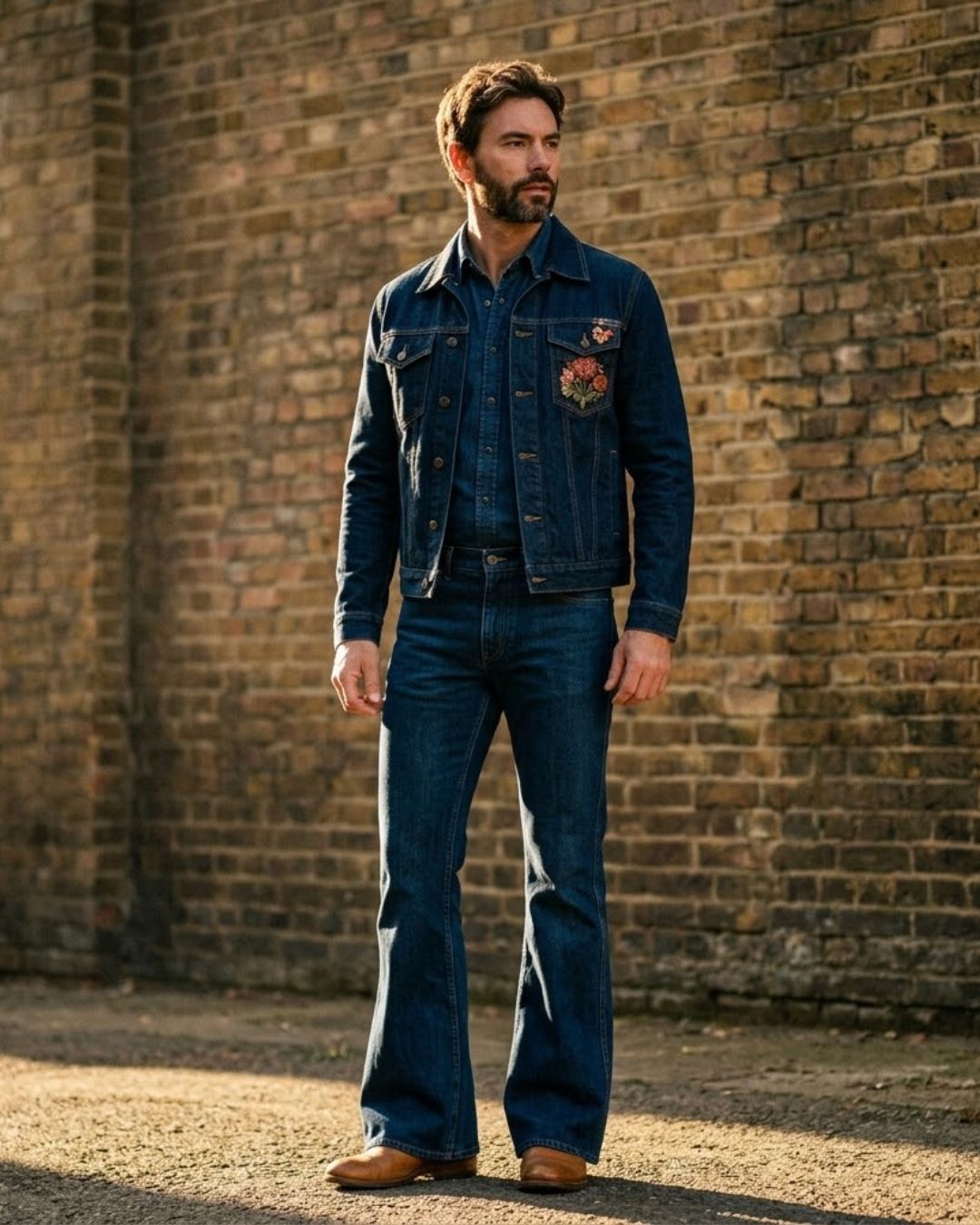
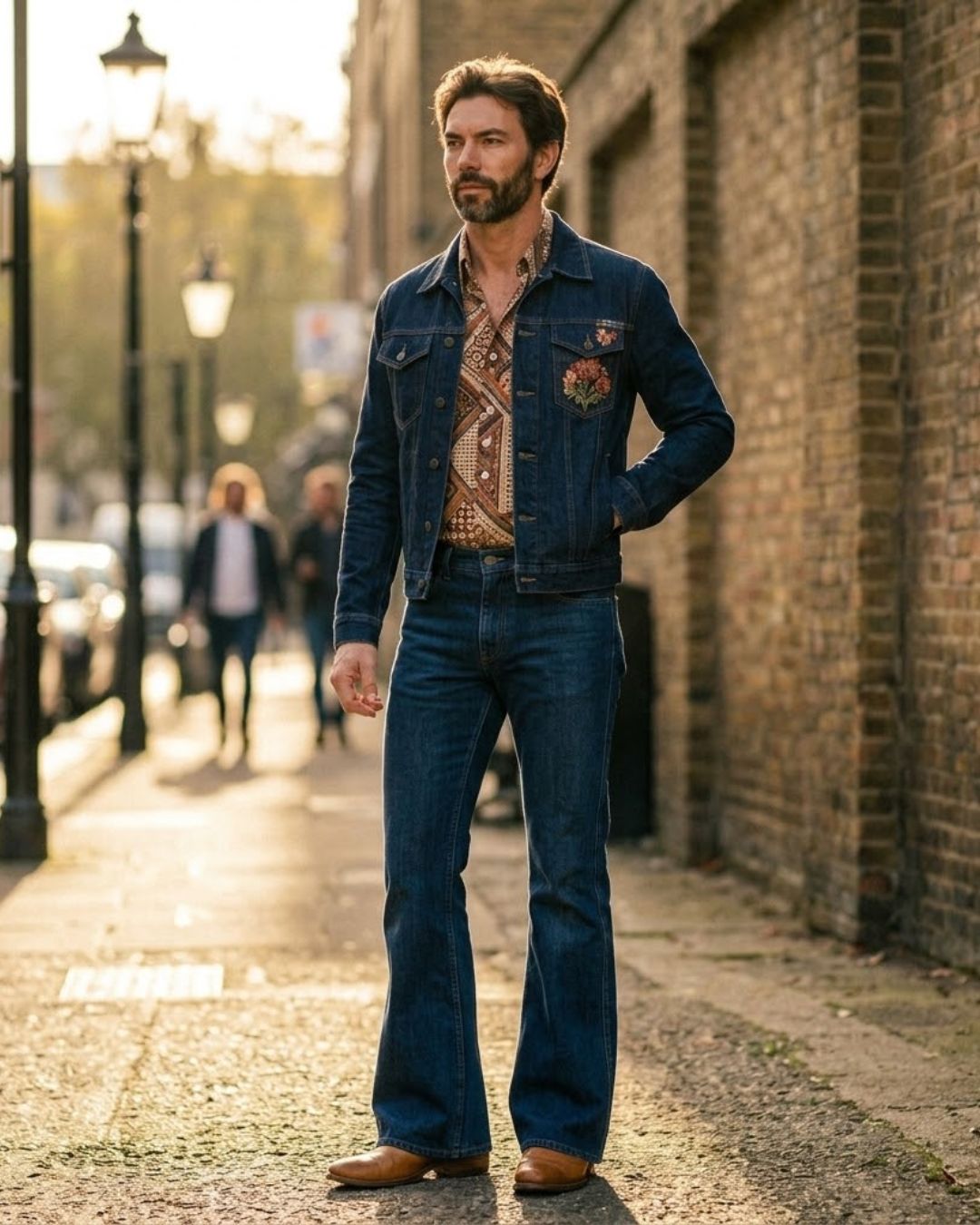
The 70s democratized denim in a way the 60s hadn’t quite managed. Denim jackets, denim shirts, bell-bottom denim jeans, even denim suits (the “Canadian tuxedo” era). Washes were deep indigo and dark blue. Embroidery and patching were common personalizations, especially in the early 70s hippie-influenced years.

Statement Accessories

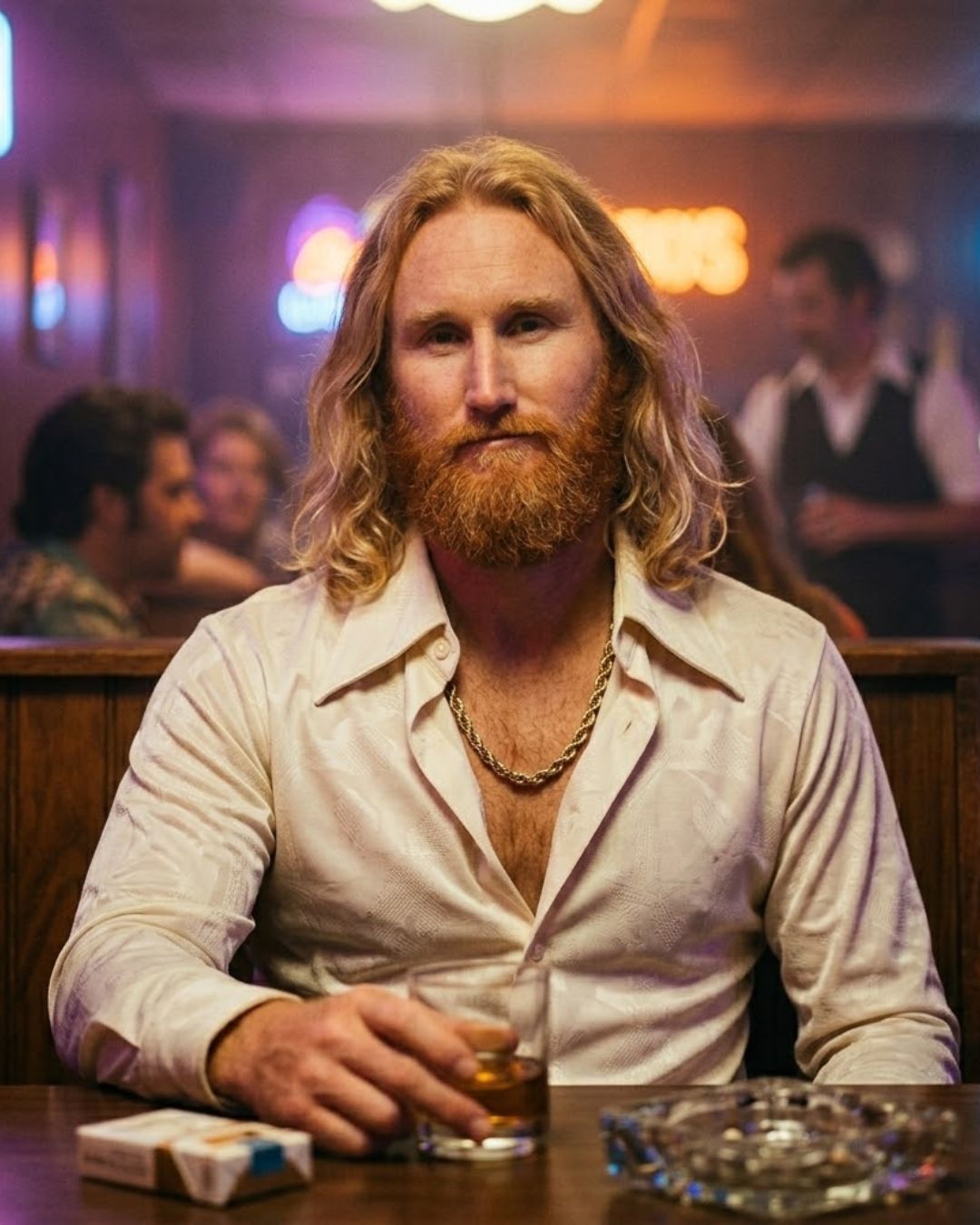
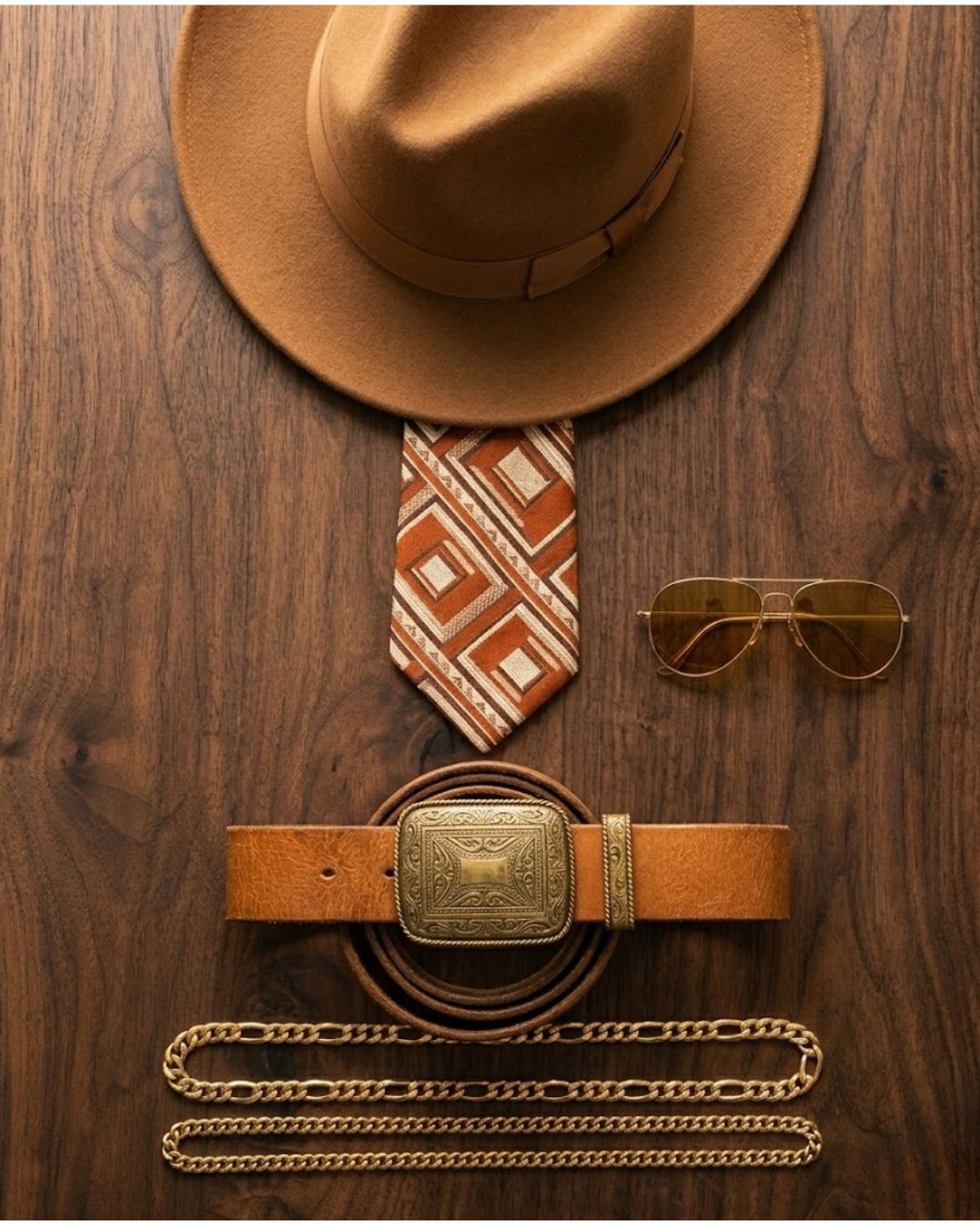
A 70s outfit wasn’t complete without accessories: wide leather belts (often with oversized buckles), gold chains worn over open shirts, wide silk ties, aviator sunglasses, and sometimes a wide-brimmed hat. The accessories didn’t complement the outfit – they completed it.

70s Male Fashion by Subculture

One of the great misconceptions about 70s mens fashion is that it was monolithic. In reality, the decade contained several distinct style tribes. Here’s how each one dressed.

Disco (1974–1979)

The most globally recognized 70s male aesthetic. Think John Travolta in Saturday Night Fever – though that’s almost a caricature of the real thing. Genuine disco style featured three-piece suits in bold colors, satin shirts with wide collars, platform shoes in metallic or patent leather, and gold jewelry. The key was shine: polyester, satin, and lamé fabrics that caught the light on the dance floor. 

Glam Rock (1971–1976)

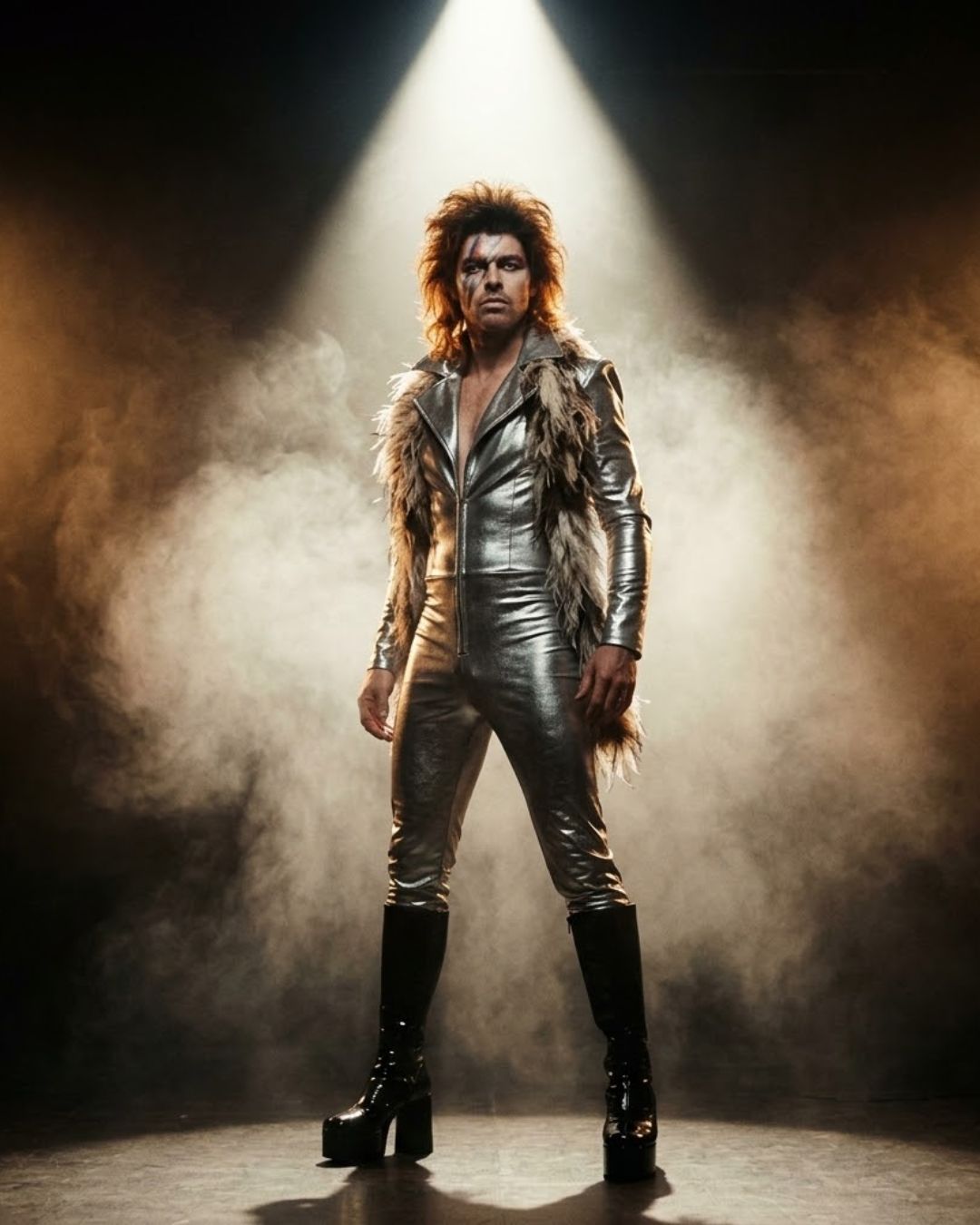
David Bowie, Marc Bolan, Elton John. Glam rock pushed men’s fashion toward the deliberately theatrical and androgynous. Metallic fabrics, feather boas, platform boots, bold makeup – these were tools of artistic identity, not mere trend-following. Bowie’s Ziggy Stardust persona remains one of the most influential fashion statements in the history of popular culture. Modern designers from Alessandro Michele to Hedi Slimane have borrowed from this well repeatedly.

Rock & Punk (1973–1979)

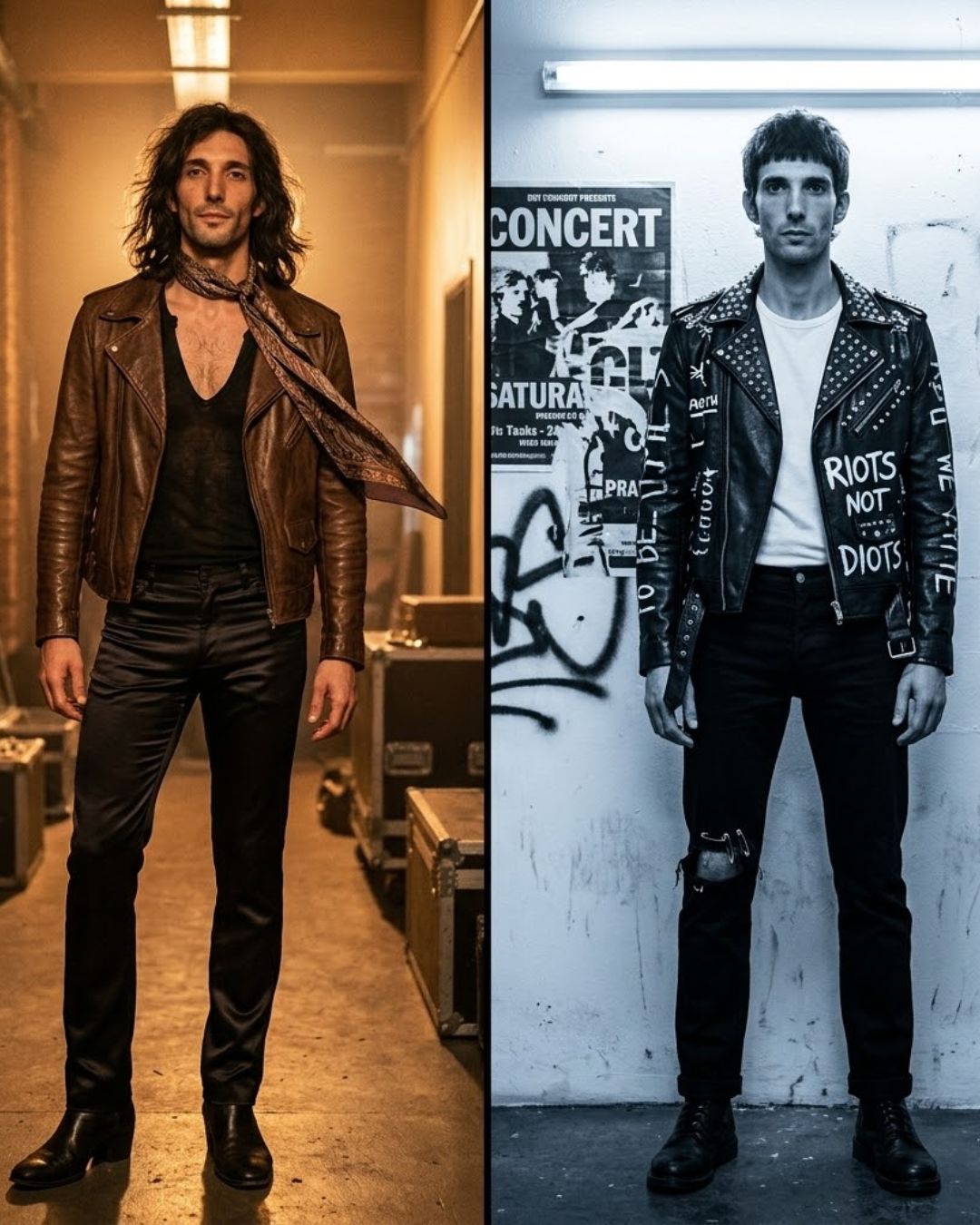
As the decade progressed, a harder-edged counterculture emerged. Early 70s rock style (Led Zeppelin, The Rolling Stones) featured tight-fitting trousers, band tees, leather jackets, and scarf-as-accessory. By 1977, punk arrived with ripped clothing, safety pins, narrow black jeans, and studded leather – a direct rebellion against disco excess. The Ramones in New York and The Clash in London were the defining images.

Hippie / Bohemian (1970–1974)

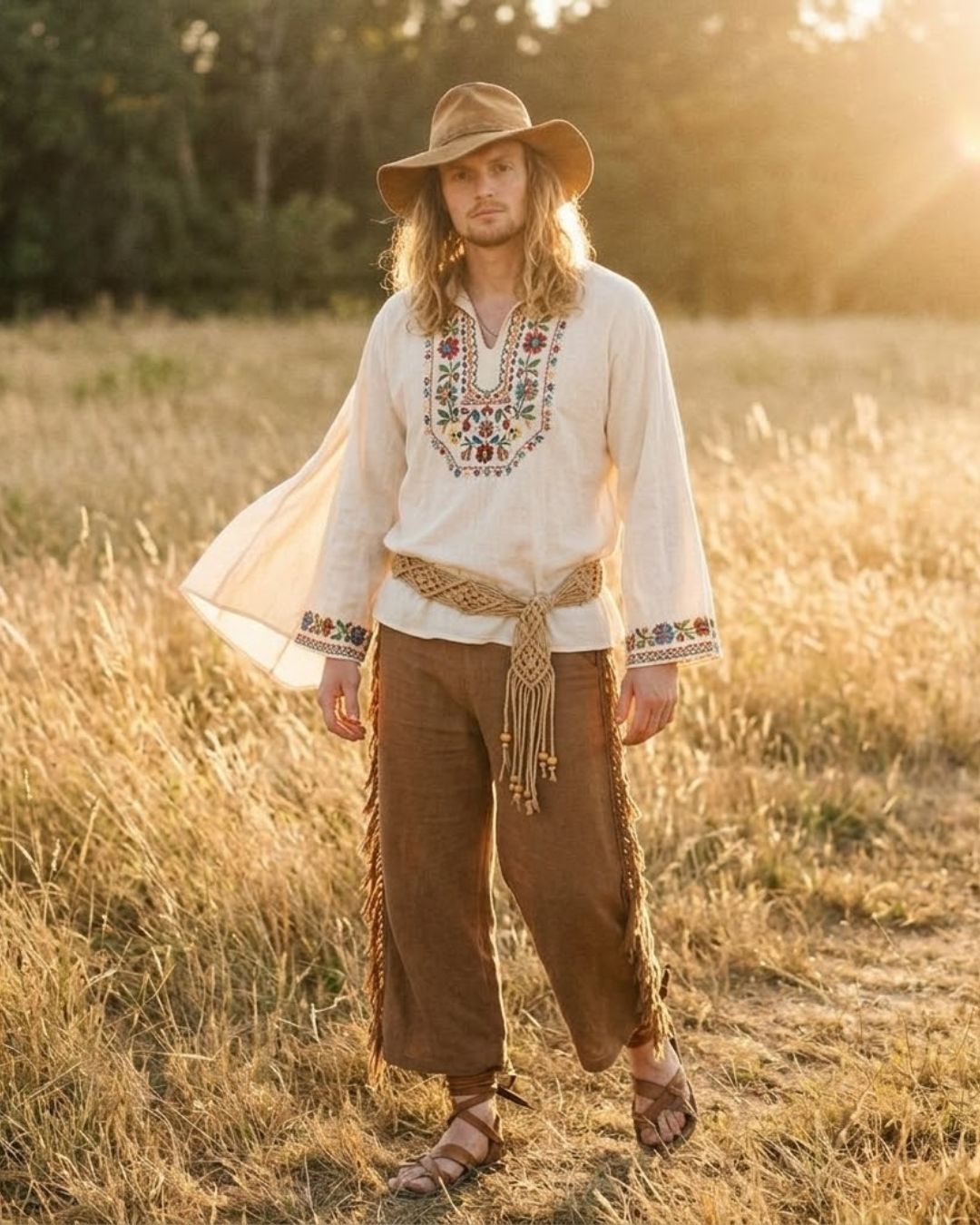
Carrying over from the late 60s, the hippie aesthetic of the early 70s embraced flowy fabrics, fringe, embroidery, peasant shirts, and earthy tones. This was the era of the festival shirt, the macramé belt, the floppy suede hat. The look was deliberately anti-establishment – natural fibers over synthetic, handmade over manufactured. Coachella’s modern “boho” aesthetic is this era with better production quality.

Preppy / Ivy League

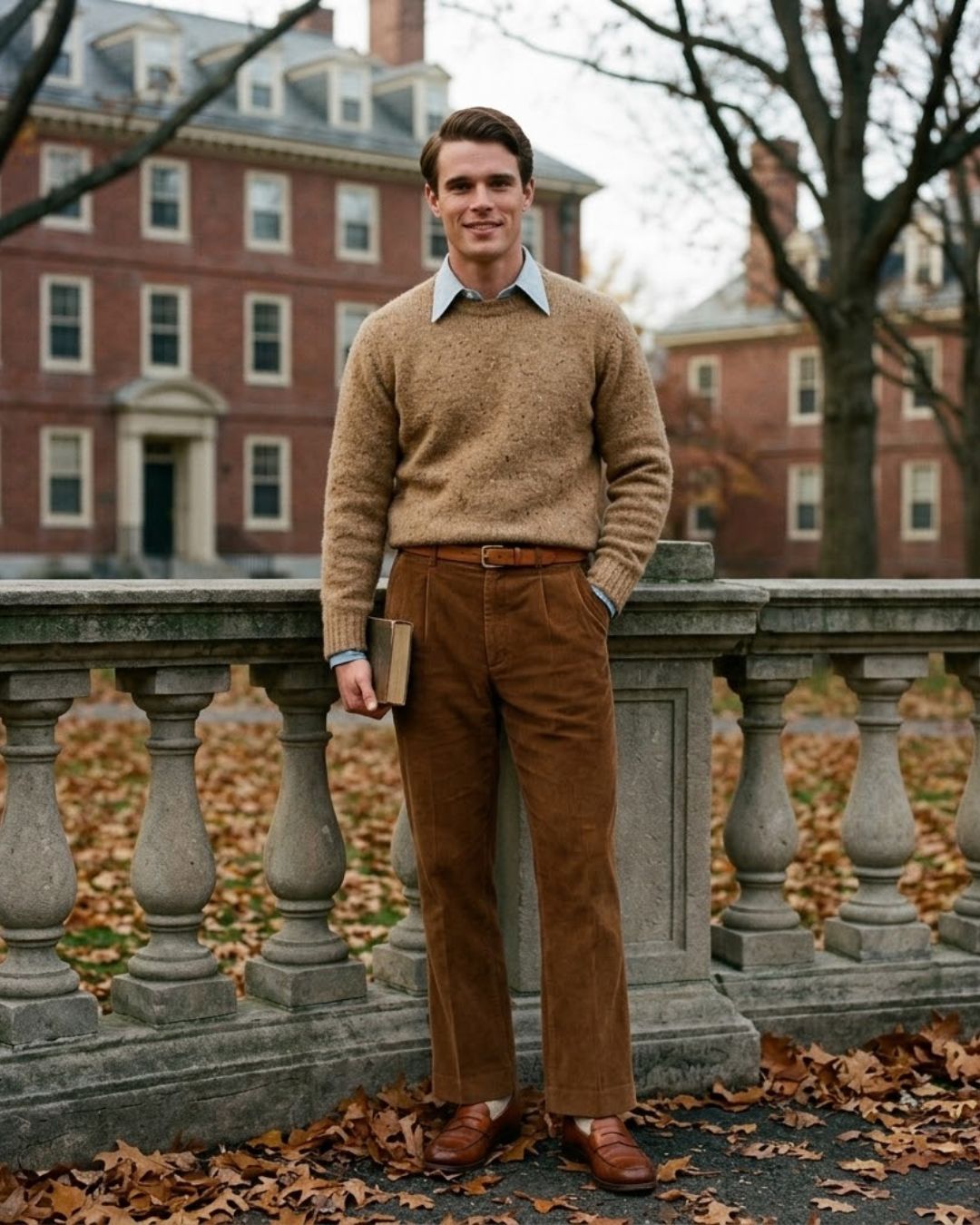
Not everyone went disco or punk. The 70s also produced a sharp preppy revival, particularly in the US. Corduroy trousers, polo shirts, Oxford button-downs, Shetland sweaters, loafers – a clean, collegiate look that drew from 50s Ivy League style but updated it with 70s proportions. Ralph Lauren built his entire empire on this aesthetic in this decade.

Colors, Fabrics & Patterns That Defined the Decade

The 70s Color Palette

The 1970s had one of the most distinctive color palettes in fashion history and it’s very different from the bright primaries of the 60s. The dominant colors were warm and earthy: burnt orange, avocado green, harvest gold, rust brown, chocolate, and caramel. These were paired with rich jewel tones: burgundy, emerald, cobalt blue, mustard yellow. By mid-decade, disco introduced silver, gold, white, and black as the after-dark palette. Pastels (powder blue, dusty rose, cream) lived in the preppy corner.

Fabrics: Polyester Was King

The 70s were the golden age of synthetic fabrics and primarily polyester. It was cheaper than natural fibers, held vibrant colors brilliantly, resisted wrinkles, and had that slight sheen that disco culture demanded. Polyester blends (polyester-cotton, polyester-rayon) made up the majority of mass-market menswear. Natural fabrics like cotton, wool, suede, leather remained for higher-end pieces and hippie-aesthetic clothing. Corduroy had a major moment for casual and academic styling.

Patterns: The Bolder the Better

70s men’s clothing was not afraid of pattern. The most characteristic motifs were: geometric and abstract prints (a direct influence from Op Art), paisley (a holdover from 60s psychedelia), floral prints on shirts, stripes (wide horizontal or vertical), and plaid/checks in earthy colorways. The rule, if there was one, was scale: patterns were large and bold, not fine and subtle.

Early, Mid & Late 70s: How the Style Evolved

The 70s weren’t static. Style shifted significantly across the decade, and understanding this evolution helps you nail the right era of the look.

Early 70s (1970–1973): Hippie Hangover & Casual Revolution

The early years were still heavily influenced by late 60s counterculture. Flares were widening, colors were earthy, denim was everywhere, and the clean-cut establishment look was in retreat. Men wore maxi-length coats, patchwork denim, peasant-inspired shirts, and hair was long across the board. The wide lapel suit was emerging but hadn’t yet hit its maximum width.

Mid 70s (1974–1976): Peak Excess

This is the 70s most people picture. Lapels at their widest, platform shoes at their tallest, polyester at its most ubiquitous. Disco was ascending. The three-piece suit in burgundy or cream, the open-collar satin shirt, the gold chain – this was the cultural peak of 70s menswear. Even conservative dressers had wider collars and slightly flared trousers. Fashion was democratically bold.

Late 70s (1977–1979): Punk Correction & Pre-80s Shift

By 1977–78, two forces were pulling fashion in opposite directions. Punk stripped everything back – narrow silhouettes, dark colors, deliberate anti-glamour. Simultaneously, the mainstream was beginning to tire of disco excess and gravitating toward a cleaner, more tailored look. Trousers were narrowing slightly. Lapels were beginning to shrink. The shoulder was gaining importance.

The seeds of 80s power dressing were planted here.

How to Wear 70s Attire for Men Today (Outfit Formulas)

Formula 1: The Modern Disco (Smart Night Out)

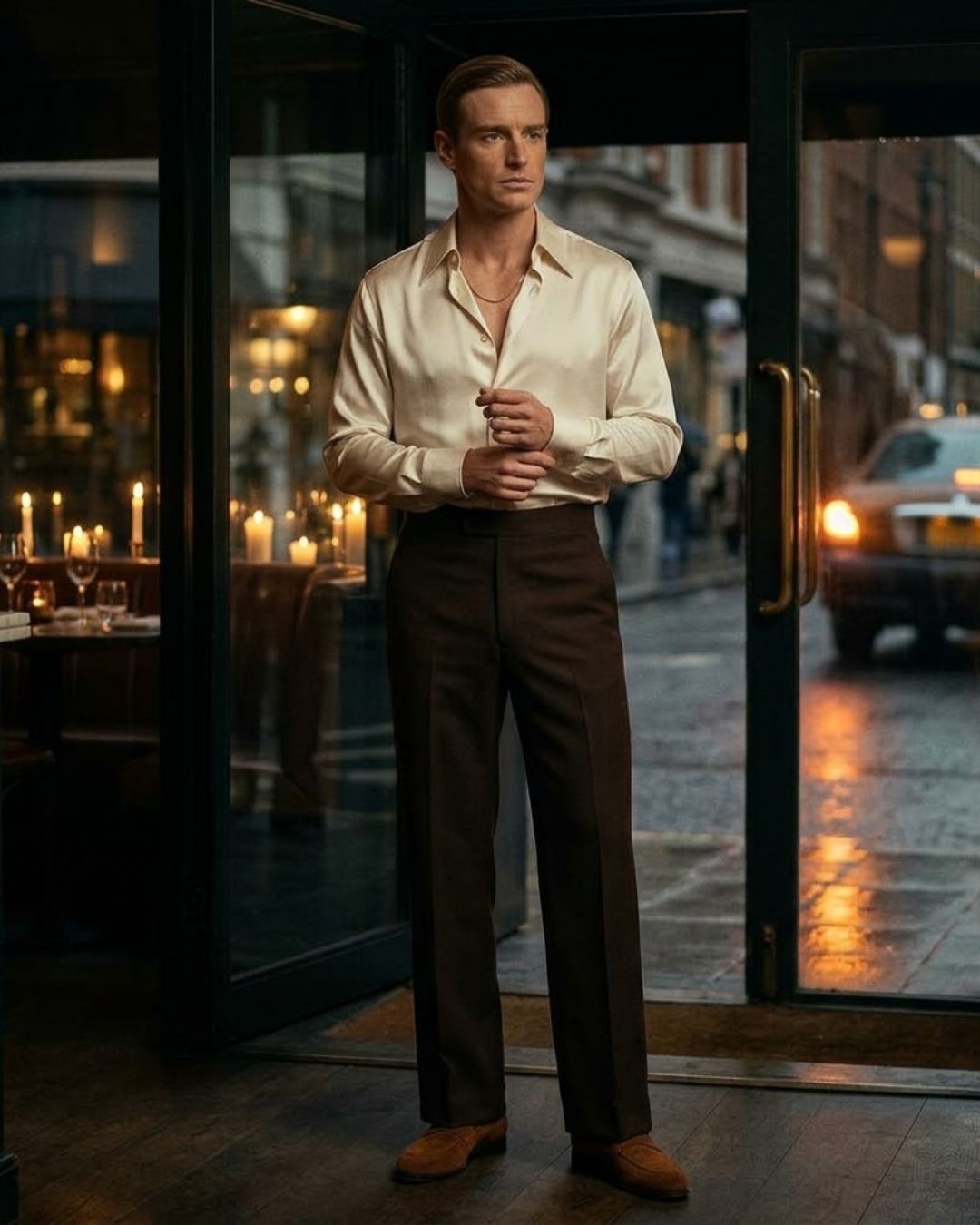
  1. Top: Satin or silk-blend shirt in ivory or black, collar open 2 buttons
  2. Bottom: Wide-leg trousers in a rich color (chocolate, burgundy, or deep teal)
  3. Shoes: Chelsea boots with a stacked heel, or loafers in suede
  4. Accessories: A simple gold chain, no tie
  5. Modern tweak: Keep tailoring sharp – the 70s silhouette works when it’s intentional, not sloppy

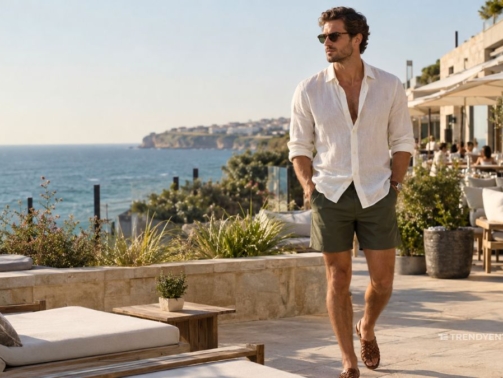
Formula 2: The Casual Boho (Weekend / Daytime)

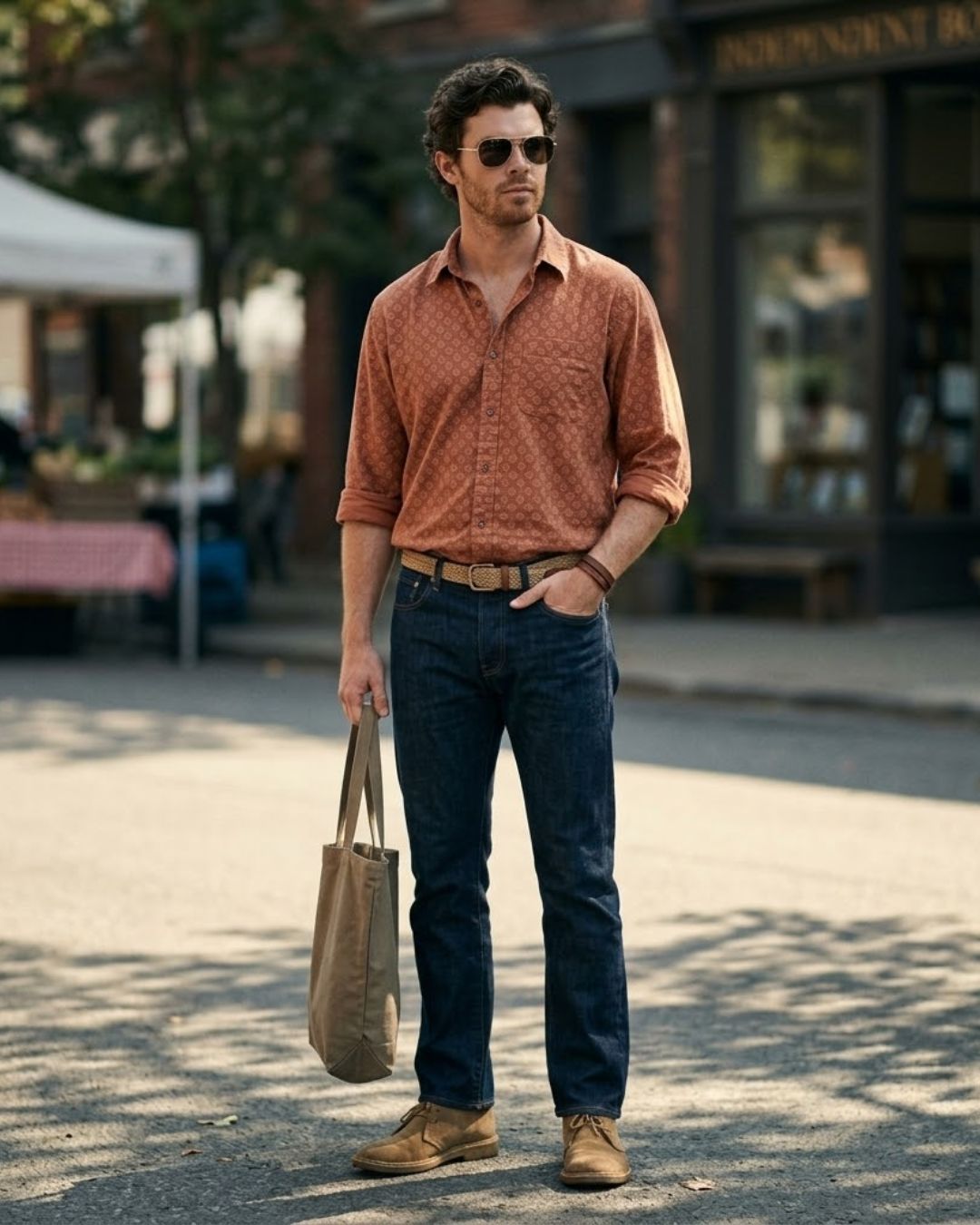
  1. Top: Embroidered or printed cotton shirt in earthy tones, worn untucked
  2. Bottom: Dark-wash straight or slightly flared denim
  3. Shoes: Desert boots or suede chukkas in tan or brown
  4. Accessories: Woven belt, simple leather bracelet, aviator sunglasses
  5. Modern tweak: Avoid the full head-to-toe boho. One statement piece is enough.

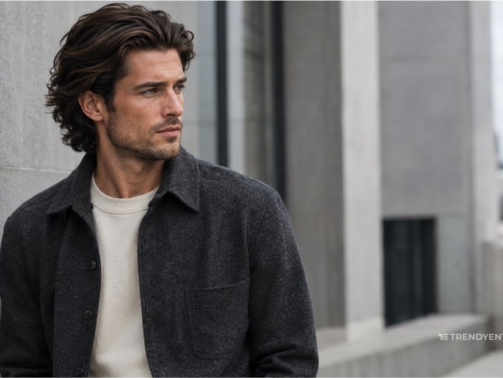
Formula 3: The Ivy Revival (Smart Casual / Business Casual)

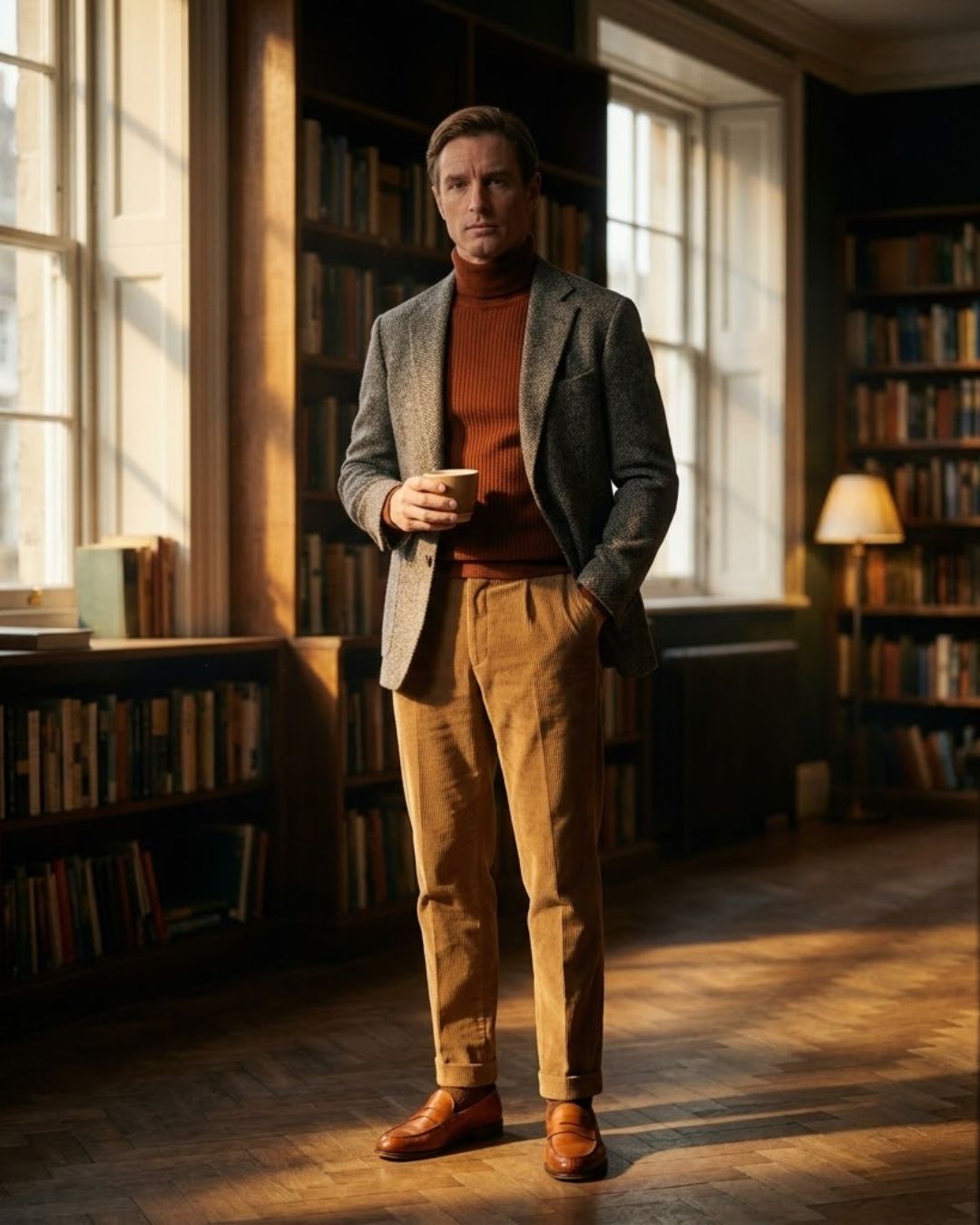
  1. Top: Ribbed turtleneck in rust, cognac, or navy
  2. Bottom: Corduroy trousers in camel or forest green, slightly tapered
  3. Layer: Unstructured blazer or sport coat in herringbone or tweed
  4. Shoes: Penny loafers or Oxford brogues
  5. Modern tweak: This is the easiest 70s look to wear in professional settings today

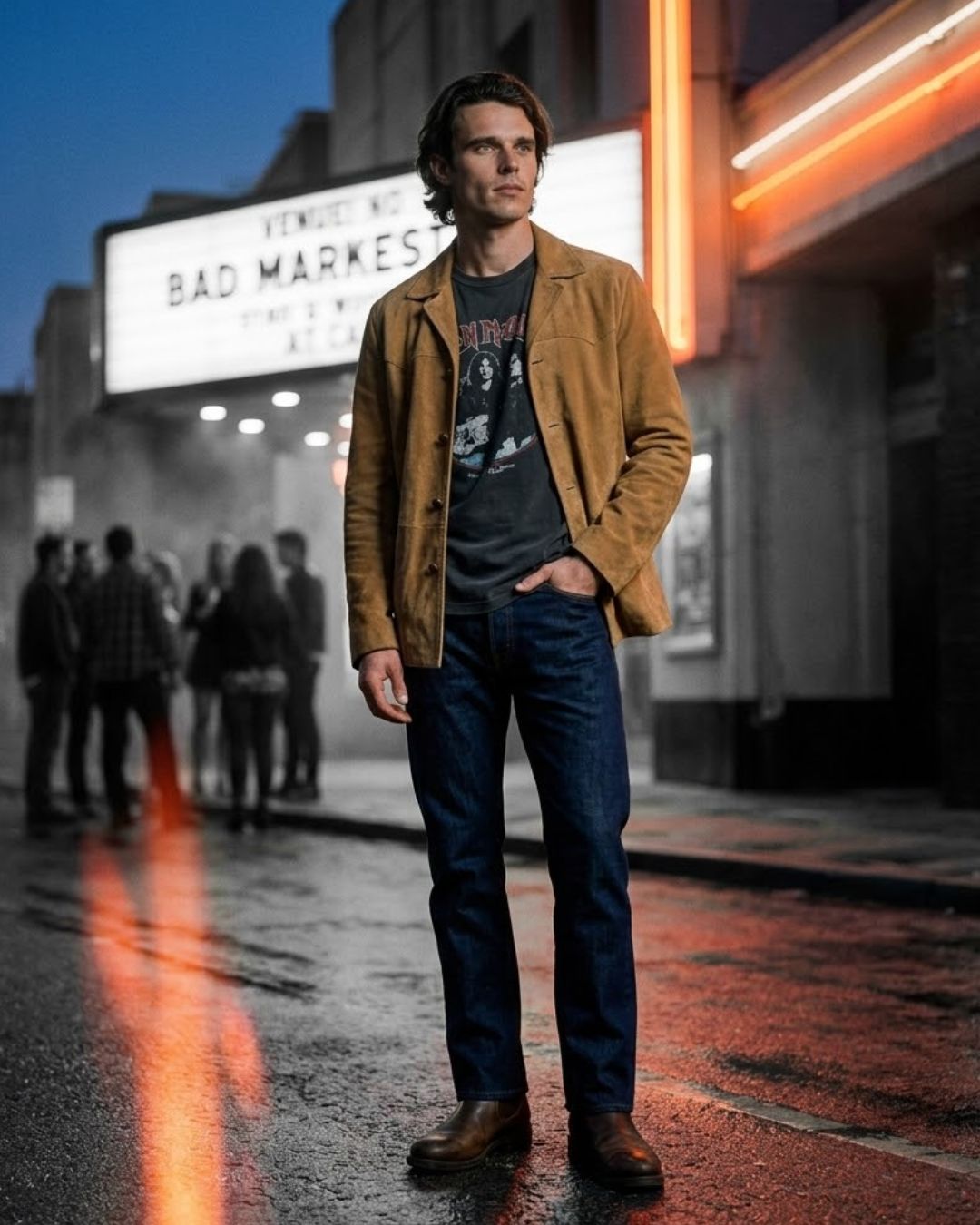
Formula 4: The Rock & Roll Edge (Concert / Casual Evening)

  1. Top: Vintage-style band tee or a fitted cotton button-down, half-tucked
  2. Bottom: Slim-straight dark denim with a slight flare at the ankle
  3. Layer: Suede or leather jacket in brown or tan
  4. Shoes: Chelsea boots or white low-top sneakers (the modern compromise)
  5. Modern tweak: Skip the platform – the leather jacket does the era-signaling for you

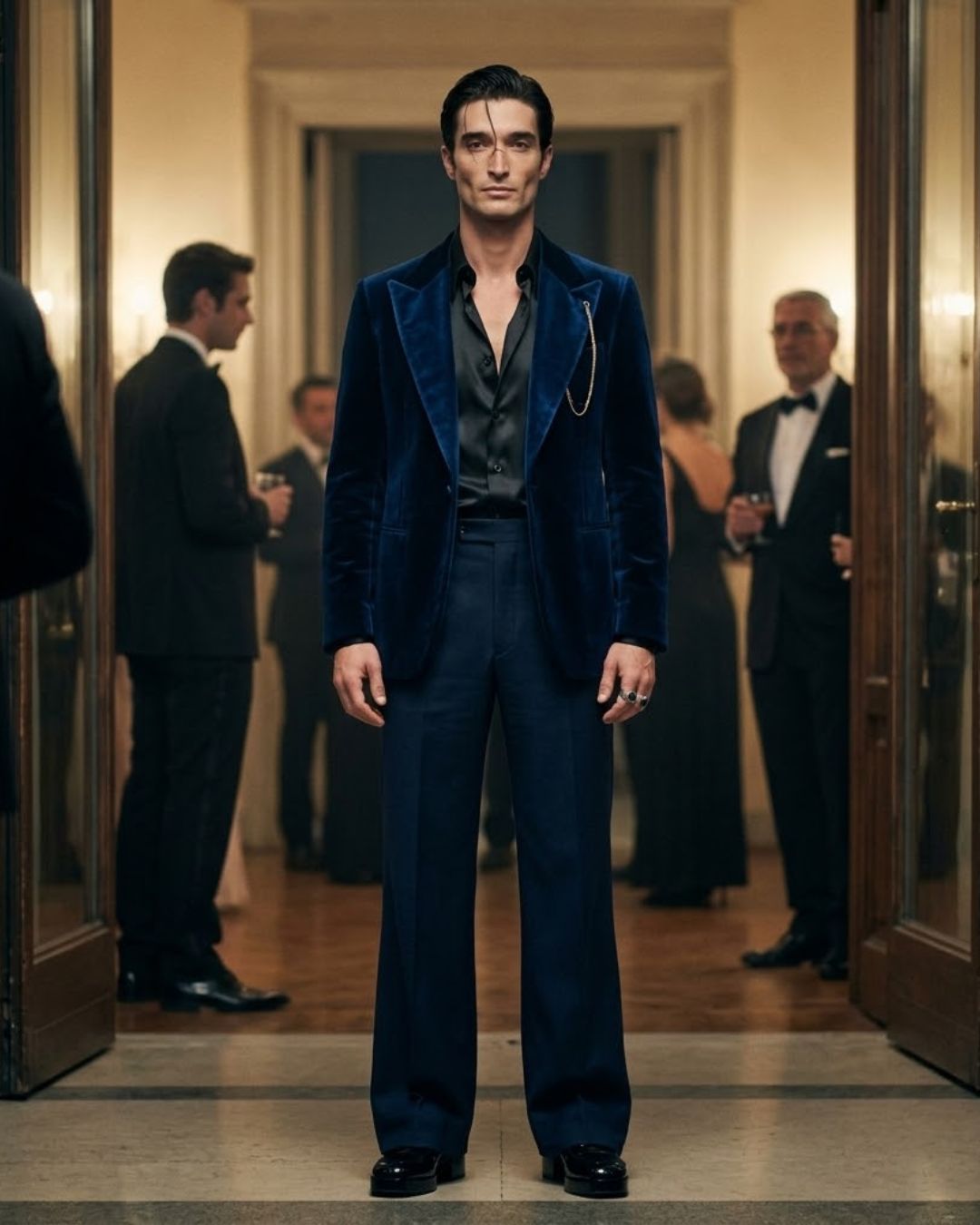
Formula 5: The Glam Statement (Fashion-Forward / Events)

  1. Top: Velvet blazer in jewel tone (emerald, deep purple, or midnight blue)
  2. Bottom: Matching or tonal wide trousers
  3. Shirt: Silky black or white open-collar beneath
  4. Shoes: Block-heel or platform loafer
  5. Accessories: Statement ring, lapel chain
  6. Modern tweak: This works best at events where dressing up is expected.

🎯 Not Sure What to Wear to Your Next Event?

Whether it’s a wedding, a rooftop party, or a black-tie dinner – getting the dress code right is half the battle. Use our AI-powered Dress Code Decoder to instantly figure out exactly what to wear, from 70s-inspired looks to modern classics.

70s Essential Pieces: Comparison & Style Guide

Here’s a breakdown of the key seventies fashion pieces for men – what they’re best for, price range to source them today, fabric, and our rating for modern wearability:

Item Best For Price Range (2026) Fabric Modern Wearability
Wide-Leg Trousers Smart casual, office, evening $45–$180 Wool blend, polyester, linen ⭐⭐⭐⭐⭐
Wide-Lapel Blazer Dinner, events, smart casual $60–$250 (vintage) Wool, polyester, velvet ⭐⭐⭐⭐
Open-Collar Disco Shirt Night out, concerts, events $30–$90 Satin, rayon, polyester blend ⭐⭐⭐⭐
Platform / Stacked Heel Boots Evening, fashion-forward looks $80–$220 Leather, suede, patent ⭐⭐⭐
Ribbed Turtleneck Smart casual, office, layering $25–$80 Cotton, merino wool, acrylic ⭐⭐⭐⭐⭐
Corduroy Trousers Casual, weekend, smart casual $40–$130 Cotton corduroy ⭐⭐⭐⭐⭐
Embroidered Boho Shirt Festival, weekend, travel $20–$70 Cotton, linen, muslin ⭐⭐⭐⭐
Suede Jacket Casual, rock-inspired, outdoor $90–$300 Genuine suede, suede-effect ⭐⭐⭐⭐⭐
Aviator Sunglasses All outfits, daily wear $15–$200 Metal frame, glass/resin lens ⭐⭐⭐⭐⭐
Wide Leather Belt Jeans, trousers, over jackets $20–$80 Genuine leather, vegan leather ⭐⭐⭐⭐

Use Our Tool to Decode Your Event Dress Code

Recreating a 70s guy outfit for a specific event takes more than just pulling on wide trousers and hoping for the best. The question is always: how formal is this occasion, and how 70s can I actually go?

That’s exactly what the Dress Code Decoder was built for. Plug in your event type – whether it’s a cocktail party, a wedding, a work function, or a weekend rooftop – and the AI gives you a tailored outfit recommendation that balances vintage 70s inspiration with the right level of formality. It takes 30 seconds and it’s completely free.

Think of it as having a GQ editor in your pocket – one who actually understands that you want to wear that wide-lapel blazer to your friend’s birthday dinner without looking like you got lost on the way to a costume party.

FAQs

From my experience, the easiest way to get a strong 70s party look right is to decide between bold disco fever or relaxed bohemian hippie styles, because both define classic men’s outfits from that era; if you lean disco, go for shiny polyester flared suits with patterned button-up shirts and dramatic wide collars, then layer in eye-catching sequins and standout accessories like chunky gold chains, while finishing with platform shoes, tinted sunglasses, and even fun wigs if you want that full retro energy, but if you prefer a softer vibe, mix the same pieces more casually so everything still feels authentic without looking like a costume.

If you look back at real 70s fashion, it wasn’t just about trends – it was about bold identity, where disco wear ruled the dance floor but also spilled into everyday life, even the office with relaxed leisure suits; I’ve noticed that standout pieces like chunky platform shoes, shiny polyester fabrics, and iconic Nik Nik shirts defined the look, while styling details such as feathered hairdos, daring vests without shirts, and flashy pimp hats added personality, making men’s style in that era feel expressive, a bit rebellious, and impossible to ignore.
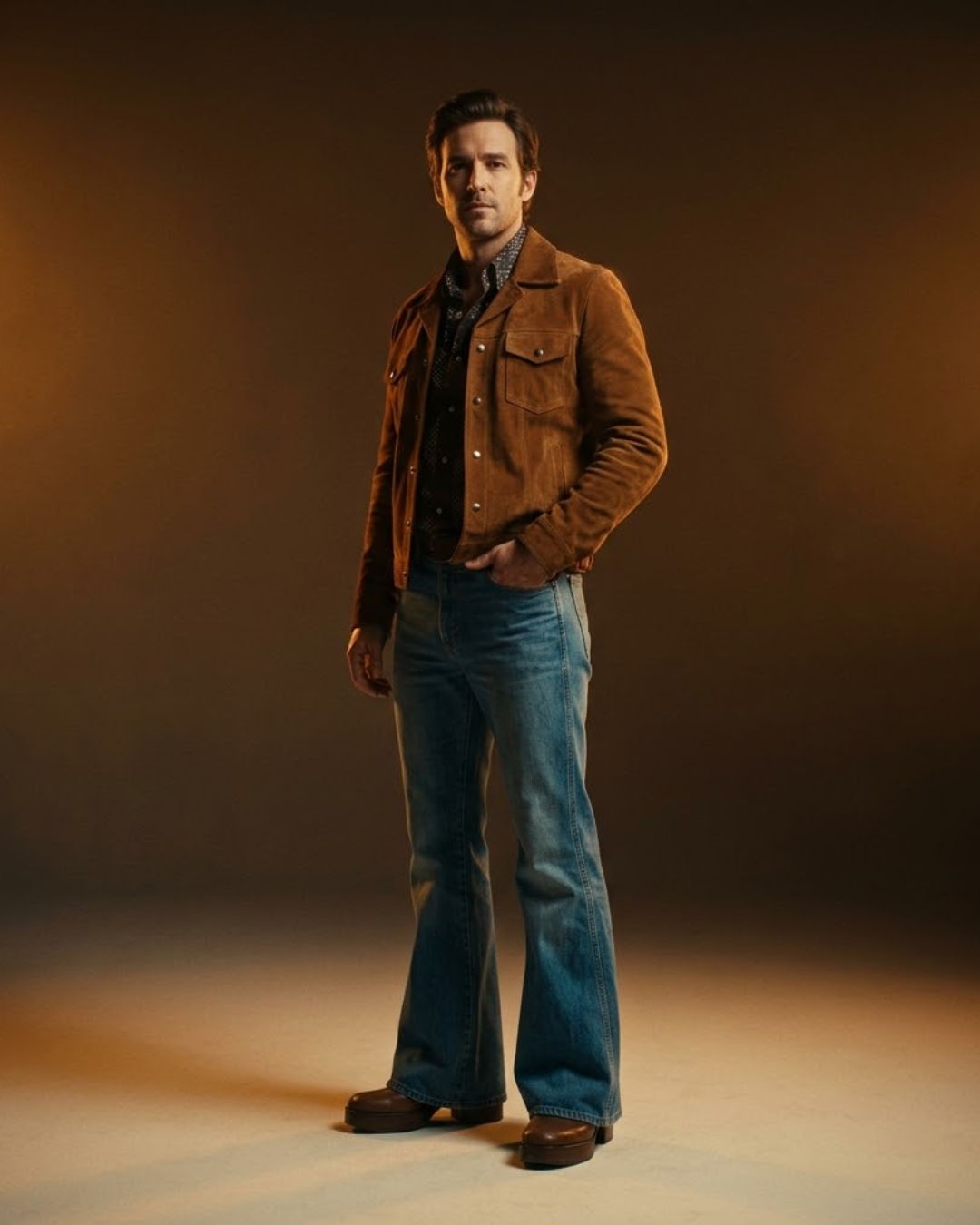
To dress like a man from the 70s, I usually suggest starting with relaxed casual wear that reflects both style and attitude, because that era was shaped by rebellion and strong counterculture influence; go for wide-leg trousers or classic bell-bottom jeans, then pair them with fitted turtlenecks or cozy patterned knitwear, and layer with rugged denim jackets since denim was one of the most iconic staples for men, giving you that effortless vintage look that feels natural rather than overdone.

When putting together a 70s theme outfit, I usually focus on mixing iconic silhouettes with personality, so start with flared pants or bell-bottoms and build around bold patterns or even maxi dresses for variation, then elevate the look with platform shoes and statement accessories; if you want a standout vibe, lean into disco glamour using sequins and smooth satin, or go relaxed with bohemian hippie styles by adding tie-dye and crochet, while finishing touches like wide-collared shirts, classic denim, or even jumpsuits bring everything together as timeless common staples of that era.

The biggest shift in 70s fashion trends was clearly the rise of Bohemian style, which brought a more relaxed aesthetic into everyday casual wardrobes and even influenced high fashion of the era; it was all about individuality, comfort, and strong artistic expression, where people moved away from strict dressing rules and instead embraced a more free, natural way of styling that still feels iconic today.

Conclusion: Seventies Fashion Mens Still Has Something to Teach Us

The 70s produced the boldest, most confident men’s fashion in modern history and the best of it has aged remarkably well. Wide trousers are back on every runway. The ribbed turtleneck never truly left. Suede jackets, corduroy, aviators, and earthy palettes are exactly where menswear is pointing right now.

The lesson of seventies fashion mens isn’t that you should dress exactly like it’s 1975. It’s that you should dress with the same deliberate confidence those men did. Pick pieces that mean something to you, wear them like you own them, and don’t apologize for taking up visual space.

The 70s references worth keeping are part of a broader edit of what translates from each decade into a modern wardrobe. The full framework is in The Complete Men’s Style Guide.

Now go find those wide trousers. The decade is waiting.

Ali Taimour

Ali Taimour

Founder and Editor of Trendy Enthusiast. Ali covers men's fashion, lifestyle, grooming, and the art of dining well - blending real experience with practical insight.

Connect on Instagram
Shopping Basket