Trendy Enthusiast

The Complete Men's Style Guide: Building a Sharp Wardrobe That Works Everywhere

men's style guide, sharp wardrobe guide, men's wardrobe essentials, how to dress well men, men's fashion guide UK, build a wardrobe men

Men’s style in 2026 is not more complicated than it has ever been — it just has more noise around it. More options, more trend cycles, more conflicting advice from more sources, most of which have a commercial interest in you buying something rather than a genuine interest in you dressing better. The result is a generation of men who own more clothing than any previous generation and dress, on average, no better for it.

The solution is not a new trend, a new brand, or a new shopping strategy. It is a framework — a clear set of principles that governs every wardrobe decision you make, from which suit jacket to buy to whether a pair of uncuffed joggers belongs in a considered wardrobe at all. This guide is that framework. It covers four things: the philosophy that makes a wardrobe work, the suiting and tailoring fundamentals that form its formal foundation, the everyday style decisions that determine how you actually look on the other 300 days of the year, and the decade references that are genuinely wearable now versus the ones that read as costume rather than style.

Every section links to the deeper breakdown where a single topic deserves more than an overview can hold. Start here. Go deeper wherever the gap between where you are and where you want to be is largest.

Part One — Wardrobe Philosophy: The Principles Behind Every Good Decision

The most useful thing this guide can do before covering any specific garment or outfit is establish what a wardrobe is actually for. Not in the abstract, but practically — what problem it solves, what standard it should be held to, and what the most common failure mode looks like.

A wardrobe’s job is to remove decisions. A well-built wardrobe means that on any given morning, for any given occasion, you can dress correctly without effort, without anxiety, and without standing in front of a rail of clothes that don’t combine into anything coherent. That is the standard. If your wardrobe doesn’t do that — if getting dressed regularly involves compromise, uncertainty, or reaching for the same three combinations because everything else feels wrong — the wardrobe is not working, regardless of how much it cost.

The most common reason a wardrobe fails this standard is volume without intention. Men buy reactively — a sale, an impulse, a piece that looked good on the hanger — and accumulate a collection of items that don’t share a colour logic, a formality register, or a coherent identity. The antidote is not buying less for its own sake. It is buying with a clear understanding of what gap each purchase fills and how it combines with what already exists. The full argument for this approach — why fewer, better pieces consistently outperform a larger, less considered wardrobe across every practical measure — is in You Don’t Need More Clothes, You Need Better Ones.

The second principle worth establishing upfront is the difference between style and fashion. Fashion is external — trend cycles, seasonal collections, what is currently prominent in media and retail. Style is internal — a consistent visual identity that expresses something true about the man wearing it, independent of what is currently fashionable. The two are not mutually exclusive, but a man who chases fashion without a stable style identity produces a wardrobe full of trend pieces that don’t relate to each other and date quickly. A man with a clear style identity can absorb relevant trend references without losing coherence. What that identity looks like in practice — the specific principles that separate classy, intentional dressing from expensive-but-purposeless spending — is in Classy Style Men: What It Actually Is and How to Wear It.

The contemporary edit of both these principles — what they look like applied to the specific silhouettes, fabrics, and references that are relevant in 2026 rather than in the abstract — is in Men Fashion 2026. That post is the practical expression of the philosophy this section establishes: not what is trending, but what is genuinely worth wearing now, and why.

For men who want their wardrobe to reflect considered values as well as considered style, the sustainable dimension of building a sharp wardrobe deserves its own mention here. Buying fewer, better pieces is already an inherently more sustainable approach than fast-fashion volume buying — the philosophy aligns naturally. The specific brands that deliver on both quality and ethical production, at a range of price points, are covered across 15 Best Men’s Sustainable Fashion Brands UK and Sustainable & Eco-Conscious Menswear: 15 Brands.

Part Two — Suiting & Tailoring: The Formal Foundation

men's style guide, sharp wardrobe guide, men's wardrobe essentials, how to dress well men, men's fashion guide UK, build a wardrobe men

A man who cannot dress formally is not fully dressed — he has a wardrobe with a ceiling, which will be reached at exactly the moment it matters most. A client dinner, a wedding, a formal occasion that requires more than smart casual: these are the tests a wardrobe either passes or fails, and the difference between passing and failing comes down to whether the suiting foundation is actually in place.

Getting the Fit Right Before Everything Else

Fit is the single variable that determines whether a suit reads as sharp or as a costume. A well-fitted suit at a modest price point consistently outperforms an expensive suit worn incorrectly, because the eye reads silhouette before it reads fabric quality or label. Getting fit right means understanding the five measurements that actually determine whether a jacket works on your specific body — chest, shoulders, sleeve length, natural waist, and back length — and knowing which of those can be corrected by a tailor and which must be bought correctly from the start.

The shoulders are the non-negotiable: shoulder alteration is expensive, imprecise, and often advised against entirely by good tailors. Buy the jacket that fits the shoulders and alter everything else. The complete measurement guide — how to take each measurement correctly at home, what to tell a tailor versus what to measure yourself, and how to read off-the-peg sizing labels accurately — is in How to Measure for a Suit Jacket.

Caring for a Suit in Transit

A suit that arrives creased is a suit that has already failed its primary purpose. The travel question — how to fold, pack, and arrive with a jacket and trousers that are still wearable — is one of the most practically useful things a man can know, and it gets less attention than it deserves in most style guides.

The folding technique matters more than the bag or case: a jacket folded inside-out using the shoulders correctly, combined with the right trouser fold, removes the majority of transit creasing without requiring a garment bag. The exact fold sequence is in How to Fold a Suit for Travel. The full packing strategy — what changes depending on whether you’re packing into a carry-on, a checked bag, or a suit carrier, and what to do on arrival if creasing has occurred regardless — is in How to Pack a Suit Without Wrinkles.

Shirts: The Layer That Makes or Breaks the Suit

The shirt underneath a suit or blazer is doing more work than most men give it credit for. A shirt that creases within two hours of being ironed, or one that has been chosen without considering how its collar structure and fabric weight interact with the jacket above it, undermines the entire outfit from the inside out.

Ironing correctly — the collar first, then the cuffs, then the placket, then the body, with temperature calibrated to fabric — is one of those skills every man should have internalised by the time he owns a suit. The sequence most men get wrong and the correct order are in The Right Way to Iron a Dress Shirt. For situations where ironing isn’t an option, No Iron No Stress: Wrinkle-Free Shirt covers the practical alternatives. The fabric and construction question — whether easy-iron or non-iron shirts actually perform as claimed and which suits which use case — is settled in Easy-Iron vs Non-Iron Shirts.

Fit matters here too: the choice between slim and regular fit is not purely aesthetic — it determines how the shirt sits under a jacket, how much it bunches at the waist when tucked, and whether it reads as fitted or billowing in the chest and shoulders. The full breakdown of which cut works for which body type and which occasion is in Slim Fit vs Regular Fit Shirt.

Building Around the Suit: Jackets, Trousers, and the Right Combinations

A suit jacket worn with the matching trousers is one outfit. A suit jacket worn as a blazer, separated from its trousers and paired with different bottoms, becomes a versatile piece that earns its wardrobe space across multiple contexts. The jackets that actually work in this separated capacity — specifically over a dress shirt, which is the combination most men get wrong — are covered in The Only Jackets Worth Wearing With a Dress Shirt.

The trouser question deserves more attention than it typically gets. Chinos and dress trousers are not interchangeable — they occupy different formality registers, work with different jacket and shoe combinations, and send different signals about the occasion you’re dressing for. Picking the wrong one for the context is one of the most common ways an otherwise considered outfit falls apart at close inspection. The exact differences — fabric, construction, occasion fit, and which combinations actually work — are in Why Choosing the Wrong Trouser Can Ruin Your Entire Outfit.

Part Three — Everyday Style & Trends: The 300 Days That Aren't Black Tie

men's style guide, sharp wardrobe guide, men's wardrobe essentials, how to dress well men, men's fashion guide UK, build a wardrobe men

The suiting foundation matters enormously, but it accounts for a fraction of the days most men actually get dressed. The other 300 days — the casual Saturdays, the smart-casual Fridays, the everyday contexts that don’t have a formal dress code — are where a wardrobe is won or lost on a practical daily basis.

Shoes: The Detail That Defines the Outfit

Shoes are disproportionately influential in how an outfit reads. A well-dressed man’s eye goes to footwear first in another man’s outfit, not because shoes are inherently more important than the garment above them, but because shoe care — or the lack of it — is instantly visible and tells you everything about the level of intention behind the rest of the look.

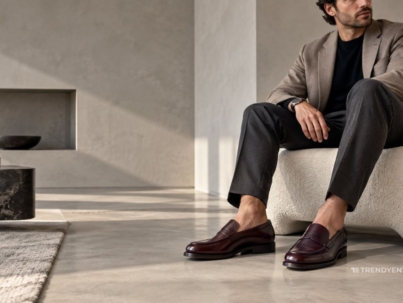
Loafers are the most versatile shoe in the contemporary gentleman’s wardrobe — capable of working from smart casual through to business casual depending on the last, the leather, and the styling decision around socks or no socks. Getting these combinations right, including the specific loafer-and-trouser pairings that work and the ones that don’t despite appearing similar, is in The Gentleman’s Guide to Styling Loafers.

The Statement Piece vs The Foundation Piece

There is a meaningful distinction between pieces that do the quiet, reliable work of holding a wardrobe together and pieces that make a specific, deliberate statement. Both have a role. The error most men make is buying statement pieces without the foundation pieces already in place to support them — which produces a wardrobe full of interesting individual items that don’t combine into anything coherent.

Statement shirts are the clearest example of this: worn correctly, over a considered foundation of well-fitted trousers and clean footwear, a statement shirt elevates an outfit. Worn as a substitute for that foundation, it reads as noise rather than signal. The specific shirts that actually earn their place and how to wear them are in 10 Statement Shirts for Men That Make Basic Outfits Look Expensive.

The Edges of the Wardrobe: Casual Done Right

Two pieces that sit at the casual end of the Sharp Wardrobe spectrum deserve specific attention because they represent the territory where men most commonly either over-casualise (wearing them in contexts they don’t suit) or under-utilise them by dismissing them as inherently informal.

Uncuffed joggers, worn correctly — with the right cut, the right proportions, and the right surrounding pieces — can function as a genuine wardrobe piece rather than purely loungewear. The styling logic that makes this work, and the specific combinations that don’t, are in Uncuffed Joggers: The Complete Style Guide for Men.

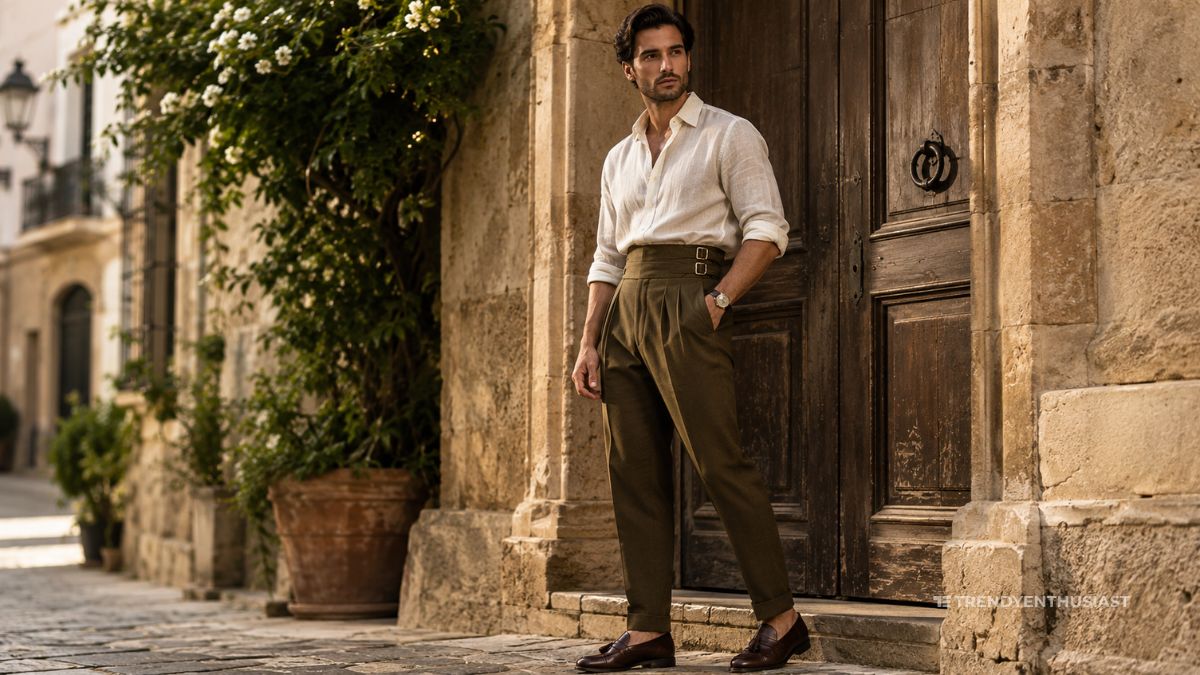
Gurkha trousers occupy the opposite end of the casual-formal spectrum — a distinctive silhouette with genuine historical roots in British tailoring that most men have never considered, despite offering a compelling alternative to both chinos and dress trousers for certain occasions. The full context and styling guide is in Gurkha Trousers: Unlocking the Rugged Elegance.

Part Four — Decade References: What to Take, What to Leave

men's style guide, sharp wardrobe guide, men's wardrobe essentials, how to dress well men, men's fashion guide UK, build a wardrobe men

Men’s style in the contemporary era draws heavily on decade references — the 1970s, 1980s, and 1990s each contribute specific silhouettes, colour palettes, and garment types that have re-entered the mainstream in genuinely wearable forms. The challenge is distinguishing between the decade references that translate cleanly into a modern wardrobe and the ones that read as deliberate costume rather than considered style.

The general principle: take the silhouette logic and the colour palette from a decade; leave the decade-specific details that no longer translate without irony. Earth tones and relaxed tailoring from the 1970s work in 2026. Kipper ties do not. The distinction requires actually understanding what made each decade’s style distinctive rather than surface-level pastiche.

The 1970s contribute one of the most wearable palettes in men’s style history — terracotta, camel, burnt orange, and brown leather against wide-lapel jackets and high-waisted trousers — in a silhouette that has come back with genuine staying power rather than as a passing micro-trend. The wearable references and the specific pieces worth owning versus the ones to leave in the decade are in Seventies Fashion Mens: The Ultimate Guide to 70s Male Style.

The 1980s are more complicated. The decade’s contributions to men’s style are genuine — strong shoulders, bold pattern mixing, the rise of power dressing — but the decade-specific excesses are also more pronounced and more difficult to absorb without reading as period costume. The edit of what actually transfers and what doesn’t, including the specific pieces that work without irony in a 2026 wardrobe, is in 1980s Fashion: The Complete Guide to the Decade That Rewrote the Style Rulebook.

The 1990s are currently the most actively referenced decade in contemporary men’s fashion, with relaxed tailoring, earth tones, and specific casualwear silhouettes all carrying genuine 90s DNA while reading as current rather than retrospective. The distinction between what’s wearable now and what reads as nostalgia rather than style is in 90s Men Fashion Trends: 15 Outfits That Still Look Stylish in 2026.

The Sharp Wardrobe Standard

A wardrobe that works everywhere — the promise in this guide’s title — is not a wardrobe full of versatile compromise pieces that are acceptable in every context without being particularly right for any of them. It is a wardrobe with enough range and enough internal coherence that whatever the occasion demands, the correct answer already exists in the wardrobe and the man wearing it knows precisely what it is.

That requires the philosophy to be in place first: buying with intention, building around a clear style identity, choosing quality over volume. It requires the suiting foundation to be genuinely present and correctly fitted. It requires the everyday style decisions — shoes, trousers, shirts, the occasional statement piece — to be made with the same level of thought as the formal ones. And it requires the decade references to be absorbed selectively rather than wholesale, as a man who understands why something worked rather than just that it did.

That is what this guide and the twenty-one posts in this cluster are built to give you. The entry point is wherever the gap is largest. Everything else is already here.

Ali Taimour

Ali Taimour

Founder and Editor of Trendy Enthusiast. Ali covers men's fashion, lifestyle, grooming, and the art of dining well - blending real experience with practical insight.

Connect on Instagram
Shopping Basket