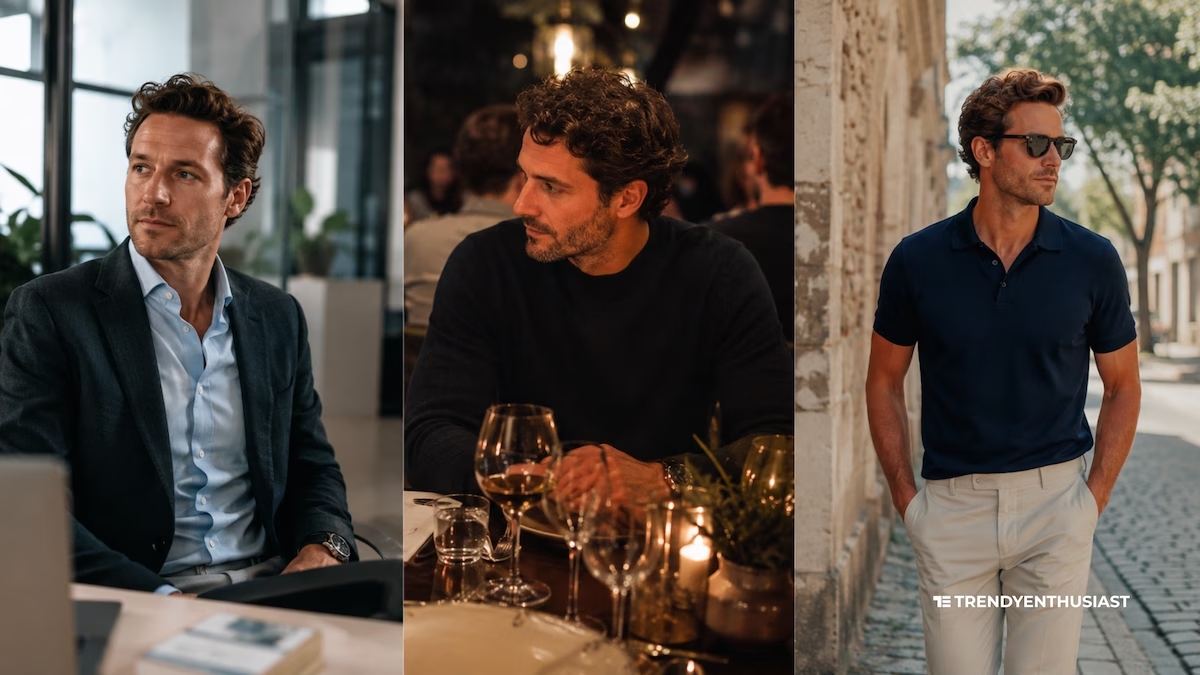
Smart casual for men is a dress code that sits between business casual and relaxed everyday wear.
It is polished enough for a client lunch or an evening dinner, relaxed enough that a tie would be conspicuously overdressed.
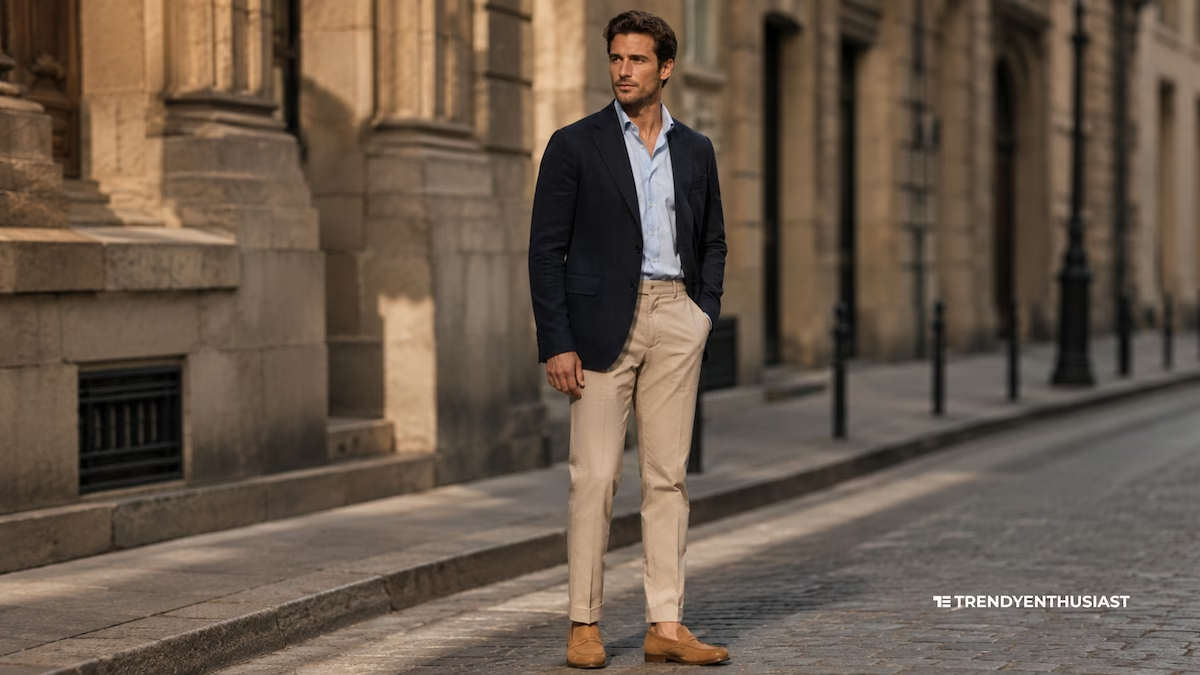
In practice, it means tailored or structured pieces worn with casual counterparts: chinos or dark trousers with a quality shirt, a blazer without a tie, loafers or clean leather shoes rather than formal Oxfords or casual trainers.
Why Smart Casual Trips Most Men Up
Smart casual is the most commonly misread dress code on any invitation, and the reason is that the name lies. “Smart” and “casual” sound like they’re being averaged together. That’s not how it works.
Smart casual is not an average. It’s a specific register with its own rules, its own correct pieces, and its own disqualifying errors.
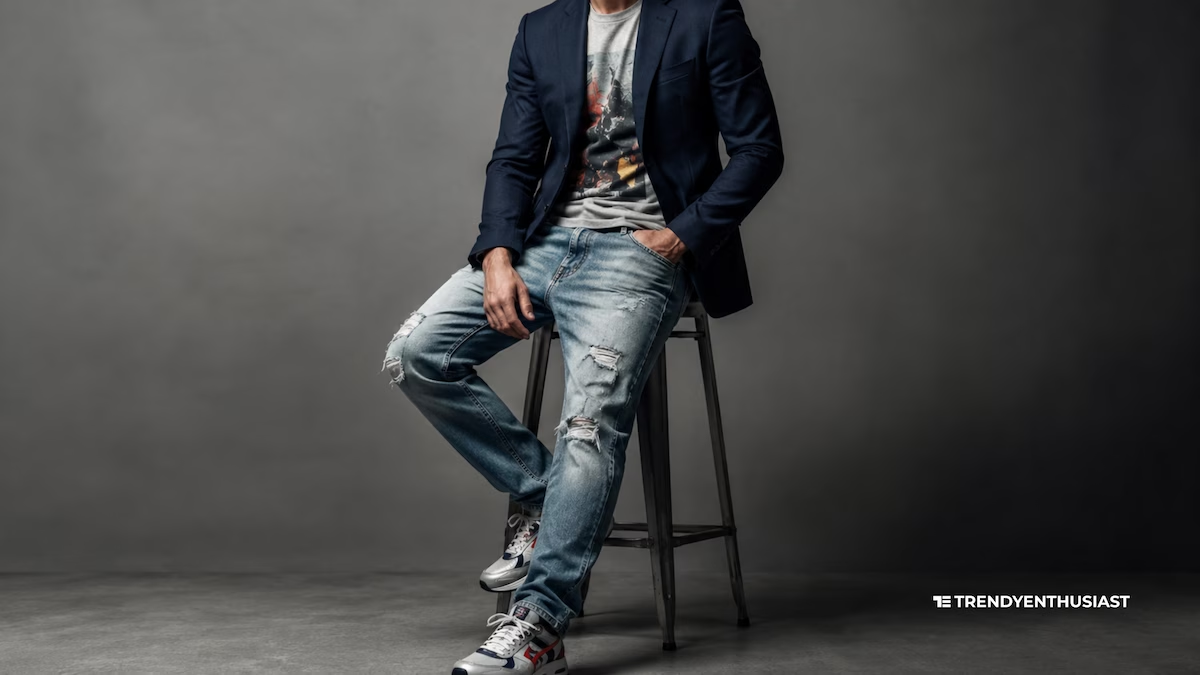
A man in a T-shirt and blazer has missed it. A man in a full suit with an open collar has also missed it, in the other direction.
Smart casual sits one tier below business formal. That matters because it tells you the ceiling as well as the floor.
The Smart Casual Outfit Formula
The formula has four components. Get all four right and the outfit qualifies without question. Compromise one and the whole reads as an attempt rather than an execution.
Component 1: The Trouser
The trouser is the foundation that determines whether everything above it can work.
Qualifies as smart casual:
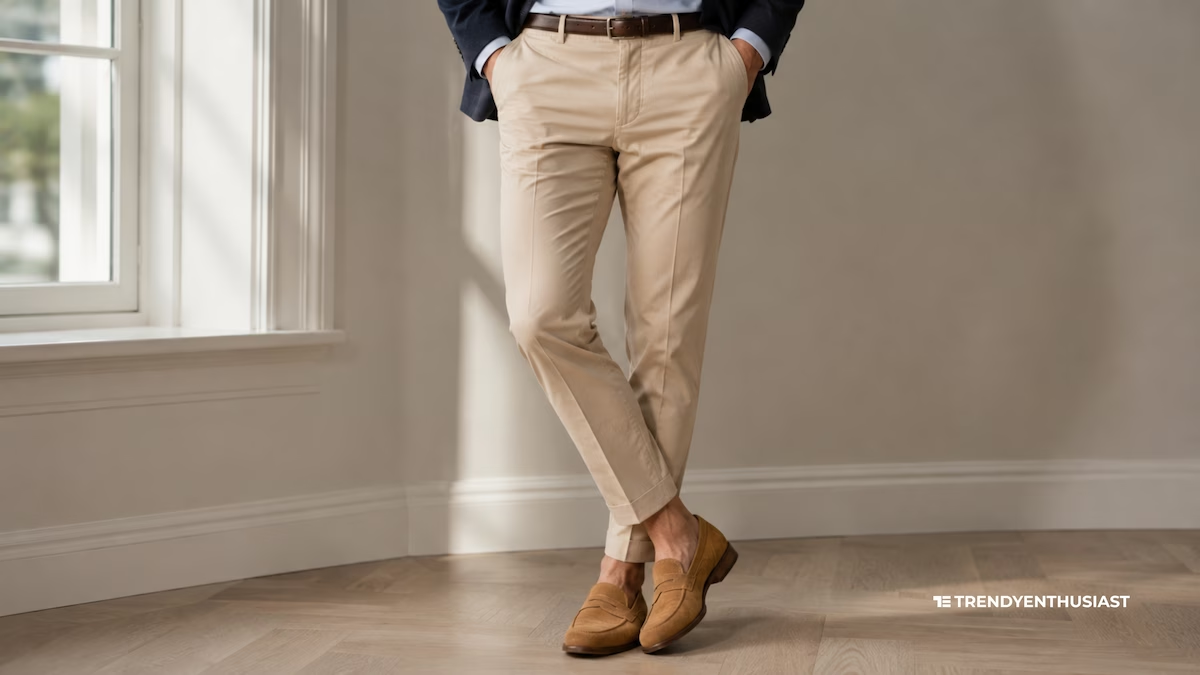
Tailored chinos: The most versatile smart casual bottom available. Slim or tailored fit in neutral tones: stone, navy, mid-grey, olive. Not relaxed fit, not cropped, not distressed.
Dress trousers worn casually: Flat-front wool-blend trousers in charcoal, navy, or mid-grey. When paired with a relaxed top, these pull the outfit toward the smarter end of the register without crossing into formal.
Dark indigo denim: Specifically no visible fading, no distressing, no rips, slim or straight cut, sits at the waist. Dark jeans done correctly qualify at the casual end of smart casual.
The rule: the collar is your primary indicator of register. A collared shirt signals smart. An open-neck, well-fitted shirt can work. A crew-neck T-shirt does not, regardless of quality.
Qualifies:
Oxford cloth button-down (OCBD): The workhorse of smart casual. White, pale blue, or subtle stripe. Tucked for the smarter end, half-tucked or relaxed at the hem for the casual end. This is the default correct answer.
Fine merino or lambswool crew-neck knitwear: Worn over a shirt collar (showing the collar) or alone in a quality plain knit. The key word is fine i.e chunky knits push toward casual.
Polo shirt: A well-fitted polo in a quality piqué cotton qualifies at the casual end of the dress code. A branded, logoed, or sporty polo does not.
Quarter-zip or zip-neck jumper: In merino or cashmere only, in a plain, neutral colour.
Does not qualify:
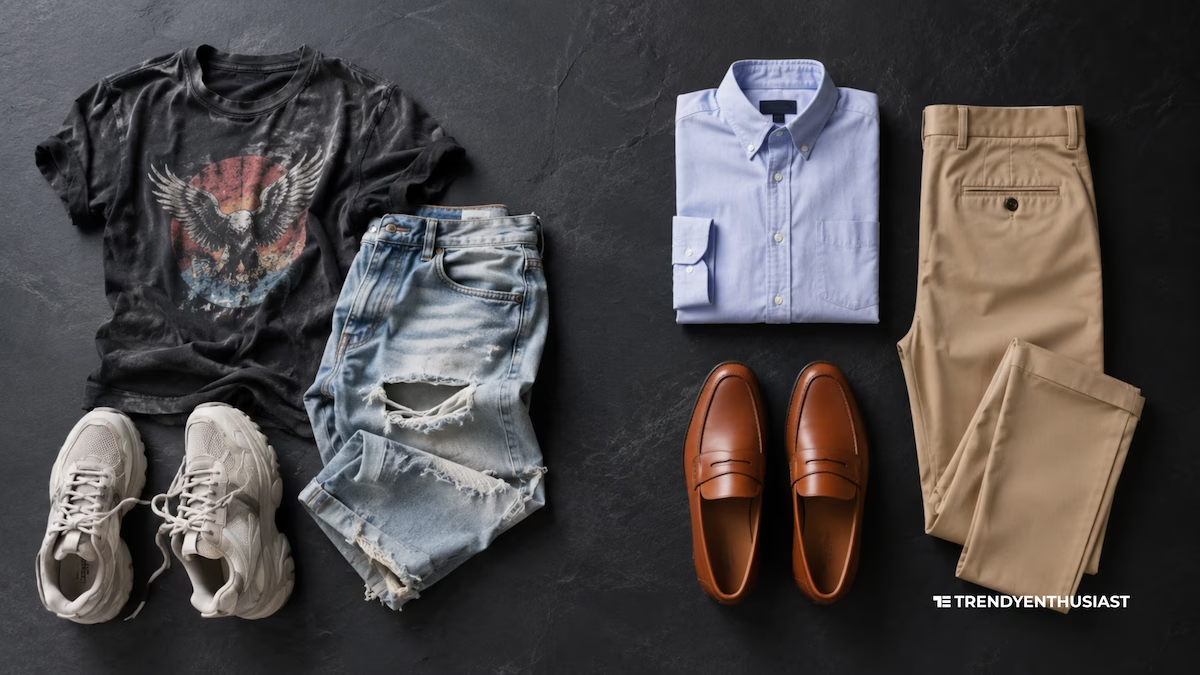
Graphic T-shirts
Band or logo tees
Linen shirts with too much relaxed drape
Hoodies in any configuration
Casual shirts worn unbuttoned over a T-shirt
Component 3: The Outer Layer
A well-chosen jacket does two things simultaneously in a smart casual outfit: it lifts the formality register of what’s underneath it, and it does the visual work of creating a structured silhouette that reads as put-together rather than assembled by accident.
Qualifies:
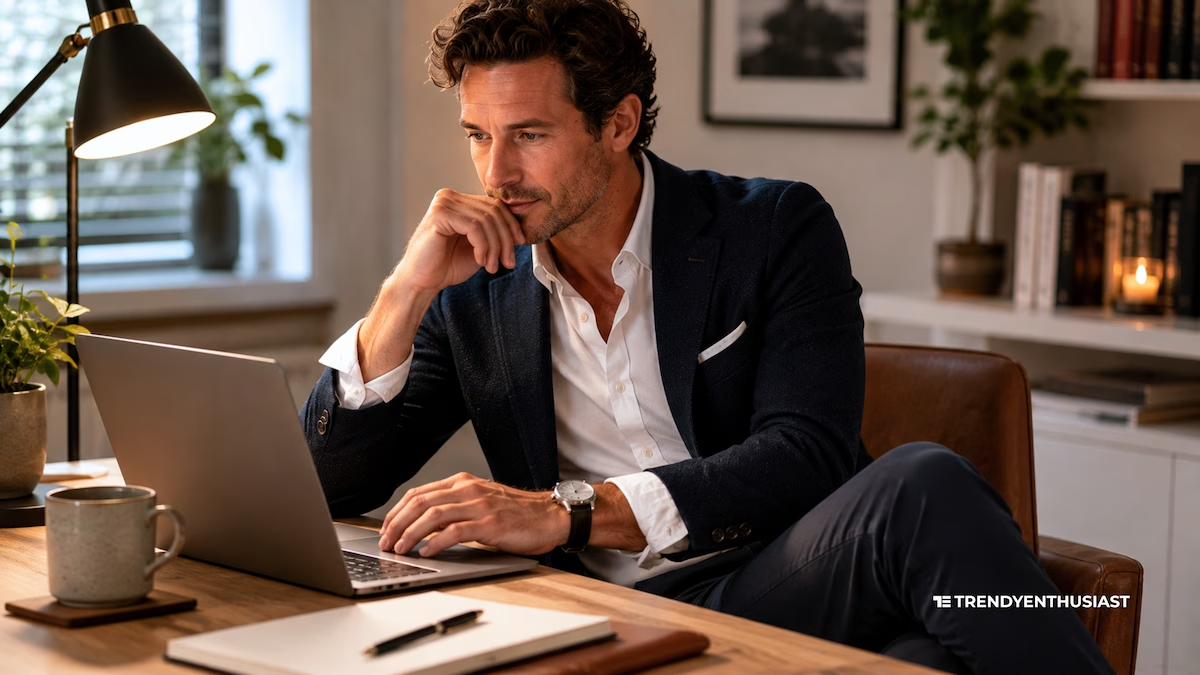
Unstructured blazer: The ideal smart casual jacket. In navy, mid-grey, or a subtle pattern. Worn without a tie. The unstructured construction is what distinguishes it from formal suiting.
Sport coat or tweed jacket: Particularly strong for autumn and winter smart casual. Provides texture and pattern interest without the formality of a suit jacket.
Harrington jacket or blouson: At the casual end only, in a quality fabric (no nylon), over a collared shirt or knitwear.
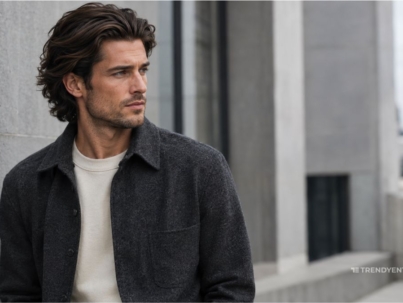
Overshirt in wool or flannel: As a layer rather than a shirt, worn open or buttoned over a T-shirt can approach the casual edge of smart casual.
Does not qualify:
Full suit jacket without its matching trousers (this reads as half a suit, which is different from a blazer)
Puffer jackets
Technical or waterproof jackets
Hooded outerwear
Component 4: The Shoe
Smart casual shoes must read as intentional without reading as formal occasion footwear.
Qualifies:
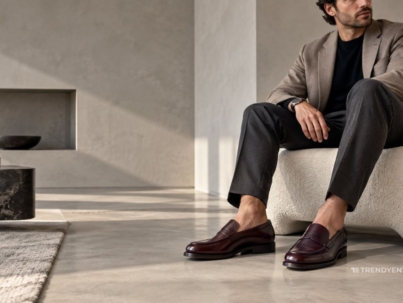
Loafers: The definitive smart casual shoe. Penny loafers, tassel loafers, or horsebit loafers in tan, dark brown, or black. In quality leather. Worn with or without socks depending on the context and season.
Derby shoes or brogues: Clean leather in brown or tan. These push toward the smarter end of the register, which is useful when the trouser and shirt combination is on the relaxed side.
Chelsea boots: In leather or suede, in a neutral colourway. Work particularly well with dark chinos or trousers.
Does not qualify:
Running or athletic trainers regardless of brand
Canvas trainers
Chunky-soled trainers or platform shoes
Formal Oxfords
Sandals
The Colour Logic of Smart Casual
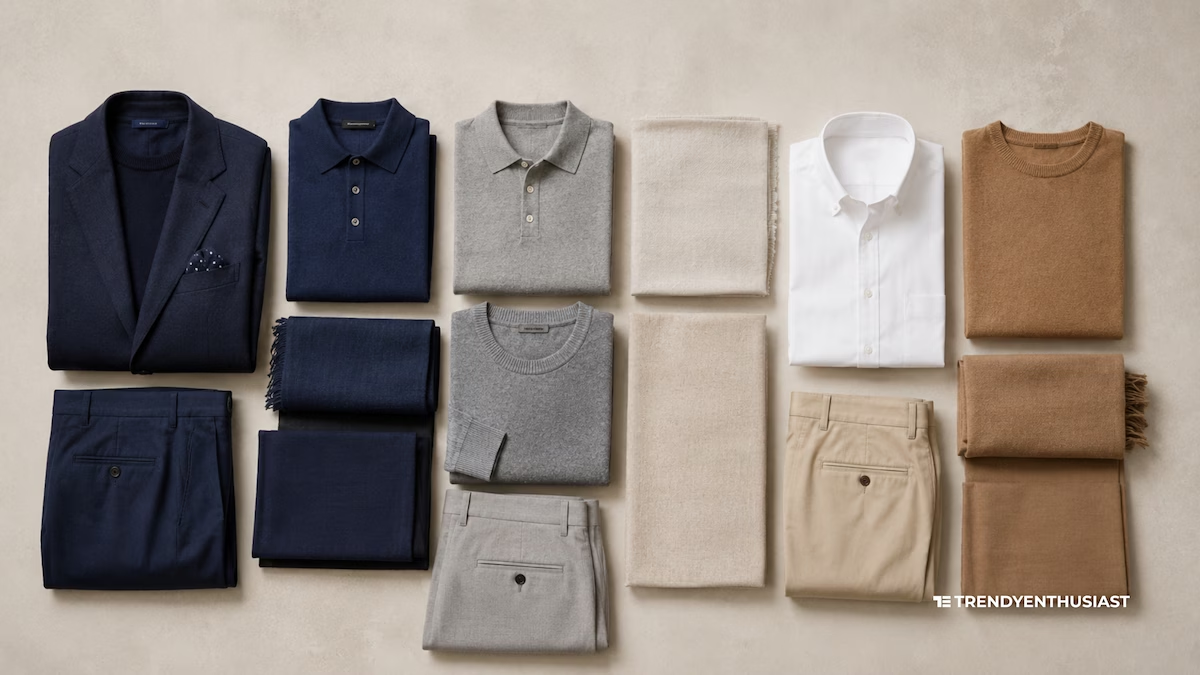
The easiest smart casual palettes to execute are built around three neutrals chosen as a foundation, with one additional colour introduced as a deliberate accent rather than a competing element.
Foundation neutrals that always work: Navy · Charcoal · Stone · Mid-grey · White · Camel
How to combine them:
Navy chinos + white Oxford + tan loafers = clean, reads unambiguously as smart casual
Charcoal trousers + pale blue shirt + navy blazer + dark brown derby = pulls toward the smarter end, appropriate for client meetings
Stone chinos + olive overshirt + white tee underneath + white leather trainers = casual end of the register, appropriate for social evenings
The mistake that collapses most smart casual outfits: Introducing pattern or colour at more than one point simultaneously. A checked shirt works. A checked shirt with patterned chinos does not. The rule: one patterned or distinctive piece per outfit. Everything else reads as a neutral foil.
Smart Casual by Occasion
The same dress code applied to different occasions calls for adjusting within the register, not changing the register entirely.
Smart Casual at Work
Choose dress trousers rather than chinos, an Oxford shirt rather than a polo, a blazer rather than a casual jacket. Derby shoes or brogues rather than loafers.
The goal is to read as smart casual to anyone who sees you, while being appropriate in an environment where colleagues are likely dressing formally.
Smart Casual for an Evening Out
Dark chinos or dress trousers, a fine-knit jumper or a quality shirt, Chelsea boots or loafers, and a jacket that provides structure.
Grooming and shoe condition should be on point. The same outfit worn with polished shoes and a maintained haircut reads an entire register higher than the same outfit worn carelessly.
Smart Casual for Travel
The practical challenge of smart casual in transit is solved by fabric choice first. Wool-blend trousers resist creasing better than cotton chinos. Fine merino knitwear packs flat and recovers quickly. Loafers slip off and on at security without changing the outfit’s register.
What Actually Disqualifies an Outfit from Smart Casual
This is the section every competitor skips. Knowing what disqualifies is more useful than knowing what qualifies, because the disqualifying errors are where most men fall short.
Instant disqualifiers – any one of these takes the outfit out of smart casual:
A graphic or logo T-shirt as the visible top layer
Distressed, light-wash, or heavily faded denim
Athletic or running shoes
A hooded garment in any form
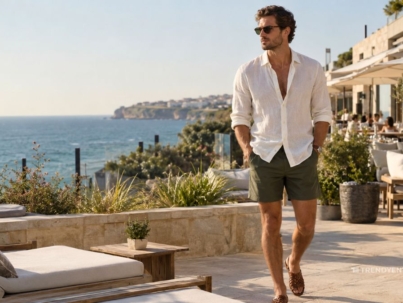
Shorts
A formal suit with an open collar (this is business dress without a tie, not smart casual)
Visible sportswear branding on any piece
Near-misses that most men defend but shouldn’t:
“Clean” athletic trainers if they were designed as running shoes, they’re running shoes
A blazer over a printed T-shirt, the blazer raises the register of the T-shirt, but not high enough
Chinos that fit correctly in the waist but are too relaxed through the leg, fit disqualifies regardless of the garment type
The Tool That Takes the Guesswork Out
Smart casual is context-dependent, the same outfit qualifies at one venue and misses at another. If you have a specific occasion and want the exact outfit formula for it, the Dress Code Decoder was built precisely for this: input the occasion, venue formality, and time of day, and get a complete outfit with a formality meter confirming it sits correctly within the smart casual band.
If the question is which smart casual silhouettes actually work on your specific body because fit is the variable that determines whether any of the above actually reads correctly, the Men’s Body Shape Style Matcher™ delivers a 12-piece personalised capsule wardrobe built around your proportions.
Smart Casual and the Grooming Standard It Implies
A correctly assembled smart casual outfit implies a grooming standard to match. The dress code signals effort and intention a man who has clearly thought about what he’s wearing, but who shows up with an overgrown haircut or unpolished shoes, is communicating a contradiction that reads louder than the outfit itself.
The minimum grooming standard for smart casual: a haircut within the last three to four weeks, clean-shaved or maintained facial hair, and shoes that have been polished or wiped down in the last 48 hours. Everything above that is refinement.
For the complete framework behind building a wardrobe that dresses every occasion correctly see The Complete Men’s Style Guide. For the specific outfit logic that defines classy dressing beyond the dress code, see Classy Style Men.
It means tailored or structured pieces like chinos, dress trousers, or dark denim; Oxford shirts, fine knitwear, or quality polos; unstructured blazers or sport coats worn with intentional footwear such as loafers, derbies, or Chelsea boots.
Dark indigo jeans no fading, no distressing, slim or straight cut qualify at the casual end of smart casual when paired with a quality shirt or fine knitwear and clean leather shoes or loafers.
Loafers are the default correct answer for smart casual penny, tassel, or horsebit, in quality leather, in tan, dark brown, or black. Derby shoes and brogues work at the smarter end.
Business casual reads as office-appropriate while Smart casual is one tier less formal like chinos and dark jeans become viable, a polo or fine knitwear can substitute for a formal shirt, and the overall register is social rather than professional.