Trendy Enthusiast

You Don't Need More Clothes. You Need Better Ones - Capsule Wardrobe Men

Sustainable capsule wardrobe

You see your closet. It’s packed. Yet somehow, you have nothing to wear :’)

Sound familiar? You’re not the only one. The average man owns about 74 clothing items but regularly wears fewer than a third of them. The rest? Impulse buys, gifts you didn’t return, sale pieces that “seemed like a good idea,” and that shirt from 2018 you’re definitely going to wear again someday.

The result is decision fatigue every morning, money wasted on things you don’t actually wear, and a closet that creates stress instead of solving it. There’s a better approach and it’s not just about owning fewer clothes.

A sustainable capsule wardrobe is about owning the right clothes. Pieces that work together, last for years, suit your actual life, and don’t cost the planet every time you get dressed.

By the end of this guide, you’ll have a complete, year-round wardrobe strategy, the one that looks sharp, stays sustainable, and genuinely works for your life.

Let’s get into it.

What Is a Sustainable Capsule Wardrobe?

A capsule wardrobe is a small, carefully chosen collection of versatile clothing pieces that mix and match with each other to cover every situation in your life without needing dozens of items.

Most men need between 25 and 35 pieces (not counting underwear and socks). 

Add the word “sustainable” and you raise the bar further. It means:

  1. Eco-friendly fabrics – grown or made with lower environmental impact (organic cotton, merino wool, Tencel, hemp)
  2. Ethical production – garment workers paid fairly, in safe conditions
  3. Long-lasting quality – pieces designed to survive years of wear, not one season
  4. Intentional buying – fewer purchases, made more thoughtfully
  5. End-of-life thinking – natural or recyclable materials that don’t sit in landfill for decades

Is a Capsule Wardrobe the Same as a Minimalist Wardrobe?

Almost. A minimalist wardrobe is about quantity. A capsule wardrobe is about a system of owning pieces that work as a coordinated whole. In practice, they overlap heavily. The difference is that a capsule wardrobe has a deliberate structure: every item earns its place by working with at least three others in your collection. 

💡 The Core Rule

Before any piece enters your sustainable capsule wardrobe, ask: “Does this work with at least 3 other items I already own?” If not, it doesn’t belong! no matter how good it looks on its own. 

The Honest Pros and Cons of a Capsule Wardrobe

Every other guide sells you the dream. Here’s the full picture including the parts that take real effort.

✅ The Benefits

  1. You get dressed faster as every combination works
  2. Spend less money long-term (better quality = fewer replacements)
  3. Reduce decision fatigue significantly
  4. Look consistently put-together with minimal effort
  5. Reduce your fashion footprint

⚠️ The Honest Downsides

  1. Upfront cost is real as quality pieces aren’t cheap
  2. Adjustment period (it takes time to trust the system)
  3. Feels repetitive at first (this passes)
  4. Requires a real closet audit, which takes a weekend
  5. Some people around you will notice and comment

💡 The solution to each downside

The upfront cost is solved by the budget tiers and secondhand strategy later in this guide. The adjustment period is solved by the 90-day transition plan. The repetitiveness fades once you realize the outfit combinations are far more varied than you expect.

None of these downsides are deal breakers. They’re just honest starting points.

Step 1: Audit Your Closet Before Buying a Single Thing

Buying before auditing is exactly how you end up with more clothes you don’t wear.

Set aside two hours. Take everything out of your wardrobe. Every item. Then go through it using this filter:

“The Keep-Donate-Recycle Method”

KEEP if it: fits well right now, is in good condition, works with at least 3 other items, and you’ve worn it in the last 12 months.

DONATE if it: is in good condition but you simply don’t wear it or it no longer fits your life.

RECYCLE/DISPOSE if it: is stained, damaged, pilled, or faded beyond recovery. Textile recycling programs exist in most cities, use them instead of landfill.

Once you’re done, you’ll have a clear picture of what you actually own and what’s genuinely missing. That is your shopping list. Not a trend article. Not what a brand is pushing this season. Your actual gaps.

💡 Don't Throw Everything Away

You likely already own 40–60% of what a good capsule wardrobe needs. The goal of a closet audit is to find what’s working, not to start from zero. Slow down before you spend.

Step 2: Build Your Color Foundation First

Color is the system that makes a capsule wardrobe actually work. Get this right and almost everything in your wardrobe will pair with almost everything else.

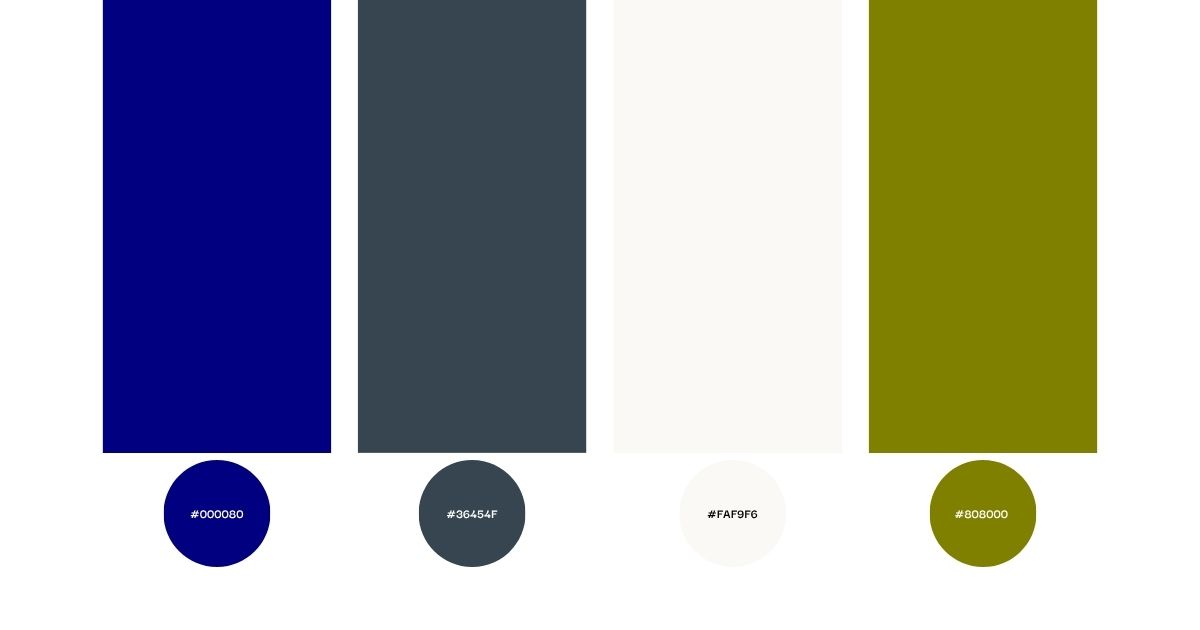
The 4 Core Neutral Colors for Men

These four neutrals are the foundation. They mix with each other naturally because none of them overpower or clash. 

  1. Navy – works with everything, reads as polished without being formal
  2. Charcoal/Dark Gray – the alternative to black, more flattering and versatile
  3. White/Off-White – essential for shirts and tees, brightens any outfit
  4. Olive/Khaki – adds warmth and works across casual and smart-casual looks

Navy trousers + white shirt + charcoal jacket works. Olive chinos + white tee + navy overshirt works. You don’t have to think about it.

Adding Accent Colors Without Breaking the System

Once your neutrals are in place, you can introduce one or two accent colors i.e burgundy, forest green, rust, camel  through sweaters, accessories, or outerwear.

The rule: keep accent pieces to no more than 20% of your wardrobe, and always make sure they work with your neutral base before you buy them.

✦ Mistake Most Men Make

They start with bold colors because they seem exciting. Then those pieces sit unworn because there’s nothing to pair them with. Neutrals first, always. Bold pieces are additions to a system not the system itself.

Step 3: Choose Sustainable Fabrics (The Part Every Other Guide Skips)

This is where a truly sustainable wardrobe separates itself from one that just looks minimal. The fabric your clothes are made from determines how long they last, how they feel, and what environmental footprint they leave behind.

Here are the fabrics that belong in a sustainable men’s capsule wardrobe ranked honestly:

• Organic Cotton

Grown without synthetic pesticides or fertilizers. Uses significantly less water than conventional cotton. The go-to for t-shirts, button-downs, and underwear. Look for GOTS certification. Soft, breathable, and improves with washing.

• Merino Wool

Temperature-regulating, odor-resistant, and naturally biodegradable. A merino t-shirt can be worn 2–3 times before washing. Excellent for travel. Best for base layers, sweaters, and lightweight shirts. More expensive upfront pays off over years.

• Tencel (Lyocell)

Made from wood pulp in a closed-loop process (the solvent is recycled, not dumped). Incredibly soft, drapes beautifully, and is biodegradable. Excellent for shirts and light trousers. Often blended with cotton.

• Hemp

Grows fast, requires no pesticides, and improves in feel with every wash it gets softer over time. Excellent for casual shirts, trousers, and outerwear. Historically rough but modern processing makes it genuinely comfortable.

• Recycled Polyester (rPET)

Made from plastic bottles or old garments. Not biodegradable, but diverts plastic from landfill. Good for performance outerwear and technical pieces where natural fibres underperform. Better than virgin polyester not a long-term foundation fabric.

• Virgin Polyester / Nylon / Acrylic

Derived from petroleum. Sheds microplastics with every wash. Does not biodegrade. Fast-fashion staples for a reason cheap to produce, not built to last. Avoid as primary fabrics. If you own them, use a Guppyfriend wash bag to reduce microplastic shedding.

How to Read Clothing Labels: The Certification Decoder

Brands love environmental buzzwords. “Eco,” “natural,” “conscious,” “green” – these mean nothing legally. These certifications actually mean something:

Certification

What It Actually Guarantees

Best For

Organic fibre content (70%+ minimum) AND ethical processing and manufacturing standards

T-shirts, underwear, denim, basics

No harmful chemicals present in any part of the garment including buttons, zips, and dyes

Any garment touching your skin daily

Fair wages and safe working conditions for garment workers throughout the supply chain

Basics, activewear, everyday essentials

Responsible use of water and energy during dyeing and finishing; no harmful chemicals in process

Technical fabrics, outerwear, performance wear

Company-wide environmental and social standards not just a single product but the whole business

Brand-level trust signal (applies to company, not garment)

Animal welfare standards in wool production; land management requirements for farms

Merino sweaters, wool outerwear, wool trousers

🔑 Priority Rule

You don’t need every certification. For everyday basics (tees, underwear): prioritize GOTS or OEKO-TEX. For outerwear: look for bluesign or B Corp brand status. For wool pieces: look for RWS. One solid certification beats five vague marketing claims.

Step 4: The Complete Sustainable Capsule Wardrobe Checklist

Here is a complete, realistic wardrobe that covers every situation in a man’s life – from morning meetings to weekend hikes to dinner out. Target range: 28–35 pieces (excluding underwear, socks, and accessories).

For four-season climates, aim toward 35. For warm climates year-round, 25–28 is sufficient.

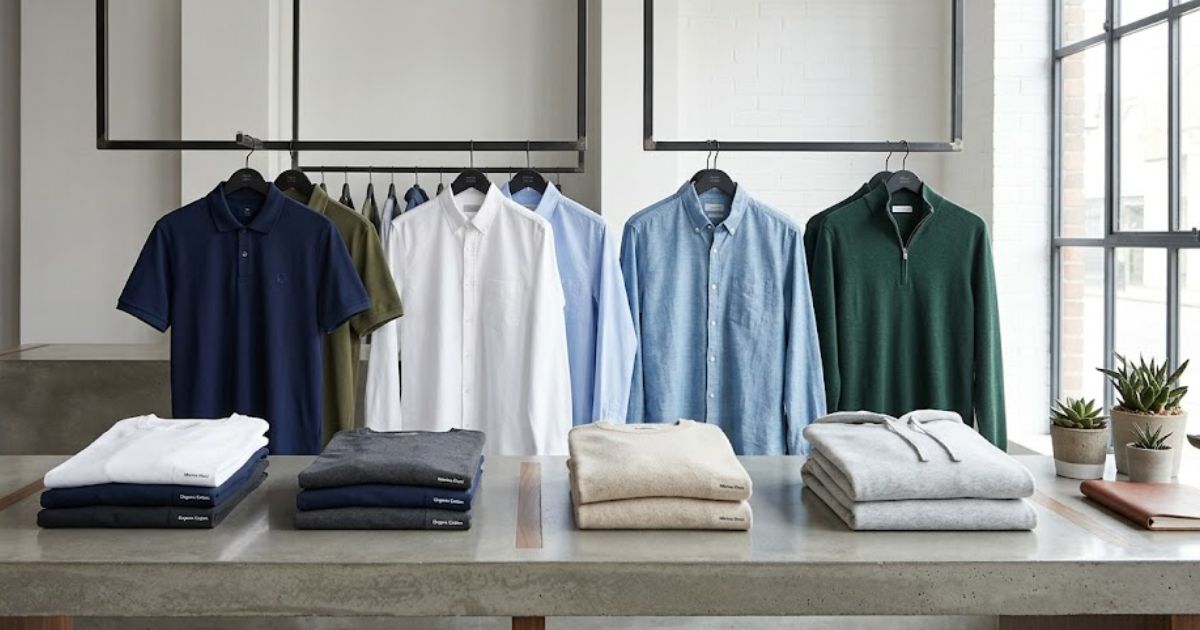
• 3× Crew-neck T-shirts – White, Navy, Charcoal. Organic cotton or merino. Foundation of almost every casual outfit.

• 2× Polo shirts – Navy + one accent color. The business-casual upgrade over a tee without the formality of a button-down.

• 2× Oxford button-down shirts – White + Light Blue. Wear alone, under a blazer, or with sleeves rolled. Versatile all-season piece.

• 1× Chambray or linen shirt – For warm months. More relaxed than Oxford, more interesting than a tee.

• 1× Crewneck sweater – Merino wool in navy or oatmeal. Elevates any outfit. Wear over a tee or button-down.

• 1× Quarter-zip or cardigan – Great layering piece. Works in office and casual settings equally.

• 1× Hoodie Casual only. Organic cotton. Keep it minimal; no loud logos.

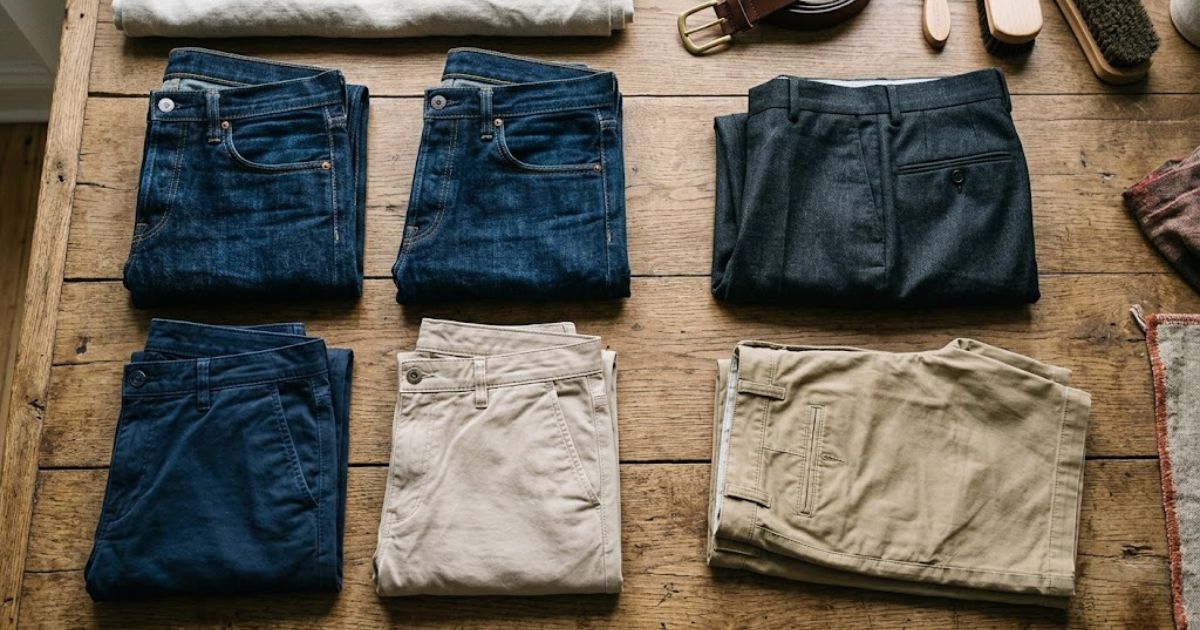
• 2× Dark wash jeans – Indigo/dark blue. Organic or recycled denim. Dark wash reads as smarter, making them office-appropriate in many settings.

• 2× Chino trousers – Navy + Khaki/Sand. The most versatile trousers you’ll own. Dress them up or down in seconds.

• 1× Wool or tailored trousers – Charcoal or mid-gray. For formal occasions. One pair is enough.

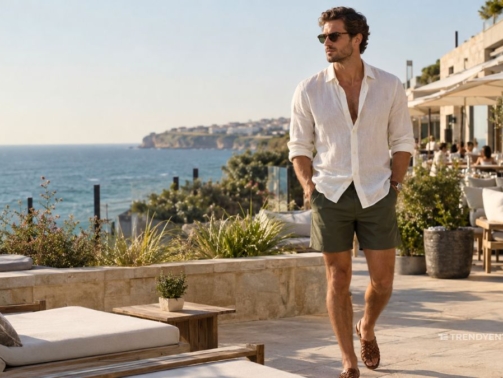
• 1× Shorts(warm climate/summer) – Khaki or navy. Chino-style shorts that can pass as smart-casual.

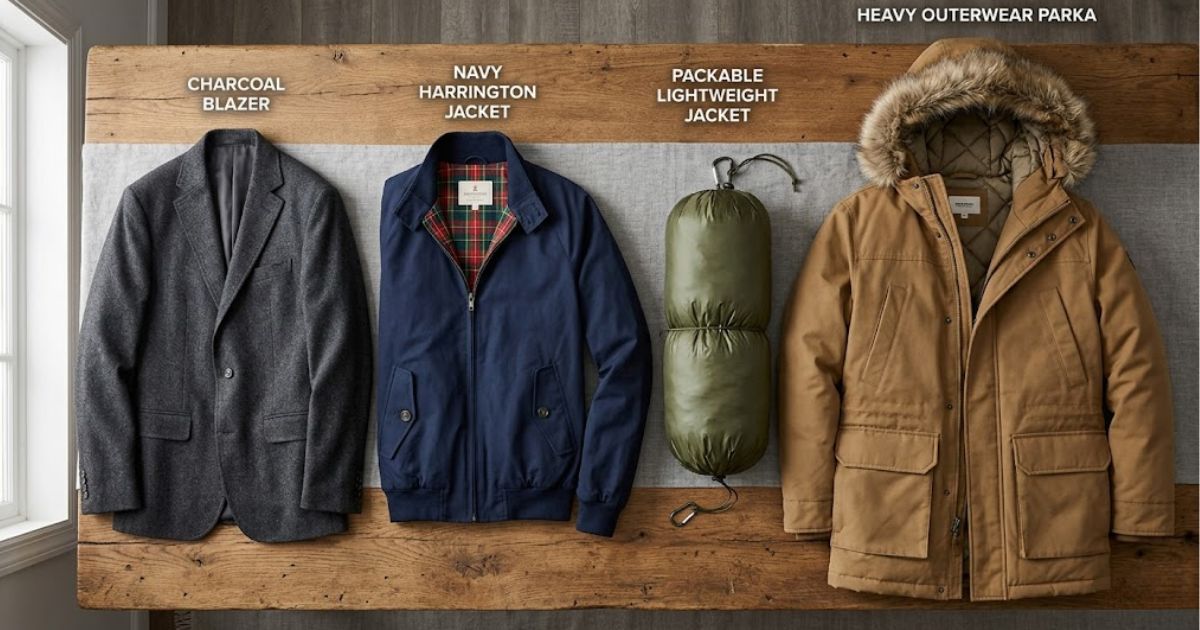
1× Blazer or sport coat – Navy or charcoal. Can be dressed down with jeans and a tee for a smart-casual look, or paired with matching trousers for business.

• 1× Casual jacket – Harrington, chore coat, or unlined denim jacket. Your everyday layer. Organic cotton or recycled material preferred.

• 1× Lightweight packable jacket – For travel and mild rain. Recycled nylon or shell.

• 1× Heavy outerwear(four-season climates)  – Wool overcoat or recycled-insulation parka. Invest here. A quality coat defines your entire look in winter.

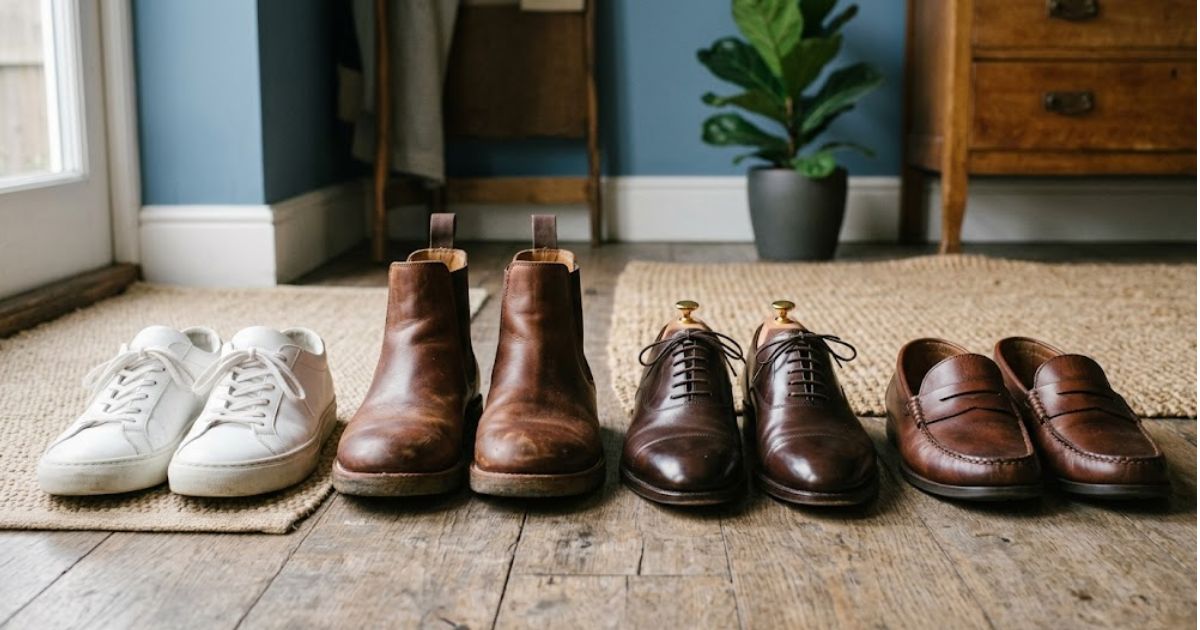
1× White leather or canvas sneakers – The most versatile casual shoe available. Works with jeans, chinos, and even smart-casual outfits.

• 1× Brown leather Chelsea or chukka boots – Dress them up with chinos, dress them down with dark jeans. One pair, enormous range.

• 1× Oxford or Derby dress shoes – Black or dark brown. For formal occasions. Well-maintained leather lasts 10–15 years.

• 1× Casual sandal or loafer(warm climate/season) – Optional but useful

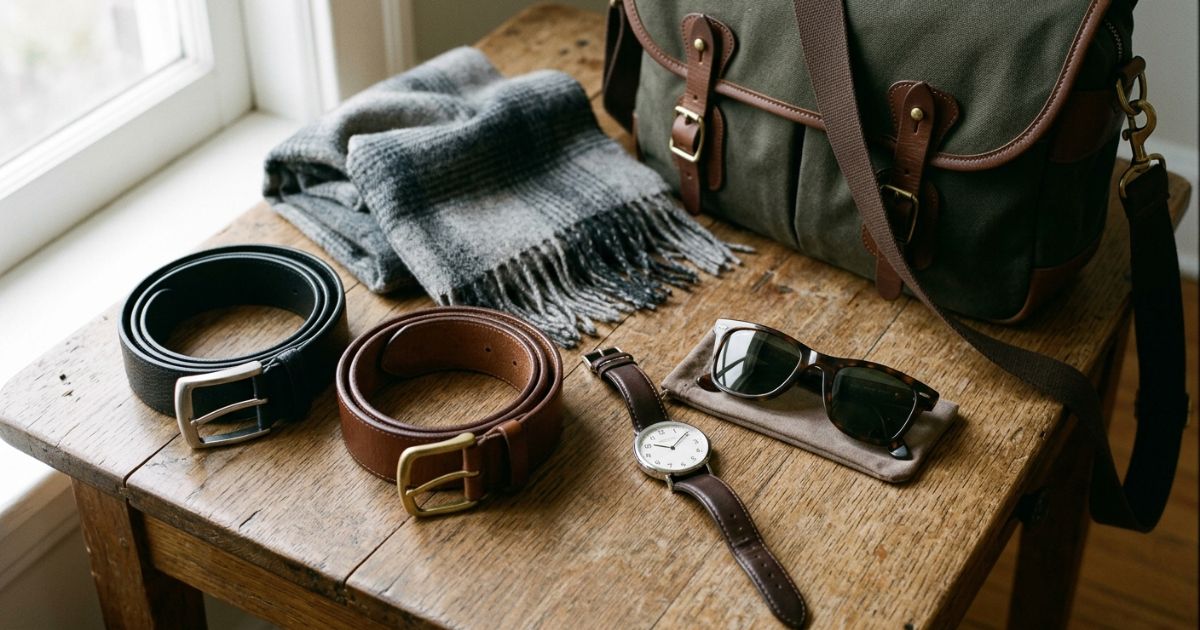
2× Leather belts – One black, one brown. Match to your shoes.

• 1× Watch – Simple, clean dial. Works across occasions.

• 1× Leather or canvas bag – Backpack or tote for daily use.

• 1× Scarf(four-season climates) – Wool or cashmere. Adds warmth and sharpness.

• 1× Sunglasses – Classic frame. Replace only when damaged.

What to Invest In vs. What You Can Buy Cheap

Not everything needs to be premium. The key is knowing where quality actually matters and where affordable options perform just as well.

Item

Buy Cheap?

Why

Mid-range

Organic cotton basics aren’t expensive but rock-bottom tees pill and fade fast

Secondhand is ideal

Denim only improves with age. Secondhand is genuinely the most eco choice

Mid-range

Cheap chinos look cheap fast. Organic cotton chinos hold shape and color far longer

Invest

Quality leather boots last 10–15 years with basic care. Cheap boots last 1–2

Invest

Your coat defines your winter look. A good wool overcoat outlasts 5 cheap alternatives

Mid or secondhand

A well-cut blazer secondhand (tailored to fit) beats a cheap new one every time

Invest (in quality, not designer)

Daily wear against skin  organic cotton matters most here. Cheap synthetics cause irritation and wear out fast

Mid-range to secondhand

Canvas or leather both work. Avoid ultra-cheap they go yellow fast

Sustainable Capsule Wardrobe Budget Breakdown (3 Tiers)

“Sustainable fashion is too expensive” this is the most common objection, and it’s partly true. But only if you try to buy everything new and premium at once. Here’s a realistic breakdown of what building your wardrobe actually costs across three approaches.

🌿 Budget Tier

~$350–500

• Mix of secondhand + affordable eco brands

• T-shirts: Pact ($25–35 ea.)

• Jeans: Thrifted ($15–40)

• Chinos: Uniqlo or sales (~$40)

• Blazer: Charity shop + tailor ($30–80)

• Boots: Thursday Boots (~$200)

• Sneakers: Secondhand Veja or canvas (~$40)

• Best for: students, those starting fresh

⚖️ Mid-Range Tier

~$800–1,400

• Quality eco brands, selective investments

• T-shirts: Colorful Standard or Everlane (~$45)

• Jeans: Nudie Jeans or Outerknown (~$180)

• Chinos: Outerknown or Patagonia (~$89)

• Blazer: Reiss or sustainable mid-range (~$300)

• Boots: Thursday or Blundstone (~$250)

• Sneakers: Veja (~$140)

• Best for: building over 6–12 months

🏆 Investment Tier

~$2,000–3,000+

• Heirloom quality, made-to-last pieces

• T-shirts: Sunspel or ASKET ($65–90)

• Jeans: Raleigh Denim or A.P.C. (~$300)

• Chinos: LESTRANGE or Sunspel (~$200)

• Blazer: Made-to-measure or heritage brand

• Boots: Red Wing or Tricker’s (~$400+)

• Sneakers: Common Projects (~$450)

• Best for: buy once, never replace

✦ The Smart Strategy

Most men should start at the Budget Tier for casual basics (tees, jeans) and Mid-Range for investment pieces (boots, outerwear). You don’t need to spend $3,000 to build a genuinely sustainable wardrobe. You need to spend intentionally.

The Secondhand Option: The Most Sustainable (and Underrated) Path

Here is something almost no capsule wardrobe guide will tell you: the most sustainable piece of clothing is one that already exists.

Buying secondhand extends the life of a garment, avoids new production entirely, and in most cases cuts the cost by 60–80%. For men’s clothing specifically, the secondhand market is excellent – men’s wardrobes turn over more slowly than women’s, so the quality is often much better.

What to Always Buy Secondhand

  1. Denim jeans – already broken in, already washed, already at peak comfort
  2. Blazers and sport coats – often barely worn, can be tailored to fit for $30–50
  3. Wool overcoats – vintage coats often use heavier, better-quality wool than modern equivalents
  4. Leather boots and shoes – good leather only improves with age; quality construction is easier to spot used
  5. Chinos and trousers – check for fade and wear at thighs/knees; otherwise excellent secondhand buys

What to Buy New

  1. Underwear and socks – hygiene, always new
  2. Base layers and merino tees – pilling and wear is harder to assess secondhand
  3. Shoes for long-term daily wear – the insole moulds to the previous owner’s foot; fine for occasional use, not ideal for primary daily shoes

Platform

Best For

Price Range

Specific brands, vintage pieces, designer

Low–High

Younger / trend-aware sellers; vintage and streetwear

Low–Mid

Wide selection; good for basics and smart-casual

Low–Mid

Curated basics; condition-graded

Very Low–Mid

Authenticated luxury and designer pieces

Mid–High

Best value; best for spontaneous finds

Very Low

12 Outfit Combination Formulas (From Your Capsule Wardrobe)

Here is the proof that 30 pieces is more than enough. These 12 outfit formulas are built entirely from the checklist above – and they only scratch the surface of what’s possible. If still confused, try Dress Code Decoder and gain your confidence.

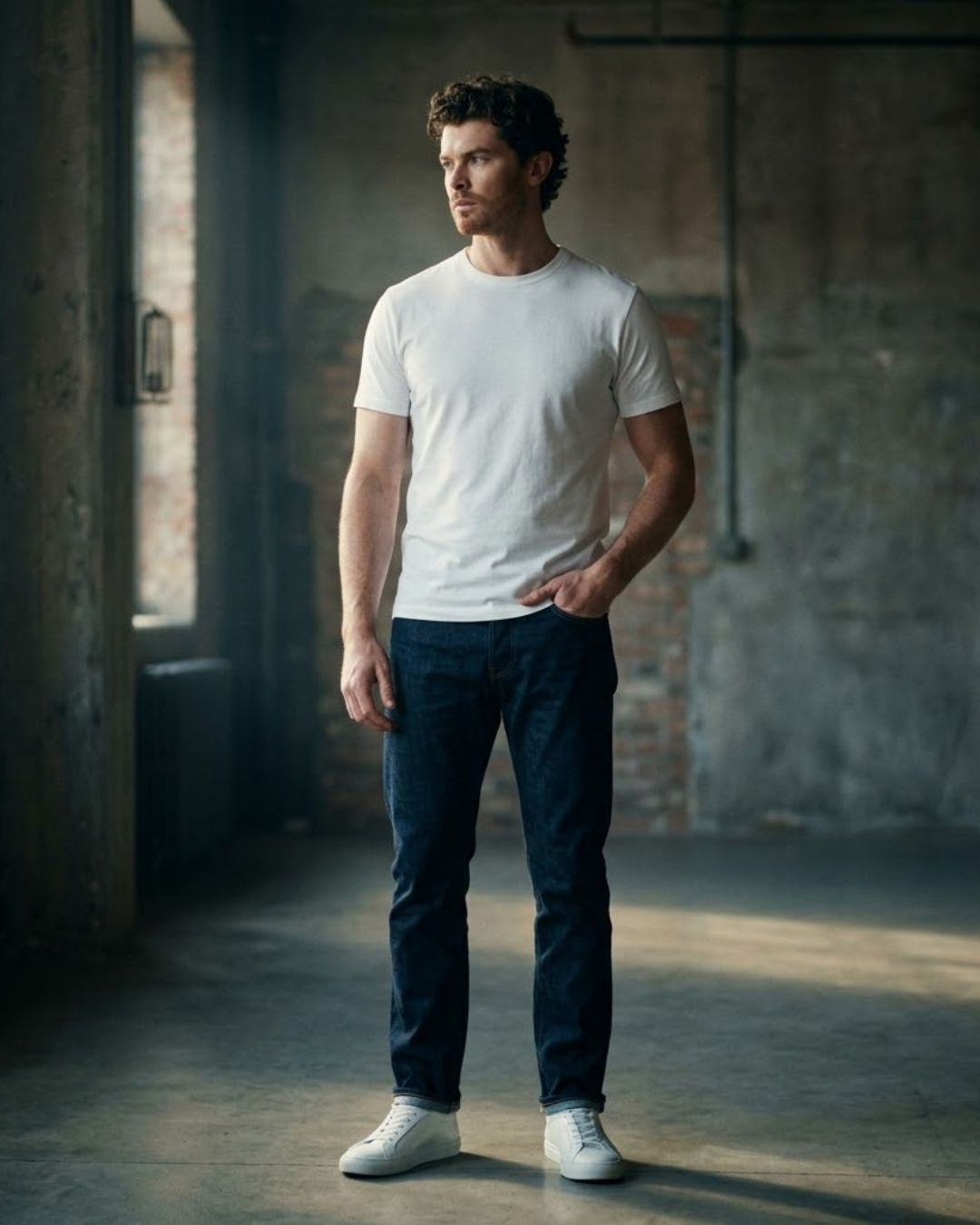
01 - The Effortless Casual

White organic cotton tee + dark indigo jeans + white leather sneakers

02 - Smart Casual Done Right

Navy polo + khaki chinos + brown leather Chelsea boots + minimal watch
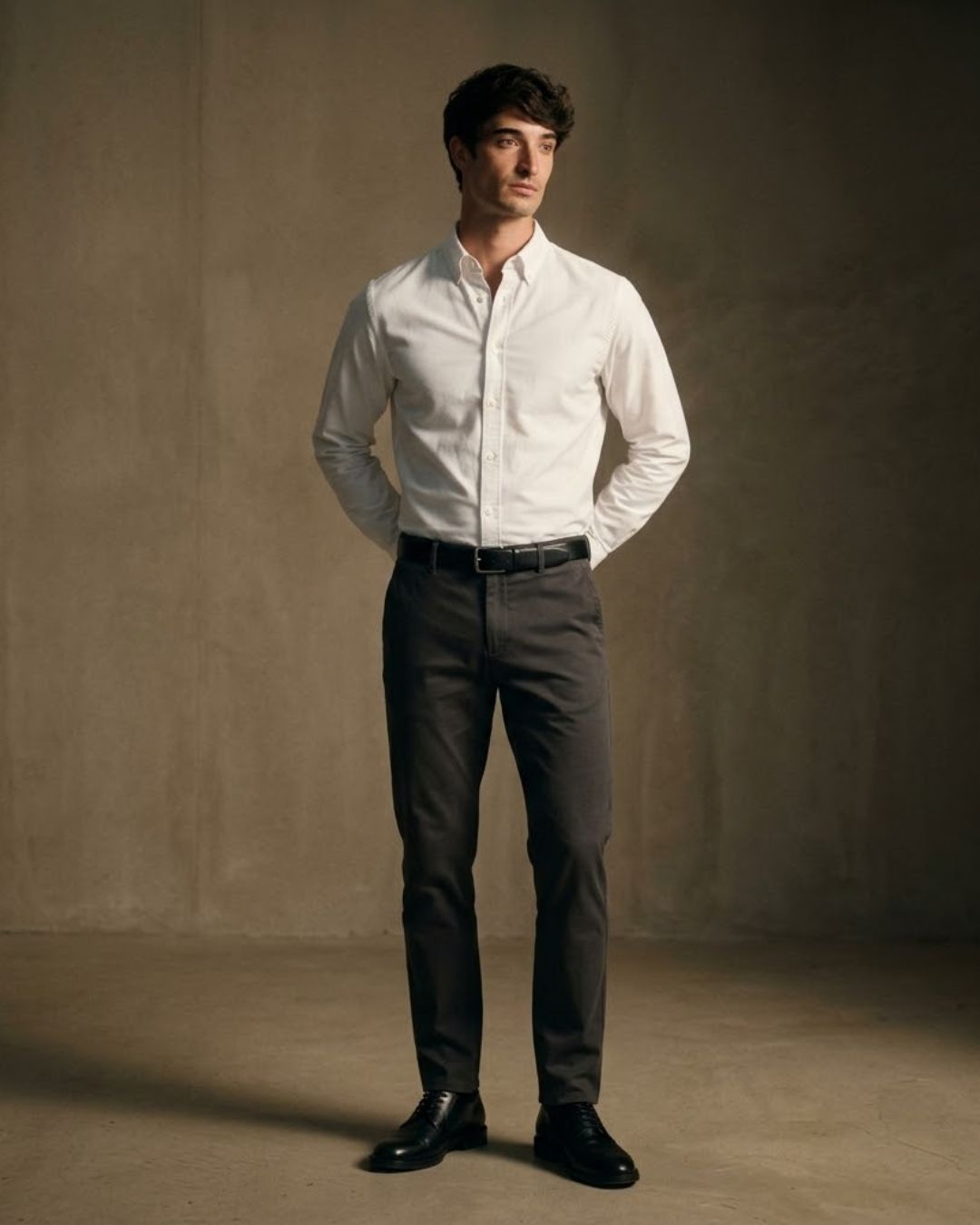
03 - Business Casual, No Tie

03 - Business Casual, No Tie

White Oxford button-down (tucked) + charcoal chinos + black Derby shoes + black belt

04 - The Weekend Elevated

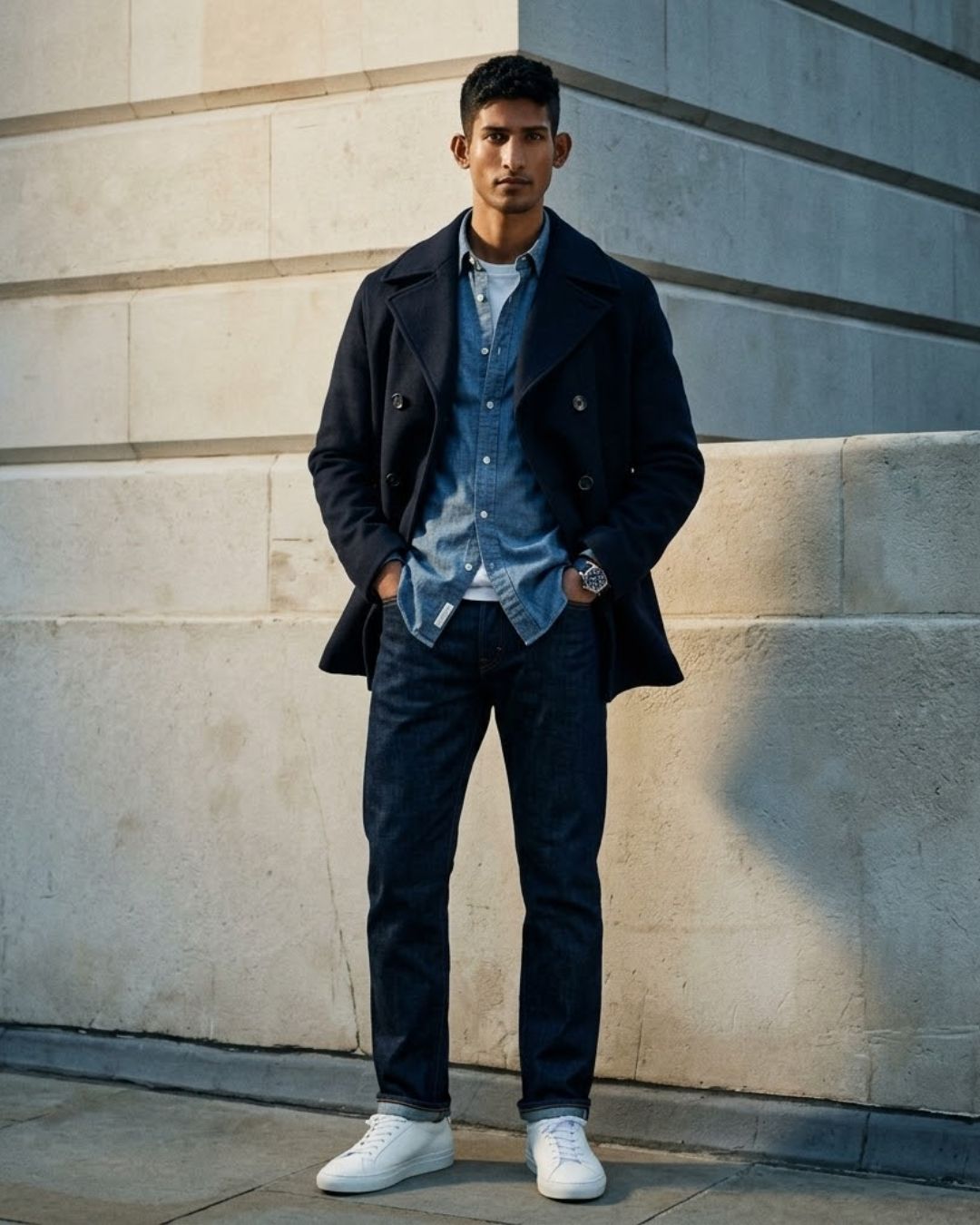
Chambray shirt (untucked) + dark jeans + white sneakers + casual watch

05 - Layered Smart-Casual

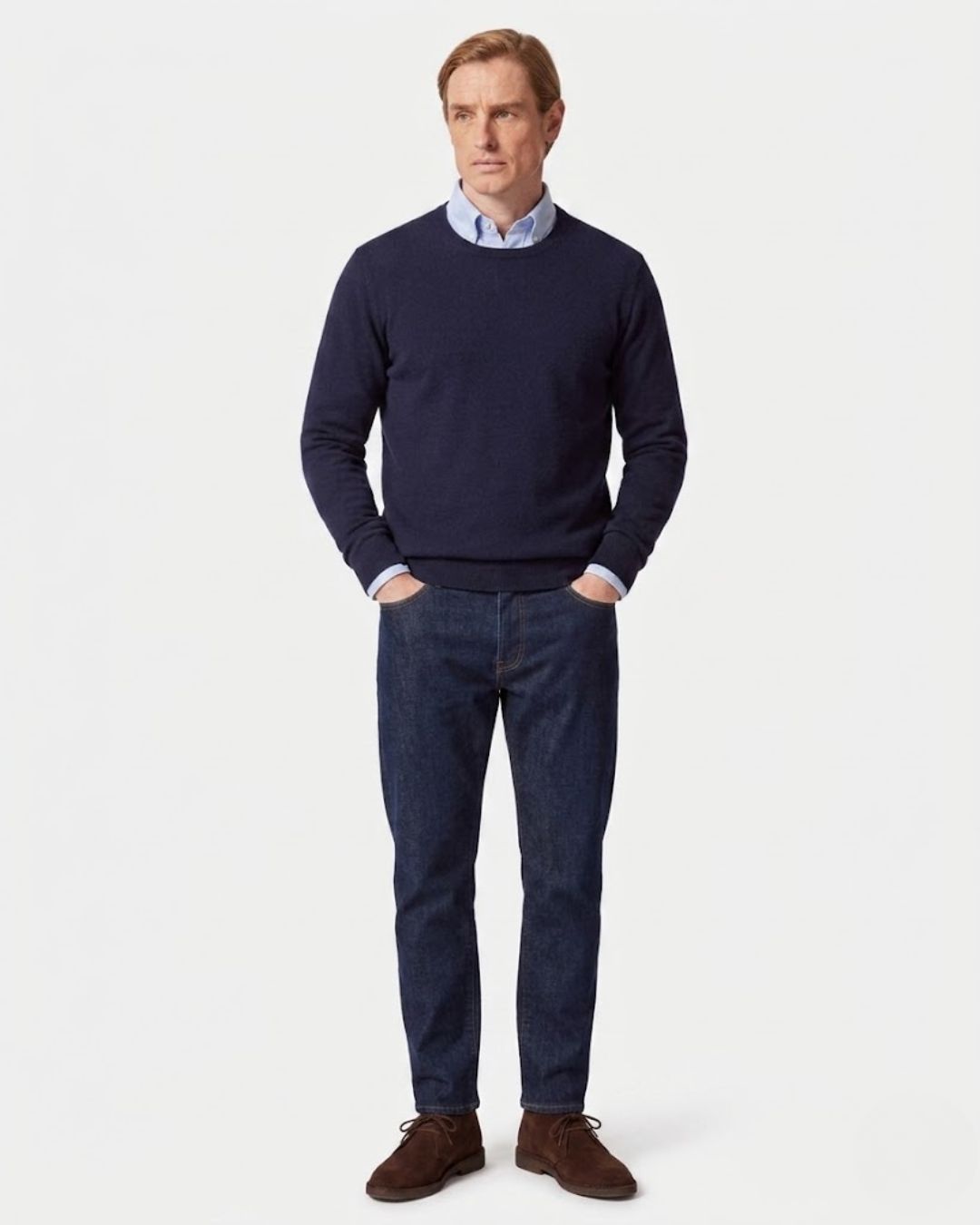
Navy crewneck merino sweater + light blue Oxford shirt underneath (collar showing) + dark jeans + brown chukka boots

06 - The City Sharp

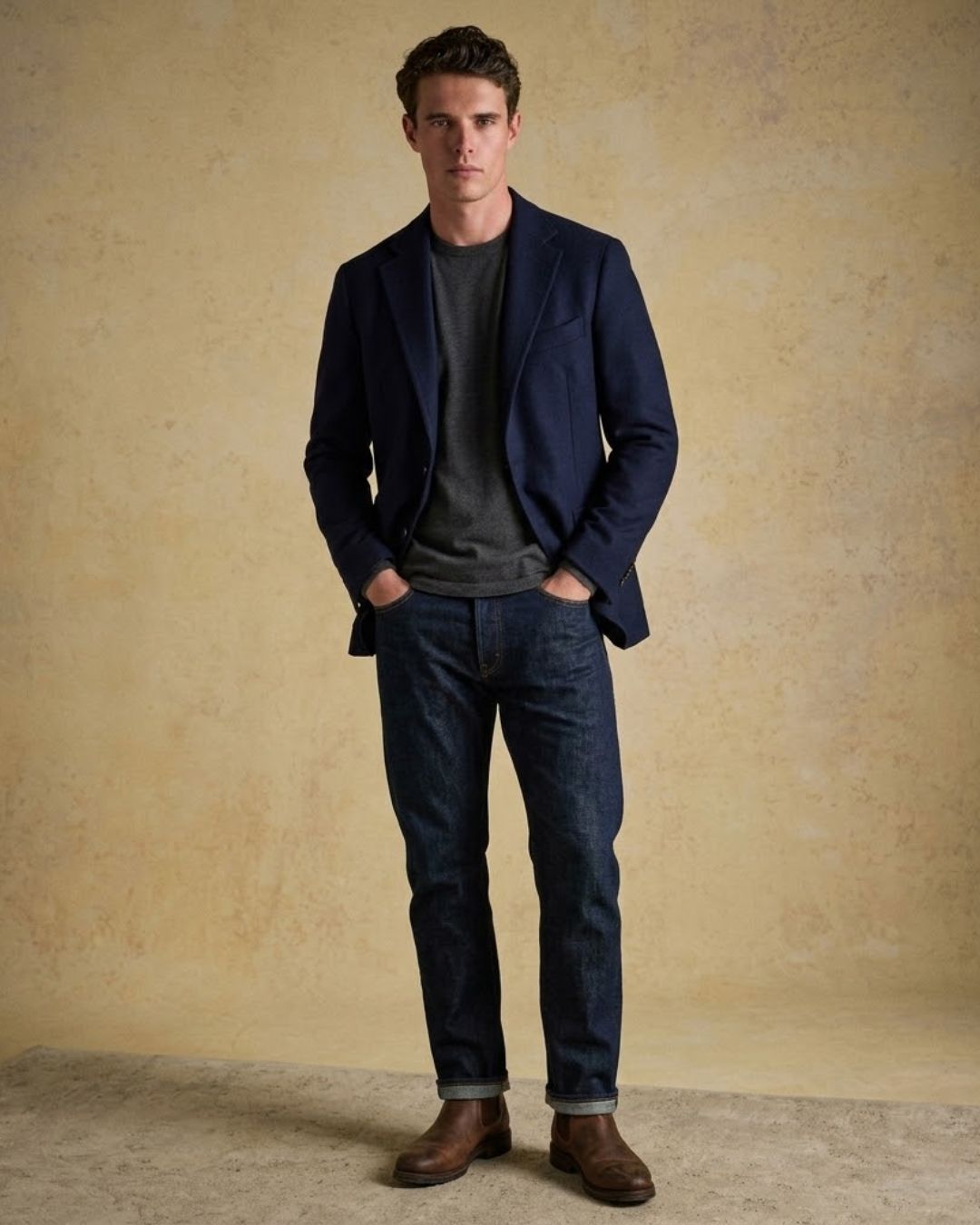
Navy blazer + charcoal tee + dark jeans + brown leather boots

07 - Full Business

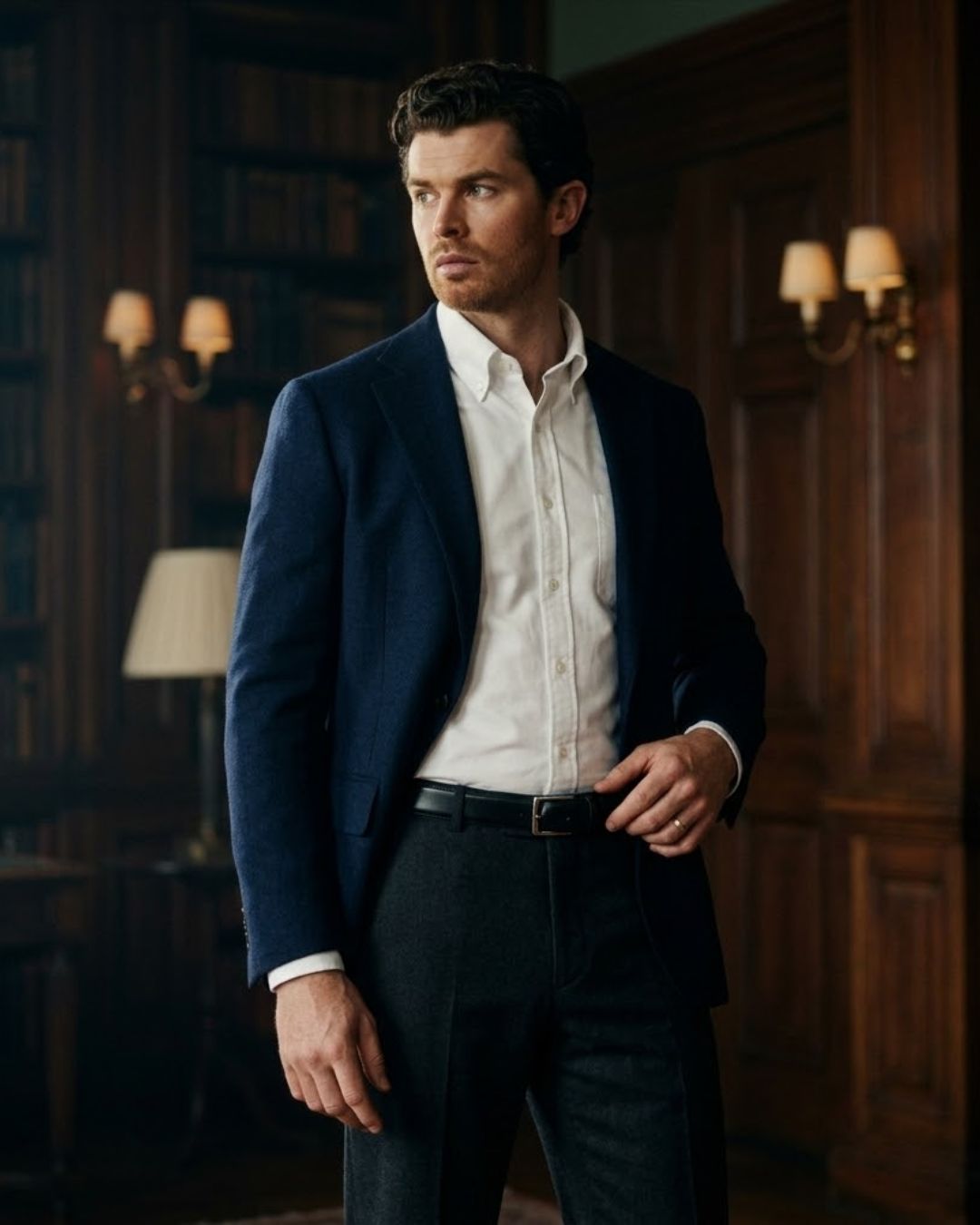
Wool charcoal trousers + white Oxford shirt + navy blazer + black Derby shoes + black leather belt

08 - The Autumn Layer

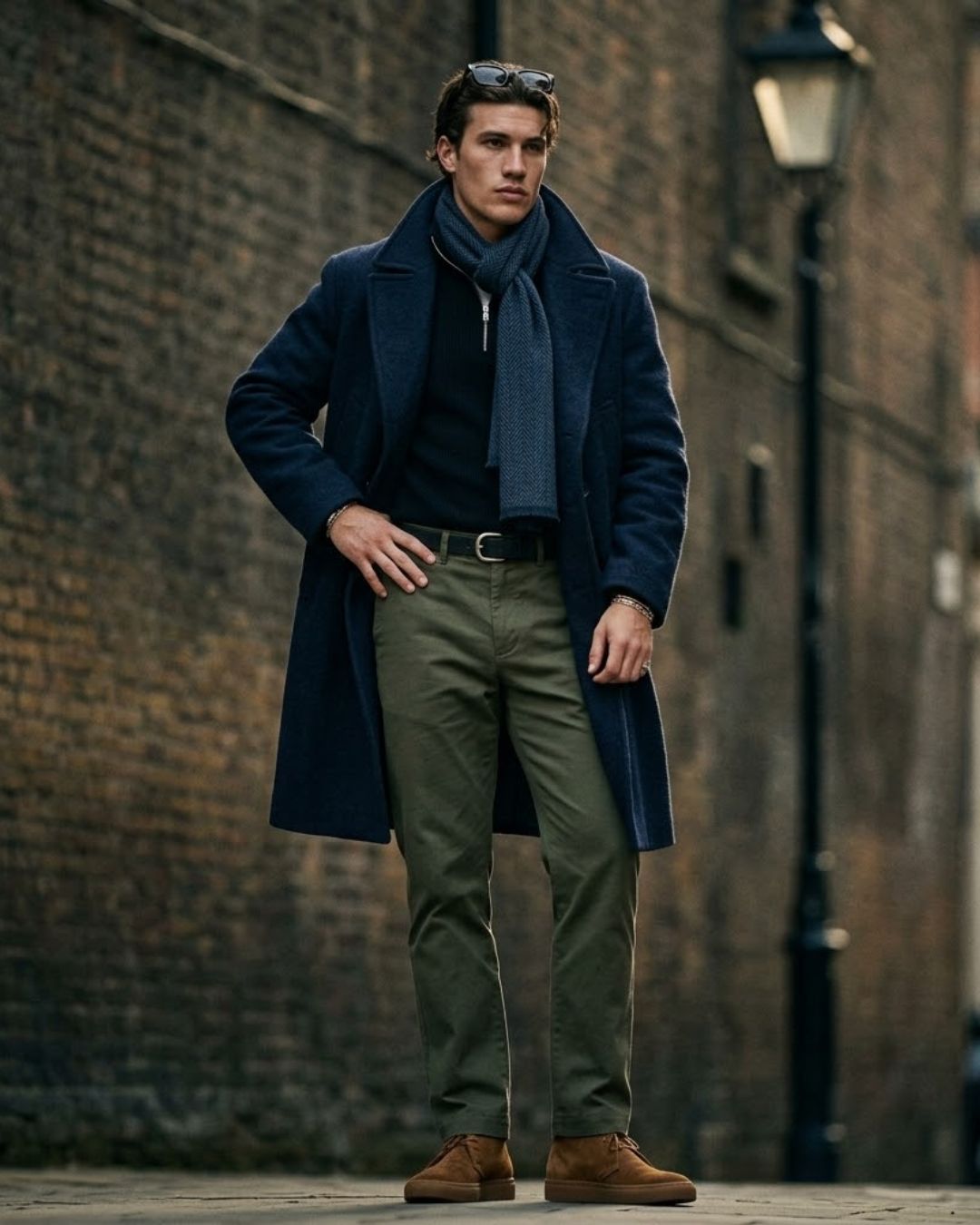
Wool overcoat (navy) + quarter-zip sweater + chinos + chukka boots + wool scarf

09 - Warm Weather Casual

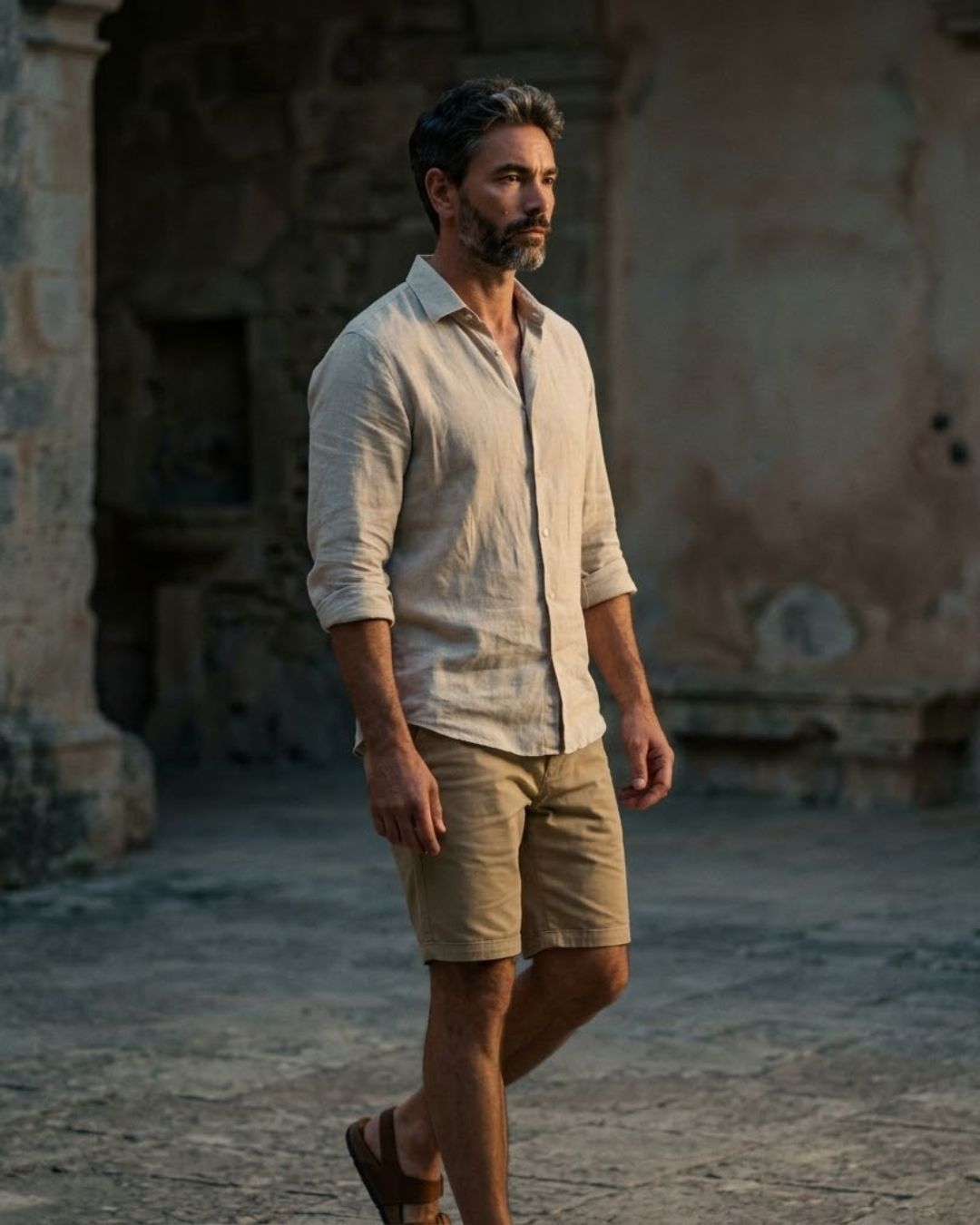
Linen shirt (open collar) + khaki chino shorts + loafers or sandals

10 - Travel Ready

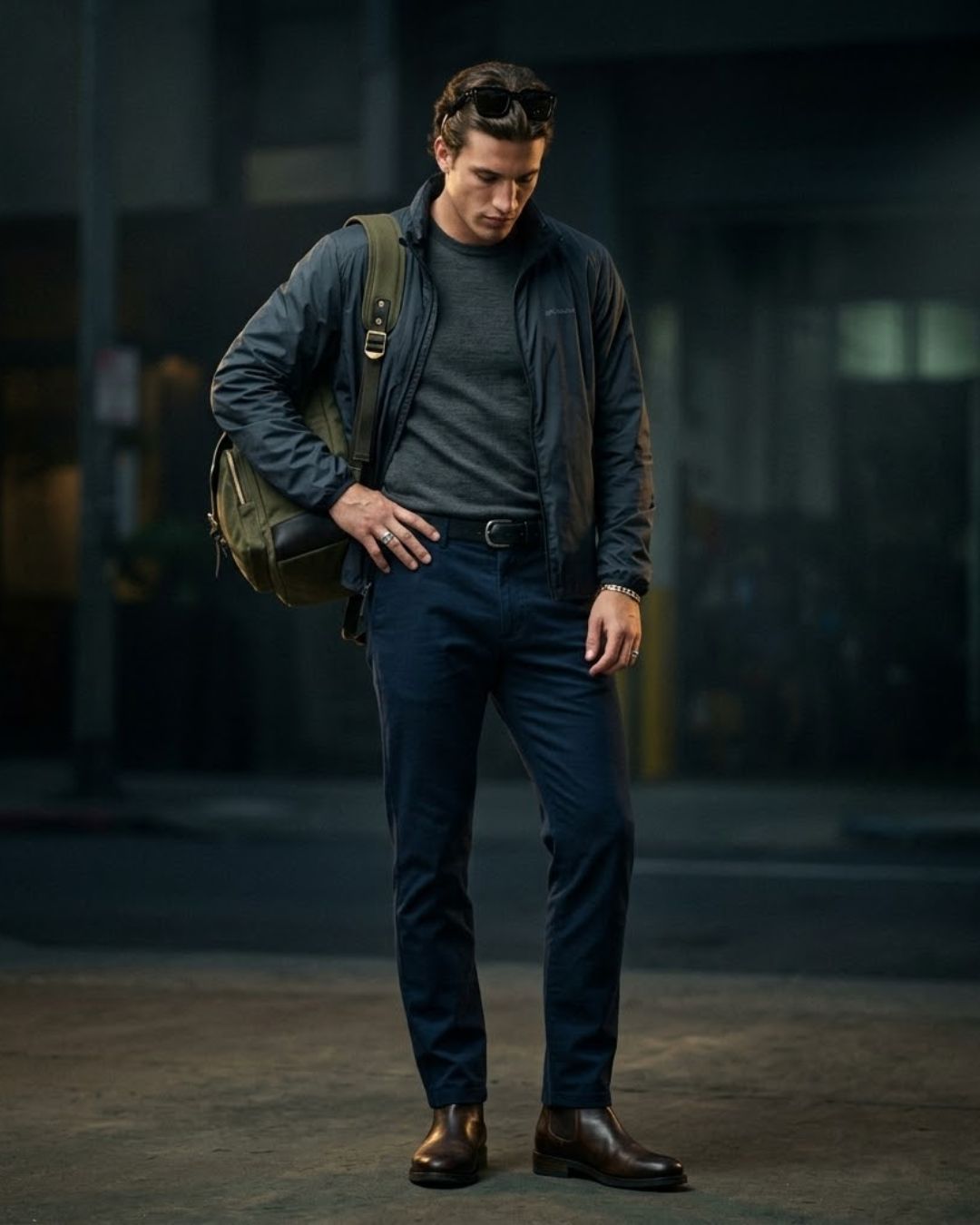
Merino tee + dark chinos + packable jacket + Chelsea boots + canvas backpack

11 - Work From Home, Presentable

Navy polo or crewneck sweater + dark jeans + white sneakers (video call ready from waist up)

12 - Evening Out

Charcoal crewneck sweater + dark chinos + brown leather boots + leather watch

Seasonal Rotation: How to Adapt Your Capsule Year-Round

A capsule wardrobe doesn’t mean wearing the same things in July and December. It means having a system that adapts with the seasons without a total overhaul every few months or Try Style Score and get to know about your outfits.

Spring & Summer Approach

  1. Store heavy knits, wool pieces, and heavy outerwear
  2. Bring forward linen and chambray shirts, shorts, lighter chinos
  3. Shift to canvas sneakers and sandals as primary footwear
  4. Colours can lighten slightly – off-white, sand, sage green work well in summer
  5. Packable jacket stays in rotation for cool evenings and air-conditioned offices

Autumn & Winter Approach

  1. Bring forward wool overcoat, heavy knits, quarter-zip, and flannel pieces
  2. Dark wash jeans earn their keep – darker tones read as smarter in cold months
  3. Layer systematically: tee → shirt → sweater → coat. Each layer should work independently too.
  4. Boots become primary footwear. Sneakers move to secondary.
  5. Add a wool scarf – it transforms even a casual outfit in winter

💡 The Capsule Transition Rule

When moving between seasons, only swap out pieces your climate genuinely requires. Men in mild climates may only need 3–4 seasonal swaps. Men in four-season climates may rotate 8–10 pieces. The core wardrobe – the 20 pieces that work year-round – stays constant.

Customize by Lifestyle: WFH, Office, or Travel

A capsule wardrobe isn’t one-size-fits-all. Here’s how to tailor the system to how you actually live.

For the Work-From-Home or Hybrid Man

Your wardrobe needs fewer formal pieces and more “presentable casual” pieces – things you’d wear on a video call without feeling overdressed when you step out to grab coffee.

  1. Prioritize: polos, crewneck sweaters, dark jeans, clean sneakers
  2. Reduce: formal shirts, dress shoes, wool trousers
  3. Keep 1 blazer and 1 pair of dress shoes for in-person meetings or events
  4. Comfortable but structured – chinos beat joggers for looking polished on calls

For the Office Professional

Your wardrobe skews smarter but still benefits enormously from a capsule system – fewer decisions in the morning = better mental energy at work.

  1. Prioritize: Oxford shirts, chinos, wool trousers, blazer, dress shoes
  2. Keep casual pieces minimal – enough for 2 days of weekend wear
  3. Invest most heavily in outerwear (your coat is what everyone sees)
  4. Maintain your shoes regularly – polished shoes elevate any office outfit

For the Frequent Traveller

You need a wardrobe that packs well, works across contexts, and doesn’t require special care on the road.

  1. Prioritize: merino wool (odor-resistant, temperature-regulating, wrinkle-resistant), dark chinos, Chelsea boots (smart enough for dinner, practical enough for walking)
  2. Linen and Tencel shirts pack flat and recover from a suitcase quickly
  3. A packable jacket is non-negotiable for travel
  4. White sneakers + Chelsea boots covers 95% of travel footwear needs
  5. One blazer covers formal to smart-casual with a simple shirt swap underneath

Your 90-Day Transition Plan: From Fast Fashion to Sustainable Capsule Wardrobe

The biggest reason men don’t act on this is overwhelm. A closet full of fast-fashion clothes, a limited budget, and a list of 30 sustainable pieces to buy – it feels like too much to do at once.

It isn’t. Here’s how to do it over 90 days without financial shock or wasted decisions.

Week 1–2: The Audit (Free)

Do the full closet audit from Step 1. Keep what works, donate what doesn’t, recycle what can’t be worn. Map your genuine gaps – write a list. Don’t buy yet. Just get clear.

Week 3–4: Fill Basics First (Budget: $60–120)

Replace the items you wear every day first – t-shirts and underwear. These are your most-used items and the easiest to replace with organic alternatives without breaking the bank. Order 3 organic tees and a pack of organic cotton underwear. Done.

Month 2: Bottoms and Shirts (Budget: $100–200)

Hit the secondhand market for jeans and a blazer. Buy one pair of quality chinos (mid-range). Add an Oxford shirt if you need one. Focus on pieces that fill the largest gaps in your audit. Use the outfit formulas to verify each purchase works with what you already own.

Month 3: Investment Pieces (Budget: $200–350)

This is when you invest in footwear and outerwear – the highest-cost, highest-impact purchases. Buy one pair of quality leather boots. If your outerwear is genuinely poor, prioritize replacing it here. These pieces define your look more than anything else.

Ongoing: The One-In-One-Out Rule

From month 4 onwards, maintain the system with a simple rule: nothing new enters the wardrobe without something leaving it. This prevents drift back toward clutter and keeps your wardrobe a living, intentional system – not a static collection.

Common Capsule Wardrobe Mistakes to Avoid

  1. Buying everything at once. You’ll make worse decisions under pressure and spend more than necessary. Build gradually.
  2. Ignoring fit. A $30 shirt that fits perfectly looks better than a $200 shirt that doesn’t. Get basics tailored – it costs less than you think and makes an enormous difference.
  3. Starting with bold or trendy pieces. Trends feel exciting, then feel dated. Start with neutrals. Add personality later.
  4. Skipping the closet audit. You almost certainly own more usable pieces than you think. Audit first, buy second.
  5. Buying “sustainable” labels without checking certifications. Greenwashing is rampant. Use the certification decoder in this guide. Vague words mean nothing; GOTS and OEKO-TEX mean something.
  6. Not considering your actual lifestyle. A wardrobe built around formal office wear doesn’t work if you work from home three days a week. Build for your real life, not an aspirational one.
  7. Neglecting care. The most expensive mistake you can make is buying quality clothes and then washing them incorrectly. The care guide above takes 5 minutes to read and adds years to every garment.

FAQs

Most men do well with 28–35 pieces, not counting underwear, socks, and accessories. If you live in a four-season climate, aim toward 35. If you’re in a mild or warm climate year-round, 25–28 is enough. The exact number matters less than the quality and versatility of each piece.
 
Upfront, individual pieces cost more. Over time, a sustainable capsule wardrobe is almost always cheaper. You replace items far less frequently, you stop buying things you don’t wear, and you avoid the slow drain of constant fast-fashion shopping. The budget tier in this guide shows you can start building a solid sustainable wardrobe for $350–500 — less than most men spend on random clothing purchases in a year.
 
Organic cotton and merino wool are the best all-round options for a men’s capsule wardrobe. Organic cotton is ideal for everyday basics and is GOTS-certifiable. Merino wool is exceptional for pieces you want to wear repeatedly with minimal washing – it’s temperature-regulating, naturally odor-resistant, and fully biodegradable. Tencel and hemp are excellent secondary options.
 
 
Almost entirely – yes. Jeans, blazers, wool coats, boots, chinos, and even leather accessories are excellent secondhand purchases. The only items worth buying new are underwear, socks, and base layers where hygiene matters. A primarily secondhand capsule wardrobe at the budget tier costs $200–350 and has a near-zero carbon footprint for production.
 
Look past marketing language and straight to certifications on the product itself. GOTS, OEKO-TEX, Fair Trade, bluesign, and RWS are independently verified – they can’t be claimed without third-party auditing. Additionally, check if the brand is transparent about its supply chain on its website. Good On You (goodonyou.eco) is an independent rating platform that assesses brands honestly across environment, labour, and animal welfare criteria.
 
No – and this is one of the most common misconceptions. The outfit formula section above shows 12 distinct looks from the same 30 pieces — and these are just the starting combinations. The secret is that neutral, well-fitting, quality clothes look consistently sharp regardless of repetition. The men who get complimented most often are not the ones with the most variety. They’re the ones who always look put-together.
 
The 90-day transition plan in this guide is realistic for most men. That said, there’s no deadline. Many men build their ideal wardrobe over 6–12 months, replacing pieces gradually as budget allows. The important thing is to start intentionally rather than randomly — audit first, identify genuine gaps, and fill them deliberately rather than reactively.

Final Thoughts: Buy Less, Choose Well, Make It Last

The point of a sustainable capsule wardrobe isn’t deprivation. It’s clarity. When your closet only contains pieces you genuinely wear, that fit well, and are built from materials that last – getting dressed stops being a source of stress and starts being almost effortless.

You don’t need 80 items to dress well. You need the right 30 — chosen intentionally, cared for properly, and built around how you actually live. That’s it.

Start with the closet audit. Pick your colour foundation. Replace the highest-wear basics first. Build from there. The 90-day plan works if you follow it. The outfit formulas work if you trust them.

The most sustainable wardrobe you can own is one you never need to replace.

Ali Taimour

Ali Taimour

Founder and Editor of Trendy Enthusiast. Ali covers men's fashion, lifestyle, grooming, and the art of dining well - blending real experience with practical insight.

Connect on Instagram
Shopping Basket