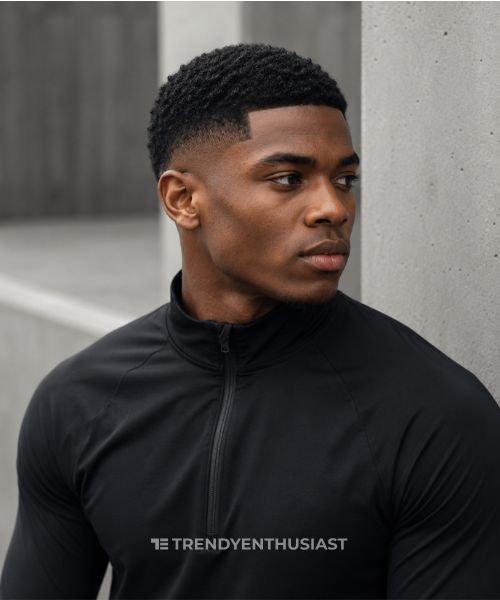
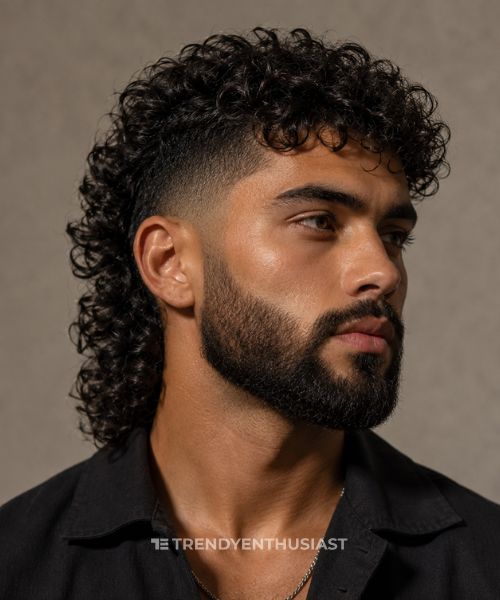
Most men approach grooming the way they approach filling the car with petrol — something you do when you absolutely have to, not something you think about with any real intention. The result is a grooming routine built entirely from habit and convenience rather than from understanding what’s actually happening to your hair, skin, and beard, and why the products and habits most men default to are often making things measurably worse.
This men’s grooming guide is the complete picture. Not a product roundup, not a list of tips that assume you already know the underlying principles — an explanation of how the male grooming system actually works, from the biology of why your hair gets oily faster than you expect, to the haircut decisions that require knowing your face shape before you sit in the barber’s chair, to the fragrance choices that make the difference between a scent that’s gone by noon and one that’s still present twelve hours later. Where a specific topic has its own full-length breakdown, this guide links to it directly. The goal is a single entry point to everything that belongs under The Groomed Man — structured so you can start wherever your immediate situation calls for, and find the rest when you need it.
The word “routine” implies repetition without necessarily implying understanding. A man can have a grooming routine — washing his hair every morning, applying whatever product is in the bathroom cabinet, shaving or trimming on a fixed schedule — and still be making fundamental errors in each of those steps, because no one has ever explained the mechanisms behind them.
Male grooming is distinct from general grooming advice in one critical way: male physiology drives significantly different conditions than the advice written for a general or mixed-gender audience accounts for. The androgen receptors in the male scalp are more numerous and more sensitive to DHT — dihydrotestosterone, the more potent derivative of testosterone — than in women. This directly upregulates sebaceous gland activity, which is why men produce more scalp oil per follicle, experience faster beard growth, and are more susceptible to certain kinds of skin congestion. Understanding this distinction is the starting point for understanding why most generic grooming advice doesn’t work particularly well for men.
A grooming system, as opposed to a routine, accounts for these mechanisms. It means washing hair at a frequency that works with the scalp’s sebum regulation cycle rather than against it. It means choosing beard products for what they actually do chemically, not for how the packaging reads. It means selecting a haircut that works with your face shape and hair texture rather than one you saw on someone whose proportions are nothing like yours. And it means choosing a fragrance based on how your specific skin chemistry interacts with different scent families, not just which bottle you liked the smell of in the shop.
What follows covers each of these systems in turn.
This is the grooming error most men are making most consistently, and it’s worth addressing before anything about haircuts or styling, because it affects both.
The sebaceous glands in your scalp operate on a feedback loop. When you shampoo — particularly with sulphate-based shampoos, which are the standard formulation in most supermarket and high-street products — you strip the scalp of nearly all surface sebum. The glands detect this deficit and respond by increasing output to restore baseline levels. In men, where androgen sensitivity is high, this rebound is fast and aggressive. Wash every morning and your scalp produces oil at a higher rate than it would if you washed every other day or every two days.
The practical outcome is a man caught in a cycle of his own creation: greasy by noon, so he washes every morning, which guarantees it will be greasy by noon again. Breaking this cycle requires deliberately reducing wash frequency and tolerating a two-to-three-week adjustment period while the sebaceous glands recalibrate to a lower baseline output. The full reset protocol — including which shampoo ingredients support recalibration and which ones (sulphates, silicones) actively undermine it — is covered in How to Get Rid of Oily Hair Men.
The most common mistake men make when choosing a haircut is choosing the style before accounting for face shape. A haircut that looks sharp on one man can look actively wrong on another, and the variable isn’t the skill of the barber — it’s whether the cut’s proportions work with the face’s proportions.
The general principle: haircuts create visual mass. Where that mass sits — high on top, close to the sides, graduated at different points — either complements your facial structure or fights it. A high-volume quiff adds length to a round face, which works. The same quiff on an already long face pushes the proportions further in a direction they don’t need to go.
The five haircuts with their own full breakdowns in this cluster cover the complete range of contemporary men’s cuts:
The quiff is one of the most versatile cuts in men’s grooming — but most men pick the wrong version of it for their face shape, defaulting to whatever version they saw most recently rather than the one that actually suits their proportions. The full breakdown of classic versus textured versus high quiff, including which face shapes each version works for and which products actually hold each version through the day, is in The Quiff Hairstyle: Most Men Pick the Wrong Version for Their Face.
The taper is the most widely requested haircut in UK barbershops, and also the most frequently misunderstood — specifically the distinction between low, mid, and high taper, which aren’t just stylistic preferences but decisions with meaningful consequences for how the overall cut sits relative to your face and head shape. The practical differences between all three, and which works for which face shape and lifestyle, are in Low Taper vs Mid Taper vs High Taper: The Differences That Actually Matter.
The temple fade is a more specific and technically demanding cut — the precision of the fade line at the temples is what makes or breaks it, and it requires a barber who understands the technique rather than someone approximating it. The full technique breakdown, including what to actually tell the barber to ensure the result is what you’re asking for, is in Mastering the Temple Fade Haircut.
The messy haircut is the most misunderstood cut in men’s styling, because the word “messy” implies it requires no effort or intention — which is exactly wrong. A genuinely good messy haircut is controlled disorder: specific length, specific texture, specific product application technique. The distinction between intentionally undone and actually unkempt, and how to achieve the former consistently, is covered in Messy Haircut Men: The Art of Looking Undone on Purpose.
Messy hairstyles more broadly — including textured crops, tousled side parts, and bedhead styles — each suit different hair textures and face shapes, and the choice between them is not arbitrary. The full guide to which version works for your specific hair type and lifestyle is in Mens Messy Hairstyles: Every Style That Works and Exactly Who It Works For.
The modern man’s relationship with his beard has shifted significantly in the last decade — beards are now a genuine style decision rather than an afterthought, which means the products and techniques that support them deserve more than afterthought-level attention.
Beard oil is the most widely owned and most incorrectly used product in men’s grooming. The error is almost universal: men apply it to the surface of the beard hair, work it through from the outside, and wonder why their beard still feels coarse, looks dull, and the skin underneath remains dry and prone to itching.
Beard oil works at the skin level, not primarily at the hair level. The carrier oils — most commonly jojoba, argan, or sweet almond — are designed to penetrate the skin beneath the beard and moisturise it directly, reducing the sebum deficit that causes itching and flaking. Getting oil onto the beard hair itself is a secondary benefit. The technique therefore inverts what most men do: apply to the palms, work down through the beard to the skin first, then distribute outward through the hair. Quantity matters too — more is not better, and the correct amount for most beard lengths is three to five drops, not the generous squeeze most men default to. The full technique including timing (post-shower, not pre-sleep), quantity by beard length, and which carrier oils suit which skin types, is in You’re Probably Using Beard Oil Wrong.
The difference between a beard that reads as intentional and one that reads as unmanaged is almost entirely about the precision of the tool maintaining it. A cheap trimmer with poor blade quality produces uneven lines and variable length that is visible even at conversational distance. A quality trimmer with ceramic or surgical steel blades, consistent motor speed, and a reliable guard system removes that variable entirely.
What to look for in a trimmer, what to avoid, and which specific options at different price points actually deliver on the precision a well-maintained beard requires — UK-specific, 2026-current — is covered in Best Beard Trimmers for Men UK.
Fragrance is the only element of a man’s grooming that precedes him into a room and remains after he leaves it. Everything else in this guide — haircut, beard, skin — requires proximity to register. Fragrance operates at a distance, which is precisely why the choices behind it deserve more consideration than most men give them.
The most common fragrance error is buying a scent entirely based on how it smells in the bottle or on a test strip, without accounting for how it interacts with skin chemistry. Fragrance is a dynamic material — what you smell in the bottle is the top notes, which fade within twenty minutes of application. The scent that remains for the following six to twelve hours is the base notes, and those interact with your body heat, skin pH, and natural oils in ways that are genuinely individual. A fragrance that smells extraordinary on one man can smell chemically flat or unexpectedly sharp on another, because the base is reacting to different skin conditions.
The second error is applying fragrance in the wrong locations or in the wrong quantity. Pulse points — wrists, neck, inner elbow — generate heat that diffuses the scent continuously rather than allowing it to sit static on fabric. Spraying onto clothing instead of skin traps the top notes indefinitely and bypasses the skin-chemistry interaction entirely, which is why clothes sprayed with fragrance often smell different (and usually worse) than fragrance worn on skin.
The third error — and the one most relevant to longevity — is choosing a fragrance concentration that doesn’t match the wearing occasion. Eau de Toilette concentrations (typically 5–15% aromatic compounds) are lighter and shorter-lasting than Eau de Parfum (15–20%) or Parfum (20–30%). A man who complains that his fragrance is gone by mid-afternoon is usually wearing an EDT in a context that calls for an EDP, not a different scent entirely.
The full breakdown of which UK fragrances actually deliver lasting performance across different scent families and price points — including which base notes perform best on different skin types — is in Men’s Fragrances That Actually Last All Day.
The standard this men’s grooming guide cluster holds itself to is simple and worth stating plainly: a man who has done the grooming work correctly should not be thinking about his grooming at all by the time he leaves the house. The haircut is right for his face, maintained at the correct frequency. The beard is kept with a tool precise enough to require no second-guessing. The fragrance was chosen with enough understanding that he knows it works on his specific skin. The scalp is not producing excess oil because the wash frequency and shampoo formulation are working with his biology rather than against it.
That state — of grooming that runs quietly in the background rather than demanding constant attention and correction — is what this guide and the nine posts in this cluster are built to deliver. The entry point is wherever you currently have the biggest gap. The rest compounds from there.
Founder and Editor of Trendy Enthusiast. Ali covers men's fashion, lifestyle, grooming, and the art of dining well - blending real experience with practical insight.
Connect on Instagram