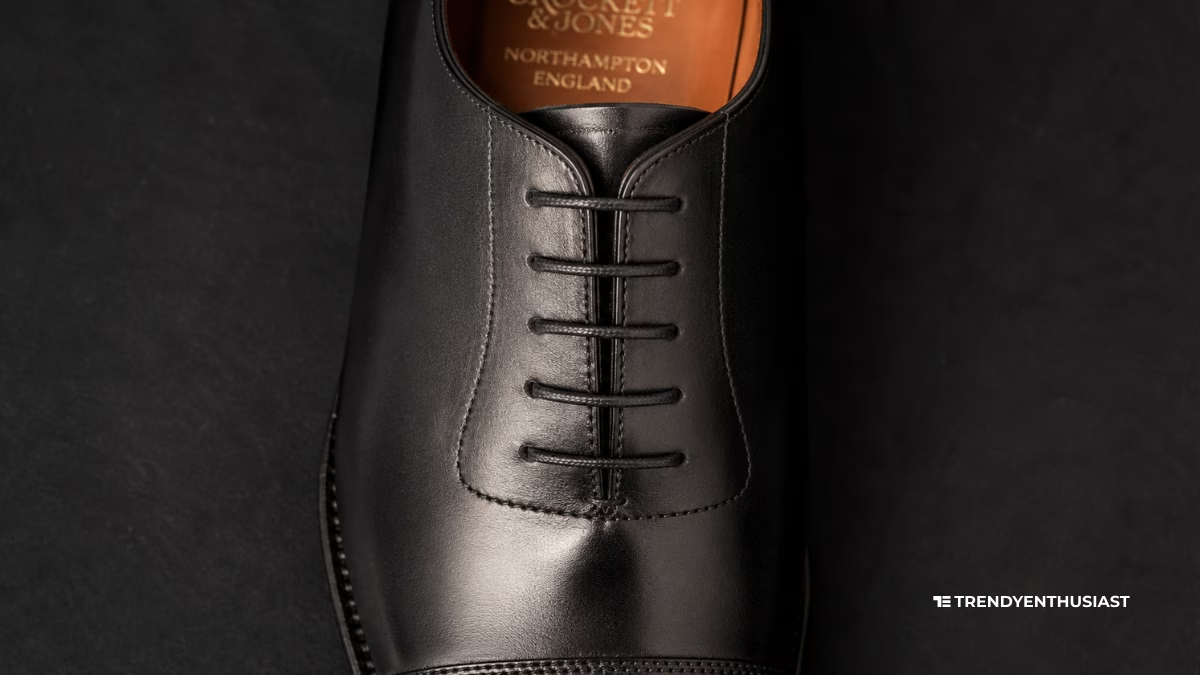
There are three correct ways to lace a pair of dress shoes and each one signals something different about the shoe and the man wearing it. Straight bar lacing is the most formal, used almost exclusively on Oxford shoes where the laced sides are closed and a clean horizontal pattern reads as deliberate and considered.
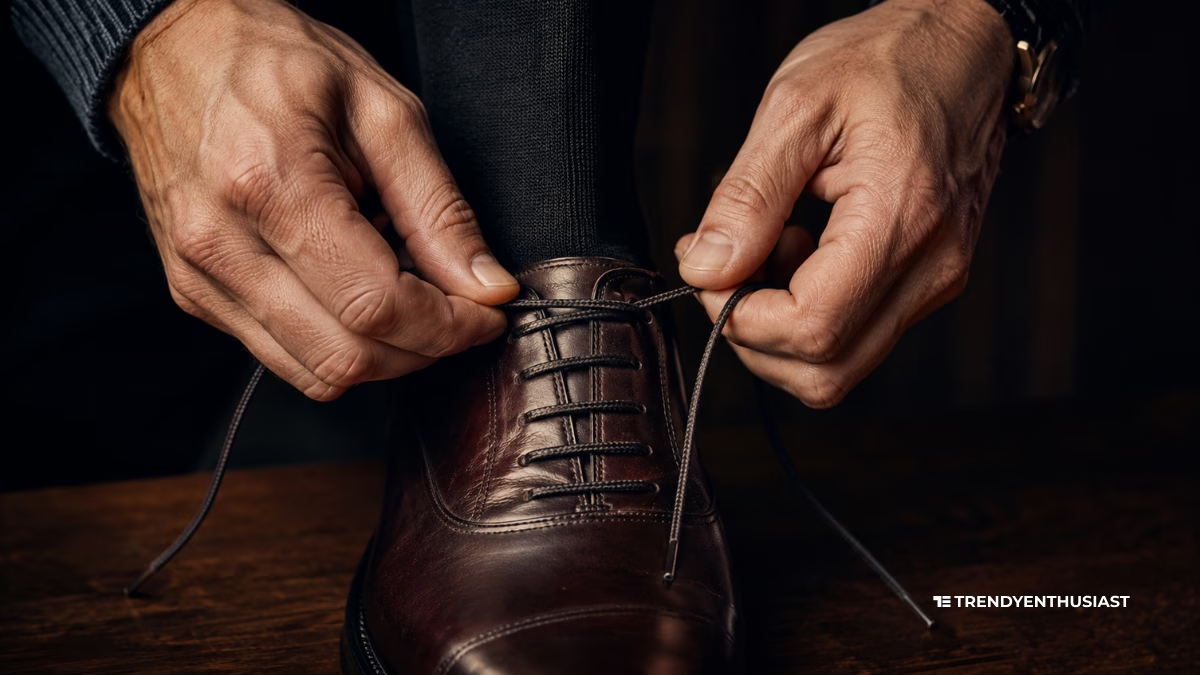
Criss cross is the standard practical lacing used across Oxfords, Derbies, and most dress shoes, and is correct by default when no other signal is needed.
Display lacing creates a diagonal or symmetrical pattern primarily used on shoes with exposed lacing as a quiet style statement rather than a functional requirement.
Why Lacing Technique Is a Real Detail, Not a Triviality
There is a category of menswear detail that separates men who have developed a genuine eye for clothing from men who dress competently without quite arriving at the next level. Lacing technique sits firmly in that category.
The reason it matters is not aesthetic complexity it is signal. A shoe laced with straight bar technique on a formal Oxford communicates, to anyone who recognises it, that the wearer has considered every element of the shoe rather than simply purchasing it and walking out of the shop. It is a quiet, specific signal the kind that the average observer does not consciously register but that a genuinely well-dressed man notices immediately, because he has made the same decision himself.
This is also, practically, one of the easiest high-impact changes available in a man’s wardrobe. Unlike a tailoring adjustment or a new pair of shoes entirely, relacing a pair of dress shoes costs nothing beyond five minutes and, in some cases, a replacement lace.
Understanding the Shoe Before the Lace: Open vs Closed Lacing
Before any lacing method can be chosen correctly, the construction of the shoe itself needs to be understood.
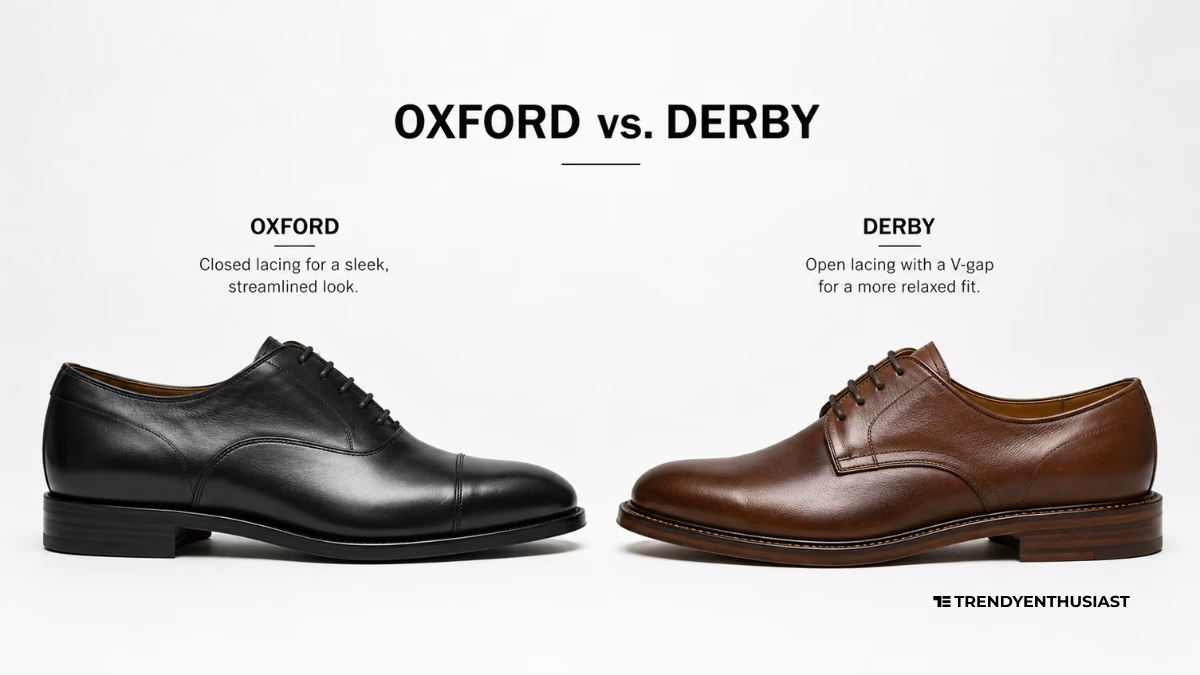
Closed lacing (Oxford construction): The eyelet facings are stitched underneath the vamp of the shoe, meaning the two sides of the lacing close completely flat when tightened, with no gap visible between them. This is the construction of a true Oxford shoe and is the most formal lacing structure in men’s footwear.
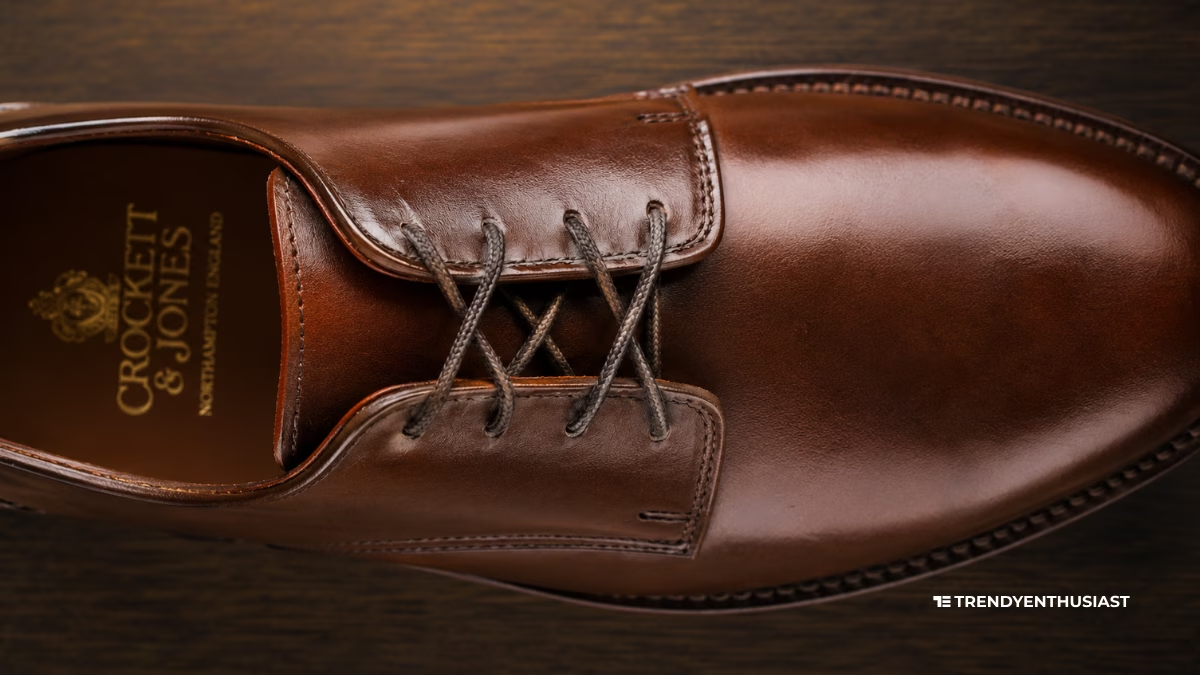
Open lacing (Derby/Blucher construction): The eyelet facings are sewn on top of the vamp as separate pieces, there is always a slight V-shape gap at the top of the lacing even when fully tightened. This is the construction of a Derby or Blucher shoe.
Method 1: Straight Bar Lacing
Straight bar lacing, sometimes called Berluti lacing after the French shoemaker most associated with popularising it, produces a clean series of horizontal bars across the front of the shoe with minimal diagonal crossing visible from above.
Where it belongs: Exclusively on Oxford shoes with closed lacing construction. This is the single most important rule in this entire guide straight bar lacing on an open-laced Derby will not lie correctly and will look like a mistake rather than a deliberate choice. On a true Oxford, it is the most formal lacing option available and is the standard at black tie and the most formal business or ceremonial contexts.
How to execute it:
Start by threading the lace from the back of the bottom two eyelets, so both ends emerge on the top side at the bottom of the shoe.
Take the left end and pass it straight up through the inside of the next eyelet on the left side, so it emerges on the top.
Take that same end and cross it straight across to the corresponding eyelet on the right side, threading it from the top down through the inside.
Repeat: thread up through the inside of the next eyelet on the same side, then straight across to the opposite side, threading down through the inside.
Continue this pattern — up through the inside, straight across, down through the inside, up through the inside on the new side — until you reach the top eyelets.
Tie a standard knot or bow at the top. The result, viewed from above, is a series of clean horizontal lines with the diagonal connecting sections hidden on the underside of the shoe.
Method 2: Criss Cross Lacing
Criss cross lacing is the pattern most dress shoes come pre-laced with from the shop, and for the majority of contexts it remains entirely correct.
Where it belongs: Both Oxford and Derby construction. Business contexts, smart casual contexts, and any formal occasion that does not specifically call for the elevated formality of straight bar lacing. This is the safe, universally appropriate default.
How to execute it:
Thread both ends of the lace through the bottom two eyelets from the back, so both ends emerge on the top at the bottom.
Cross the left end over to the opposite top-side eyelet, one level up, threading from the top down through the inside.
Cross the right end over to the opposite top-side eyelet, one level up, threading from the top down through the inside.
Continue this alternating crossing pattern — left crosses up and over to the right, right crosses up and over to the left — all the way to the top eyelets.
The result is the classic X pattern visible on most dress and casual shoes. It is correct, it is expected, and on a well-fitted, well-maintained shoe it requires no further justification.
Method 3: Display Lacing
Display lacing refers to a category of decorative lacing patterns used on shoes designed to show the lacing as a visual feature.
Shoes with exposed lacing as a design element like certain boots specifically constructed with wider eyelet spacing intended to showcase the lace pattern.
Diagonal ladder:
Thread both ends through the bottom eyelets from the back, emerging on top.
Take the left end and thread it straight up through the inside of the next eyelet on the same side, no crossing yet.
Take that end and cross diagonally to the eyelet one level up on the opposite side, threading from the top down through the inside.
From there, thread straight up the same side to the next eyelet, then cross diagonally again.
Lace Material and Length
The lacing method only works correctly with the right lace itself.
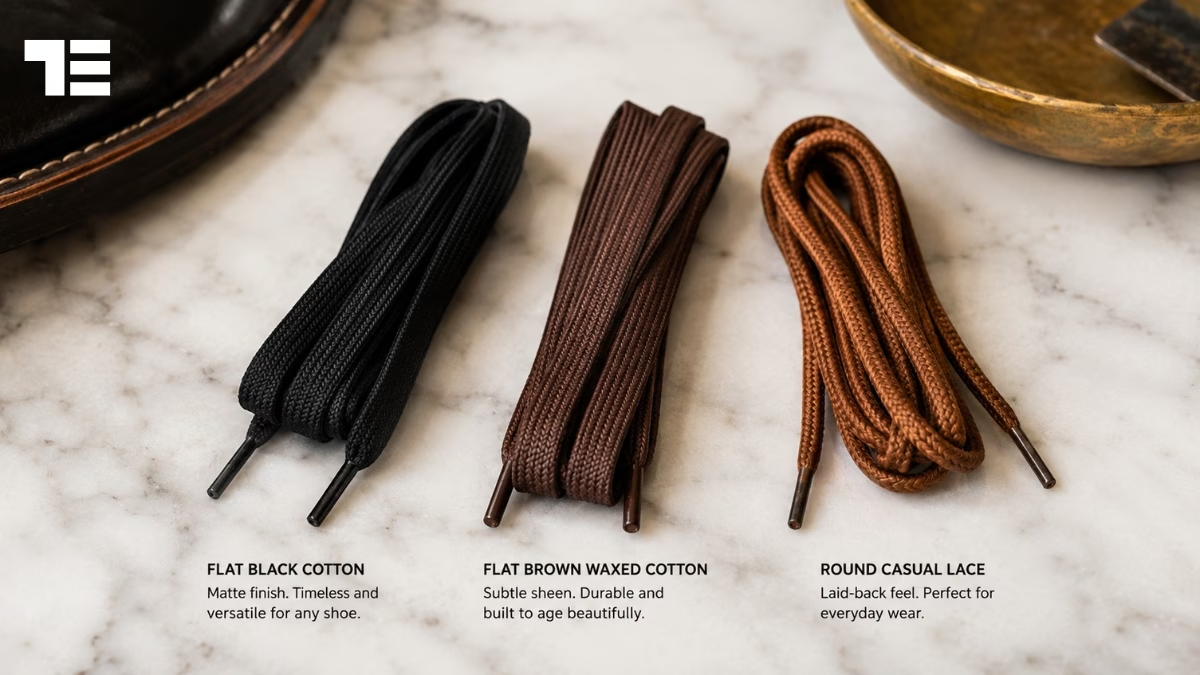
Flat cotton or waxed cotton laces are the standard for dress shoes — they hold a knot well, sit flat against the leather without bulk, and read as appropriately formal. Round laces, more common on boots and casual shoes, are too casual in character for a formal Oxford regardless of how correctly they are threaded.
Length matters more than most men account for. A lace too long produces an untidy excess that has to be tucked or double-knotted awkwardly. A lace too short cannot be tied with a proper bow. For a standard five or six-eyelet Oxford, a lace between 27 and 32 inches is typically correct — check the specific eyelet count on your shoe, as more eyelets require a longer lace.
Colour should match the shoe, not stand in contrast to it, with the narrow exception of a deliberately contrasting lace as a specific style choice on a casual shoe — never on a formal Oxford or business Derby, where the lace should be functionally invisible in colour, drawing attention only through the correctness of the pattern itself.
What Lacing Choice Signals in Different Contexts
The practical question most men actually have once they understand the three methods: which one, for which occasion?
Formal occasions: Straight bar lacing on a black Oxford is the standard.
Business contexts: Criss cross is entirely appropriate and remains the default for good reason.
Smart casual : Criss cross remains correct on a Derby or Oxford worn in this register.
For occasions where the dress code itself is uncertain and the shoe choice, lacing included, needs to be calibrated precisely the Dress Code Decoder translates any stated dress code into a complete outfit.
Maintaining the Lacing Once It's Correct
A lace that held a clean, taut straight bar when new will gradually loosen at the bottom eyelets. Re-tighten from the bottom up periodically, working any slack out toward the top before retying.
A frayed or visibly worn lace undermines an otherwise correctly executed lacing pattern immediately. Keep a spare pair of the correct length and material on hand.
Polish worked around a fully laced shoe. Unlacing fully before a proper polish ensures complete coverage.
The Detail That Completes the Outfit
A correctly laced pair of dress shoes is the kind of detail that very few people will consciously notice and the rare few who do will register immediately and specifically. That asymmetry is exactly what makes it worth the five minutes required to get right.
There are three correct methods for lacing dress shoes. Straight bar lacing produces clean horizontal lines, Criss cross lacing is the standard practical default. Display lacing creates a decorative diagonal or ladder pattern.
Straight bar lacing produces a series of horizontal lines across the front of the shoe. Criss cross lacing produces the familiar X pattern visible on most dress shoes.
Look at how the two sides of the lacing meet when the shoe is fully laced and tightened. On closed lacing, the two sides meet completely flat with no gap. On open lacing , a small V-shaped gap remains visible at the top.