Trendy Enthusiast

Low Taper vs Mid Taper vs High Taper: The Differences That Actually Matter

taper haircut men

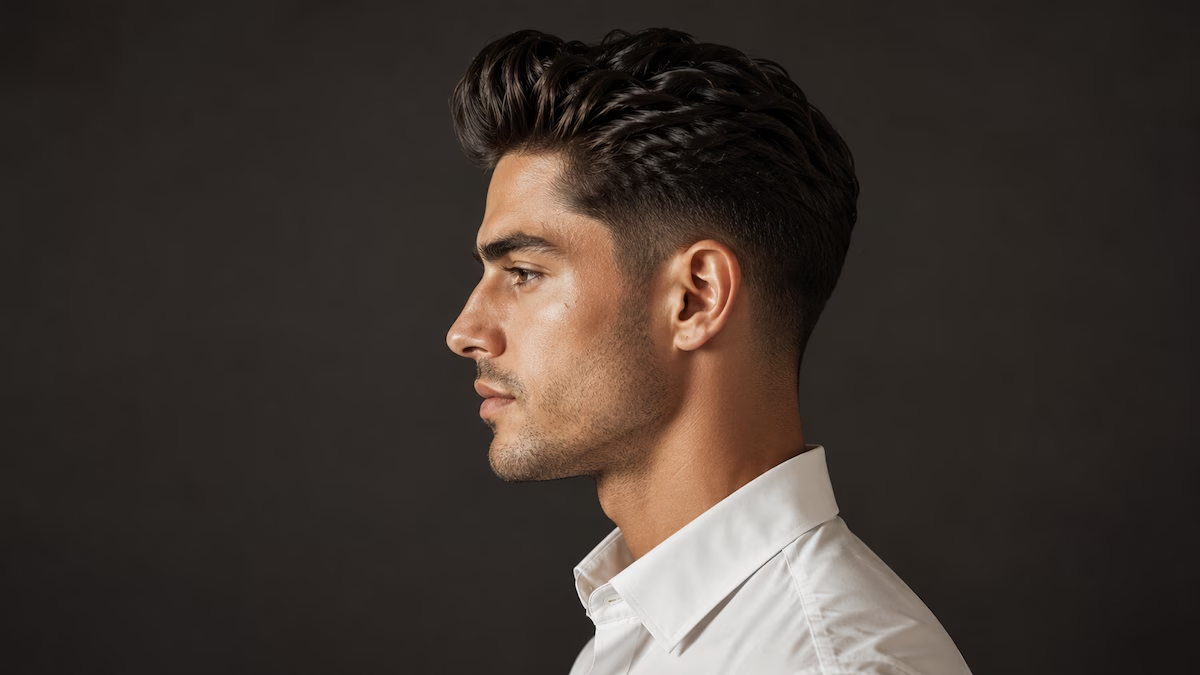
A taper haircut is a men’s cut where the hair length gradually decreases from the top of the head down toward the neck and temples, finishing close to the skin without necessarily reaching a skin fade. The difference between a low taper, mid taper, and high taper is where on the sides and back that graduation begins: a low taper starts just above the ear and neckline, a mid taper begins roughly at the level of the temple, and a high taper starts above the temples and removes significantly more length from the sides. Each produces a distinctly different silhouette, suits different face shapes differently, and carries a different weight in terms of formality and lifestyle fit.

Most men sit in the barber’s chair and say “taper” without specifying which and walk out with whatever the barber defaulted to. This guide removes that ambiguity entirely.

What a Taper Haircut Actually Is (And What It Is Not)

The taper is one of the most misused terms in men’s haircutting, and the confusion costs men good haircuts every week.

A taper is a graduation of length. The hair transitions from longer on top to shorter on the sides and back, with the change happening smoothly over a defined area – no abrupt line, no sharp disconnection. The hair does not reach skin at any point unless a skin fade is specifically added to the taper. A taper alone finishes with a very short but not bald result at the lowest point.

A fade is a specific kind of taper that does reach the skin. All fades are tapers. Not all tapers are fades. When a barber says “low fade,” they mean a taper that reaches skin low on the head. When they say “low taper,” they typically mean a graduation that stays close to skin but does not go all the way.

A hard part is not a taper. A scissor cut is not a taper. An undercut is not a taper, an undercut disconnects the sides from the top with a defined line rather than a graduation.

Understanding this distinction matters because it changes the instruction you give. “A low taper” and “a low fade” are different haircuts. The taper is more conservative; the fade is sharper and more modern. Both are correct choices but they are not the same choice.

The Three Types of Taper: Exactly Where Each One Sits

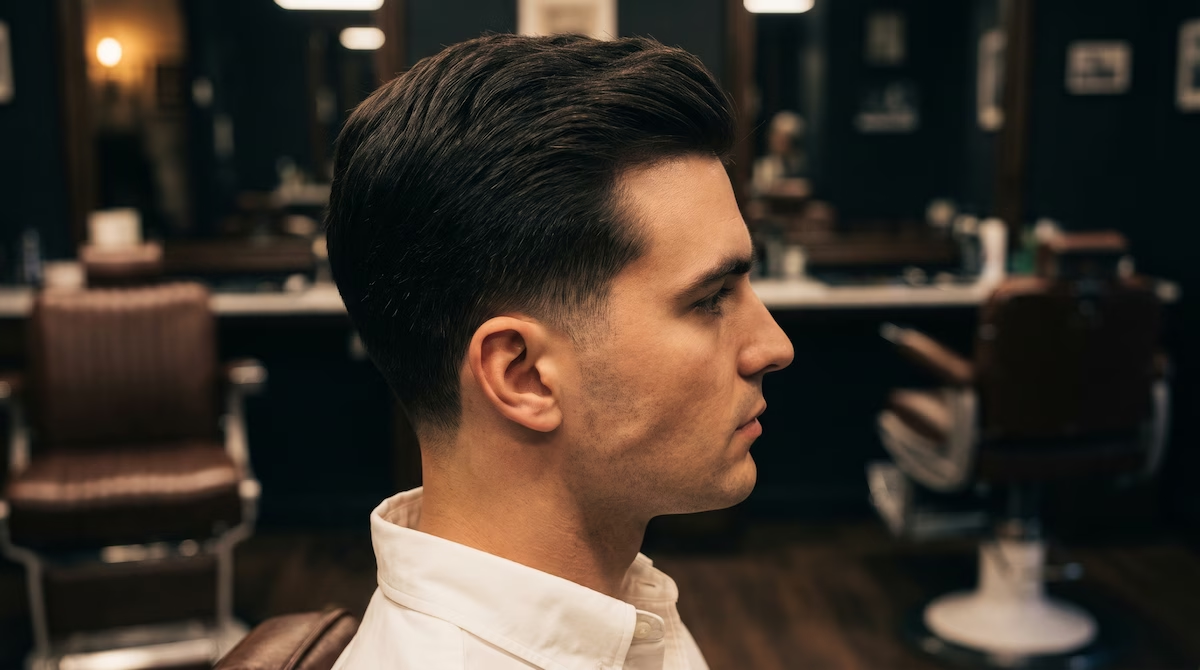
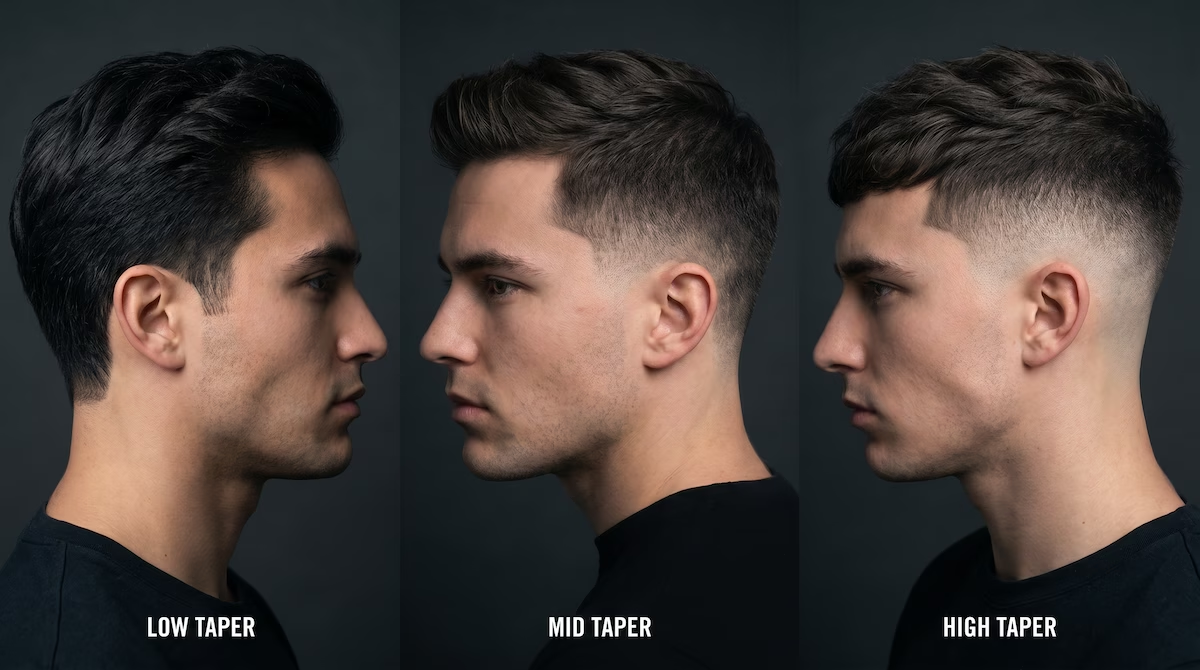
low taper vs mid taper vs high taper haircut comparison

The Low Taper

The most subtle and most versatile option. The graduation begins just above the ear typically at the level of the occipital bone at the back of the head and finishes very short or near-skin at the hairline above the ear and around the neckline.

From the front, a low taper looks almost like a natural haircut. The sides retain significant length and the overall silhouette is full. The drama of the taper is concentrated at the very bottom the neckline is clean, the ear is defined, but the overall shape reads as a classic, conservative cut.

Who it suits: Conservative professional environments. Traditional dress codes. Men who want a maintained look without significant weekly upkeep. Face shapes that benefit from retaining width at the sides notably longer or more angular faces where a high taper would over-narrow the silhouette. The lifestyle fit: Law, finance, formal corporate contexts. The low taper is the haircut that works on a Sunday morning and still looks correct at a Monday board meeting. It requires the least frequent barber maintenance of the three the graduation is subtle enough that three to four weeks of growth does not significantly degrade the shape.

Who it suits: Conservative professional environments. Traditional dress codes. Men who want a maintained look without significant weekly upkeep. Face shapes that benefit from retaining width at the sides notably longer or more angular faces where a high taper would over-narrow the silhouette.

The lifestyle fit: Law, finance, formal corporate contexts. The low taper is the haircut that works on a Sunday morning and still looks correct at a Monday board meeting. It requires the least frequent barber maintenance of the three the graduation is subtle enough that three to four weeks of growth does not significantly degrade the shape.

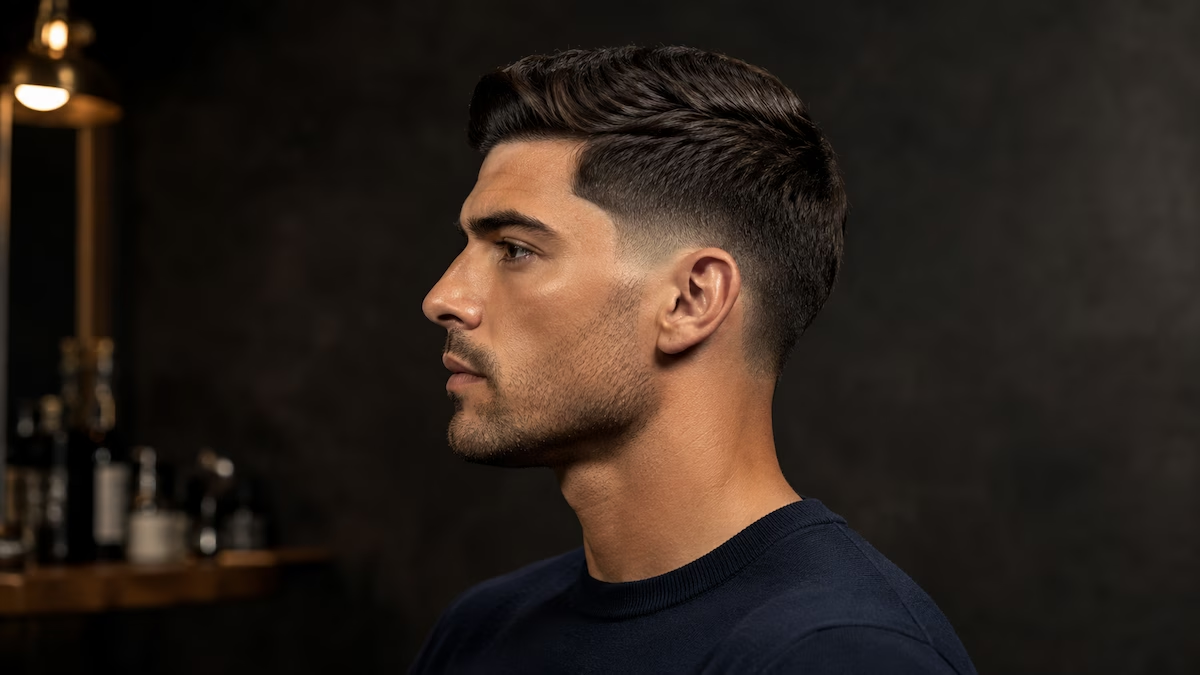
The Mid Taper

The most popular option in contemporary men’s barbering, and for good reason. The graduation begins at the level of the temple — roughly halfway up the sides — producing a more visible contrast between the length on top and the closely cut sides than the low taper, without the severity of the high version.

The mid taper reads as modern and deliberate. It is not a fashion statement. It is a considered, clean haircut that works across almost every context from a creative agency to a wedding to a weekend brunch. It gives the top section of the hair a clearer stage — making it easier to build a quiff, a textured crop, a side part, or a more casual pushed-back style on top.

Who it suits: Oval, square, and heart-shaped faces. Men who want visible style intention without a high-contrast finish. Almost any lifestyle context short of the most formal traditional environments.

The lifestyle fit: The mid taper is the default starting point for most men who say “something clean and modern.” It occupies the same register as a well-chosen navy blazer: versatile, considered, works for almost every occasion without being too conservative or too bold.

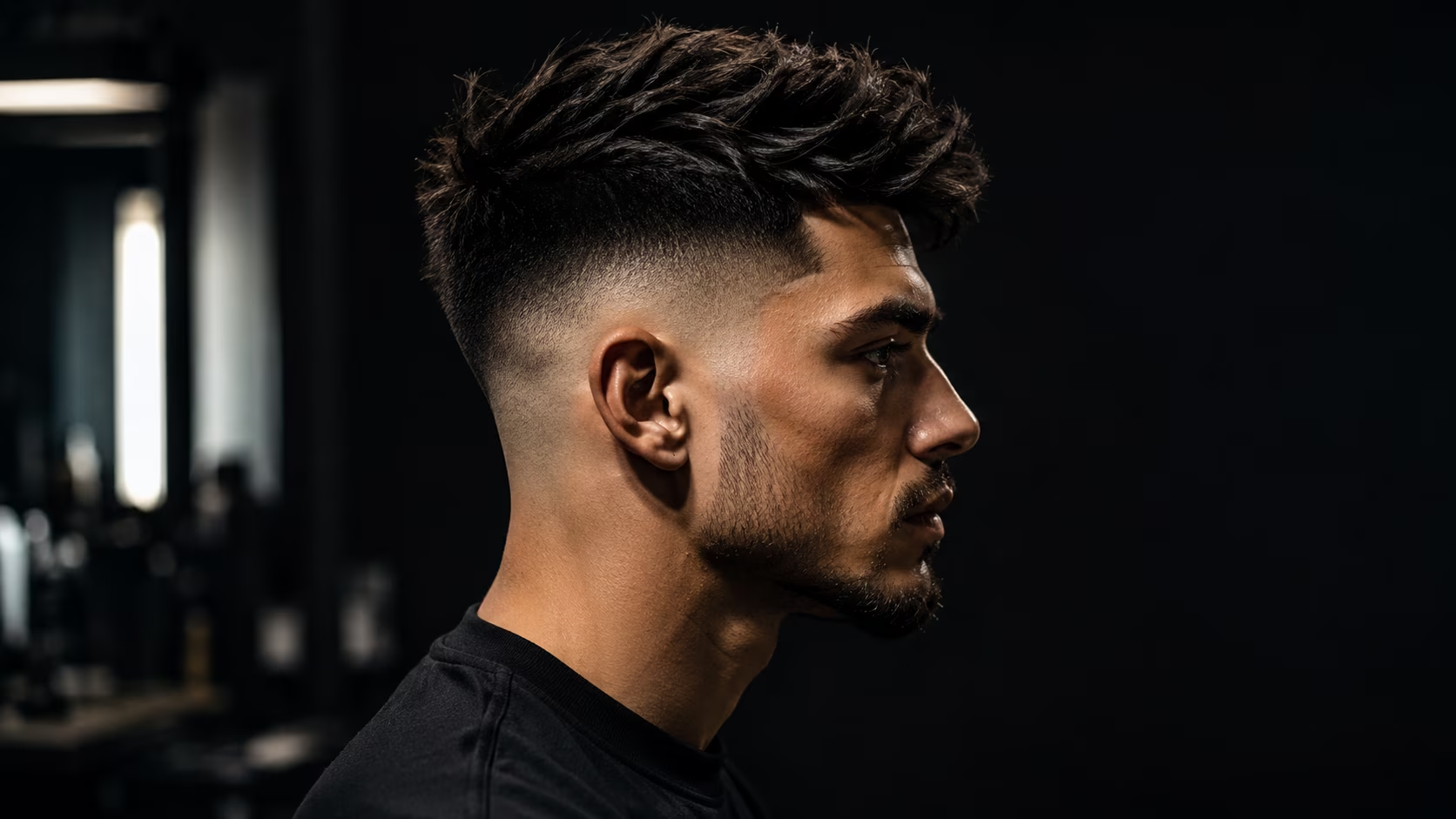
The High Taper

The graduation begins at or above the temples removing significantly more length from the sides and creating a strong contrast between the closely cut sides and the length on top. When combined with a skin fade, this becomes the high fade: one of the most visually striking options in men’s barbering.

The high taper is the boldest of the three. The silhouette is defined and geometric a clear column of length on top with tightly cropped sides. It demands more frequent maintenance than the lower options because the growth at the sides becomes visible quickly, and the contrast that defines the cut degrades within two to three weeks.

high taper haircut men — skin fade strong contrast

Who it suits: Round and wider face shapes the high taper’s aggressive reduction at the sides counteracts the visual width and elongates the face. Men in creative, fashion, music, or style-forward industries. Men who want their haircut to be a considered aesthetic choice.

Who it does not suit: Men with longer or more angular faces where the already-present length is amplified further by the high taper’s additional height. Formal traditional environments where the severity of the cut works against the dress code’s expectations.

The lifestyle fit: The high taper requires commitment. You are going to the barber every two to three weeks if you want it to look correct. That is not a drawback it is the contract. Men who wear a high taper correctly understand that the maintenance is part of the choice.

Face Shape and the Taper: Which Version Works for You

This is the question that matters most and gets answered least in most barbering content.

Oval face: The most versatile face shape. All three taper levels work. The mid taper is the most balanced choice for everyday wear. The high taper suits more style-forward occasions.

Round face: The mid or high taper. Both options reduce visual width at the sides and elongate the face vertically. The low taper retains too much width at the sides and accentuates the roundness it could be countering. If the face is round and the priority is looking sharper and more defined, the high taper is the strongest choice.

Square face: The low or mid taper. The square face has strong jaw definition a high taper with aggressively reduced sides emphasises the jaw and can make the head appear top-heavy. A low or mid taper keeps weight at the sides, balancing the jaw’s prominence and producing a more proportionate overall shape.

Oblong / longer face: The low taper only. Adding height through a high taper on an already-long face amplifies the length further. The low taper keeps the sides fuller, providing visual width that counteracts the vertical proportions. This is one of the strongest cases for the low taper specifically it is not the “conservative default,” it is the correct choice.

Heart face (wider forehead, narrower jaw): The mid taper, with the graduation starting below the widest point of the forehead rather than at or above it. A high taper on a heart-shaped face over-exposes the width at the temples. A mid taper’s graduation, starting below that point, keeps the transition balanced.

If you want to build the broader picture how your face shape and body proportions interact with your wardrobe choices, not just your haircut the Body Shape Matcher works through this systematically and delivers a 12-piece capsule wardrobe built around your actual frame. A haircut and a wardrobe that share the same logic about your proportions produce a result that is visibly more considered than either element alone.

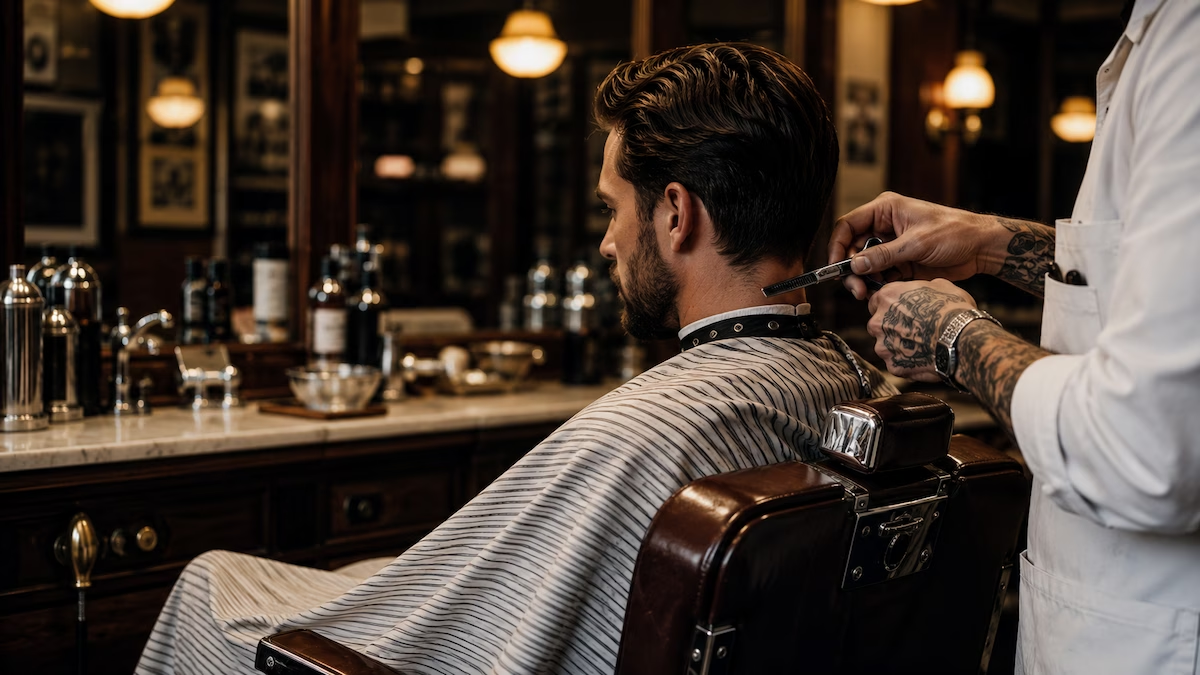
What to Say in the Barber's Chair

man in barber chair taper haircut consultation

This is the section that makes the difference between leaving satisfied and leaving uncertain.

Most men say one of three things: “just a tidy up,” “something clean,” or “a taper.” None of these is sufficient instruction. Every one of them produces a result that depends entirely on the barber’s interpretation which varies significantly between barbers and barbershops.

Here is the complete instruction to give:

State the taper level first: “Low taper,” “mid taper,” or “high taper.” This is the single most important piece of information.

State the finish at the bottom: “Down to skin” (fade), “very short but not skin” (taper without full fade), or “natural — no skin.” Each produces a different result at the hairline and ears.

State the length on top: Either in inches (“leave about two inches on top”), or by texture/style (“enough length to push back,” “enough for a quiff,” “a short textured crop”). Vague requests produce vague results.

Mention the neckline style: Square neckline (a flat horizontal cut across the back) or tapered neckline (the natural graduation follows the hairline’s shape and tapers into the neck). The tapered neckline looks more natural and grows out more cleanly; the square neckline is sharper and more contemporary but requires more frequent maintenance.

Show a photograph. This is not a shortcut for men who cannot communicate — it is the professional standard. Showing a reference photo eliminates interpretation entirely. No photograph means the barber is guessing. They are good at guessing. But a photograph is better.

The Taper and the Quiff: The Most Effective Combination

The quiff and the taper are the most naturally complementary combination in modern men’s haircutting.

The taper’s graduation creates the contrast that makes the quiff’s volume read correctly. Without shorter sides, a quiff loses visual definition the height at the front has no foil. The taper provides that foil. The mid taper with a textured quiff on top is the combination that accounts for the majority of the most well-executed everyday men’s haircuts currently in circulation.

mid taper with quiff hairstyle men

The relationship between the two is adjustable:

A low taper + soft quiff produces a conservative, professional result enough style intention to read as considered, not enough contrast to draw attention in a formal context.

A mid taper + textured quiff is the everyday gentleman’s combination. Modern without being fashionable, deliberate without being loud. Works Monday to Sunday.

A high taper + high quiff is a statement. Maximum contrast, maximum height, maximum commitment. Reserved for men who are fully comfortable with their haircut being visible.

The full guide to the quiff which variation suits which face shape, what products hold it, and how to ask for it is in The Quiff Hairstyle for Men: Which Type Suits You and How to Wear It  and for a complete breakdown of every messy hairstyle worth wearing in 2026 the textured crop, messy quiff, bedhead cut, French fringe, and tousled side part including which suits your hair type, face shape, and lifestyle, the full guide is at Mens Messy Hairstyles: Every Style That Works and Exactly Who It Works For

Maintaining a Taper: The Honest Timeline

Low taper: Three to four weeks between cuts. The graduation is subtle enough that it grows out slowly. Many men with low tapers visit the barber monthly without visible degradation.

Mid taper: Two to three weeks for a sharp result. At four weeks, the mid taper looks more like a grown-out low taper still clean, but the deliberate graduation has softened. If the mid taper is your baseline, a three-week schedule keeps it correct.

High taper: Two weeks maximum. The high taper’s defining quality is the contrast between the closely cut sides and the length on top. That contrast disappears quickly as the sides grow. Men with high tapers who visit the barber every three to four weeks are essentially wearing a different haircut by the end of the cycle.

The economics: More frequent visits cost more. The high taper is the most expensive haircut to maintain relative to its original cut price. Factor this into the decision before committing to the style.

Between barber visits, a quality hair product keeps the top section of a taper looking intentional even as the sides begin to soften. A matte clay for a textured result or a light pomade for a cleaner finish applied correctly to dry hair extends the life of the cut visually without changing the underlying shape.

The Taper vs the Undercut: A Common Confusion

These two cuts are frequently conflated, and they are structurally completely different.

A taper graduates the length: the transition from longer on top to shorter on the sides is smooth, with no defined line.

An undercut disconnects the length: the sides are cut to a fixed short length and the top sits above a defined architectural line with no graduation between them.

The visual results are different, the maintenance is different, and the appropriate contexts are different. The taper is more versatile and more conservative. The undercut is more geometric and more fashion-specific. If you are asking your barber for one and walking out with the other, this distinction is why.

The taper is not a trend. It has been the structural backbone of the well-maintained gentleman’s haircut for decades and it will continue to be. Get the level right, maintain the schedule, and it is one of the last things you will need to think about. 

FAQs

A low taper begins the graduation just above the ear and neckline, maintaining significant length through the sides. A mid taper starts at the temple level, producing more visible contrast between the top and sides. A high taper begins above the temples, removing most of the side length and creating the strongest contrast of the three. Each suits different face shapes and lifestyle contexts: low for conservative and formal settings, mid for versatile everyday wear, high for bold and fashion-forward results.

All three taper levels work for oval faces. Round faces benefit from mid or high tapers, which reduce side width and add height. Square faces suit low or mid tapers, which balance the jaw without amplifying it. Oblong or longer faces should stay with the low taper — a high taper adds height to a face that does not need it. Heart-shaped faces work well with the mid taper, with the graduation starting below the widest point of the forehead.

It depends on the level. A low taper can be maintained with monthly or every-three-week visits. A mid taper looks correct with a two-to-three week schedule. A high taper requires a visit every two weeks to maintain the contrast that defines the cut. The higher the taper, the more frequently it needs refreshing — and the more quickly it degrades when left.

A taper is a gradual reduction in hair length from top to sides, finishing very short but not reaching skin. A fade is a taper that does reach the skin. All fades are tapers; not all tapers are fades. A taper is more conservative in result; a fade is sharper and more modern. When specifying to a barber, “taper” and “fade” produce different outcomes — a taper without a fade leaves a thin line of hair at the lowest point rather than a clean skin finish.

Yes — specifically the low taper, which is one of the most appropriate haircuts for formal professional environments. Its graduation is subtle, the sides retain significant length, and the overall silhouette reads as conservative and well-maintained. The mid taper also works in most modern professional contexts. The high taper is more context-dependent and may conflict with strict or traditional dress code environments.

Further Reading

Ali Taimour

Ali Taimour

Founder and Editor of Trendy Enthusiast. Ali covers men's fashion, lifestyle, grooming, and the art of dining well - blending real experience with practical insight.

Connect on Instagram
Shopping Basket