Buzz Cut for Every Face Shape: The Complete Breakdown
A buzz cut suits every face shape but the guard length and fade height that make it work change completely depending on your shape. Oval faces can wear almost any length from a 0 to a 5. Round faces need vertical contrast from a higher fade. Square jaws need softening, not sharpening. Get the length right for your shape and a buzz cut looks deliberate. Get it wrong and it just looks short.
This is the deep dive our main Buzz Cut Guide only touches briefly. Here’s the full breakdown for all six face shapes, with the exact guard number and fade to ask for.
Quick answer: Round faces suit guard 1–2 with a high or skin fade. Square faces suit guard 2–3 with a taper, not a fade. Oval faces suit almost anything. Rectangle and triangle faces need more length and texture on top. Diamond faces suit guard 2–4 with length left up top to balance a narrow jaw.
How to Identify Your Face Shape First
Before picking a length, confirm your shape. Stand in front of a mirror and look at three measurements: the width of your forehead, the width of your cheekbones, and the width of your jaw, relative to the overall length of your face.
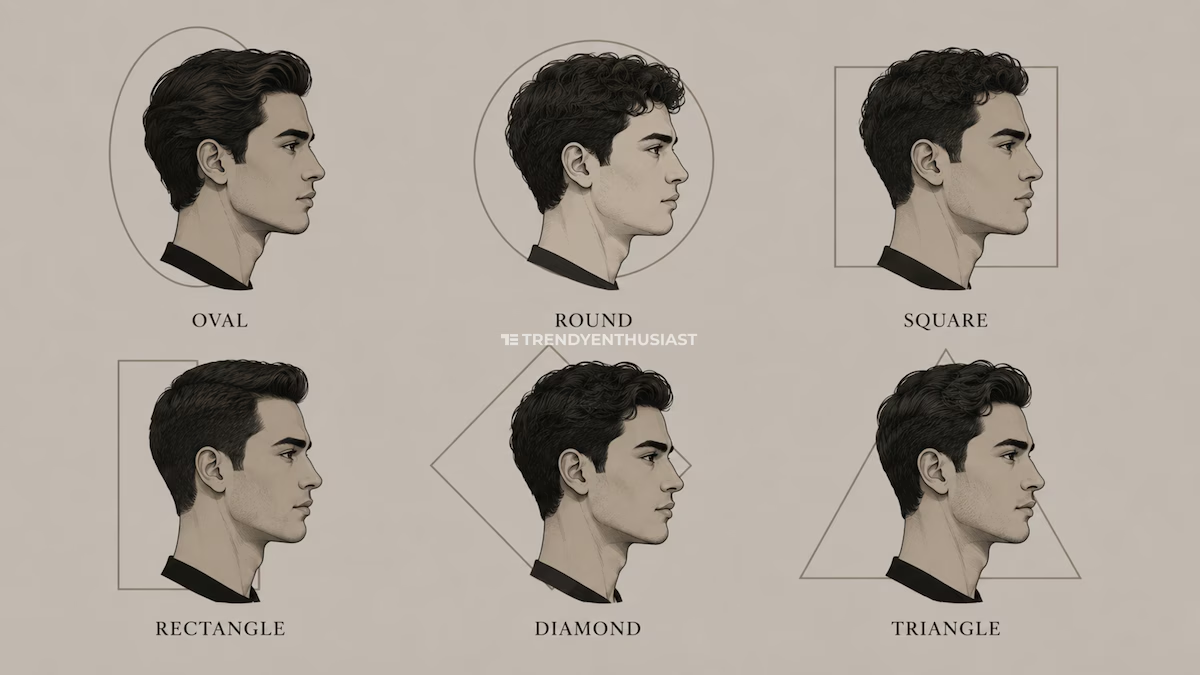
Oval – face length is roughly 1.5x the width, jaw slightly narrower than the forehead, no single dominant angle.
Round – width and length are close to equal, soft jawline, fullest at the cheeks.
Square – forehead, cheekbones, and jaw are similar width, strong angular jawline.
Rectangle (Oblong) – similar to square but noticeably longer, with a longer forehead and chin.
Diamond – narrow forehead and jaw, widest at the cheekbones.
Triangle – narrower forehead, wider jaw.
Not sure which shape you actually are? The Hairstyle Matcher identifies your face shape from a quiz.
Buzz Cut for an Oval Face
Oval faces have the most balanced proportions of any shape, which means they can wear nearly any guard length from a 0 induction cut through a 5. There’s no jaw angle to soften and no width to correct, so the decision comes down to personal preference rather than correction.
Best guard: 0–5, whatever suits your maintenance preference Best fade: Any – low, mid, high, or skin all work Avoid: Nothing specific. This is the one face shape where a buzz cut has zero real restrictions.
If you have an oval face and haven’t committed to a length yet, a mid fade with a guard 2–3 on top is the safest, most universally flattering starting point.
Buzz Cut for a Round Face
Round faces are the most searched face-shape query in this category, and the goal here is simple: add vertical length and contrast, since the natural width of a round face is already the dominant feature.
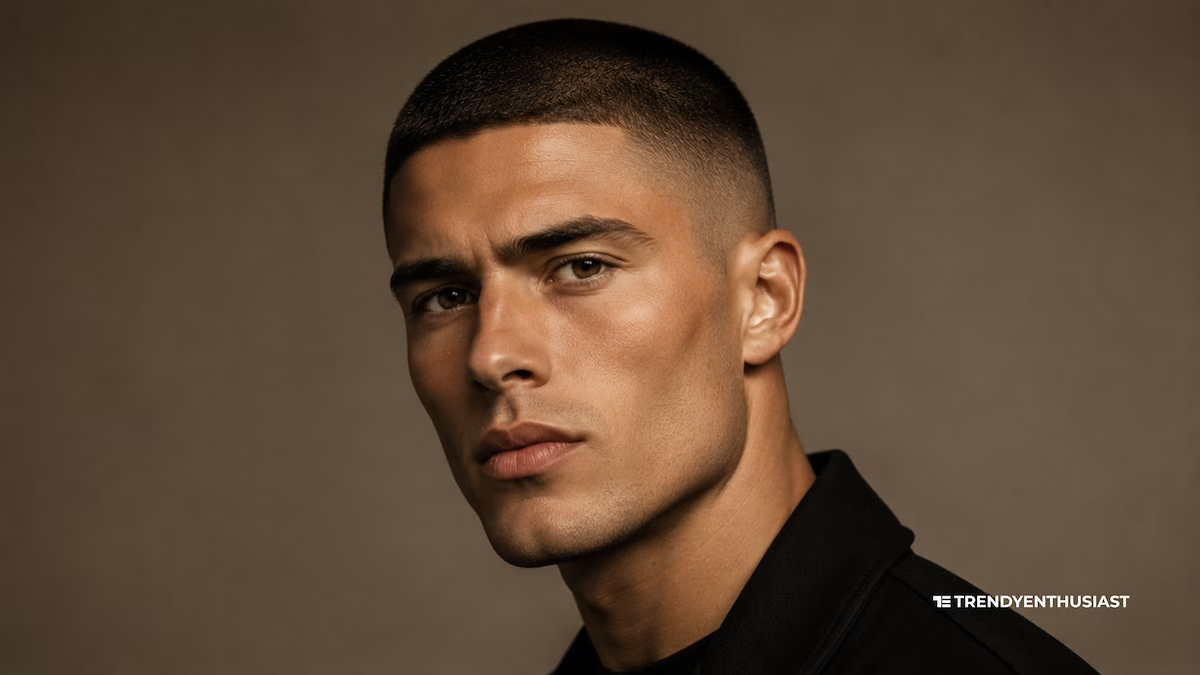
Best guard: 1–2 on top Best fade: High fade or skin fade buzz cut – the sharp vertical line elongates the face more than the guard number itself does Avoid: A low fade or no fade at all. Without contrast at the sides, the roundness reads even fuller.
A high fade buzz cut works because it removes width at the temples and leaves the eye moving vertically rather than horizontally across the face. Pairing this with a defined beard along the jawline adds further structure.
Buzz Cut for a Square Face
Square faces already have the strongest, most defined jawline of any shape. A buzz cut with a hard fade sharpens that further, which can tip a strong jaw into looking severe. The better move is a taper, not a fade.
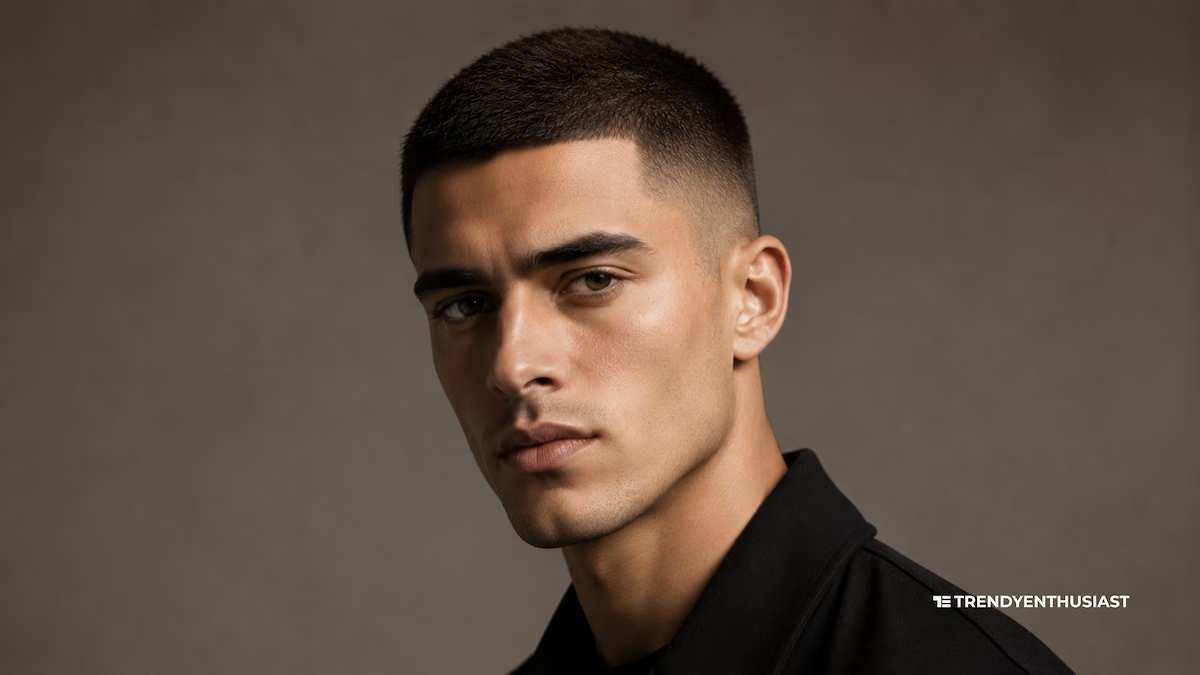
Best guard: 2–3, tapered rather than faded Best fade: Skip the hard fade line entirely, a gradual taper softens the transition instead of sharpening it Avoid: A skin fade or high fade. These add contrast the square jaw doesn’t need.
If you have a square face and want more texture, keep length on top (guard 3–4) with a soft taper at the sides. This is one of the few face shapes where “more length, less fade” is the better formula for a buzz cut.
Buzz Cut for a Rectangle (Oblong) Face
Rectangle faces are longer than they are wide, with a longer forehead and chin than a square face. The buzz cut goal here is the opposite of round faces: add width, not length.
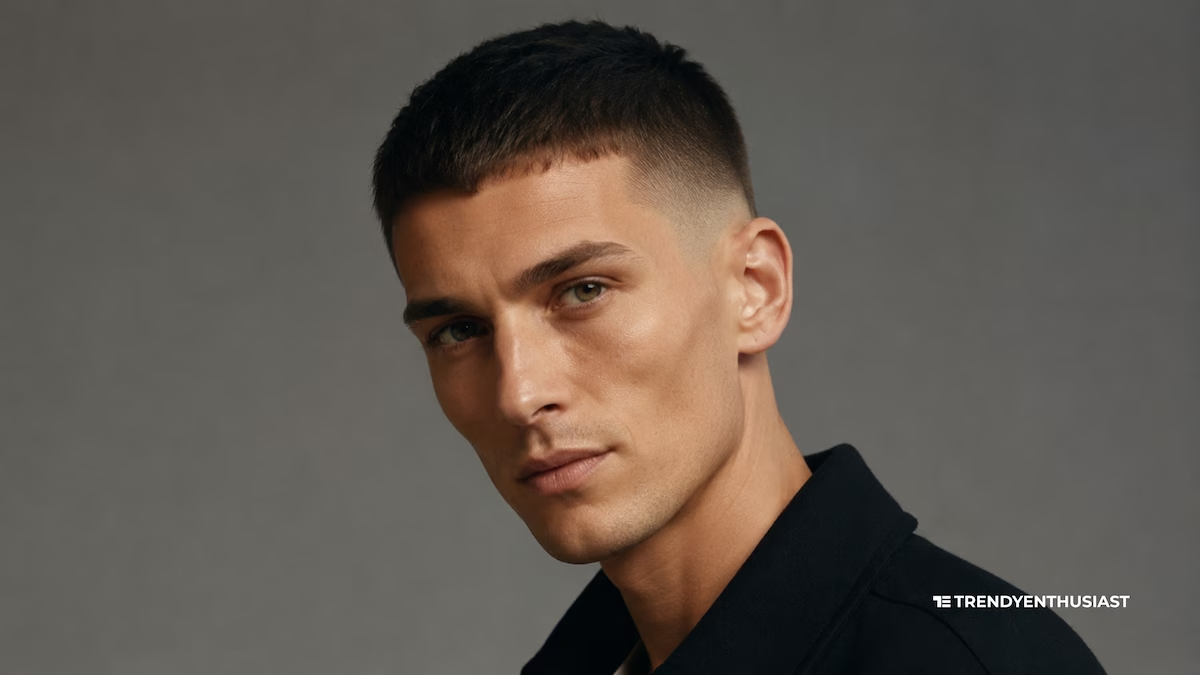
Best guard: 3–4 with texture on top Best fade: Low fade – keeps the sides from adding further height Avoid: A skin fade or induction cut. Removing all volume up top elongates an already long face further.
Leaving texture on top is what breaks up the length of a rectangle face. A number 3 or 4 with a slight quiff or textured fringe does more visual work here than any fade choice.
Buzz Cut for a Diamond Face
Diamond faces are widest at the cheekbones with a narrower forehead and jaw. The buzz cut goal is to balance the narrower top and bottom against the wider middle.
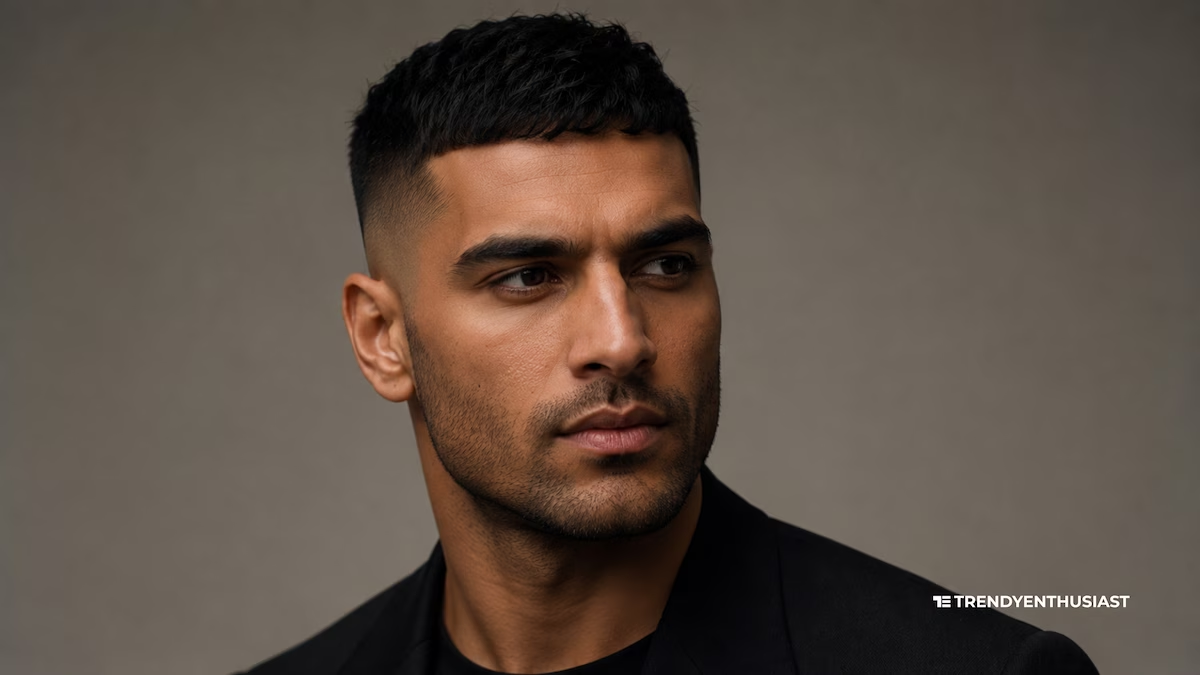
Best guard: 2–4, longer on top Best fade: Mid fade – enough contrast to define the sides without over-narrowing the face further Avoid: A skin fade combined with a very short guard on top (0–1). This narrows the top of the face and exaggerates the width at the cheekbones.
Leaving slightly more length on top than a round or oval face would need helps widen the forehead visually, balancing the diamond shape’s narrowest point.
Buzz Cut for a Triangle Face
Triangle faces have a narrower forehead and a wider jaw – the reverse of a diamond shape. The buzz cut should add visual weight at the crown to balance a wider jawline.
Best guard: 3–4, more volume on top Best fade: Low fade – keeps focus on the top rather than adding more width at the sides Avoid: A high or skin fade, which draws attention toward the jaw rather than balancing it with volume up top.
A textured buzz cut with guard 4 on top and minimal fade is the most effective version of this cut for a triangle face — the added texture up top does the balancing work a fade would do for other shapes.
Face Shape
Best Guard Length
Why
Oval
0–5 most flexible
Balanced proportions suit almost any length, including the induction cut
Round
1–2 with a high or skin fade
Vertical contrast from the fade elongates the face
Square
2–3 tapered rather than faded
Softens a strong jawline instead of sharpening it further
Rectangle
3–4 with texture on top
Adds visual width and breaks up a longer face
Diamond
2–4 longer on top
Balances a narrower jawline and forehead
Triangle
3–4 more volume on top
Adds width at the crown to offset a wider jaw
Buzz Cut, Beard, and Face Shape Together
A buzz cut removes almost all styling variables above the neckline, which means the beard becomes the second lever for correcting face shape. Round faces benefit from a more angular, defined beard along the jaw rather than a full rounded one. Square faces can soften further with slightly more length at the chin. Rectangle and triangle faces generally do better with fuller width at the sides rather than length at the chin, which would elongate the face further.
If you’re pairing a buzz cut with a beard, the Beard Oil guide and Best Beard Trimmers UK cover the maintenance side of keeping that shape defined between trims.
Common Mistakes by Face Shape
Round faces going too short with no fade – this is the single most common mismatch. A guard 1 with no fade adds no contrast and leaves the face reading fuller, not sharper.
Square faces defaulting to a skin fade – sharpens an already strong jaw. A taper reads more polished on square faces than a hard fade does.
Rectangle and triangle faces going too short on top – a 0 or 1 induction-style cut on a longer or narrower-forehead face removes the volume needed to balance proportions.
Diamond faces over-fading – a skin fade with a very short top narrows the face further at exactly the point it’s already narrowest.
A close crop naturally directs attention to your bone structure and facial hair; discover how to keep every detail sharp with our expert Men’s Grooming Guide.
Yes, but the guard length and fade height need to change by shape. Round faces suit a high fade with a short top, square faces suit a taper over a fade, and oval faces have the most flexibility of any shape.
A guard 1–2 on top paired with a high or skin fade. The vertical contrast from the fade elongates a round face more effectively than the guard number alone.
Not strictly avoid, but a tapered buzz cut generally suits a square jaw better than a hard skin fade, since the jaw is already the face’s strongest feature and doesn’t need more definition.
Yes, but a guard 2–4 with a mid fade works better than a very short guard 0–1, since leaving some length on top helps balance a narrower forehead against wider cheekbones.