Smart Casual Shoes for Men: The Only Five Styles Worth Owning
Smart casual shoes bridge the gap between office-ready Oxfords and weekend trainers.
The five styles that actually work are penny loafers, Chelsea boots, Derby shoes, suede chukka boots, and minimalist leather sneakers in that order of versatility.
Colour and texture matter more than style name: black reads formal, brown and tan read casual, and suede always relaxes a look further than polished leather.
Purchases made through our links may earn us a commission, at no extra cost to you. As an Amazon Associate, we earn from qualifying purchases.
What Makes a Shoe "Smart Casual"
A shoe qualifies as smart casual when it sits between a polished Oxford and a running trainer on the formality scale leather or suede construction, a round or almond toe, and no athletic detailing.
Colour does the rest of the work: black pushes a shoe toward formal, tan and oxblood pull it toward casual, and matte suede reads more relaxed than high-shine leather.
Three variables decide where any shoe lands on the spectrum:
Colour: Black is the smartest option, brown sits in the middle, tan and oxblood are the most casual
Silhouette: Round or almond toes read casual; pointed toes and cap-toes read formal
Texture: Nubby suede is casual by default; polished calfskin pushes any shape upward
Five Shoe Styles To Cover Every Smart Casual Occasion
Five shoe types handle the entire smart casual range:
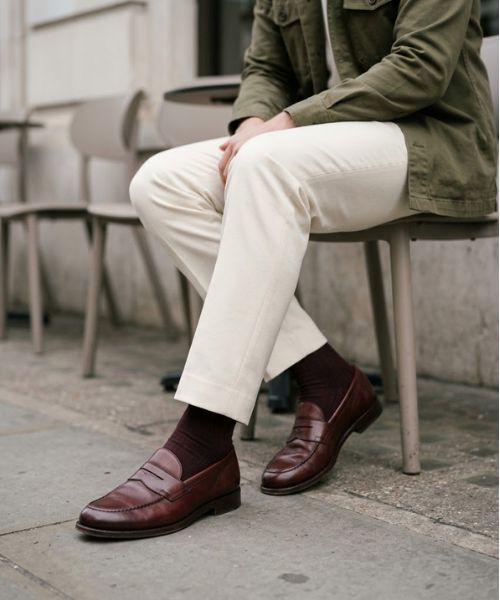
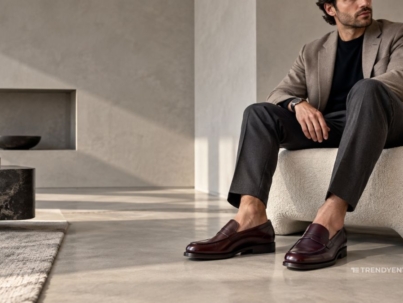
Penny loafers for the widest versatility.
Chelsea boots for a rock-and-roll edge.
Derby shoes for the most office-friendly option.
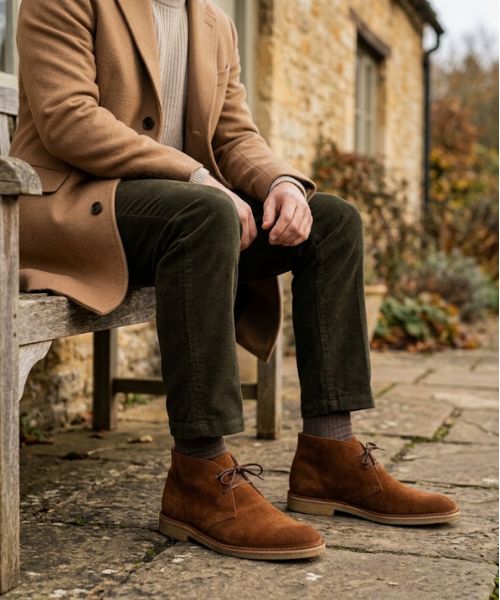
Suede chukka boots for cold-weather smart casual.
Minimalist leather sneakers for the most relaxed end of the code.
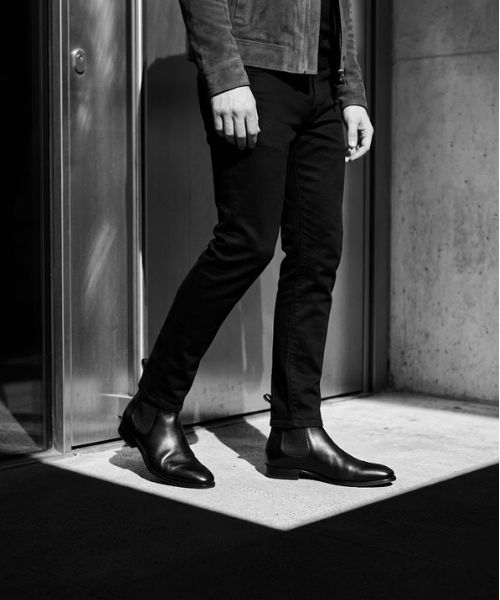
Chelsea boots are the shoe of choice when the outfit needs an edge the loafer can’t give it.
Slim, ankle-height, no laces, they work with everything from dark jeans to tailored trousers, and suede versions relax the formality further than leather ones.
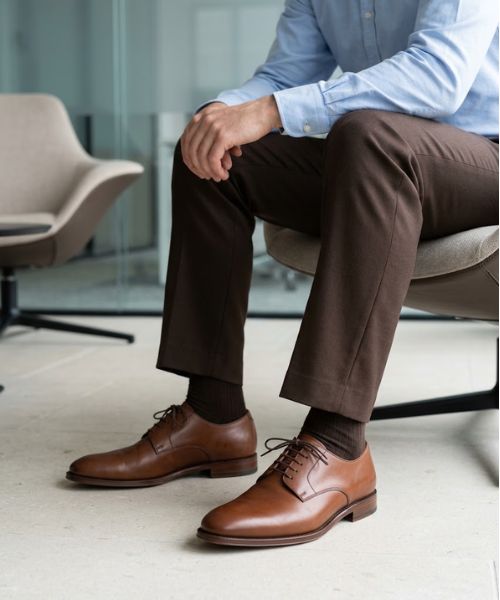
Derby shoes are the most underrated pick on this list. Slightly more casual than an Oxford because of the open lacing, a Derby in tan or mid-brown leather is the safest single shoe for a client meeting that might extend into after-work drinks.
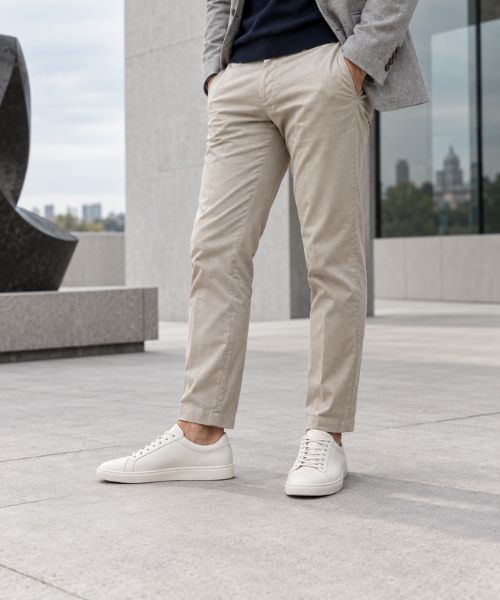
Minimalist leather sneakers sit at the far casual edge of the code and should be used sparingly. A clean white or black leather sneaker works with chinos and a blazer, but only in genuinely relaxed settings.
This is the one category where confidence in execution matters more than the shoe itself.
Which Colour to Wear and When
Shoe colour should match the formality of the occasion before it matches the outfit.
Black: Closest to formal wear; use for client dinners, smarter weddings, evening events
Dark brown: The genuine middle ground; works with navy, grey, and most business casual trousers
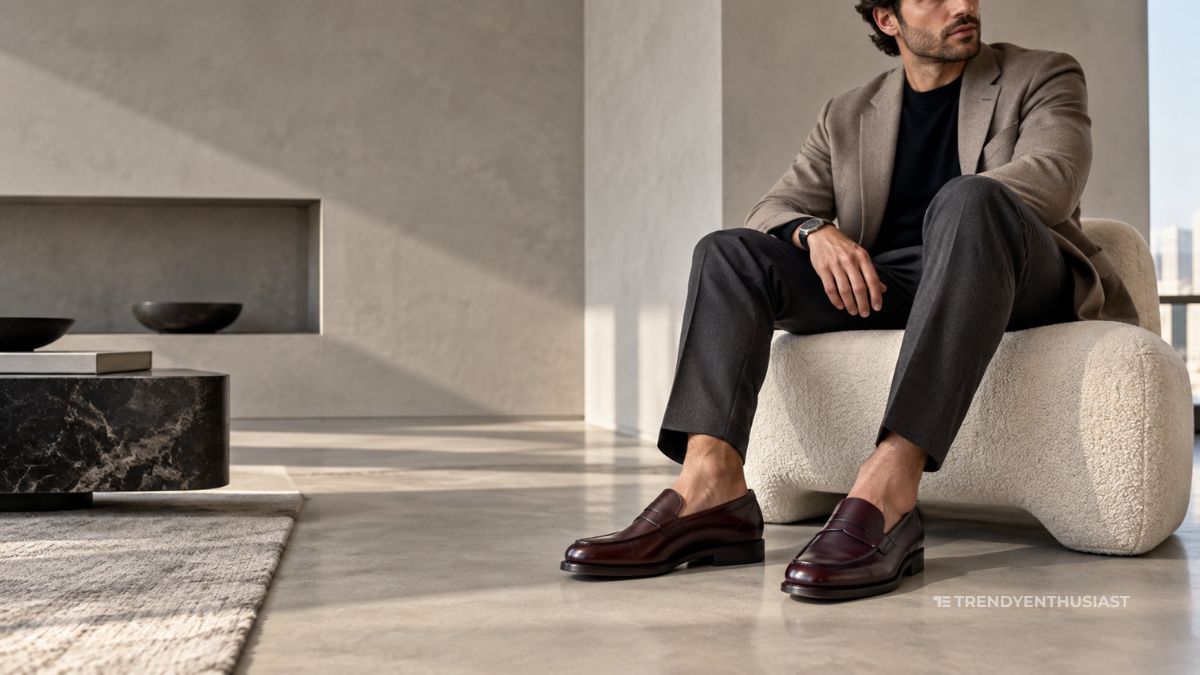
Oxblood/burgundy: Adds warmth without sacrificing polish; strongest with navy and charcoal
Tan/light brown: The most casual leather tone; reserve for daytime and warmer months
Suede: Automatically more relaxed than the same shade in leather
How Smart Casual Shoes Should Fit
Loafers should feel snug at the widest part of your foot; loafers stretch slightly with wear, so buying too big leads to heel slip within weeks
Chelsea boots rely on the elastic gusset for fit i.e the boot should be snug going on, not loose, since the elastic won’t compensate for a shoe that’s genuinely too big
Derby shoes have an open lacing system, which means they accommodate a slightly higher instep than a Derby’s closer-fitting cousin, the Oxford
Chukka boots should allow a little more room than a low shoe, since they’re often worn with a thicker sock in colder months
Smart Casual Shoes by Budget
Entry level (under £100): Focus on penny loafers or a simple Derby in a versatile brown.
Mid-range (£100–£250): A mid-range Chelsea boot or loafer here should last years with basic care.
Investment tier (£250+): Reserved for shoes you plan to resole and rewear for a decade. Worth it for a single black loafer or Chelsea boot you’ll wear weekly.
The honest rule: buy the best pair of loafers you can afford before buying a second or third smart casual shoe. One excellent pair beats three mediocre ones.
Smart Casual Shoes by Season
The best smart casual shoes for men shift with the season as much as the rest of the outfit does.
Spring/Summer: Lighter tan and suede loafers, unlined where possible for breathability.
Autumn/Winter: Chukka boots and Chelsea boots take over.
Wet weather: A rubber-soled Chelsea boot or chukka boot is the more practical choice when rain is likely
What to Avoid When Choosing Smart Casual Shoes
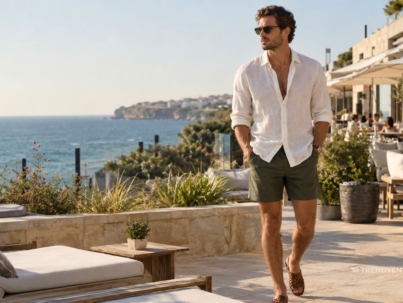
Athletic trainers, sandals, flip-flops, and anything with visible technical detailing (mesh, chunky rubber soles, running-shoe branding) fall outside the smart casual code.
A shoe fails the smart casual test the moment it looks like it was designed for a gym rather than a wardrobe. That includes:
Running shoes and cross-trainers, even in neutral colourways
Sandals, slides, and any open-toe footwear
Heavily distressed or scuffed leather
Colourful or logo-heavy sneakers
Patent leather
For the wider dress code these shoes sit inside, our Dress Code Decoder breaks down all 17 formality levels in seconds.
Business casual shoes stay more conservative e.g Oxfords, Derbies, and darker colours dominate. Smart casual allows more range: loafers, suede, Chelsea boots, and even sneakers, with more flexibility in colour and texture.