A dress shirt only works under a jacket built to sit over a collar and cuff without fighting them as structured shoulders, a clean chest line, and enough formality to match the shirt underneath.
That rules out more than half of what’s in a typical wardrobe. A hoodie, a puffer or a heavily branded bomber will always make a dress shirt look like an accident, not a choice.
The Best Jackets to Wear with Dress Shirt
The eight jackets below are the ones that consistently work, ranked from most formal to most casual, with the specific pairing rule that makes or breaks each one:
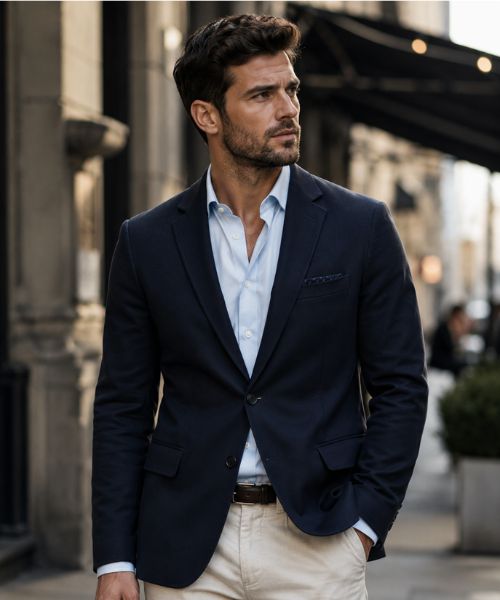
A blazer works over a dress shirt because it’s cut with a shirt collar in mind i.e structured shoulders, a defined chest, and enough room through the sleeve to let a cuff show without bunching.
Pair a navy or charcoal blazer with a spread or point collar shirt for business-casual; add a tie only when the setting genuinely calls for it.
The pairing rule: keep the shirt collar visible above the lapel by half an inch. Metal or horn buttons both work; metal reads slightly sharper, horn slightly softer.
Before choosing the jacket, the shirt underneath needs to be impeccable. How to Iron a Dress Shirt covers the five-step sequence that produces a properly pressed shirt every time.
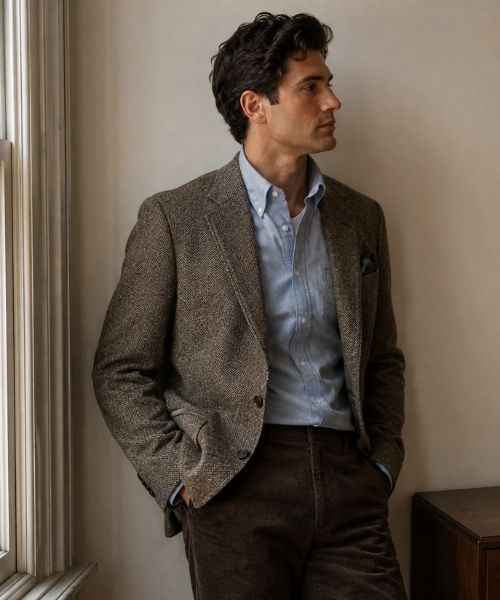
A sport coat is a blazer’s more relaxed cousin; same structured shoulder, but in tweed, herringbone or a patterned wool that reads as smart-casual rather than business.
It pairs best with an Oxford cloth button-down (OCBD), since the softer collar roll matches the coat’s more textured, less formal fabric.
The pairing rule: match texture, not just colour. A heavily textured tweed sport coat over a crisp poplin shirt looks mismatched. Keep the shirt in a similarly textured weave, like Oxford cloth or brushed cotton.
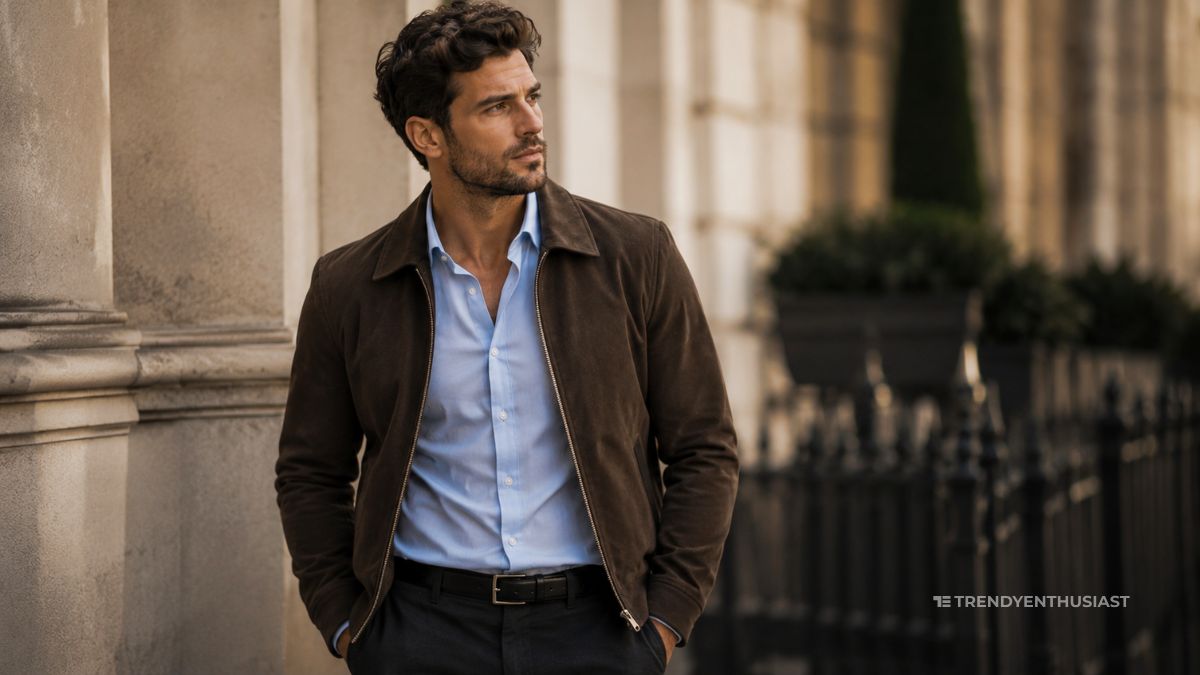
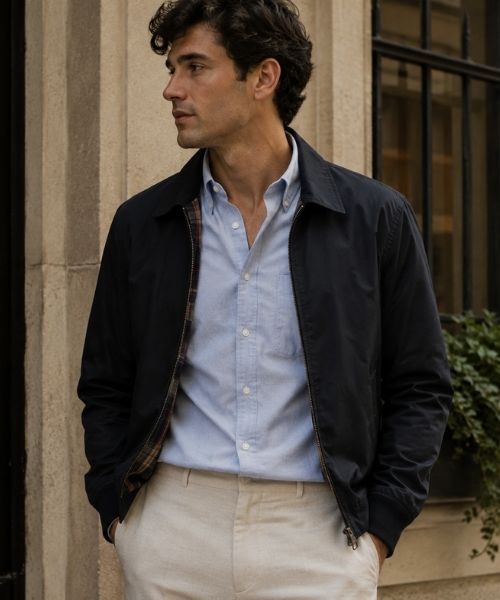
The Harrington is a short, zip-front jacket with a fold-down collar. British in origin, built for exactly the space between a blazer and a bomber.
Worn open over an OCBD, it reads as put-together without trying, which is why it’s a strong pick for a smart-casual pub date or a daytime meeting that doesn’t call for tailoring.
The pairing rule: leave the top button of the shirt undone and the jacket unzipped enough to show the collar. A Harrington zipped to the neck hides the exact detail that makes the combination work.
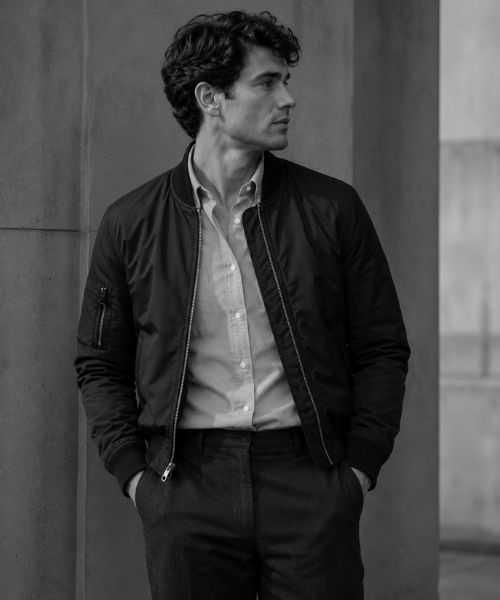
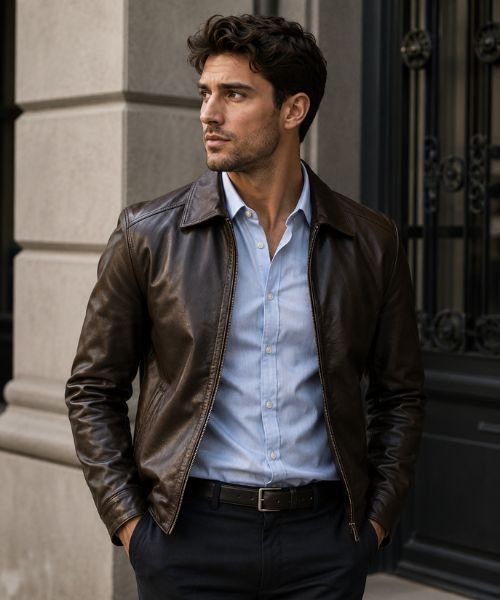
The men’s bomber jacket is a short, waist-length coat defined by its functional zipped front.
Structured with snug fitted ribbed cuffs and a matching ribbed hem, it seals in heat while maintaining a clean profile.
Originally engineered for military pilots seeking warm, easy-to-move-in gear, this silhouette has evolved into a versatile wardrobe staple.
The pairing rule: fit is non-negotiable here. An oversized bomber over a fitted shirt breaks the silhouette completely so, both pieces need to sit close to the body for the pairing to read as intentional rather than mismatched.
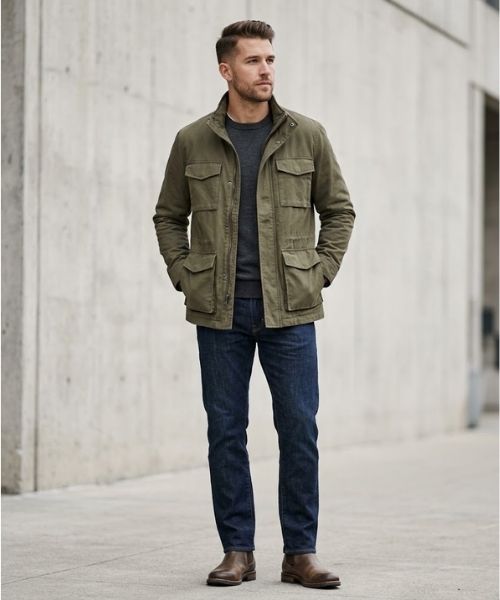
The field jacket is a durable, lightweight outer garment with military origins designed for functional layering.
This utility-focused piece features a weather-resistant cotton or synthetic blend shell that shields against unpredictable conditions.
Traditional designs feature four large external patch pockets for maximum practicality. A secure zip and snap-button front closure seals in warmth and completes the silhouette.
The pairing rule: keep the rest of the outfit casual too. A field jacket over a dress shirt with tailored trousers looks like two different outfits stitched together; pair it with jeans or chinos instead.
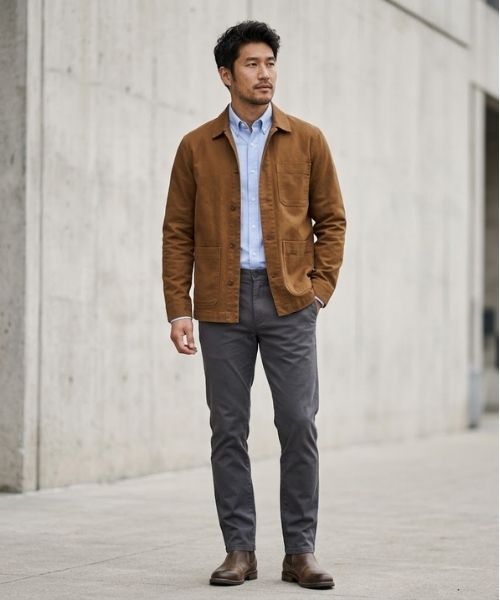
Chore coat is one of the few jackets that pairs as naturally with a dress shirt as it does with a plain tee. The straight, unstructured cut leaves room for a shirt collar to sit cleanly at the neck without the jacket’s own collar competing for space.
The pairing rule: stick to a single-colour, unpatterned dress shirt underneath because chore coats already carry visual weight through their boxy cut and patch pockets.
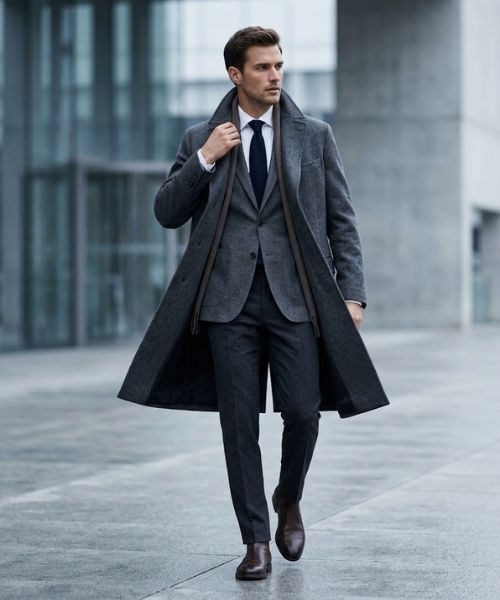
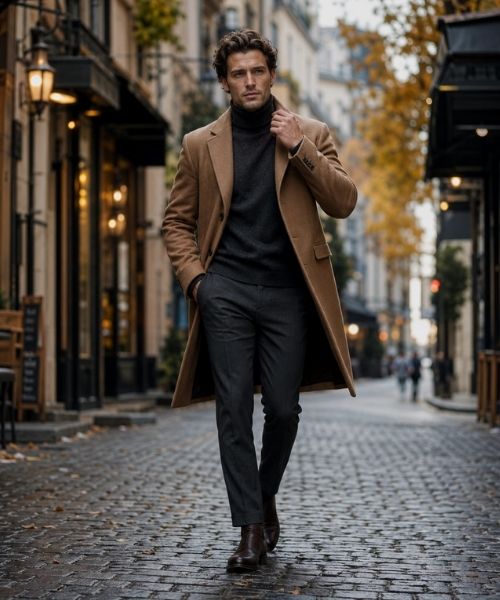
An overcoat is a long, thick outer garment tailored to wear comfortably over indoor clothing in severe cold weather.
Reaching past the knee, it uses premium heavy fabrics like insulating wool or ultra-soft cashmere to provide superior warmth.
A lighter alternative is the traditional tailored top coat, designed to resist daily wear while elevating formal layers.
The pairing rule: proportion matters more than colour here. A long overcoat over a short, cropped blazer looks unbalanced; keep the blazer or suit jacket underneath reaching close to the same silhouette length as the coat allows.
A trench coat pairs with a dress shirt the way an overcoat does, but with less bulk and more versatility across seasons.
Cotton gabardine rather than wool, belted rather than buttoned closed, and light enough to wear open over a shirt and tie without adding real weight.
The pairing rule: worn open, a trench needs a genuinely sharp shirt underneath, since the coat itself won’t hide a poor fit. Worn closed and belted, it becomes the whole outfit.
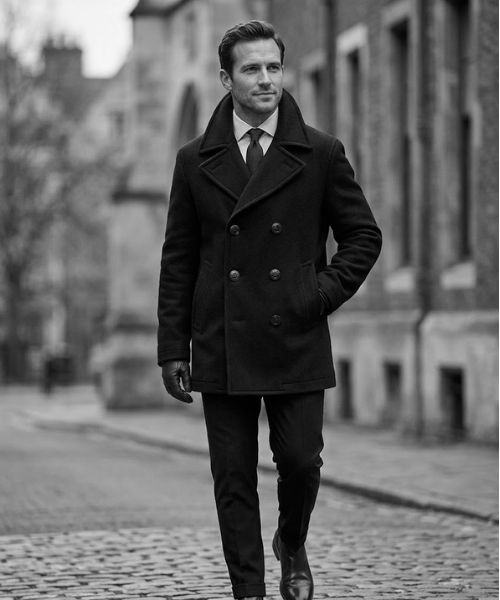
The pea coat, historically known as a P-jacket or peacoat, is a short, heavy wool coat rooted in classic naval tailoring.
Anchored by a tailored double-breasted front and wide lapels, it fastens securely with iconic large buttons to block out cold winds.
Engineered with deep vertical hand-warmer pockets, this functional outerwear shares structural DNA with military-style coats and the traditional Tuchjacke (German word).
What Not to Pair With a Dress Shirt
Not every jacket earns a place on this list, and the reason is consistent: fabric weight, cut, or branding that fights the shirt rather than complementing it.
Puffer jackets: the bulk distorts the shirt’s silhouette entirely; there’s no version of a puffer that reads as intentional over tailoring.
Varsity jackets: the branding competes with the shirt for attention rather than layering over it.
Denim jackets in a lighter wash: the casual, faded finish clashes with a dress shirt’s formality; if denim is the goal, a chore coat achieves the same rugged effect without the mismatch.
What Your Shirt Jacket Says About You
Selecting the right jacket to compliment your dress shirt is only half the battle – the real game is in the styling. In a formal setting, I always reach for a tie or a pocket square tucked into my jacket to sharpen the overall attire and give it that polished appeal.
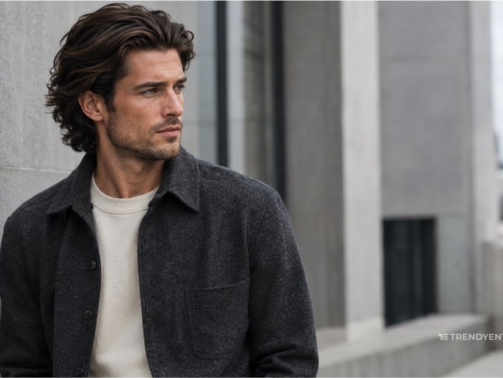
While for a semi-casual occasions twist, throwing a neutral-coloured shirt jacket over a lightweight turtleneck sweater and chinos builds a layered outfit that carries quiet elegance without trying too hard.
For office attire, a darker-toned jacket worn over a dress shirt and tailored trousers is a refreshing twist on business casual that genuinely exudes confidence and believe me, people notice.
And for outdoor adventures, combining a plaid flannel shirt with rugged jeans and hiking boots creates an outdoorsy ensemble that is both stylish and functional – proof that the right jacket can do it all.
A blazer is the safest, most versatile choice as it’s structured enough for business settings, adaptable enough for smart-casual when worn without a tie. For a more relaxed register, a Harrington or sport coat pairs just as cleanly.
A blazer is more formal and typically solid-coloured, suited to business settings. A sport coat is more textured and patterned, suited to smart-casual pairings with an Oxford cloth shirt specifically.
No, worn open over a plain shirt, a trench coat works in smart-casual settings as easily as formal ones, which is what separates it from a full overcoat.
For blazers, sport coats, and Harringtons, yes. Visible collar is the detail that makes the pairing read as intentional. For overcoats and closed trench coats, less collar shows and that’s fine, since the outer layer carries the formality instead.