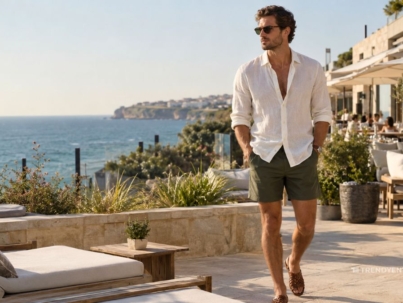
The key men’s fashion trends for 2026 are the return of relaxed tailoring, the consolidation of the quiet luxury palette, the ongoing shoe pivot away from trainers toward leather footwear, and the elevation of basics, the conviction that a well-chosen t-shirt, a correctly fitted trouser, and a quality knitwear piece matter more than any trend item. These are not predictions. They are the directions that have been building for two to three years and have now settled into the mainstream as the defining aesthetic of the modern well-dressed man.
What is not a trend in 2026: logomania, maximalism, deliberately oversized silhouettes worn as a statement. These are either retreating or being absorbed into broader relaxed-fit sensibility rather than sitting at the centre of how men dress. The man who looked at the fashion cycle in 2023 and 2024 and waited is now in the right position.
This is not a trend listicle. It is an editorial assessment of what the gentleman’s wardrobe looks like in 2026 and more importantly, which elements are worth adopting versus which ones are noise.
I have been paying attention to men’s fashion for long enough to recognise cycles, and 2026 sits at an unusually comfortable point in one.
The last five years have been a period of significant aesthetic turbulence streetwear at its zenith, then the backlash, then the quiet luxury counter-movement, then the slow return of tailoring in a form that no longer required a formal occasion. Men who dressed with genuine taste through that period often felt at odds with what was being promoted. The noise was loud and the signal was quiet. In 2026, the signal has won.
The aesthetic that the best-dressed men have been executing for years like relaxed tailoring, neutral palette, quality over quantity, clothes that work for actual life rather than editorial photographs is now the mainstream direction. The fashion industry caught up to the men who were already there.
The practical implication: this is the year to build rather than react. Not to chase new trend items, but to invest in the pieces and principles that are now clearly the direction of travel because they will compound rather than date.
The slim fit that defined menswear through the 2010s has not disappeared. It has been joined by something broader and the relationship between the two is now a matter of occasion and preference rather than one being right and the other being wrong.
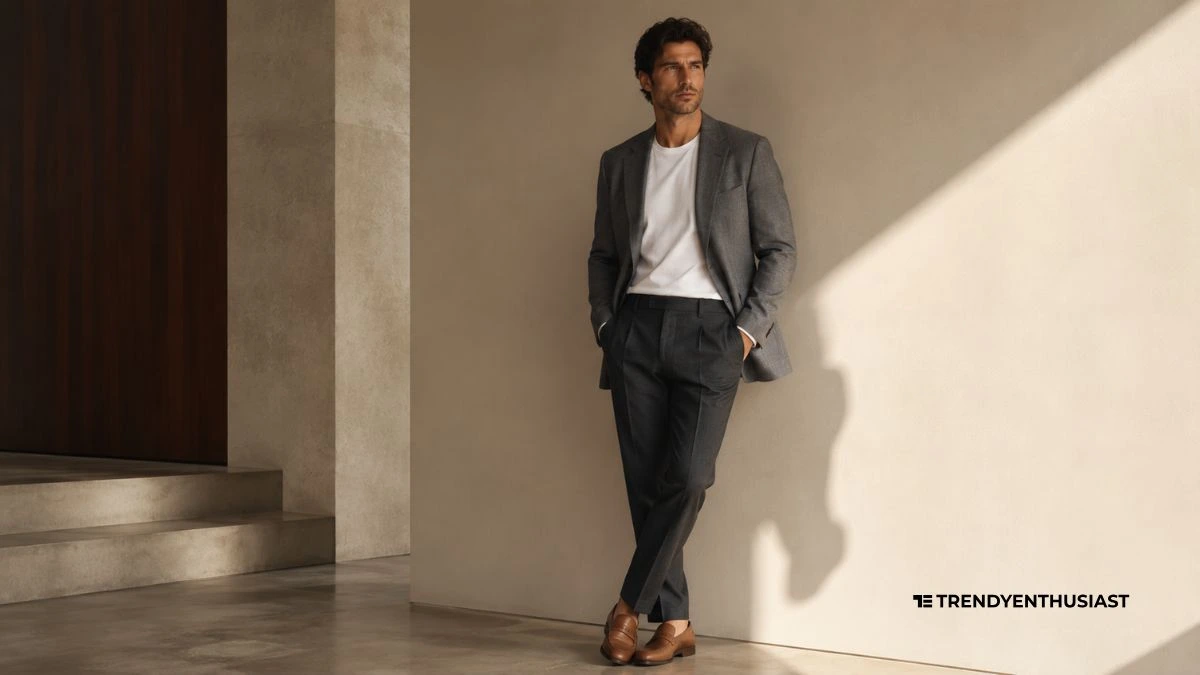
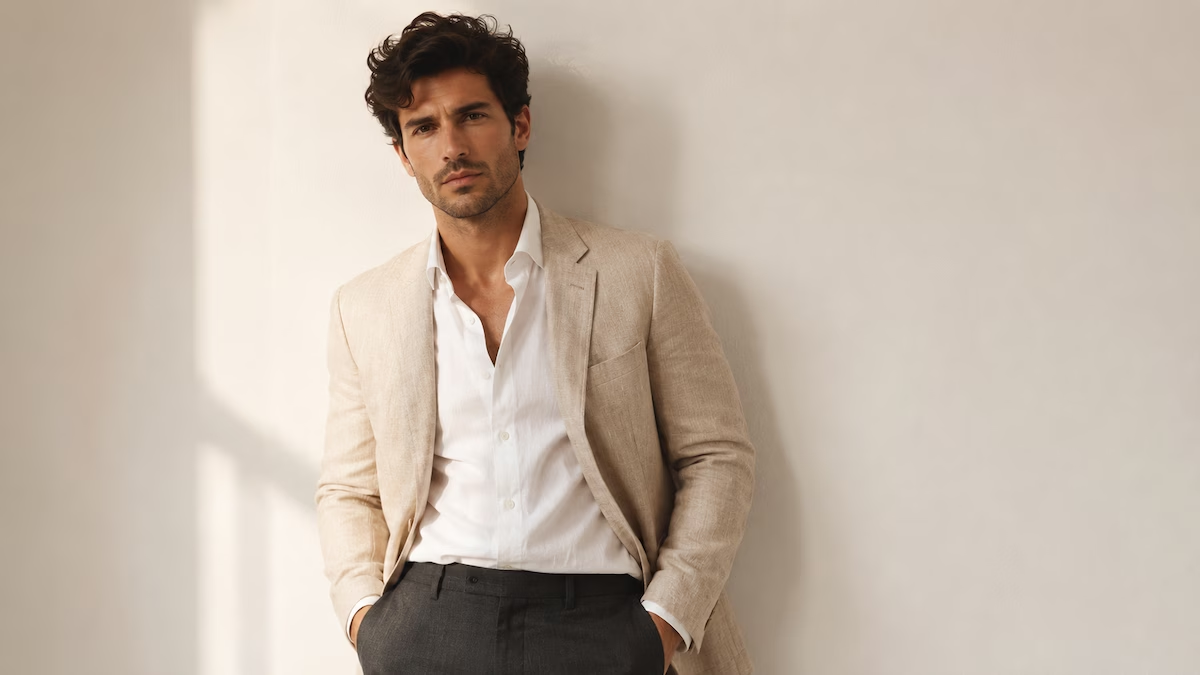
Relaxed tailoring in 2026 means a suit jacket with a slightly fuller chest, a trouser with more room through the thigh, a shoulder that sits cleanly without padding it aggressively. It is not the shapeless suiting of the 1990s, the structure is still there, the tailoring is still visible. The ease has simply increased.
What this looks like in practice: a mid-grey suit in a slightly heavier wool with a natural shoulder and a trouser that breaks cleanly at the shoe. A blazer that can be worn open over an OCBD and chinos without looking like the jacket and the trousers are trying too hard to belong to each other.
Quiet luxury as a term has been overused to the point of near-meaninglessness. But the underlying aesthetic it describes is real, durable, and worth understanding precisely.
Quiet luxury dressing is not about expensive clothes. It is about clothes that do not announce themselves. No visible branding. No trend-specific details that date a piece to a particular season. Colours that occupy the neutral-to-muted spectrum like stone, camel, navy, charcoal, warm grey, off-white, rather than the statement end. Fabrics that feel correct rather than conspicuous. A silhouette that fits without straining.
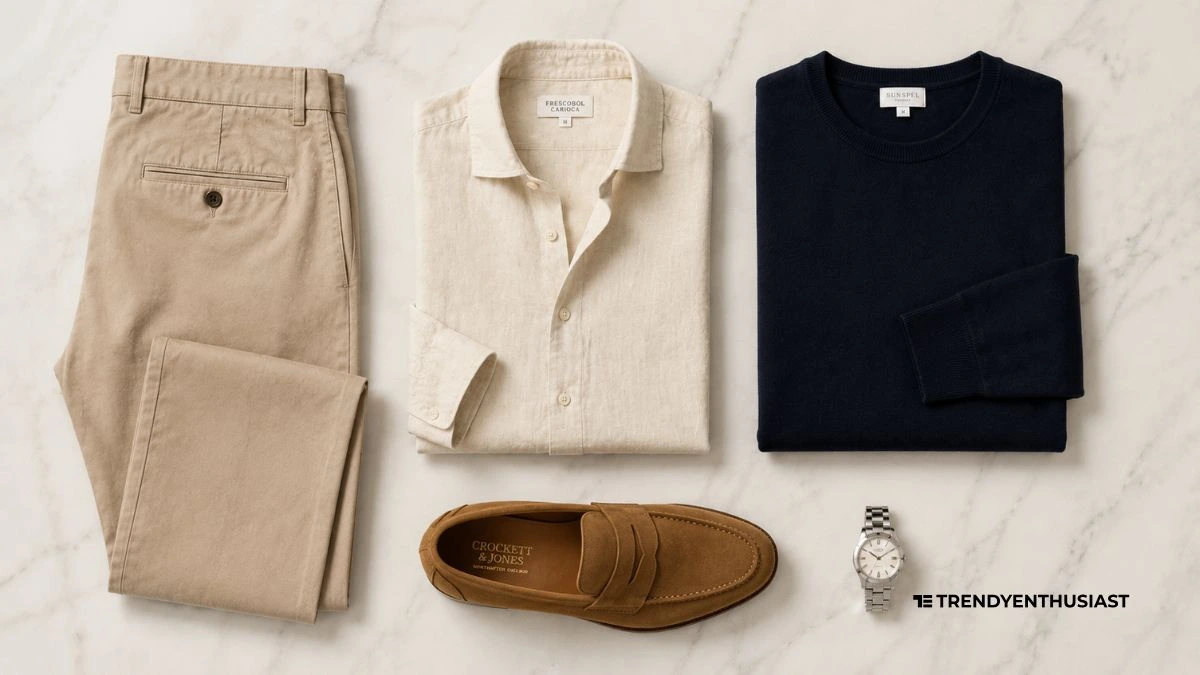
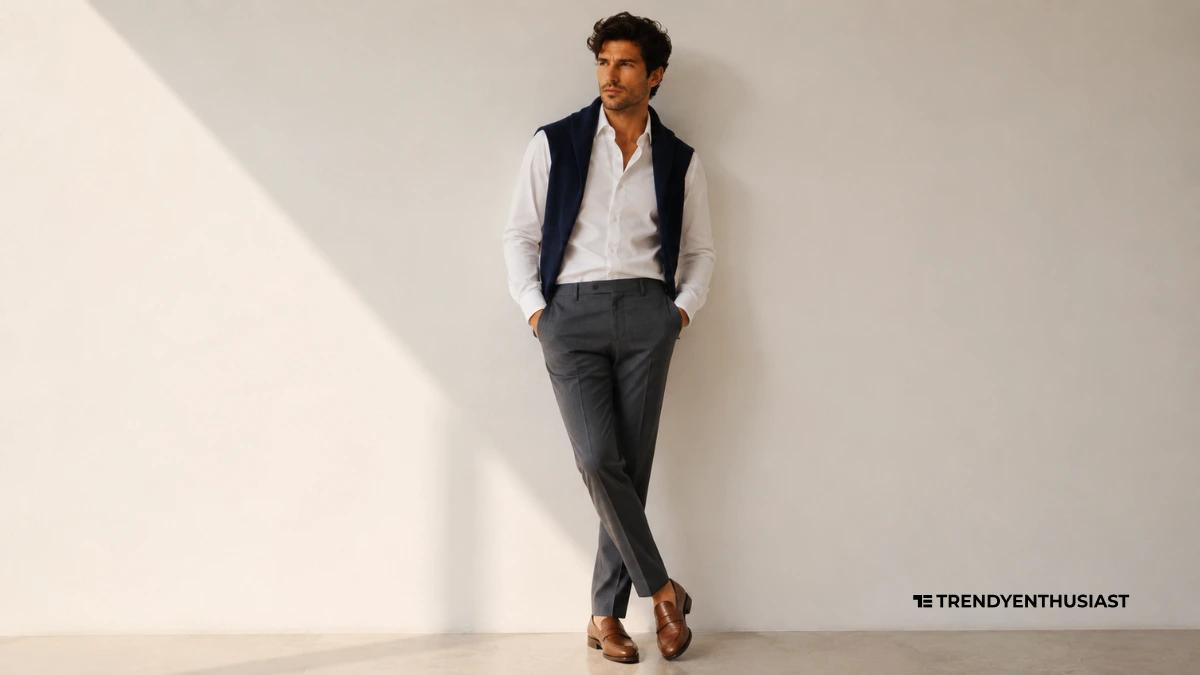
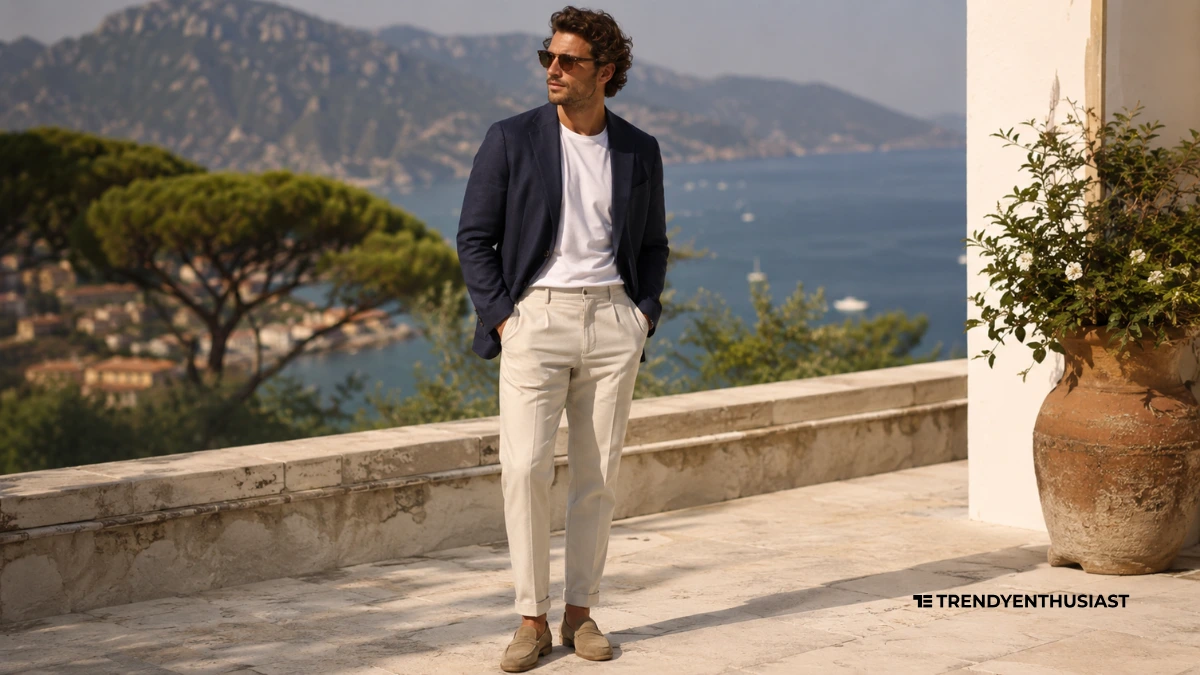
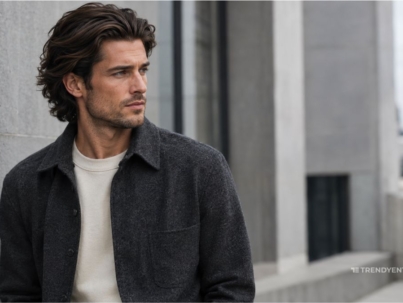
The palette in practice: a stone chino with a cream linen shirt and tan leather loafers. A charcoal suit with a white OCBD and black penny loafers. A navy overshirt over a light grey t-shirt with mid-grey tailored trousers. These are not exciting combinations. They are correct ones — and correct compounds in a way that exciting does not.
The one element that separates the man who executes this well from the one who executes it boringly: texture. When every piece in an outfit sits in the same colour register, texture becomes the variable that creates visual interest. A chunky knit against a smooth trouser. A brushed cotton shirt against a fine wool jacket. A suede loafer against a polished linen trouser. The palette is restrained. The texture variation is doing the work
Something has shifted definitively in men’s footwear in 2026 and it is worth naming directly.
The trainer specifically the clean, minimal, white leather trainer that dominated smart casual dressing for most of the 2010s has not gone away. But it has returned to being one option among several rather than the default answer to every smart casual situation. The man who wore clean white trainers with tailored trousers from 2015 to 2023 and found it worked every time is now finding that the same combination reads as slightly behind rather than effortlessly modern.
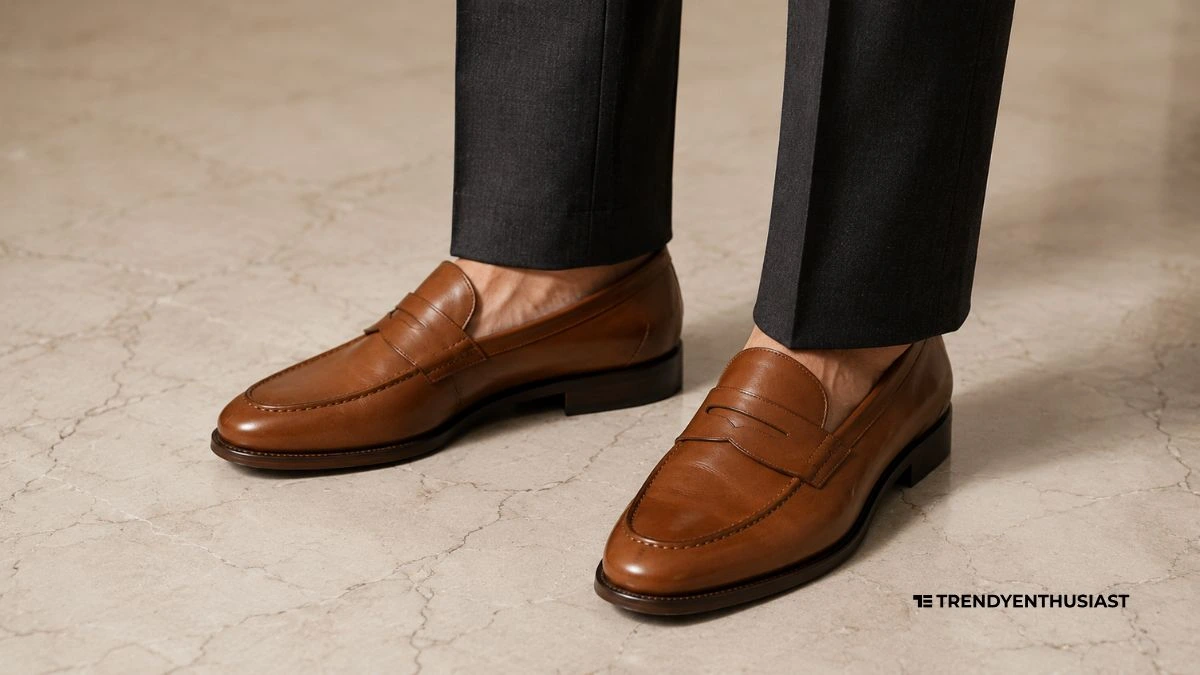
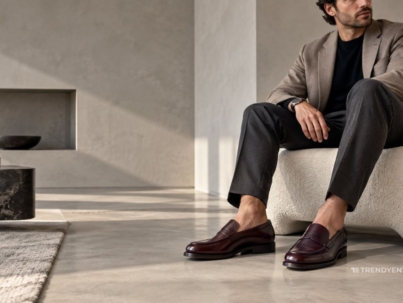
The shoe that has taken its place at the centre of the smart casual wardrobe is the loafer. Specifically the penny loafer and tassel loafer in leather or suede, worn with or without socks depending on the temperature and the outfit. The loafer’s position in menswear in 2026 is what the clean trainer’s was in 2018; the shoe that works across the widest range of occasions and outfit registers without requiring justification.
The broader leather footwear move: the Chelsea boot has strengthened in autumn and winter contexts. The Derby shoe has gained ground in business casual. The Oxford has held its formal position without change. The common thread is that leather upper, leather sole footwear is being reached for in situations where a trainer would previously have been the automatic choice.
For the complete guide to wearing loafers correctly like which style works with which outfit, the sock question resolved, and the seasonal logic of suede versus leather, The Gentleman’s Guide to Styling Loafers covers every combination in detail.
The most durable fashion shift of the last three years is not a trend item. It is a principle: that the quality and fit of basic garments matters more than any statement piece.
The man who invests in a white Oxford cloth shirt that fits correctly, a pair of well-cut navy chinos, a fine-gauge navy crewneck in a quality merino, and a pair of tan leather loafers has the foundation of more outfit combinations than the man who owns ten trend pieces and no coherent basics. This has always been true. In 2026 it is the dominant sensibility.
The basics worth investing in for 2026:
The white dress shirt: In 100% cotton, correctly fitted across the shoulders and chest, with a collar that holds its shape without a collar stay. This piece earns its keep across more outfit contexts than anything else in the wardrobe.
The navy crewneck: Fine-gauge knit, merino or cotton, no branding. Worn over an OCBD, under a jacket, or alone with tailored trousers. The most versatile top in a man’s wardrobe.
The tailored trouser in grey or stone: Not jeans, not chinos a proper tailored trouser with a clean break at the shoe. The piece most men resist buying and most men feel the absence of when they try to build outfits.
The quality leather shoe: One pair in tan or brown leather. The loafer is the current first choice. The investment level should be proportionate to how often it will be worn which for most men is daily.
These four pieces are not fashion. They are infrastructure. Everything else in the wardrobe works harder when these four are right.
The aesthetic thread connecting all four elements above has a specific cultural origin: Italian dressing, specifically the Neapolitan and Milanese traditions that prioritise sprezzatura over any particular trend direction.
Italian dressing in the context of men’s fashion 2026 means: a jacket worn open over a t-shirt with tailored trousers and loafers. A linen shirt worn untucked with slim chinos and suede loafers. A suit jacket worn as a blazer with a roll-neck in winter. The clothes are formal enough to be considered and relaxed enough to be lived in. The formality is never the point. The ease is.
This is not a new influence. What is new is that it has moved from the vocabulary of the few men who consciously referenced it to the mainstream aesthetic of 2026 menswear. The Italian casual approach is what the best-dressed men in London, New York, and Tokyo are wearing right now. Not because it is fashionable. Because it is correct.
Maximalist colour blocking: Present in runway collections, absent from the wardrobes of well-dressed men in real life. The restraint of the quiet luxury palette is winning.
Overly distressed or intentionally deconstructed pieces: A niche aesthetic that reads as deliberate rather than effortless in most real-world contexts.
Logo-forward pieces from luxury houses: The visible logo has retreated significantly as a signifier of taste. The men who most visibly wear luxury branding in 2026 are not the men setting the aesthetic direction.
Trend-specific sneakers worn in formal contexts: As discussed above — the trainer is not gone, but its reign as the automatic answer to every smart casual situation has ended.
The guiding question for any purchase decision in 2026: will this piece be as correct in three years as it is today? If the answer is yes, it belongs in the wardrobe. If the answer depends on whether the trend continues, it does not.
Understanding the direction of men’s fashion in 2026 is useful. Translating it into wardrobe decisions is where it becomes valuable.
Three questions before any purchase:
Does it fit my frame? The trends above are silhouette-specific. Relaxed tailoring that does not suit your proportions is not relaxed tailoring it is an ill-fitting jacket. Every piece needs to be evaluated against your specific body geometry, not a general trend description. The Body Shape Matcher does this systematically; it maps your proportions to the silhouettes and pieces that work for your specific frame across every category.
Does it work with what I already own? The quiet luxury palette’s strength is internal coherence. A stone chino, a navy knit, and a tan leather shoe work together. A statement piece that requires specific accompaniments to function adds complexity rather than versatility.
Does it suit the occasions my life actually contains? The most common wardrobe mistake is buying for a version of life that does not exist. For occasion-specific guidance what a specific dress code requires, how to build an outfit around a particular event, the Dress Code Decoder translates any occasion into a complete outfit with formality guidance.
The five defining elements of men’s fashion in 2026 are: relaxed tailoring replacing the ultra-slim silhouette of the previous decade, the quiet luxury palette of neutral and muted tones with no visible branding, the shift from trainers to leather footwear — specifically the loafer — at the centre of smart casual dressing, the elevation of quality basics over trend pieces, and the Italian dressing influence of sprezzatura and effortless formality. These are not new ideas but consolidated directions that have become the mainstream aesthetic for well-dressed men in 2026.
Yes — and it has moved from a trend descriptor to a durable aesthetic position. Quiet luxury in 2026 means clothes that fit correctly, sit in a neutral palette, carry no visible branding, and are made from fabrics that feel appropriate rather than conspicuous. It is the antithesis of fashion-cycle dressing. Rather than becoming dated as a trend, it has strengthened as a principle — the man who dressed this way in 2023 looks more current in 2026, not less, because the aesthetic has now become the mainstream direction rather than a counter-movement.
The loafer — specifically the penny loafer and tassel loafer in leather or suede — has become the central shoe of smart casual dressing in 2026, taking a position previously held by the clean white trainer. Beyond the loafer, the Chelsea boot has strengthened in autumn and winter, the Derby has grown in business casual contexts, and the Oxford holds its formal position. The common direction is leather upper footwear replacing trainers in contexts where the trainer would previously have been the automatic choice.
Relaxed tailoring is a suit or separates cut with slightly more ease through the chest and thigh than the slim fit that dominated through the 2010s, paired with a natural or softly structured shoulder rather than a padded one. The result is tailored clothing that sits comfortably in motion and reads as considered without being formal. It is distinct from oversized dressing — the fit is still proportionate to the body, the construction is still visible — but the ease is greater than what slim fit allowed. In 2026 it has become the mainstream position in tailored menswear.
The most useful framework for men dressing in 2026 is: invest in quality basics that fit correctly, build around a neutral palette that creates internal wardrobe coherence, prioritise leather footwear over trainers in smart casual contexts, and choose pieces that will be as correct in three years as they are today. The specific trends — relaxed tailoring, quiet luxury, the loafer — are the aesthetic language of this framework rather than items to chase individually. The man who builds around the framework will look correct regardless of where the trend cycle moves.
Men’s fashion in 2026 rewards the man who stopped chasing and started building. The aesthetic is settled, the direction is clear, and the pieces that matter are the ones that will still matter in 2029. That is not a difficult standard to meet. It just requires knowing which ones they are.
Next in the Sharp Wardrobe series: The Gentleman’s Guide to Styling Loafers | How to Measure for a Suit Jacket | Classy Style Men (coming soon)
Founder and Editor of Trendy Enthusiast. Ali covers men's fashion, lifestyle, grooming, and the art of dining well - blending real experience with practical insight.
Connect on Instagram