Curly Hair Is Actually the Best Match for a Mullet
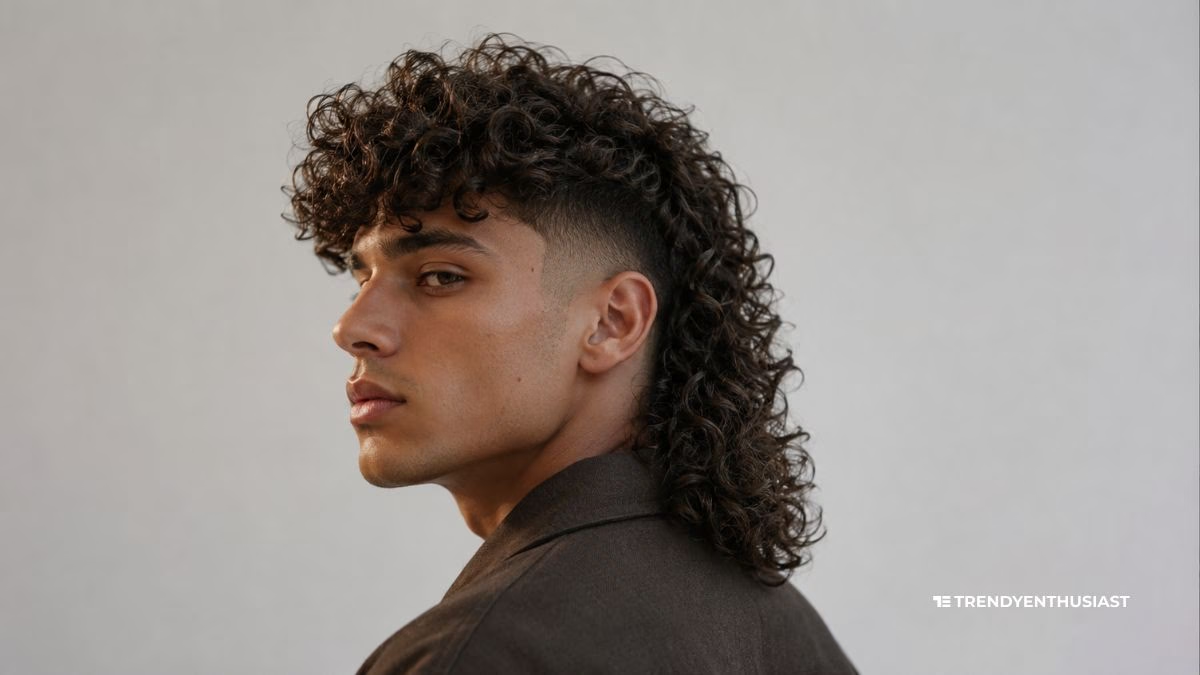
A curly mullet takes the mullet’s short-front, long-back shape and builds it around natural curls instead of straight or wavy hair and it’s one of the best-suited hair types for the cut.
Curls add volume, texture, and movement to the back and crown with far less styling effort than straight hair needs, which is exactly why the curly mullet has become one of the most requested modern mullet variations.
For the full modern mullet picture beyond curly hair specifically, see the Modern Mullet guide.
Why Curly Hair Suits a Mullet So Well
The mullet’s whole visual effect depends on contrast and volume at the back and curly hair delivers both without extra work.
Where straight hair needs deliberate layering and product to build shape, curls create natural volume, definition, and a “lived-in” texture on their own.
That’s the core reason curly hair is considered one of the strongest hair types for this cut, not just an acceptable one.
Coily and tightly-coiled hair tends to produce the boldest, most voluminous back; looser curls and waves create a softer, more relaxed version of the same silhouette.
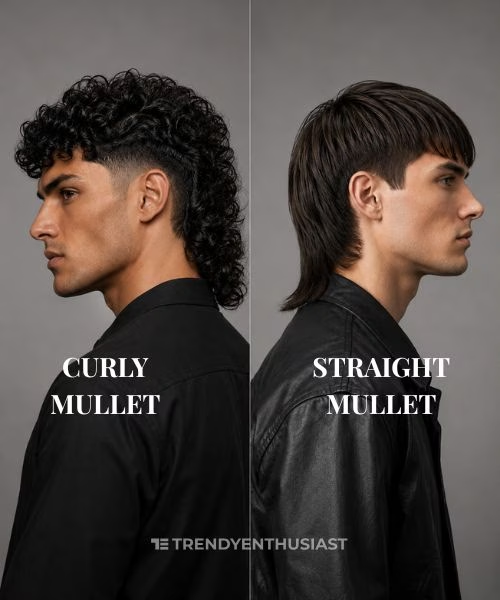
Curly Mullet vs Straight or Wavy Mullet
Detail
Curly Mullet
Straight / Wavy Mullet
Natural volume
High - built in, minimal effort
Low to moderate - needs styling
Best fade pairing
Burst fade or taper fade
Skin fade or hard taper
Styling effort
Lower - texture does the work
Higher - needs blow-dry and product
Cutting method
Dry cut, curl-by-curl recommended
Wet or dry cutting both work
Contrast at fade line
Softer, less visually sharp
Sharper, more defined line
The practical difference comes down to effort and finish. A straight hair mullet needs active blow-drying and product to build volume and hold a shape.
A curly mullet does most of that work on its own, the challenge shifts from “how do I add texture” to “how do I keep the curl pattern defined and frizz-free.”
Best Fade Pairings for a Curly Mullet
Not every fade style suits curly hair equally well.
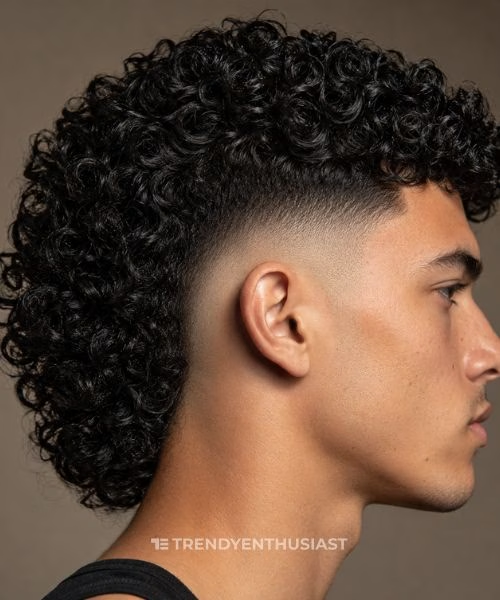
Burst Fade Mullet
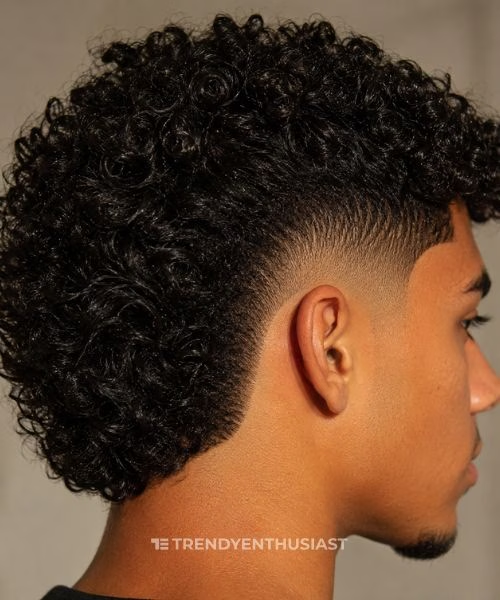
Burst fade mullet is the most commonly recommended pairing for curly hair specifically.
Its rounded, horseshoe-shaped fade around the ear complements the natural roundness of curl volume better than a straight fade line does.
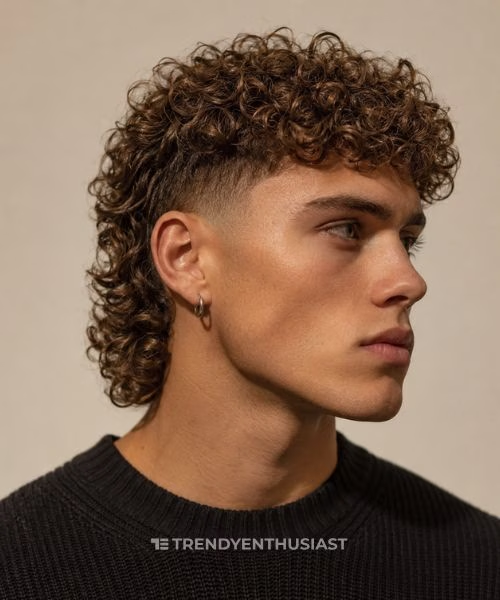
Taper Fade Mullet
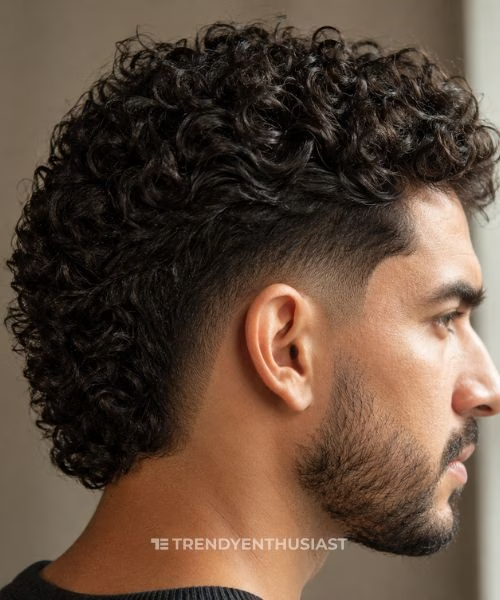
Taper fade (rather than a hard skin fade) is often the gentler, more natural-looking choice for curly hair, it avoids the stark contrast a skin fade creates against dense curl texture, giving a softer, more blended transition instead.
Skin Fade Mullet
Skin fade still works and creates the boldest contrast against voluminous curls, but it needs more frequent maintenance to stay sharp as new growth comes in, since curly regrowth is often less visually obvious than straight regrowth until it’s fairly pronounced.
A subtler, lower-drama version where the back length is only moderately longer than the top, easier to maintain and more office-appropriate.
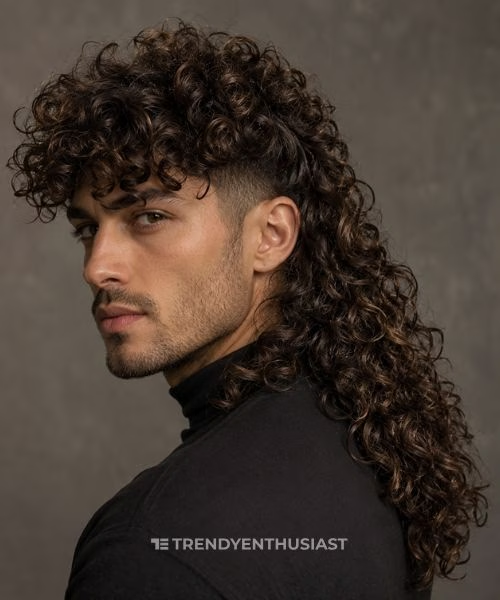
Long Curly Mullet
The maximalist version, where curls at the back are left to grow out fully, often past the collar, creating a bold, statement-making silhouette with maximum volume.
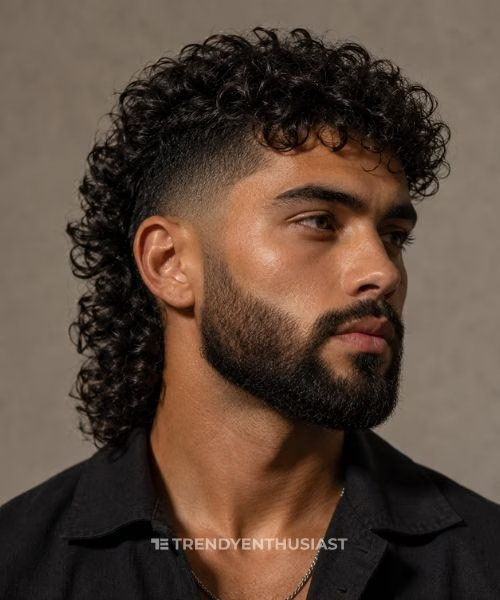
Curly Mullet with Beard
Pairing facial hair with a curly mullet is a popular way to balance the haircut’s volume with definition lower on the face.
Which Face Shapes Suit a Curly Mullet?
Square faces are frequently cited as one of the strongest matches for a curly mullet: the style’s longer, textured back draws attention downward and away from a strong jawline, while curls on top and around the sides soften angular features.
Oval and diamond face shapes also suit the cut well, since the mullet’s layering adds balance without competing against already-balanced proportions.
Round faces can wear a curly mullet too, but generally benefit from more height and volume specifically at the crown to elongate the face, rather than an evenly rounded curl shape all over.
If you want to know which hairstyle suits perfectly to your face, use our free tool Hairstyle Matcher.
How to Style a Curly Mullet
Start on damp, not wet, hair. Towel-blot curls (never rub, which causes frizz) before applying product.
Apply a curl cream or leave-in conditioner through the mid-lengths and ends first, working from damp hair to lock in moisture before the curl pattern sets.
Diffuse in sections, cupping curls upward toward the scalp rather than pulling them down, to build volume without disrupting the natural curl pattern.
Add sea salt spray for looser waves, or a small amount of curl-defining gel for tighter coils, to hold the shape through the day without stiffness.
Finish with a light amount of curl oil or matte clay, worked through with fingers rather than a comb, for shine and hold without weighing curls down.
Maintenance notes specific to curly hair:
Use a sulfate-free shampoo and deep condition regularly; curly hair is naturally more prone to dryness and frizz than straight hair
Sleep on a satin pillowcase, or use a plop with a microfiber towel or t-shirt, to preserve curl definition overnight instead of flattening it
Book a barber or stylist specifically experienced with curly textures, a curl-by-curl, dry-cutting approach shapes the mullet far more accurately while growing than cutting curly hair wet, since curls shrink significantly once dry
For a complete breakdown of barbershop clipper techniques, daily skin maintenance, and signature scents, explore our complete Men’s Grooming Guide.
The Bottom Line
Curly hair isn’t just compatible with the mullet, it’s arguably the hair type best suited to it. The natural volume and texture curls provide does most of the visual work a straight-haired mullet has to build with layering and product. Pair the right fade, find a stylist who understands curl-specific cutting, and the maintenance is genuinely lighter than most people expect.
A curly mullet is a mullet haircut built around naturally curly hair, with short or faded sides and longer curls left at the back and crown, using the hair’s natural texture to create volume and movement.
Yes — tight coils, springy ringlets, and looser waves all work, though the finished look varies: tighter curl patterns tend to produce a bolder, more voluminous back, while looser waves create a softer result.
A burst fade is the most commonly recommended pairing for curly hair, since its rounded shape complements natural curl volume. A taper fade is a gentler alternative to a full skin fade for a softer transition.
Use a sulfate-free shampoo, apply curl cream or leave-in conditioner to damp hair, diffuse rather than air-dry roughly, and sleep on a satin pillowcase or use a plop to protect curl definition overnight.
Dry cutting, using a curl-by-curl method, is generally more accurate for a curly mullet, since curls shrink significantly once dry compared to their wet, stretched length.