How to Measure for a Suit Jacket: Every Measurement, Done Right

To measure for a suit jacket, you need five measurements: chest, shoulders, sleeve length, jacket length, and waist. Take the chest measurement across the fullest part of your chest with the tape held level and firm, not tight. Shoulders are measured seam to seam across the back. Sleeve length runs from the top of the shoulder seam to the wrist bone. Jacket length runs from the base of the collar at the back of the neck to where you want the hem to fall. Waist is measured at the narrowest point of the torso, not the trouser waistband.
These five numbers determine the base size. What turns a correctly-measured jacket into a well-fitted one is knowing which measurements allow alteration and which do not and what to tell the person measuring you, whether that’s a tailor in a fitting room or a measuring partner at home.
This guide covers all of it.
Why Suit Jacket Sizing Is Not Like Shirt Sizing
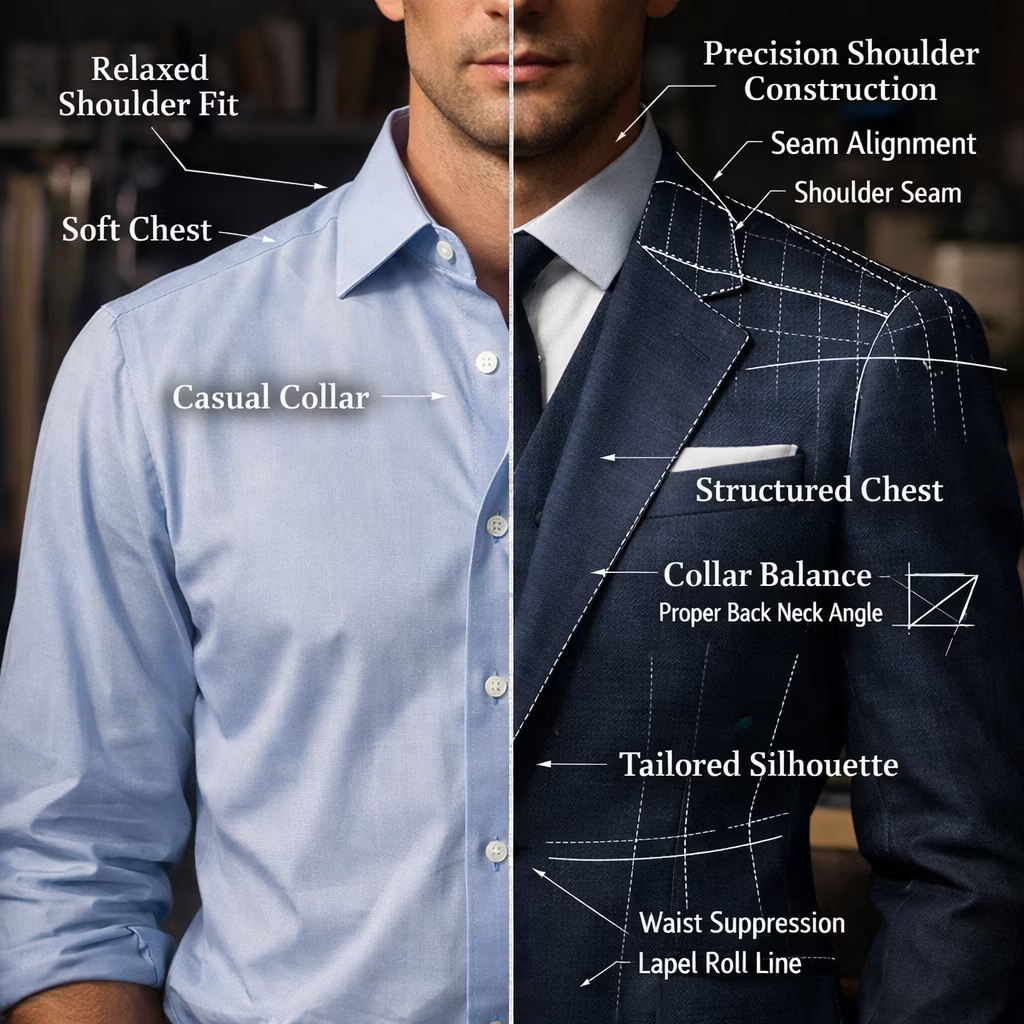
A dress shirt has four meaningful measurements: collar, chest, sleeve, and sometimes waist. A suit jacket has more and the tolerance for error is significantly smaller, because a jacket’s structure is built around your shoulders in a way that no shirt is.
The shoulder seam is the one measurement in a suit jacket that cannot be altered without rebuilding the garment. Every other element can be adjusted by a competent tailor for a cost that is modest relative to the jacket price. The shoulders cannot. Get the shoulder measurement right and the rest can be fixed. Get the shoulders wrong and no amount of alteration recovers the jacket.
This is why most men who buy suits off the rack and feel vaguely uncomfortable in them cannot identify why. The jacket is often the right chest size but the wrong shoulder width which manifests as a shoulder seam that sits behind the actual shoulder point, a collar that gaps at the back of the neck, or sleeves that hang with a slight forward pull. All of these are shoulder-fit failures, and none of them can be corrected after purchase.
To me the measurement comes first. The fitting comes second. The alteration comes last.
What You Need Before You Start
A soft fabric tape measure: Not a retractable metal builder’s tape. A fabric or flexible plastic tape, the kind used in dressmaking and tailoring which conforms to the body’s curves without the measurement being distorted by the tape’s own rigidity. They cost very little and the accuracy difference matters.
A partner, ideally: Several of these measurements can be taken solo with care but shoulder width and jacket length in particular are more accurate when someone else holds the tape. If you are measuring alone, use a mirror to check the tape position, not just feel.
Your posture: Stand normally. Not at military attention and not slumped. The way you stand when you are simply standing that is the measurement position. Pulling shoulders back, straightening beyond your natural posture, or sucking in the stomach all produce measurements that result in a jacket fitting incorrectly when you are actually wearing it.
Lightweight clothing: Measure in a fitted t-shirt or a thin dress shirt not a jumper, not a thick layer. Suit jackets are lined and cut to sit over a single layer. Measuring over heavy clothing adds false bulk to every number.
The Five Essential Measurements
Measurement 1: Chest
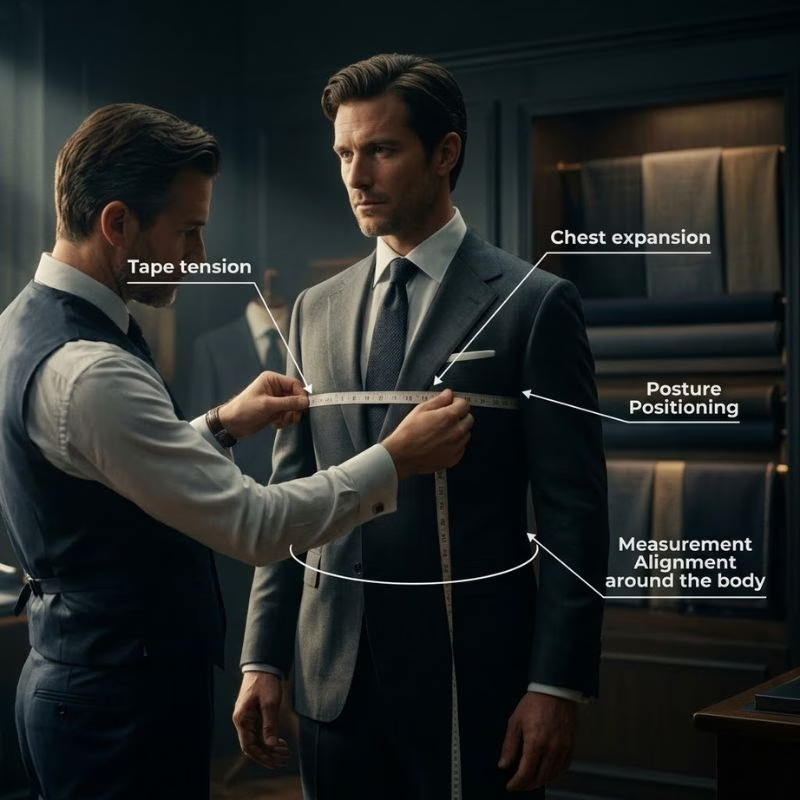
This is your anchor measurement. Every suit jacket size label the 38, 40, 42 you see in shops and on rail tags refers to the chest measurement in inches. All other suit proportions are derived from it.
How to measure: Stand with your arms relaxed at your sides. Wrap the tape around the fullest part of your chest, this is typically across the nipple line and around the shoulder blades at the back. Keep the tape level all the way around: check in a mirror or ask your partner to confirm the tape is not dipping at the back.
The tension question: The tape should be firm but not compressive. You should be able to slide one finger underneath it comfortably. Too tight and you are measuring compressed tissue, not your actual chest. Too loose and you will order a jacket with unnecessary ease that reads as poor fit.
Read the number: This is your chest measurement in inches or centimetres depending on your tape. This number determines your base jacket size. A 40-inch chest corresponds to a size 40 jacket in most standard sizing systems.
Natural chest vs dressed chest: If you plan to wear a waistcoat or a thick shirt under your suit jacket, measure with that layer on. A jacket cut to fit over a t-shirt will pull across the chest when a waistcoat is added. Measure for the heaviest layer you intend to wear underneath.
Measurement 2: Shoulders
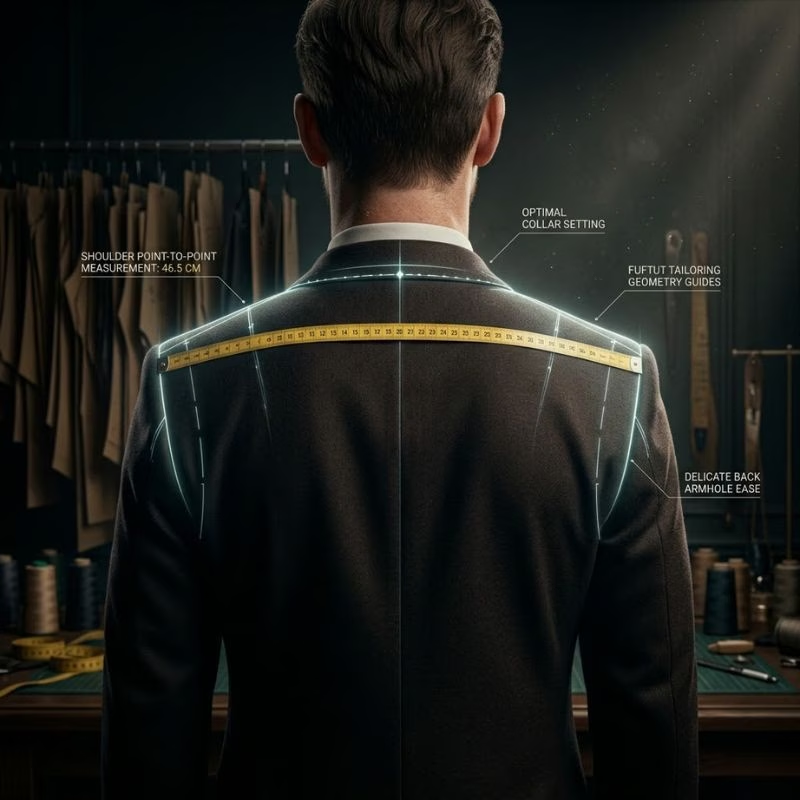
The most critical measurement. The one that cannot be fixed.
How to measure: This measurement goes across the back from the point of one shoulder to the point of the other. The “point” is the bony prominence at the outer edge of your shoulder, where the shoulder meets the arm. In a well-fitted jacket, the jacket’s shoulder seam should sit precisely at this point: not one centimetre beyond it, not one centimetre short of it.
Have your partner hold one end of the tape at the right shoulder point, run it horizontally across the upper back to the left shoulder point, and read the measurement there. You want the tape to run across the back of the body, not over the top of the shoulders.
What this number does: It tells you whether a standard jacket size fits your frame symmetrically. Most mass-produced suits are cut to a proportion where chest and shoulder width increase together. If you have narrow shoulders relative to your chest (or broad shoulders relative to it), you will need to specify this to a made-to-measure service, or choose brands that cut for your body geometry.
A useful check: The shoulder seam of any jacket you try on should end exactly where your shoulder ends. Hold your arm out horizontal and look at where the seam sits. If it overhangs the shoulder edge, the jacket is too wide. If it pulls inward before the shoulder edge, it is too narrow. Neither can be tailored.
Measurement 3: Sleeve Length
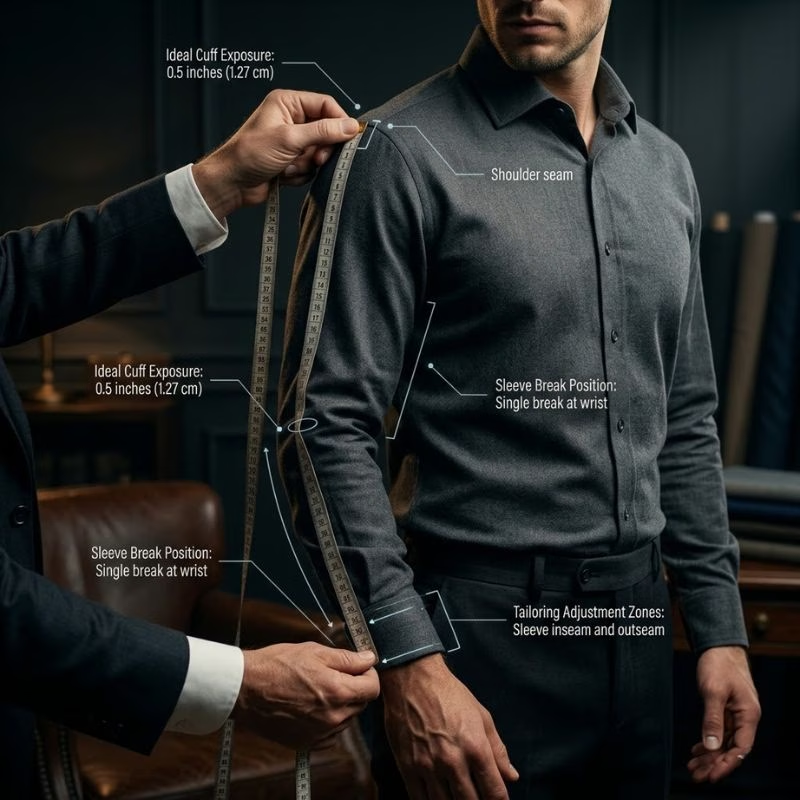
How to measure: Stand with your arm relaxed at your side, elbow very slightly bent, the position your arm is in when you are simply standing. Have your partner place the tape at the top of your shoulder seam (the bony point at the very top of the shoulder where the arm meets the torso) and run it down the outside of the arm, following the slight bend of the elbow, to the wrist bone – the prominent bone on the outside of the wrist.
What length to aim for: Convention, and the standard upheld by every sartorial tradition from Savile Row to Neapolitan tailoring, is that the jacket sleeve should end approximately 1.5 to 2 centimetres above the wrist bone allowing the shirt cuff to show below it. The shirt cuff showing is not an accident or an oversight. It is the correct result.
A jacket sleeve that covers the shirt cuff entirely reads as too long. A jacket sleeve that exposes more than two centimetres of shirt cuff reads as too short. The 1.5 to 2 centimetre window is the target.
The alteration tolerance: Sleeve length is one of the more straightforward jacket alterations, most jackets can be shortened by a competent tailor in under an hour. Lengthening is only possible if sufficient material was left in the sleeve hem during manufacture, which is common in quality tailoring and uncommon in budget suits. When in doubt, buy slightly long and shorten to fit.
Measurement 4: Jacket Length
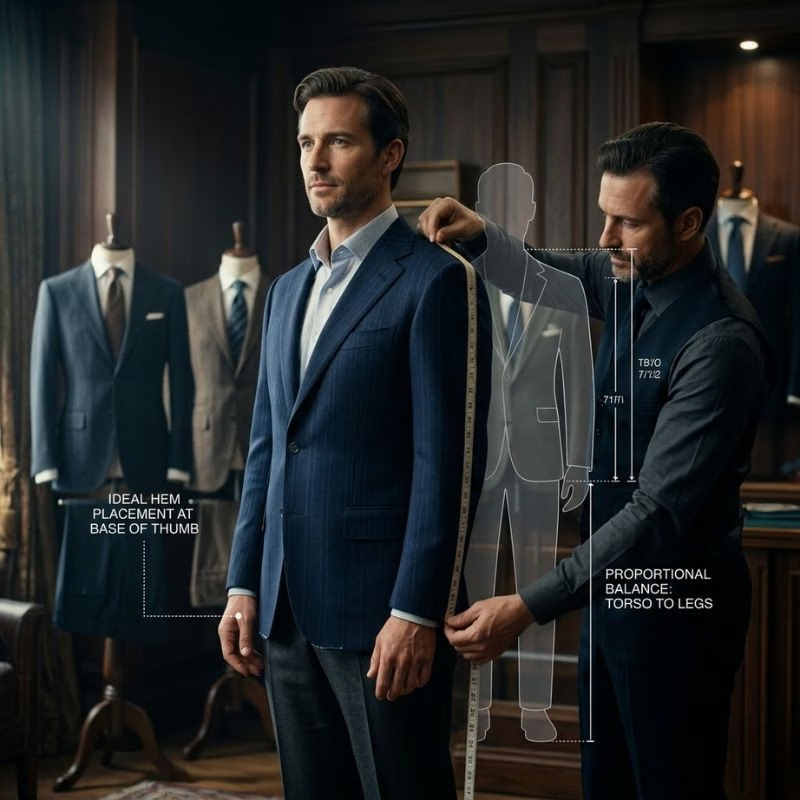
This measurement determines where the jacket hem falls, and it is more personal than the others – it relates to your torso-to-leg ratio rather than a fixed anatomical point.
How to measure: Start at the base of the collar, at the back of the neck specifically, the point where the collar meets the jacket back. Run the tape down the centre back of the jacket to where you want the hem to fall.
The conventional guidance: The jacket hem should fall at or around the base of the thumb when the arm hangs naturally. To find this point without measuring: stand normally, relax your arm completely, and note where the base of your thumb (the knuckle where the thumb meets the hand) sits. The jacket hem should reach that point. This is the benchmark used by most Savile Row tailors as a proportional starting point.
For men with longer torsos, this rule produces a longer jacket. For men with shorter torsos, a shorter one. The proportionality is the point.
Style variation: Single-button jackets and fashion-forward cuts sometimes run shorter. Double-breasted jackets traditionally run slightly longer. Classic two-button and three-button suits follow the thumb rule closely. Know which you are buying before using this as your only reference.
Measurement 5: Waist
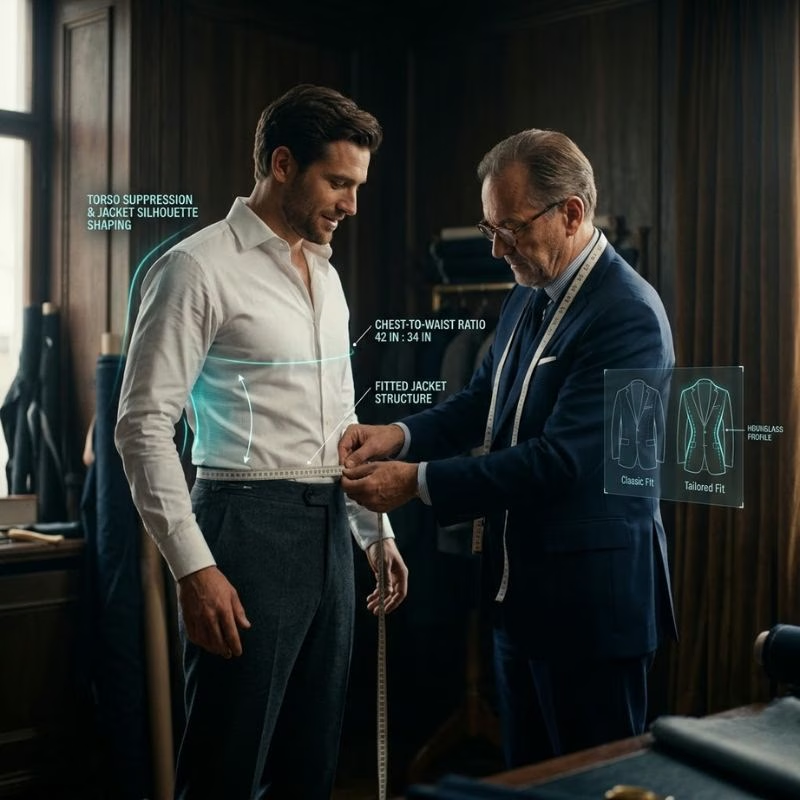
The waist measurement determines how much suppression is appropriate, and it is the measurement most frequently left out of home measuring attempts.
How to measure: Find the natural waist – the narrowest point of your torso, which sits above the trouser waistband and typically two to three finger-widths above the navel. This is not where your trousers sit. Most men’s trouser waistbands sit below the natural waist; measuring there produces a number that results in a jacket with excess fabric through the torso. Wrap the tape around the natural waist and keep it level. Same tension rule as the chest: firm but not compressive, one finger of ease.
What this number does: The difference between your chest measurement and your waist measurement tells a tailor how much suppression your jacket needs. A 40-inch chest with a 34-inch waist suggests meaningful suppression for a fitted silhouette. A 40-inch chest with a 40-inch waist suggests a straight or slightly suppressed cut. Most mass-produced suits offer a fixed suppression for each size. Made-to-measure and bespoke allow this to be specified. If you are buying off the rack and your chest-to-waist differential is significant, budget for a waist suppression alteration – a competent tailor can take this in cleanly in less than an hour, and the transformation in how the jacket reads on the body is considerable.
Getting the measurements right is the foundation of a suit that fits — for the complete framework of building a wardrobe around it, see The Complete Men’s Style Guide.
What Your Measurements Tell a Tailor vs What You Tell Them Yourself
There is a difference between measurements and instructions.
Measurements are numbers: chest 40, shoulder 18, sleeve 64 centimetres. These numbers tell the tailor the geometry of your body.
Instructions are style decisions: how much chest ease, how much waist suppression, where the sleeve should end, how the collar should sit. These decisions are partly taste and partly body-type logic and they are worth understanding before you walk into a fitting appointment.
On ease: Suit jackets are not cut to your exact chest measurements, they are cut to your measurement plus a specified ease allowance. A jacket with very little ease reads as slim or fitted. One with more ease reads as relaxed or classic. When buying made-to-measure, specify the ease you want. When buying off the rack, the ease is fixed by the brand’s block – try the jacket on to assess whether you prefer the ease of their standard cut.
On silhouette: Your body shape determines which silhouette works. A broader-shouldered man typically suits a jacket with some suppression to define the waist without padding the shoulders further. A slimmer build suits a cleaner, less structured shoulder.
The Body Shape Matcher maps your measurements to specific silhouette recommendations and builds the broader capsule wardrobe logic around your proportions – if you haven’t used it, this is the right moment in the process.
On collar gap: Tell the tailor if any jacket you try creates a gap between the collar and the back of your neck when the jacket is on your shoulders. This is a common fit issue in mass-produced suits and has a specific alteration (collar suppression) that addresses it cleanly.
The Six Suit Jacket Fit Checks (After Measuring, Before Buying)
Measurements get you to the right size. These six checks confirm the fit is correct when you put the jacket on.
The shoulder seam: Sits exactly at the shoulder point. Not behind it, not ahead of it. Check this first. If it fails here, no other check matters.
The collar lie: The jacket collar should lie flat against the shirt collar at the back of the neck with no gap. If it pulls away from your neck, the jacket has either too much shoulder width or a back length issue.
The chest button: When the jacket is buttoned, the fabric across the chest should lie flat with no horizontal pulling creases (too tight) and no vertical draping excess (too large). The lapels should roll cleanly without splaying outward.
The arm movement: Raise both arms to shoulder height with the jacket buttoned. The jacket should lift at the hem but the shoulders should not ride up significantly or pull across the back. Restriction here indicates insufficient ease in the chest and back.
The sleeve show: Shirt cuff should show 1.5 to 2 centimetres below the jacket sleeve. Check with arms hanging naturally.
The hem length: At rest, the hem should reach the base of the thumb. The jacket should cover the seat of the trousers completely when standing. A jacket that exposes the trouser seat is too short.
Pass all six and the jacket fits. Fail on the shoulders and walk away. Fail on anything else and assess whether the alteration is practical and proportionate in cost.
Measuring for Off the Rack vs Made to Measure vs Bespoke
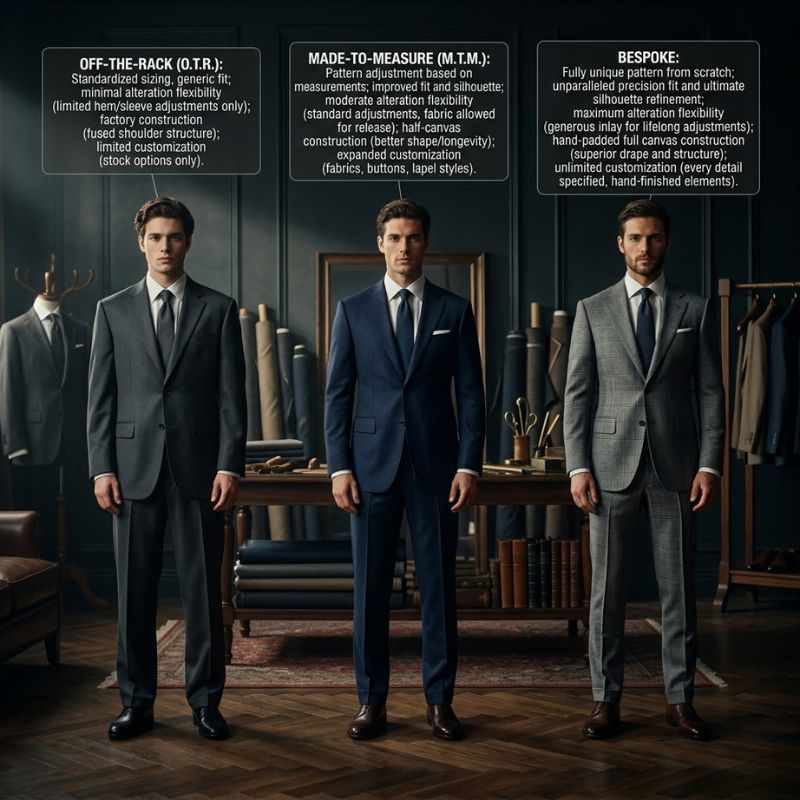
These three routes use your measurements differently.
Off the rack: Your measurements determine which size to try. The jacket is pre-cut to a standard block, and alterations are applied afterward to correct the fit. The shoulder width and overall silhouette are fixed by the brand’s block, you are adjusting to their cut, not the other way around. Buy from brands whose block suits your body type. If you consistently find that a 40 regular fits your chest but gaps at the collar and pulls at the back, that brand’s block does not match your proportions. Try a different brand before committing to repeated alterations.
Once the jacket is correctly fitted, the next practical question is travel. How to Fold a Suit for Travel covers the exact technique that keeps a well-fitted jacket arriving uncrumpled.
Made to measure: Your measurements are used to modify an existing pattern. Most made-to-measure services take your five measurements and adjust the base pattern proportionally. You get closer to a perfect fit than off the rack, and you can specify style details (lapel width, button stance, suppression level) within the brand’s options. The Savile Row Company, Charles Tyrwhitt made-to-measure, and several mid-range UK tailoring brands offer this at an accessible price point.
Bespoke: Your measurements are the starting point for a pattern created from scratch for your body alone. A bespoke tailor typically takes 15 to 20 measurements in an initial appointment and uses them to draft a unique pattern. Two to three fittings follow before the finished garment. This is the process that produces jackets with no collar gap, no shoulder issues, and a chest fit that requires no alteration because it was built for your specific body geometry. It is also expensive, with entry-level bespoke in London starting at £1,000 and Savile Row bespoke beginning at several multiples of that.
For most men building a wardrobe, made-to-measure is the right level of investment relative to result. Off the rack with targeted alterations is a close second when the brand’s block suits your frame.
Measuring for a Suit Jacket Alone vs as Part of a Full Suit
If you are buying a jacket and trousers as a matched suit, your trouser measurements i.e waist, inside leg, seat are taken separately. The jacket measurements above apply to the jacket only.
One important coordination point: jacket length and trouser rise interact. A jacket that falls correctly to the thumb rule exposes a proportional amount of trouser below the hem. If your trouser rise is very high or very low relative to convention, the visual relationship between jacket hem and trouser waistband changes. This is a style and proportions question, not a measurement error but it is worth being aware of when assessing how a suit reads as a complete outfit.
For the trouser side of the equation – chino cut vs dress trouser, rise options, how different waistband heights change the silhouette – the Chino vs Dress Trousers: The Mistake Ruining Men’s Outfits guide covers the trouser logic that corresponds to everything above.
Once you have the suit jacket measured, fitted, and altered: the next practical questions are how to travel with it without arriving creased and how to store it correctly. Both of those are covered in the Sharp Wardrobe series.
Frequently Asked Questions
You need five measurements: chest (around the fullest part of the chest, tape level and firm), shoulder width (across the back from shoulder point to shoulder point), sleeve length (from shoulder point down the outside of the arm to the wrist bone), jacket length (from collar base at the back of the neck to the desired hem position), and natural waist (at the narrowest point of the torso, above the trouser waistband). Use a soft fabric tape measure, wear lightweight clothing, stand in your natural posture, and measure with a partner for the shoulder and length measurements where possible.
Shoulder width. It is the only suit jacket measurement that cannot be corrected through alteration – the shoulder seam position is structurally fixed once the jacket is made. All other measurements – chest, waist, sleeve length, jacket length can be adjusted by a competent tailor. If a jacket fits correctly across the shoulders, the rest can be made to work. If the shoulders are wrong, no alteration recovers the jacket.
A fitted or slim suit jacket typically has 3 to 5 centimetres of ease above the chest measurement — meaning a 40-inch chest wears a jacket cut to approximately 43 to 45 inches at the chest. A classic or regular fit jacket has 5 to 8 centimetres of ease. Less ease produces a sleeker, more modern silhouette. More ease produces a more relaxed, traditional one. When measuring, note how the jacket feels across the back when you raise your arms: restriction across the back indicates insufficient ease; excess fabric draping at the chest indicates too much.
The jacket sleeve should end approximately 1.5 to 2 centimetres above the wrist bone, allowing the shirt cuff to show below. This is the standard upheld by British and Neapolitan tailoring traditions. A sleeve that covers the shirt cuff entirely is too long; one that exposes more than 2 centimetres of shirt cuff is too short. Sleeve length is an alterable measurement most tailors can adjust it in one appointment.
The number on a suit jacket label – 38, 40, 42, and so on – refers to the chest measurement in inches in the UK and US sizing systems. A size 40 suit jacket is cut for a 40-inch chest. The letter suffix indicates the torso length: S (short), R (regular), L (long). A 40R is built for a 40-inch chest with a standard torso length. If your chest measurement falls between sizes, size up and alter down reducing ease is more straightforward than adding it.