Trendy Enthusiast

How to Fold a Suit for Travel: The Technique That Arrives Uncrumpled

how to fold a suit jacket for travel

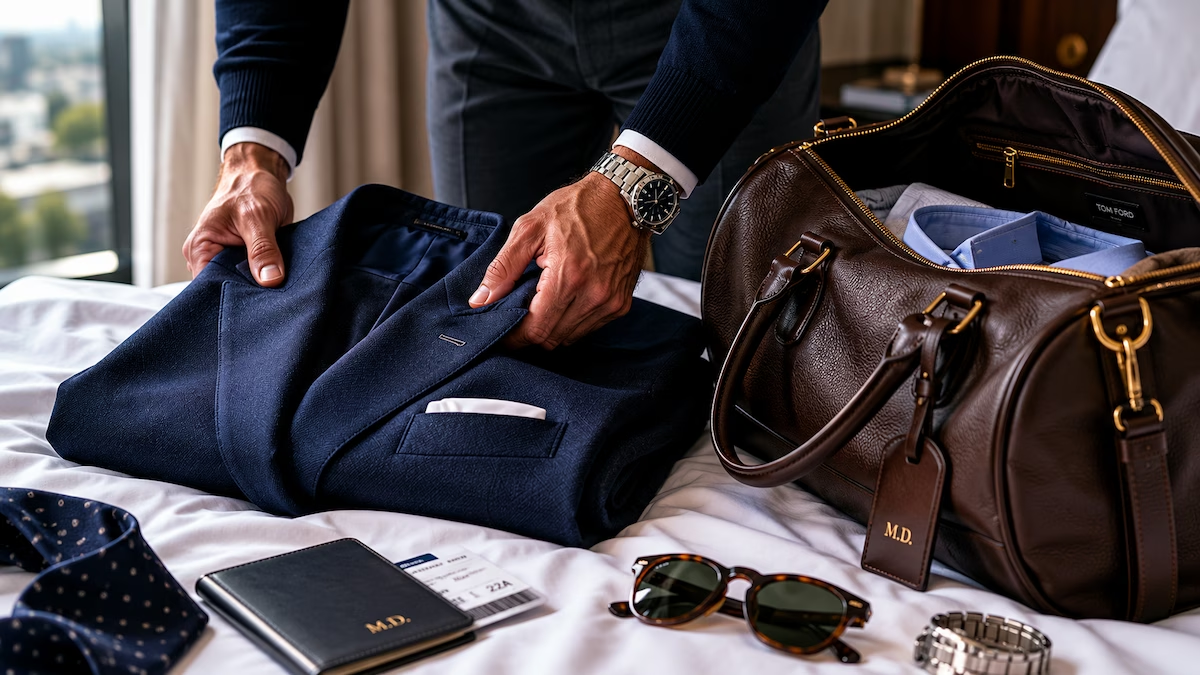
To fold a suit jacket for travel without creasing it: turn the jacket inside out, fold one shoulder into the other so the lining faces outward, then roll the jacket loosely from the collar downward into a compact cylinder. For the trousers, fold along the crease lines, lay them flat, and roll from the waistband down. Both pieces rolled together in the centre of your bag arrive with minimal creasing regardless of journey length.

This is the inside-out roll method. It is the most reliable technique for folding a suit jacket for travel without a garment bag, used by frequent business travellers and endorsed by most suit manufacturers for carry-on packing. Every other method i.e the flat fold, the military roll, the dry cleaning bag trick either requires a garment bag or produces more creasing under the pressure of a packed suitcase.

This guide covers the complete technique, the trouser method, the garment bag question, and what to do on arrival if creases have set in anyway.

Why Suits Crease When Packed (And What Actually Prevents It)

Understanding the problem makes the technique make sense.

Suit fabric like wool, wool-blend, or performance fabric creases when fibres are compressed under pressure and held in that position long enough for the natural elasticity of the cloth to relax into the compressed shape. A flat-folded jacket in a suitcase under the weight of everything else packed on top of it is sitting in exactly that condition for hours.

The inside-out roll method addresses this in two ways. First, turning the jacket inside out means the outer fabric is protected on the inside of the roll, away from direct contact with other items and shielded from pressure by the jacket’s own lining. Second, rolling rather than folding distributes the compression across a continuous curve rather than concentrating it at a sharp fold line. A curve creases far less than a fold under equivalent pressure.

The fabric weight matters too. A heavier wool has more body and resists creasing better than a lightweight summer-weight fabric of 180 to 220 grams. If you’re travelling with a lightweight suit, the technique is more important, not less.

What You Need Before You Start

Nothing specialist. The inside-out roll method requires no garment bag, no suit carrier, no special packing cubes. Your hands and the jacket are sufficient.

If you have a suit carrier or garment bag, the method differs covered in its own section below. But the absence of one is not a problem. The roll method was developed precisely for men packing a suit into a standard carry-on or holdall.

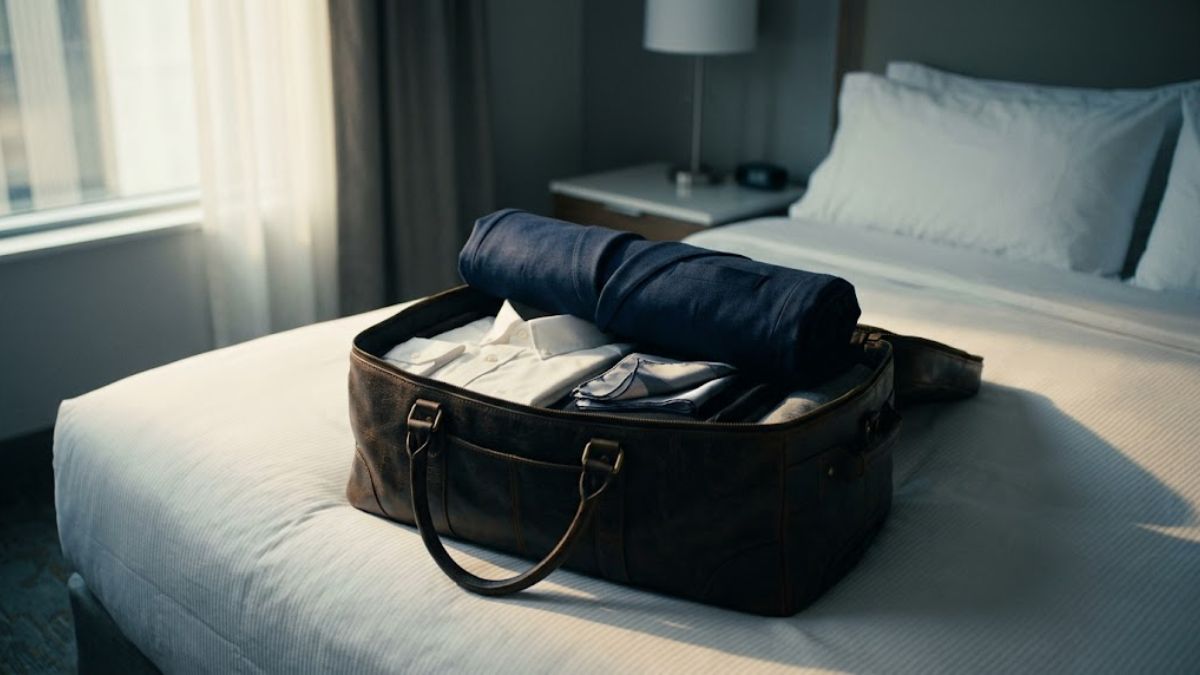
The right moment to pack: Pack the suit last. Everything else in the bag first shoes at the bottom, heavier items next, shirts and accessories on top of those. The suit goes in last so it sits at the top of the pack with the least pressure bearing down on it during transit.

Suit condition before packing: If the suit has been worn before the journey, hang it for at least an hour before packing. A suit that has been worn and is still holding body heat and moisture packs far less well than one that has had time to air and cool. If it needs pressing before travel, do it the night before so the fibres have time to set before being compressed into the bag.

For the complete ironing method that produces the sharpest pre-travel press, the technique is in How to Iron a Dress Shirt: The Correct Order and Technique – the same sequencing logic applies to suit jackets.

The Inside-Out Roll Method: Step by Step

This is the technique. Follow it in sequence.

Step 1 – Turn One Shoulder Inside Out

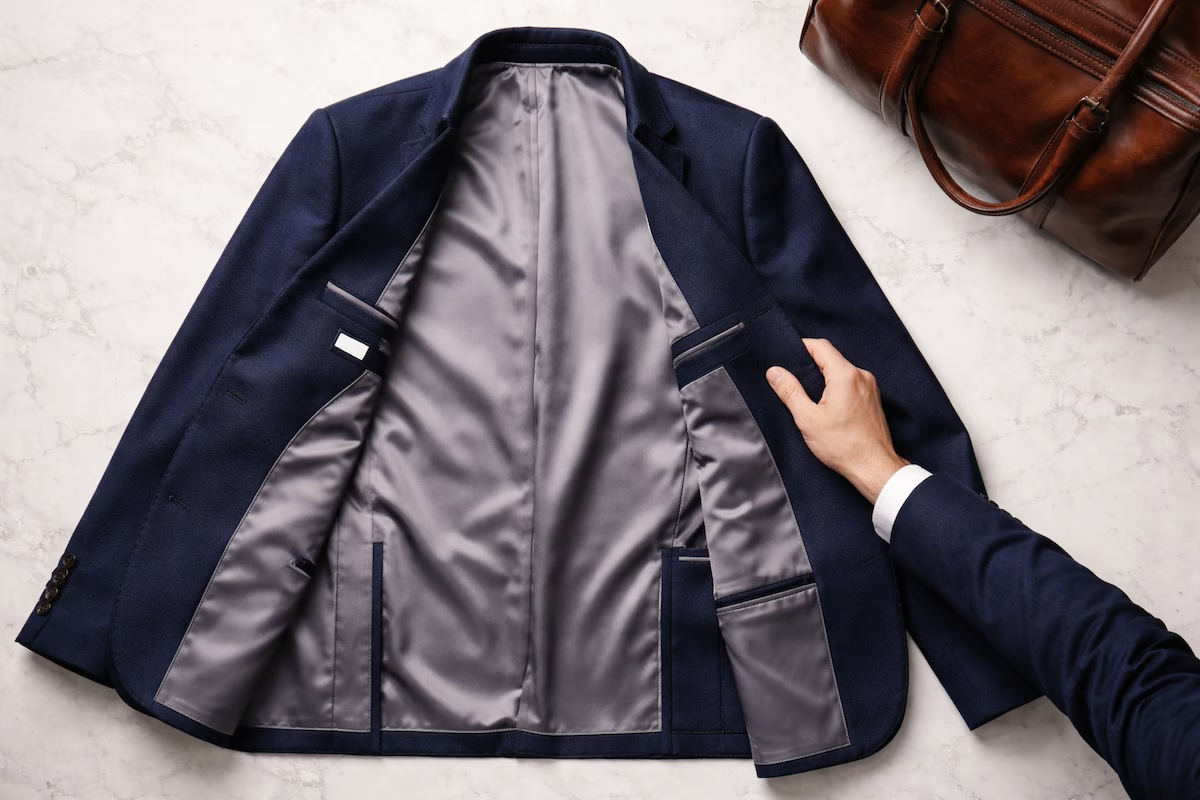
Hold the jacket by the left shoulder. Push your right hand into the left shoulder from the outside, reaching through so that your hand inverts the shoulder pad and lining outward. The left shoulder of the jacket is now inside out – the lining is facing you, the outer fabric is tucked inside.

Step 2 – Fold the Right Shoulder Into the Left

With the left shoulder inverted, take the right shoulder of the jacket and tuck it directly into the inverted left shoulder pocket you have just created. The right shoulder folds into the left, face to face, with both shoulders now nested together and the entire jacket lining facing outward.

At this point the jacket should look like a compact bundle with the lining on the outside. The lapels, collar, and front panels are all protected inside.

Step 3 – Smooth and Align

Lay the jacket flat on the bed. Smooth out any visible air pockets or bunching with your hands – particularly across the back panel and sleeves. The sleeves should run alongside the body of the jacket, not folded across it.

Step 4 – Roll From the Collar Down

Starting at the collar end, roll the jacket away from you in a firm, even cylinder. Keep the roll tight enough to be compact but not so compressed that you are forcing the fabric – the goal is a snug roll, not a squeezed one.

The finished roll should be roughly the width of the jacket and compact enough to fit across the width of most carry-on bags or holdalls.

Step 5 – Secure If Needed

If the roll tends to loosen in transit, place it inside a pillowcase, a spare t-shirt, or a dry cleaning bag before placing it in the main bag. This keeps the roll intact and adds a further layer of protection for the outer fabric.

How to Fold Suit Trousers for Travel

The trouser fold is simpler than the jacket but equally important –  creased trousers undermine a well-preserved jacket completely.

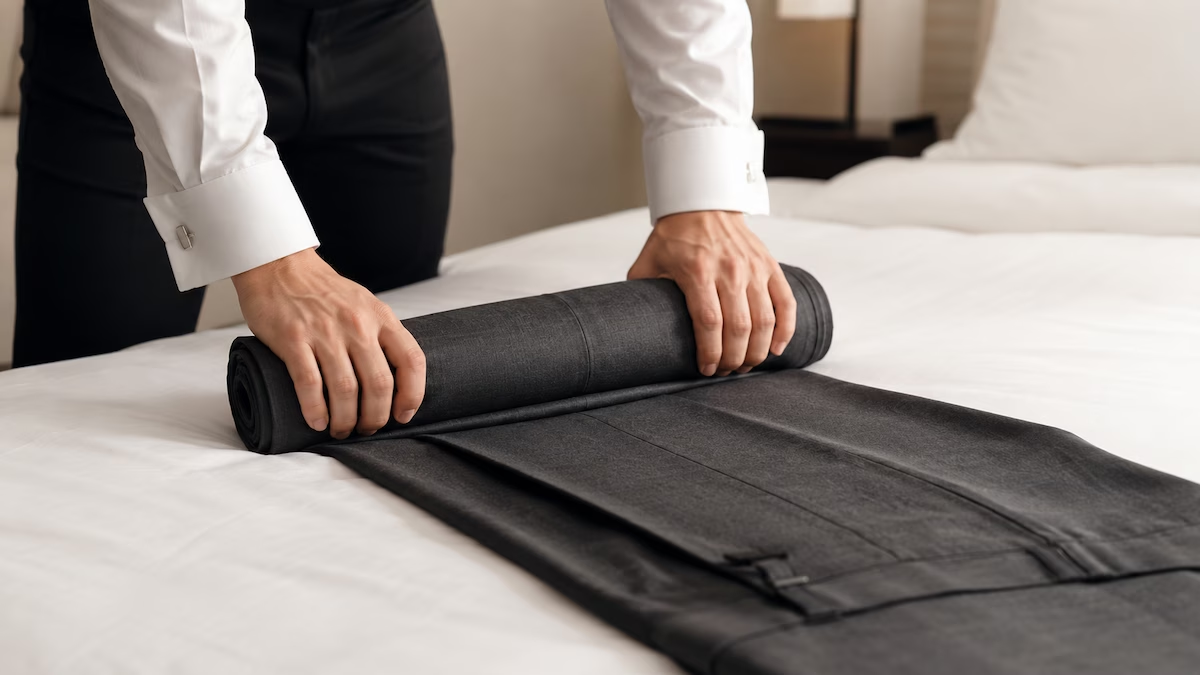
Method 1 – The Flat Roll (recommended for most bags)

Lay the trousers flat on the bed, aligned along the crease lines – the front and back creases that run from waistband to hem should be perfectly aligned with each other. Smooth out any wrinkles with your hands.

Fold the trousers in half lengthways along the crease line so you have one leg on top of the other. Then fold the waistband down by approximately one third to bring the waistband toward the knee – this reduces the overall length for packing. Roll from the hem upward toward the waistband in a firm, even roll.

Method 2 – Around the Jacket Roll

For minimal bag space: once the jacket is rolled, wrap the trouser roll around the outside of the jacket roll. The two pieces together form one compact packing unit that can be placed in the bag as a single item.

What to avoid: Folding the trousers in half across the knee and then in half again. This creates a horizontal crease directly across the thigh – the most visible crease point on a pair of trousers and one of the hardest to steam out quickly on arrival.

Garment Bag vs No Garment Bag: The Honest Answer

The garment bag debate is less important than most men think – and more important than most travel blogs admit.

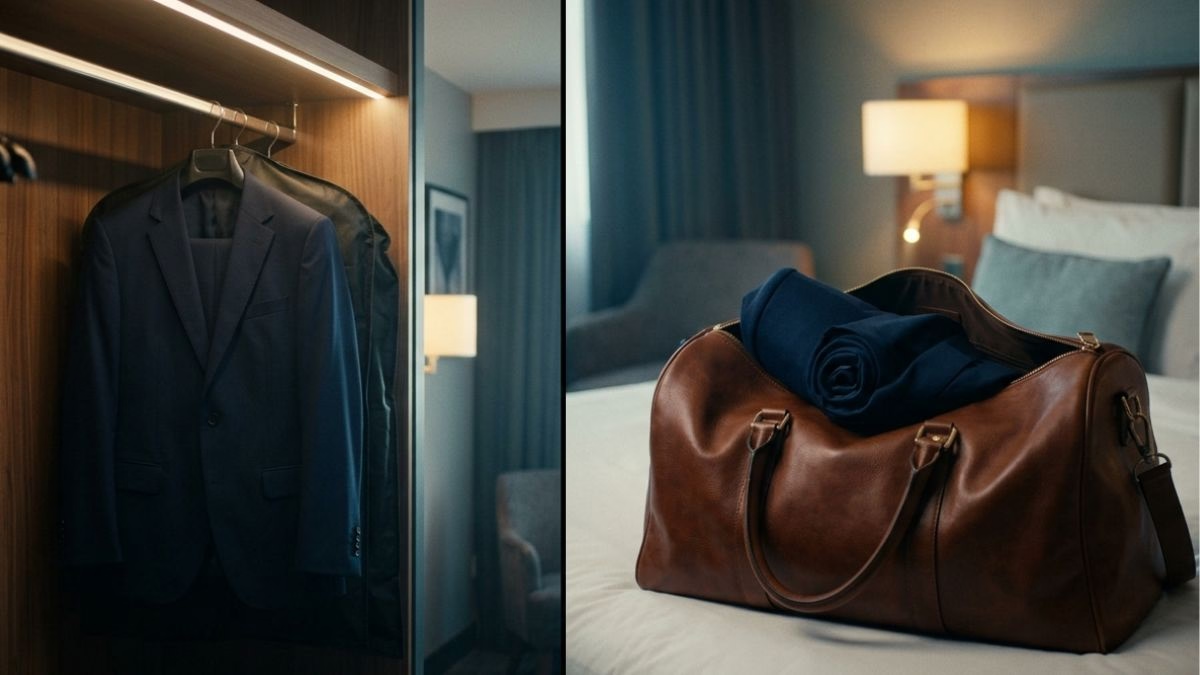
With a garment bag: A quality garment bag – one long enough to accommodate the jacket without folding the hem, with a sturdy zip and a hanging hook – is the gold standard for suit travel. The suit hangs rather than being compressed, which eliminates the pressure creasing that the roll method is designed to counteract. If you are travelling by car, train, or on a flight where overhead locker space allows a garment bag to hang flat, this is the superior option.

The practical limitation: most airline overhead lockers cannot accommodate a full-length garment bag laid flat. The bag ends up folded in half across a locker rail, introducing exactly the fold crease it was meant to prevent. At that point, a well-executed inside-out roll in a carry-on frequently produces a better result.

Without a garment bag: The inside-out roll method. As described above. Reliable, requires no additional equipment, and works in any bag format from a carry-on to a weekender holdall.

The verdict: Use a garment bag when you can hang it flat for the entire journey. Use the roll method when you cannot. The distinction is not garment bag vs no garment bag – it is whether the bag can travel hung or must be packed flat. Packed flat, the roll method wins.

A well-cut suit in a performance wool or wool-synthetic blend handles both methods well. A delicate silk-wool or fine flannel suit rewards a garment bag more strongly. Know your fabric before deciding.

What to Do on Arrival If Creases Have Set

Even with the correct technique, a long-haul flight or a compressed overnight bag can produce residual creasing. Here is the arrival protocol.

Hang immediately. The first thing to do on arriving at a hotel room is remove the suit from the bag and hang it on a proper hanger. Do not leave it in the bag while you shower or unpack. Gravity and air circulation begin relaxing the fibres the moment the compression is removed.

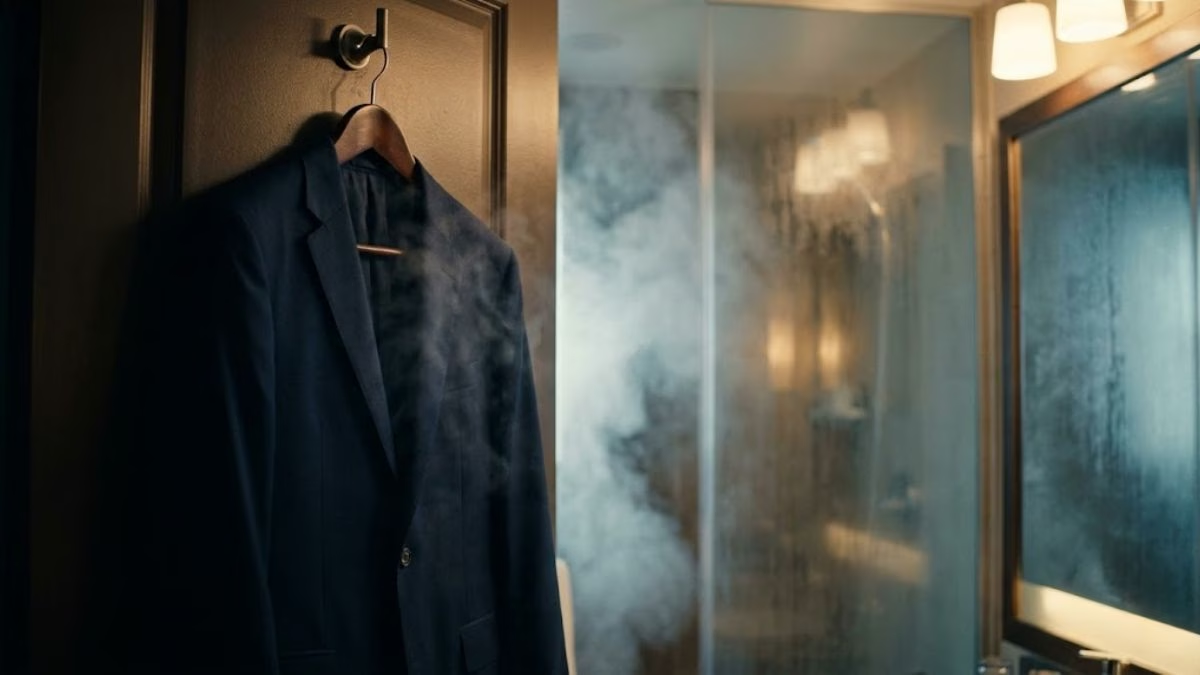
Use the bathroom steam method. Run the shower on its hottest setting, hang the suit on the bathroom door or rail inside the closed bathroom, and leave it for fifteen to twenty minutes. The steam penetrates the wool fibres and releases the compression creases without any direct heat contact. This method works reliably on most wool and wool-blend suits and requires no iron or steamer.

Follow up with a light press if needed. If the bathroom steam method does not fully remove the creasing – typically only necessary on very lightweight fabrics or after very long journeys – use the hotel iron on a medium setting with a pressing cloth between the iron and the suit fabric. Never apply a hotel iron directly to suit fabric without a pressing cloth; the temperature controls on hotel irons are inconsistent and the risk of shine or scorching is real.

What not to do: Do not hang the suit in a humid bathroom for more than thirty minutes. Extended humidity exposure can cause some suit fabrics – particularly those with natural shoulder padding – to lose their structure temporarily. Fifteen to twenty minutes is sufficient.

Packing a Suit in a Carry-On vs Checked Luggage

Carry-on – always preferable for suits.

A suit in the overhead locker travels in a controlled environment with no handling by ground crew, no weight stacking from other bags, and no temperature extremes of the cargo hold. The suit arrives in the condition you packed it.

For a carry-on, the inside-out roll fits across the width of most standard 55 x 40 x 20 cm cabin bags. Pack it last, on top of everything else, and orient the roll horizontally across the bag rather than vertically to minimise the pressure bearing on any one section.

Checked luggage – use if you must, pack correctly.

If the suit must go in checked luggage, place it at the top of the bag – the last item in, the first item out. Pack shoes and heavy items at the bottom, clothing in the middle, suit on top. The weight gradient matters: a suit at the bottom of a checked bag with five kilograms of clothes on top of it will crease regardless of how well it was folded.

Consider a compression packing cube specifically for suits if you check luggage regularly – several travel accessory brands produce structured cubes designed to protect formal wear in checked bags without the bulk of a full garment bag.

The Suit You Travel With Matters

Travel-friendly suit fabrics:

Technique accounts for most of the result. The other part is choosing the right suit for the journey.

Wool-synthetic blends (wool-polyester or wool-nylon): The most practical choice for frequent travellers. The synthetic component adds wrinkle resistance and recovery without significantly compromising the look of the wool. Creases fall out faster and the suit looks presentable within thirty minutes of hanging on arrival.

Performance wool (super 120s and above): Fine merino wool with high thread counts has natural elasticity that allows it to recover from compression well. More expensive than a wool-synthetic blend but genuinely more travel-resilient than standard wool.

Linen suits: Do not travel well. Linen creases under any compression and the creases are slow to fall out. Reserve linen for destinations you are driving to or where you can arrive with the suit hung throughout the journey.

Standard wool (super 100s): The benchmark business suit fabric. Travels adequately with the correct technique. Falls short of a performance blend for very long journeys or compressed packing.

✦ ️ Try our Dress Code Decoder Tool

Instantly translate any dress code into a complete, stylish outfit. Completely Free.

Try Now →

The Suit Jacket Measurement Foundation

None of this technique produces the right result if the suit jacket does not fit correctly to begin with. A jacket with too much ease through the chest or too much length billows when rolled and packs less compactly. A correctly fitted jacket rolls into a tighter, cleaner cylinder and arrives with less distortion.

If you have not yet measured for your suit jacket at home the complete measurement guide covers every measurement, what each one determines, and the six fit checks to run before buying. A well-fitted suit is also a well-travelling suit.

Frequently Asked Questions

Use the inside-out roll method: turn the left shoulder of the jacket inside out, tuck the right shoulder into it so both shoulders are nested face to face with the lining on the outside, lay the jacket flat, and roll it from the collar downward into a compact cylinder. Place the roll at the top of your bag with soft items around it. This method protects the outer fabric inside the roll and distributes compression across a curve rather than a fold line, significantly reducing travel creasing.
Roll, using the inside-out method. A flat fold concentrates compression at sharp fold lines — typically across the chest and at the sleeves — which produces the most visible travel creases. Rolling distributes the compression evenly across a continuous curve, which the fabric handles significantly better. The inside-out orientation adds a further layer of protection by keeping the visible outer fabric away from direct contact with other items in the bag.

No — provided you use the inside-out roll method correctly. A garment bag is the superior option when the suit can hang flat for the entire journey, such as in a car or on a short train journey where the bag can be laid flat. On most flights, garment bags end up folded in half across the overhead locker, which introduces a fold crease. A well-executed roll in a carry-on frequently produces a better result than a garment bag that cannot hang properly.

Lay the trousers flat and align the crease lines precisely. Fold in half lengthways along the crease, fold the waistband down by one third, then roll firmly from the hem toward the waistband. The key mistake to avoid is folding the trousers across the knee — this creates a horizontal crease across the thigh that is slow to release and visible when worn.

Hang the suit immediately on arrival. Run the hotel shower on its hottest setting, hang the suit inside the closed bathroom, and leave it for fifteen to twenty minutes. The steam relaxes the wool fibres and releases most travel creasing without any direct heat contact. For residual creasing on very lightweight fabrics, follow with a light press using a hotel iron on medium heat with a pressing cloth between the iron and the fabric.

The well-dressed man does not arrive creased. Not because he carries more luggage, because he packs with more intelligence.

Next in the Sharp Wardrobe series: How to Pack a Suit Without Wrinkles (coming soon) | How to Measure for a Suit Jacket

Further Reading

Ali Taimour

Ali Taimour

Founder and Editor of Trendy Enthusiast. Ali covers men's fashion, lifestyle, grooming, and the art of dining well - blending real experience with practical insight.

Connect on Instagram
Shopping Basket