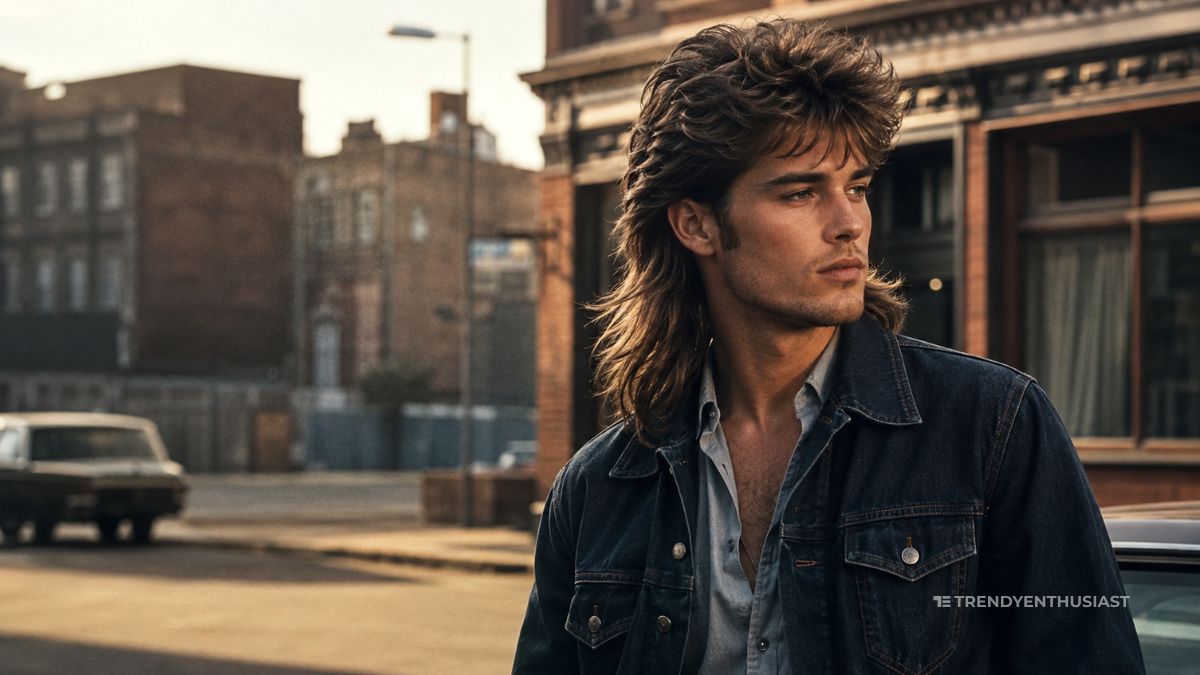
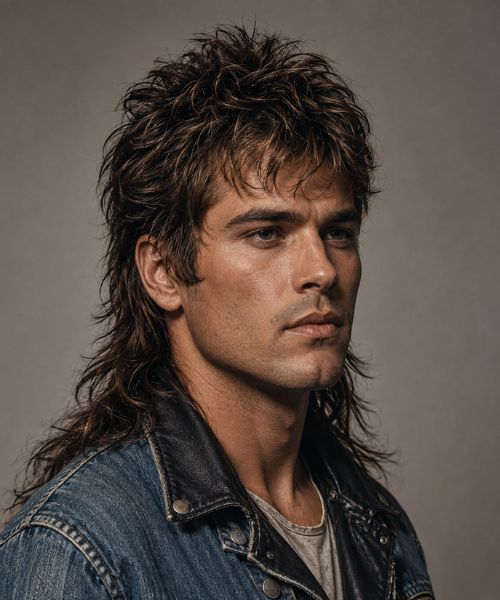
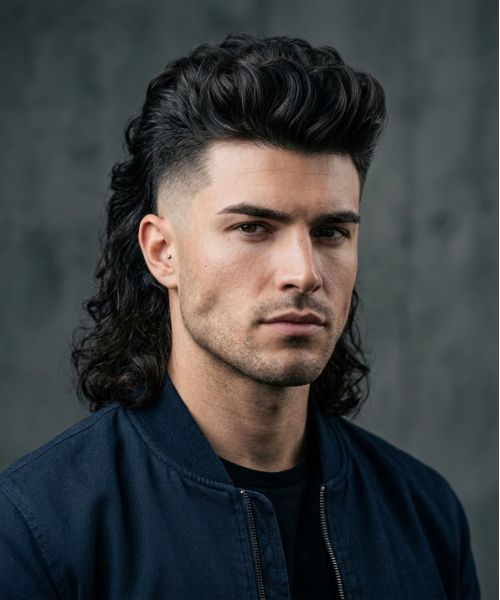
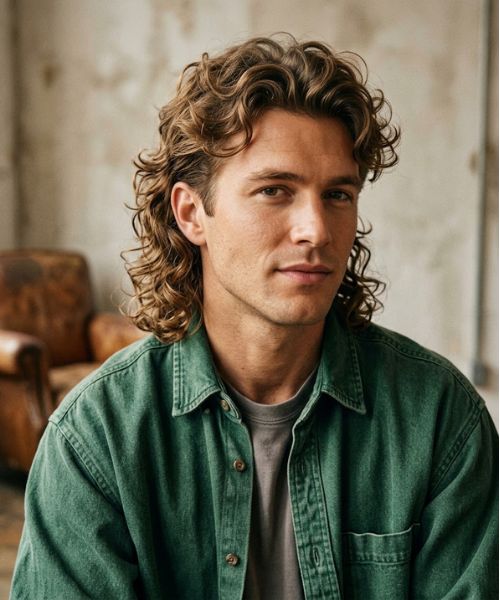
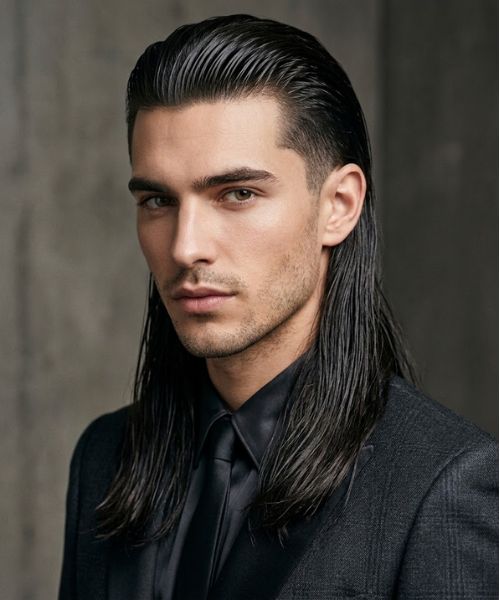
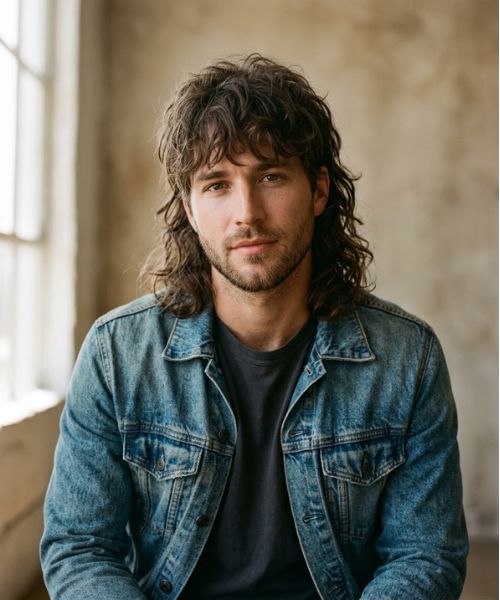
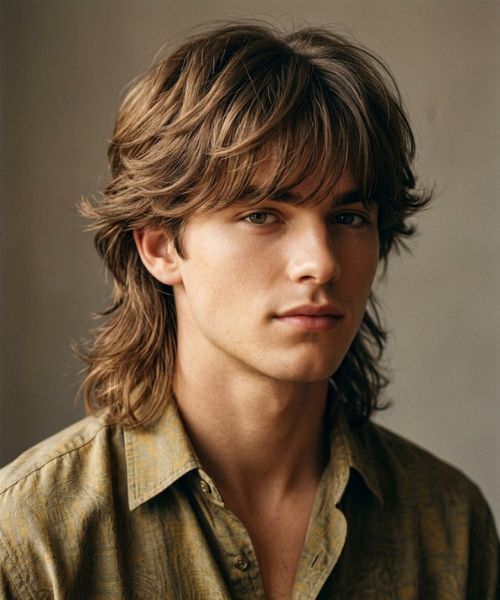
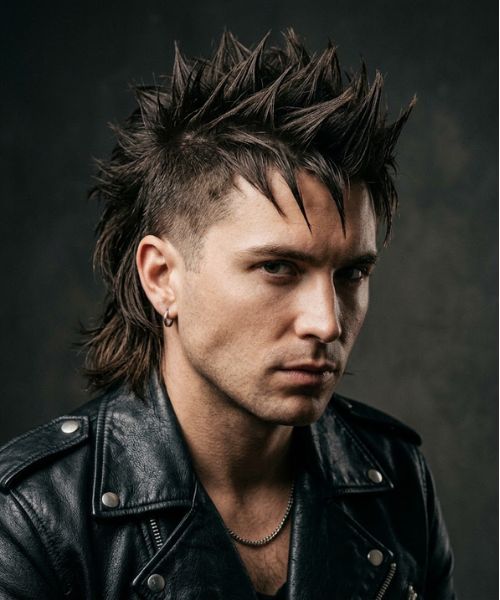
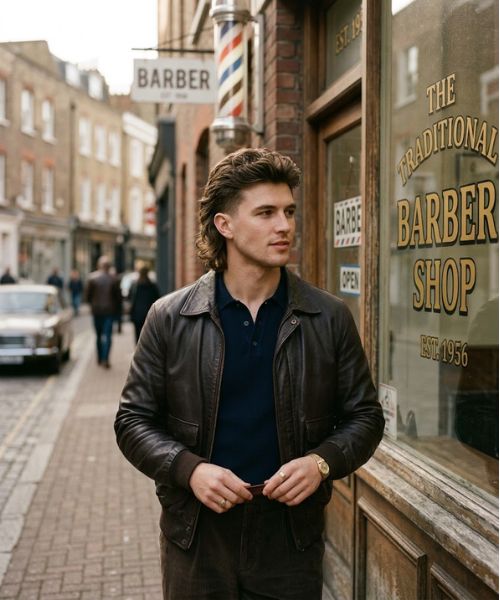
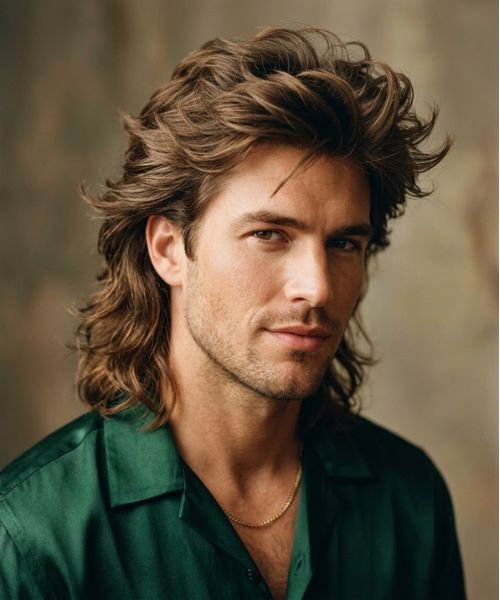
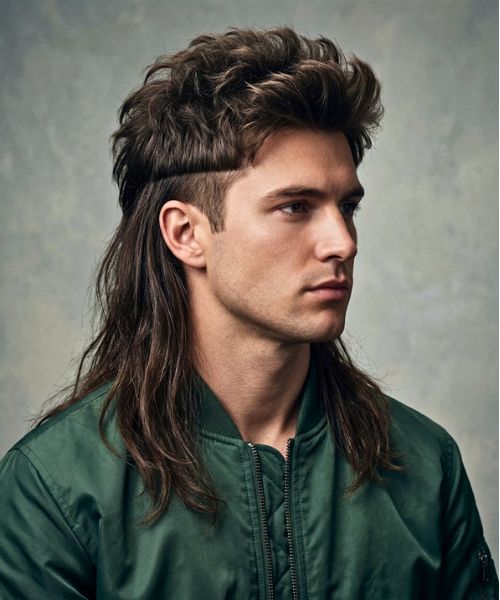
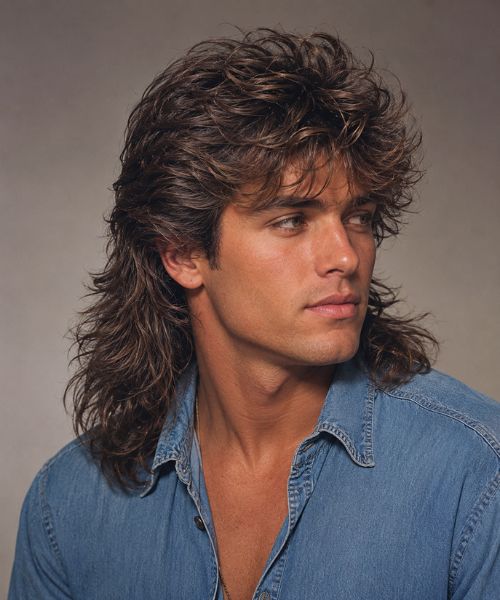
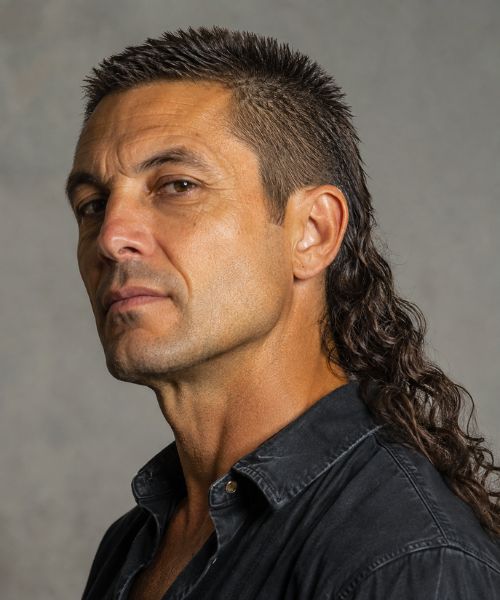
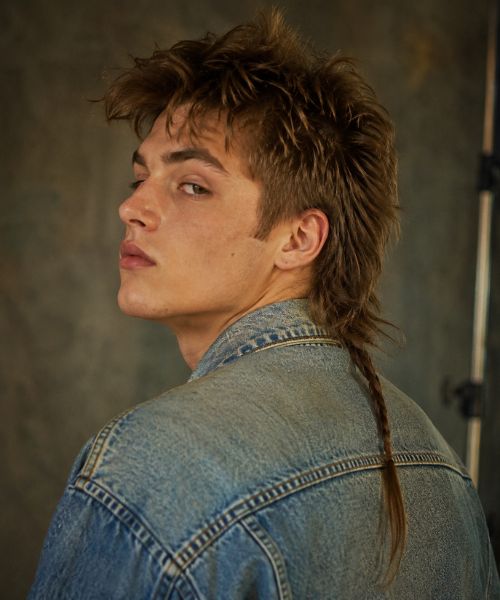
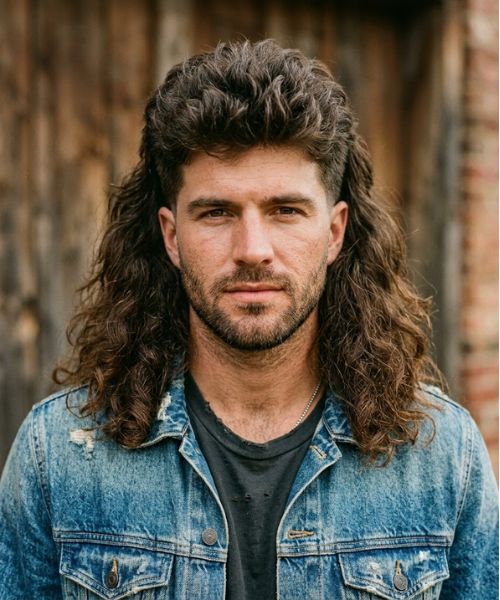
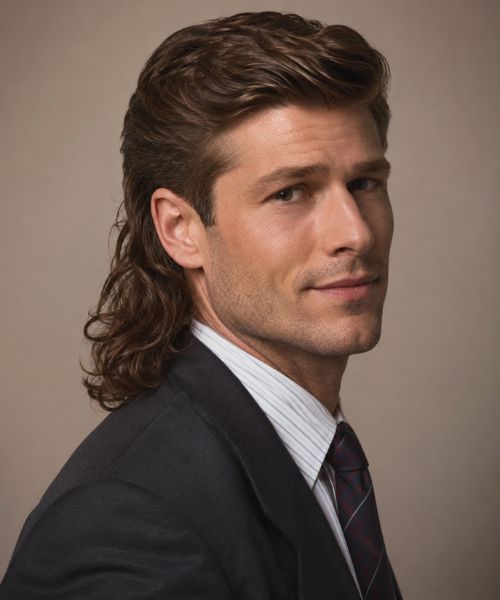
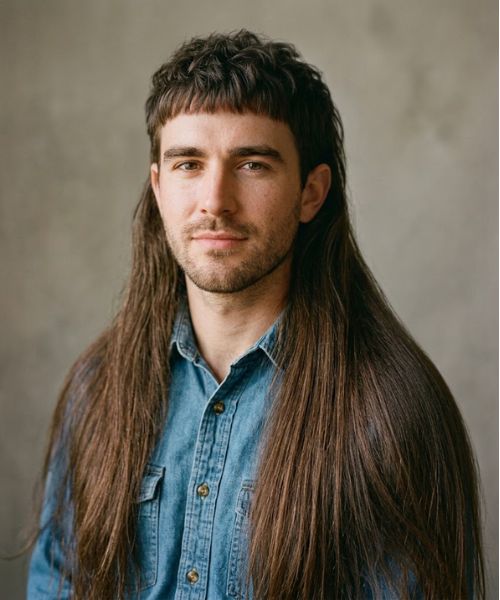
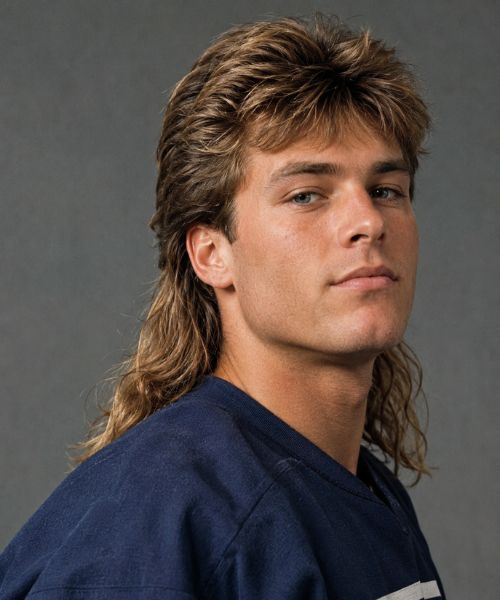
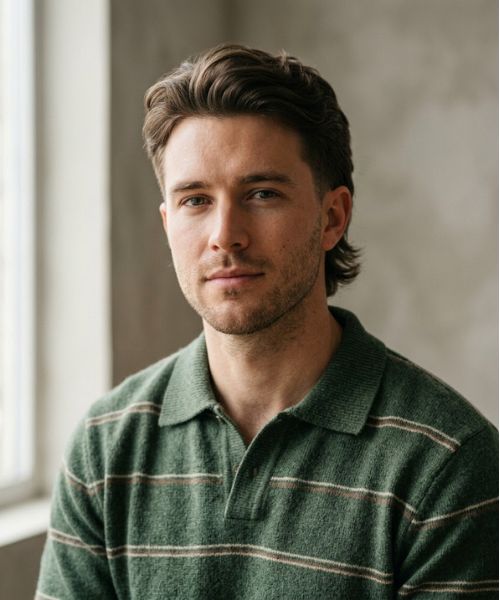
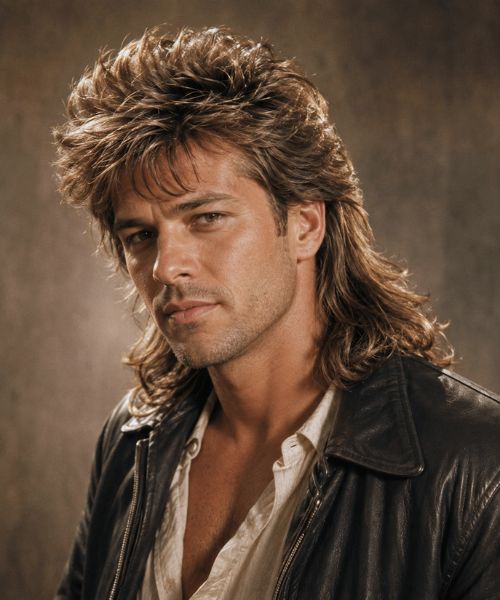
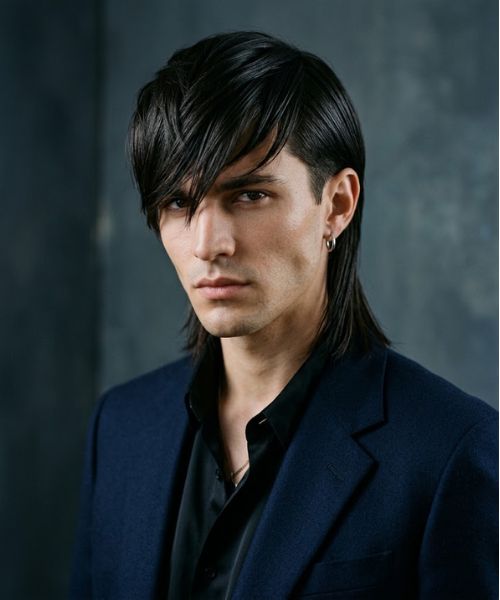
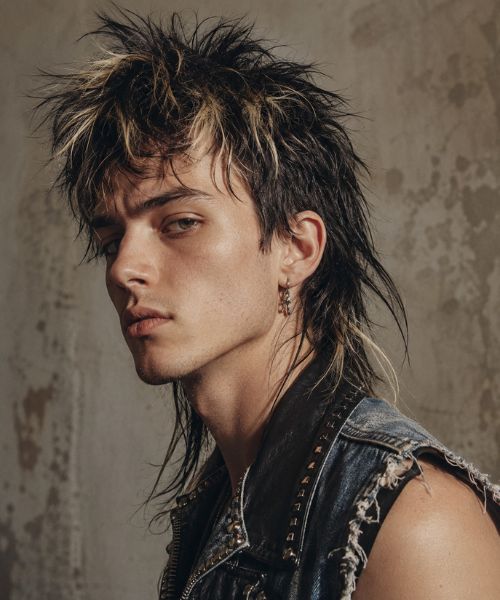
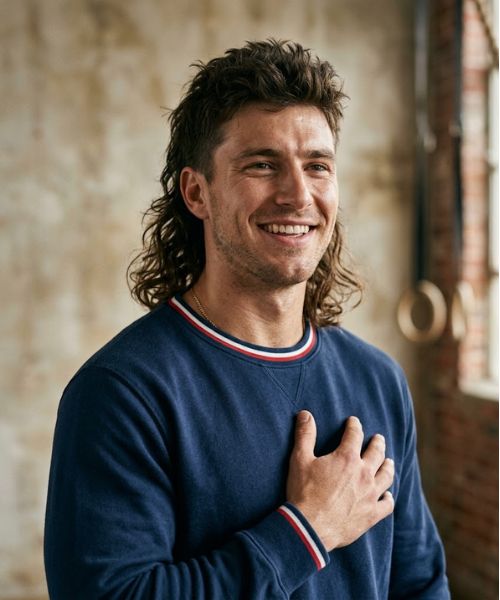
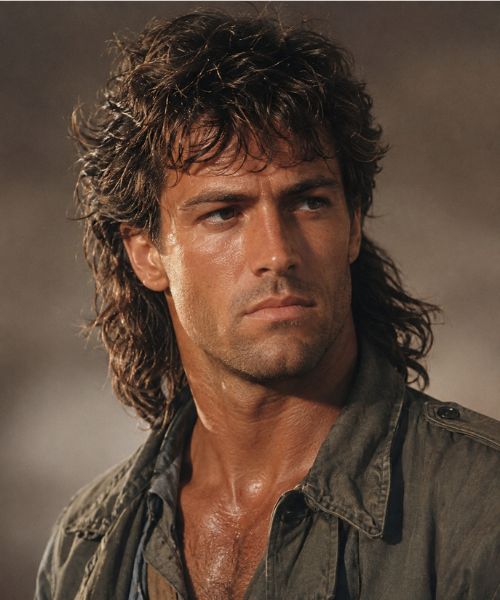
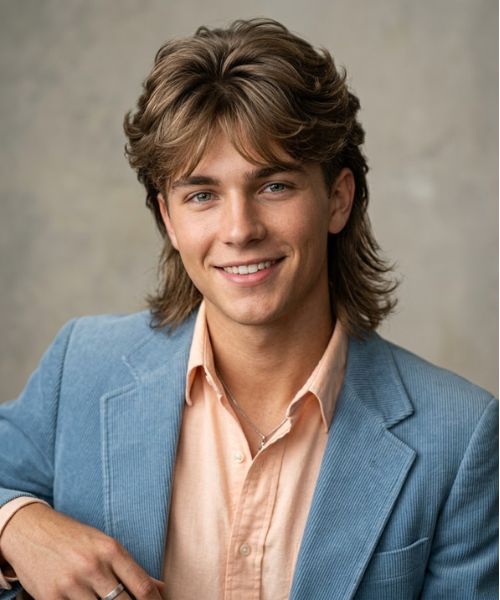
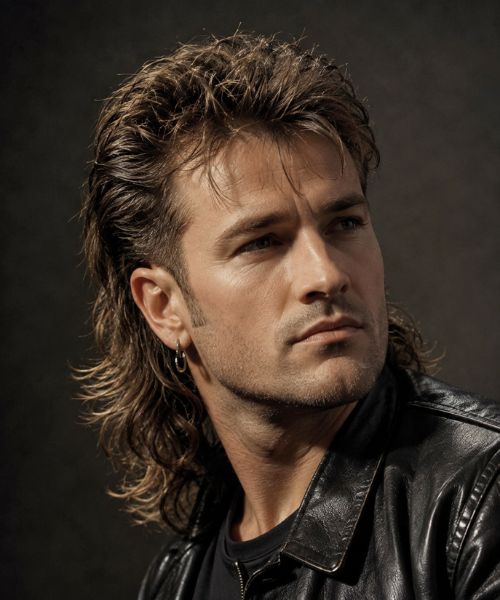
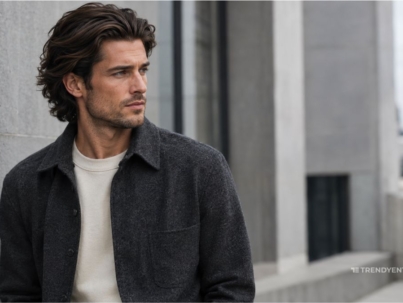
The 80s mullet haircut means crown volume piled high, a temple taper at the sides, and length left long past the nape.
It is not the loose modern mullet of today, it is teased, permed, or blow-dried into an angular silhouette, built for MTV close-ups and arena stages.
What Made a Mullet "80s"
An authentic classic 1980s mens mullet haircut relied on volume and processing, not just length contrast.
Stylists used cold wave perms, teased roots, and aerosol hairspray to build height at the crown, whereas the modern mullet favours soft, unpermed movement and a lower-maintenance wolf cut-adjacent finish.
The difference between 80s mullet and modern mullet comes down to three things: processing, volume, and frontal layering (heavy feathered bangs vs a simple fringe).
The 30 Defining 80s Mullet Styles
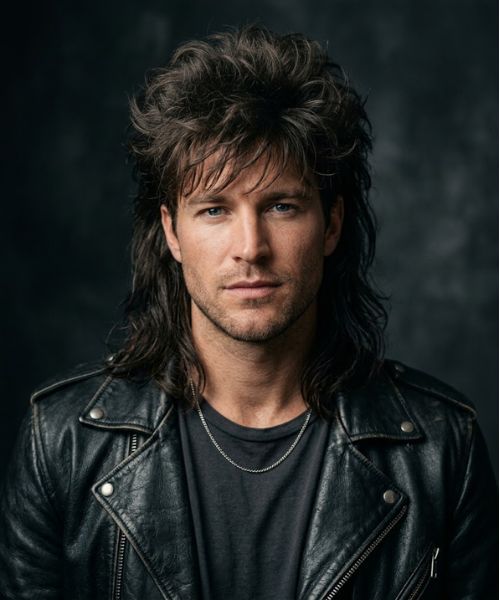
The Classic Rocker Mullet
Short, teased crown, feathered bangs, and shoulder-length back. Worn by David Bowie and popularised further through Def Leppard and Mötley Crüe stage looks.
Best for: Straight or wavy hair type, oval face shape.
How to style: Apply volumizing mousse to damp roots, blow-dry with a round barrel brush lifting the crown volume, then set feathered bangs with a diffuser attachment.
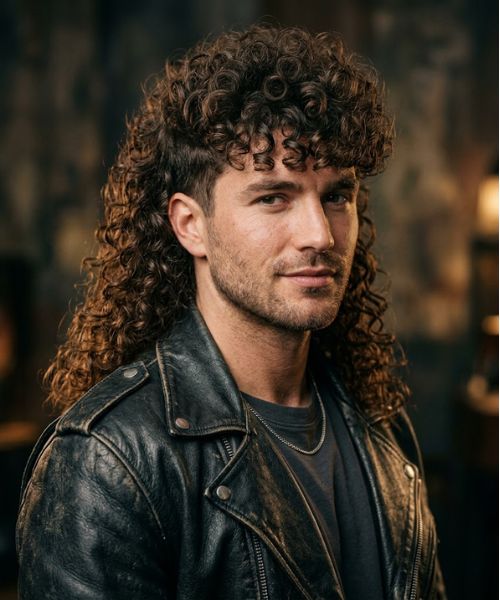
The Curly / Permed Mullet
A cold wave perm applied through the crown and back to create dense, springy curls while sides stay short. Billy Ray Cyrus wore a looser variant; glam rock versions were tighter.
Best for: Coarse or naturally wavy hair type.
How to style: Scrunch texturizing sea salt spray into damp curls, diffuse on low heat, avoid brushing separate curls with fingers only.
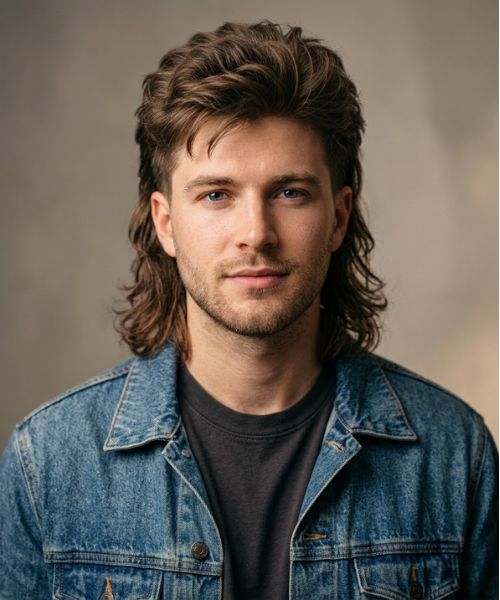
80s Mullet
Moderate crown volume, temple taper, back length sitting at the collar. The reference point every other variant on this list departs from.
Best for: Any face shape; most forgiving cut for first-timers.
How to style: Blow-dry back and away from the face, add styling pomade through the mid-lengths, comb back sides flat.
Textured 80s Mullet
Uses point cutting through the crown and back to break up density, giving a choppier, less uniform finish than the smooth classic rocker mullet.
Best for: Coarse hair texture that holds shape without heavy product.
How to style: Work styling pomade through dry hair with fingers only, twisting sections for a disheveled texture.
80s Mullet with Skin Fade
A skin fade mullet treatment at the temple taper paired with an otherwise period-accurate teased crown and long back.
Best for: Square jawline, thick hair density.
How to style: Maintain the fade fortnightly with clipper guards, style the top as per the Classic Rocker Mullet.
Curl-Enhanced 80s Mullet
Natural curls or waves amplified with a light cold wave perm only through the back cascading layers, leaving the crown looser than the fully Permed Mullet.
Best for: Wavy hair type wanting curl without a full perm commitment.
How to style: Scrunch mousse in, diffuse upside-down for root lift, finish with light aerosol hairspray.
Slicked-Back 80s Mullet
Duran Duran style wet-look sides and crown, combed flat and back, with the mullet length left to hang loose behind. Billy Ray Cyrus worn it.
Best for: Straight hair type, fine to medium density.
How to style: Comb styling pomade through wet hair straight back, let the back cascading layers air-dry unstyled for contrast.
Shaggy 80s Mullet
Soft, unteased, shaggy mullet layering throughout with minimal temple taper. Closer to a step cut than a hard bi-level.
Best for: Wavy hair type, low-maintenance preference.
How to style: Rough-dry with texturizing sea salt spray, no brush, tousle with fingers.
80s Mullet with Layered Bangs
Builds frontal layering into a heavy, sweeping fringe using feathering technique, a look associated with Rob Lowe and John Stamos press photography.
Best for: Oval face shape; fringe softens angular jawlines too.
How to style: Round-brush blow-dry the fringe forward and down, set with light hairspray to hold the sweep.
Spike-Tipped 80s Mullet
Combines stiff, hair-sprayed spikes on the crown with a controlled, edgy tail, borrowing directly from Glam Metal and Beastie Boys-era styling.
Best for: Coarse hair texture that holds a spike without collapsing.
How to style: Work strong-hold gel into small crown sections, pinch into points, lock with aerosol hairspray.
80s Mullet with Tapered Sides
A cleaner, barbershop-precise temple taper replaces the shaggy or disconnected sides seen in rock-era versions, giving sharper ear clearance and a more wearable daily silhouette.
Best for: Professional settings wanting a nod to the trend without full commitment.
How to style: Maintain taper with thinning shears monthly, style top as the base 80s Mullet.
Precision-Cut 80s Mullet
Every layer cut with razor cutting for sharp, deliberate lines rather than the soft, feathered edges of most 80s variants.
Best for: Straight hair type; holds crisp lines best.
How to style: A light pomade to define the parietal ridge weight without softening the cut lines.
Feathered 80s Mullet
The archetypal feathered mullet, defined by feathering technique through the crown and sides for wing-like layers, closely tied to Farrah Fawcett-era styling adapted for men, and to feathered 80s rock star mullet haircut searches specifically.
Best for: Wavy hair type, medium hair density.
How to style: Round-brush each section outward and back for the wing effect, finish with light-hold spray.
Bi-Level 80s Mullet
An abrupt, undisguised length change between crown and nape with no blending, favoured for its stark high-contrast silhouette.
Best for: Anyone wanting the most historically literal cut on this list.
How to style: Blow-dry the top section for volume; leave the back flat and untouched for contrast.
Wolf-Inspired 80s Mullet
Blends wolf cut shag layering into an 80s frame, heavier cascading layers throughout rather than the sharp bi-level break, softening the transition.
Best for: Wavy hair type wanting a hybrid retro-modern look.
How to style: Diffuse-dry with mousse, scrunch layers upward rather than combing flat.
Skullet-Adjacent 80s Mullet
An exaggerated variant approaching the skullet, minimal to no top length, aggressive crown volume loss disguised with the remaining hair swept back, long growth kept only at the nape length.
Best for: Thinning hair density at the crown.
How to style: Keep sides and top clipper-short with clipper guards, let the back grow uninterrupted.
Rat Tail 80s Mullet
Pairs a standard short-to-medium mullet with an isolated rat tail section left to grow long and thin from the nape, often braided. A distinct counterculture fashion statement of the era.
Best for: Younger, trend-forward styling; low upkeep on the main cut.
How to style: Cut the main shape as the base 80s Mullet, leave one nape section unclipped and braid or leave loose.
Kentucky Waterfall Mullet
A regional US nickname for a fuller, thicker-backed mullet with heavy nape length and minimal shaping. It favours volume over precision.
Best for: Coarse hair texture, thick natural growth.
How to style: Minimal cutting at the back; focus product on the top for crown volume contrast.
Business-in-the-Front Mullet
The most literal reading of business in the front party in the back it’s a conservative, short, side-parted front and top with an unexpectedly long back, maximising the contrast joke the mullet is known for.
Best for: Workplace settings wanting the silhouette without the risk.
How to style: Style the front with a traditional side part and light pomade; leave the back to hang loose and untouched.
Ape Drape Mullet
The ape drape variant drapes length low and heavy down the back with almost no frontal layering up top, creating a draped rather than feathered silhouette.
Best for: Straight hair type; drapes cleanly without curl interference.
How to style: Weight the back with a light serum so it hangs flat; keep the top simple and short.
Hockey Hair Mullet
Practical, helmet-friendly short sides and top with length left long at the back, a North American rink-culture staple distinct from the glam-rock versions.
Best for: Active lifestyles; sits well under headwear.
How to style: Keep sides tapered with clipper guards; back needs no styling just wash and go.
Neck Warmer Mullet
A shorter, more subtle mullet nicknamed the neck warmer it has enough nape length to cover the collar without the dramatic shoulder-length back of louder variants.
Best for: First-time mullet wearers testing the silhouette.
How to style: Standard short back and sides styling; leave nape length untrimmed at each cut
Camaro Hair Mullet
Camaro hair pairs feathered, wind-swept top layers with a longer back culturally tied to Miami Vice-adjacent American car culture and Kurt Russell-style leading-man looks of the period.
Best for: Wavy hair type; feathers hold better with natural movement.
How to style: Blow-dry top layers back and up for a wind-blown finish; light hairspray to hold the feathered shape.
New Wave Mullet
A sleeker, New Romanticism-influenced mullet with asymmetric frontal layering and less teasing than the rock variants, associated with George Michael and Duran Duran styling of the period.
Best for: Straight hair type, fine to medium density.
How to style: Blow-dry the fringe asymmetrically to one side, comb sides close, leave back cascading layers loose.
Punk Mullet
A choppier, more aggressive counterculture fashion take, closely linked to Joan Jett’s styling, heavy point cutting, uneven layers, and often bleached highlights streaked through the crown.
Best for: Coarse hair texture that holds choppy separation well.
How to style: Apply styling pomade to dry hair, twist sections for a disheveled texture, no smoothing.
Athlete's Mullet
A practical, sport-adapted mullet worn short enough to stay out of the eyes during play, the look most associated with Andre Agassi and Wayne Gretzky in period photography.
Best for: Active, low-maintenance wearers.
How to style: Keep the top short with light texture cream; back left to grow with minimal shaping.
Action-Hero Mullet
A rugged, slightly overgrown mullet seen across 80s action cinema like Kurt Russell, Mel Gibson, Chuck Norris, and Richard Dean Anderson all wore variations with looser, less-groomed cascading layers.
Best for: Wavy hair type; suits an intentionally undone finish.
How to style: Rough-dry with texturizing sea salt spray, no parting, minimal hold product.
Teen Idol Mullet
A softer, more polished mullet with careful feathering technique through the front, the look popularised by Rob Lowe, John Stamos, and Kiefer Sutherland in Miami Vice- and The Lost Boys-adjacent media.
Best for: Oval face shape; the softened fringe flatters most features.
How to style: Round-brush the fringe forward and down, finish with light-hold spray to keep movement soft.
Rockstar Bono Mullet
A moodier, New Romanticism-tinged mullet worn shorter on top with sideburn fade detailing, associated with Bono’s early-to-mid 80s look and the broader arena-rock aesthetic.
Best for: Square jawline; the shorter top balances stronger features.
How to style: Comb top back with light pomade, taper sideburns with thinning shears, leave back natural length.
McCartney Mop Mullet
A softer, rounder-shaped mullet blending 1960s mop-top frontal layering with an 80s-length back, a look Paul McCartney adapted for the decade, less teased than pure glam-metal versions.
Best for: Wavy hair type, rounder face shapes wanting softness up top.
How to style: Blow-dry the fringe down and round with a round barrel brush, leave back layers loose and unteased.
How to Style an 80s Mullet
Getting a genuine how to style an authentic 80s mullet result depends on process, not just product.
Start with damp hair and volumizing mousse worked through the roots for crown volume. Blow-dry upside down or with a round barrel brush lifting against the direction of growth.
Set teased roots with a fine-tooth comb backcombing at the crown, then lock everything with aerosol hairspray.
Best Products
The best styling products for 80s voluminous mullet results are volume-first: a strong-hold volumizing mousse applied to towel-dried hair, backcombing at the roots for lift, and aerosol hairspray to lock teased sections in place.
Styling pomade should be reserved for smoother variants like the Slicked-Back or Precision-Cut mullet, where flat sides need control rather than lift.
How to Cut an 80s Retro Bi-Level Haircut
Cutting a genuine 80s retro bi-level haircut starts with sectioning the crown from the nape.
Use clipper guards for a defined temple taper, then switch to scissors for the top, applying point cutting to break up bulk at the parietal ridge weight.
The back is left un-blended by design that stark disconnected length between the tapered sides and long back is what separates a true bi-level cut from a softly graduated modern shag.
Finish the crown with razor cutting or thinning shears depending on how much texture the hair density needs.
Tools Behind the Look
Vidal Sassoon-trained precision cutting and Wahl Clipper Corporation equipment shaped much of the era’s vintage barbering standards, even as the mullet itself sat outside mainstream salon fashion.
Modern barbers replicate the look using the same feathering technique and backcombing methods, updated with contemporary clipper guards for a cleaner ear clearance line than the originals typically had.
Processing and volume. The 80s version relies on cold wave perms, teased roots, and heavy aerosol hairspray for crown volume, while the modern mullet and wolf cut favour relaxed, natural texture with little to no perming.
No, the vintage female 80s punk rock mullet was equally prominent, worn by figures like Joan Jett, often with bleached highlights and choppier point cutting than the male rock-star versions.
The word itself is younger than the style, the Oxford English Dictionary credits Beastie Boys lyrics with popularising “mullet” as the haircut’s name in the early 90s, even though the cut itself was already an 80s hair metal and New Romanticism staple.
Yes. Coarse, curly, and wavy hair type hair suits the Curly/Permed and Curl-Enhanced variants especially well, since natural texture reduces reliance on a cold wave perm to achieve the volume.