Wolf Cut vs Mullet: Most Men Can't Tell the Difference
A wolf cut uses soft, connected layers with volume at the crown, while a mullet creates a hard contrast between short, faded sides and a long, separated back. Everything else, the styling, the vibe, the maintenance, follows from that single structural difference.
What Actually Separates a Wolf Cut From a Mullet
A wolf cut blends its sides smoothly into the top and back, with no harsh lines anywhere on the head.
A mullet does the opposite: it relies on a skin fade, taper, or shaved sides to create a bold, visible division between the front and the back. One is built on flow, the other on contrast.
Sides and Transition
The sides tell you which cut you are looking at faster than anything else.
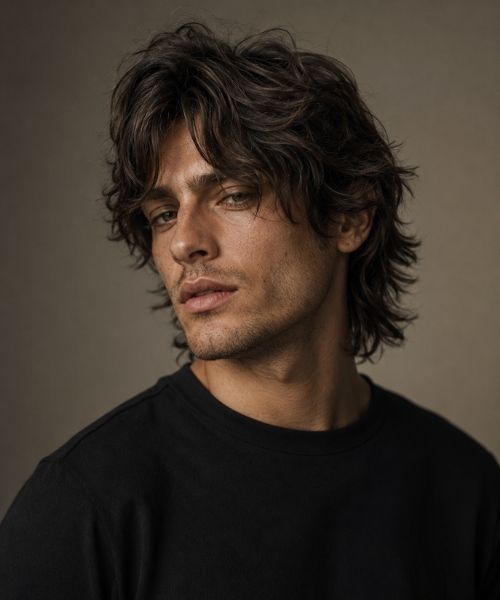
On a wolf cut, the hair on the sides carries length and merges into both the top and back without a single sharp line.
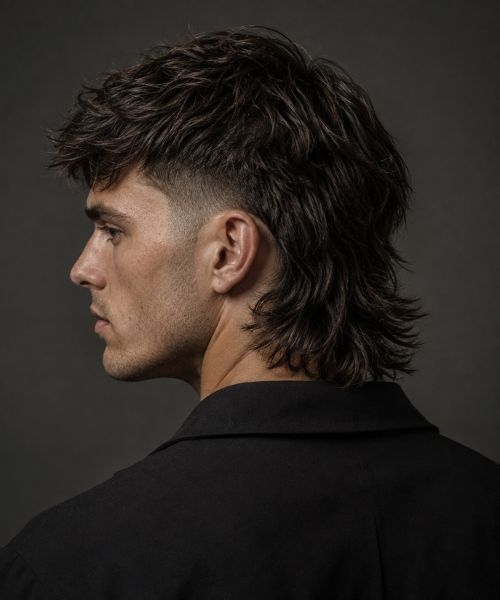
On a mullet, the sides are cropped short, tapered, or shaved completely, creating a severe drop in length the moment the eye moves from front to back.
Layers and Texture
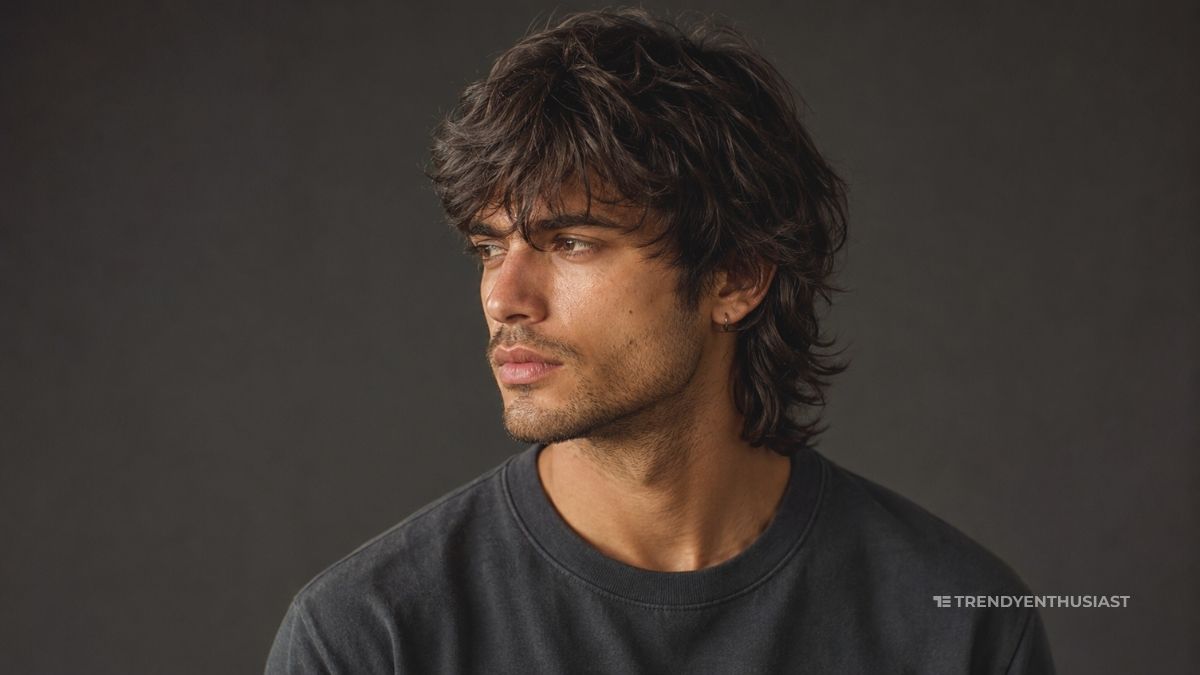
A wolf cut is built from shaggy, choppy layers all around the head, producing a voluminous, undone look that barbers often finish with a middle part or face-framing fringe.
A mullet takes the opposite approach. Length is concentrated strictly at the back, with far less bulk on top, giving it a more defined and structured shape than the wolf cut’s deliberate chaos.
The Wolf Cut, Explained Properly
A wolf cut is a hybrid of a shag haircut and a modern mullet, which is exactly why so many men confuse the two. The sides have real length and blend into the top and back with no fades or line-ups anywhere.
At the crown, heavy and voluminous layers taper downward, often paired with a middle part or fringe that frames the face. The overall vibe is soft, wild, and tousled, styled to look effortless rather than sharp.
The Mullet, Explained Properly
A mullet is the original “business in the front, party in the back” cut. The sides are cropped very short, tapered, or shaved outright, creating a sharp drop in length the moment you move past the crown.
The top and front stay short while the back grows long and tail-like, producing a retro, two-layer look with unmistakable contrast. Where the wolf cut blends, the mullet divides, and that single choice defines the entire style.
Is the "Wolf Mullet" Its Own Haircut, or Just a Blend?
Search for “wolf cut mullet” or “mullet wolf cut” and you will find barbers using the terms almost interchangeably, which is part of why the confusion exists in the first place.
In practice, a wolf mullet is usually a mullet base with wolf cut layering added on top: the back stays long and separated, but the sides and crown pick up the choppy, blended texture instead of a hard fade.
It is a genuine hybrid rather than a marketing term, and worth naming clearly when you book the appointment so your barber does not default to one style or the other.
If you are upgrading your personal presentation across hair, beard, and daily styling, read our structured Men’s Grooming Guide for expert-backed advice.
How to Ask Your Barber for Either Cut
If your barber hears “wolf cut” and reaches for the clippers on your sides, stop them.
Bring a reference photo every time. Stylists consistently point to miscommunication over reference images as the single biggest cause of a client leaving unhappy.
The two cuts share a family resemblance, shag-based layering, longer back sections, but the execution on the sides is where barbers most often get the request wrong without a photo to work from.
If still confused use our free tool: Hairstyle Matcher to get the exact script to tell your barber.
Maintenance and Growing-Out Differences
Maintenance is where the two cuts diverge most in daily life, not just on the day you get it cut.
A wolf cut grows out into itself, since there are no hard lines to lose, so most men stretch appointments to every 8 to 10 weeks.
A mullet is the opposite: the fade or taper on the sides grows out visibly within 3 to 4 weeks, and skipping a trim means the whole point of the cut, the contrast, disappears first.
No. A wolf cut blends its sides into the top and back with no hard lines, while a mullet uses a fade or shave to create a sharp contrast between short sides and a long back.
Yes, though the volume and texture take longer to build. A wolf cut relies on layering rather than raw length, so shorter hair can still achieve the shape with more frequent styling.
No, the opposite is true. A wolf cut grows out softly with no lines to maintain, while a mullet needs a trim every 3 to 4 weeks to keep its fade and contrast sharp.
It depends on hair type and face shape more than trend. Wolf cuts tend to suit textured or wavy hair, while mullets read sharper on straighter hair with defined sides.
Oval, round, and square face shapes generally handle a wolf cut’s volume and fringe well, since the layered crown softens angular features without overwhelming a rounder one.
Yes. A barber can soften a mullet’s harsh sides by blending the fade into longer layers, gradually building the connected, shaggy texture that defines a wolf cut.
Neither is objectively better. A mullet suits someone who wants sharp contrast and a retro edge, while a wolf cut suits someone who wants volume and a softer, undone look.