Classy style for men is not about price. It is about a specific set of decisions — about colour, fit, fabric, and occasion — made with enough precision that the result reads as considered rather than assembled. The classy man is not wearing the most expensive item in the room. He is wearing the most intentional outfit in it. His colour palette is restrained. His clothes fit correctly. His fabrics earn their place. And nothing he is wearing is working too hard to be noticed.
This guide defines classy style precisely — not as a mood board or a budget recommendation, but as a replicable system. The specific colours that create the effect. The fit standards that separate classy from merely dressed. The fabrics worth investing in and the ones worth leaving. And the occasions where the system applies and where it appropriately relaxes.
The word classy is used constantly and defined almost never. Which is why most men who want to dress this way cannot quite get there — they are chasing a feeling without a blueprint.
Here is the blueprint.
Classy style men sits at a specific intersection: formal enough to signal intention, relaxed enough to signal ease. The classy man is not in black tie at a casual occasion. He is not in a tracksuit at a smart one. He has read the context and dressed one register above the minimum it requires — not to stand out, but because that is simply how he approaches being dressed.
Three qualities define every genuinely classy outfit:
Restraint. Nothing is competing for attention. No loud print, no statement accessory, no item doing something dramatic. The palette is cohesive. The silhouette is clean. The details are considered but quiet.
Proportion. Every piece fits the body wearing it. Not tight, not loose — proportionate. A jacket with the correct shoulder seam position and the right amount of chest ease. Trousers that break cleanly at the shoe. A shirt collar that frames the face without overwhelming it. Proportion is the variable with the highest return on investment in men’s style, and it costs nothing beyond the alteration.
Consistency. The outfit makes sense as a whole. The shoe belongs with the trouser. The trouser belongs with the shirt. The shirt belongs with the jacket. When every element belongs to the same visual register, the result reads as intentional — which is the definition of classy.
The man who dresses with consistent class operates within a deliberately limited colour palette. Not because he lacks imagination, but because constraint produces coherence — and coherence produces the visual effect that reads as classy.
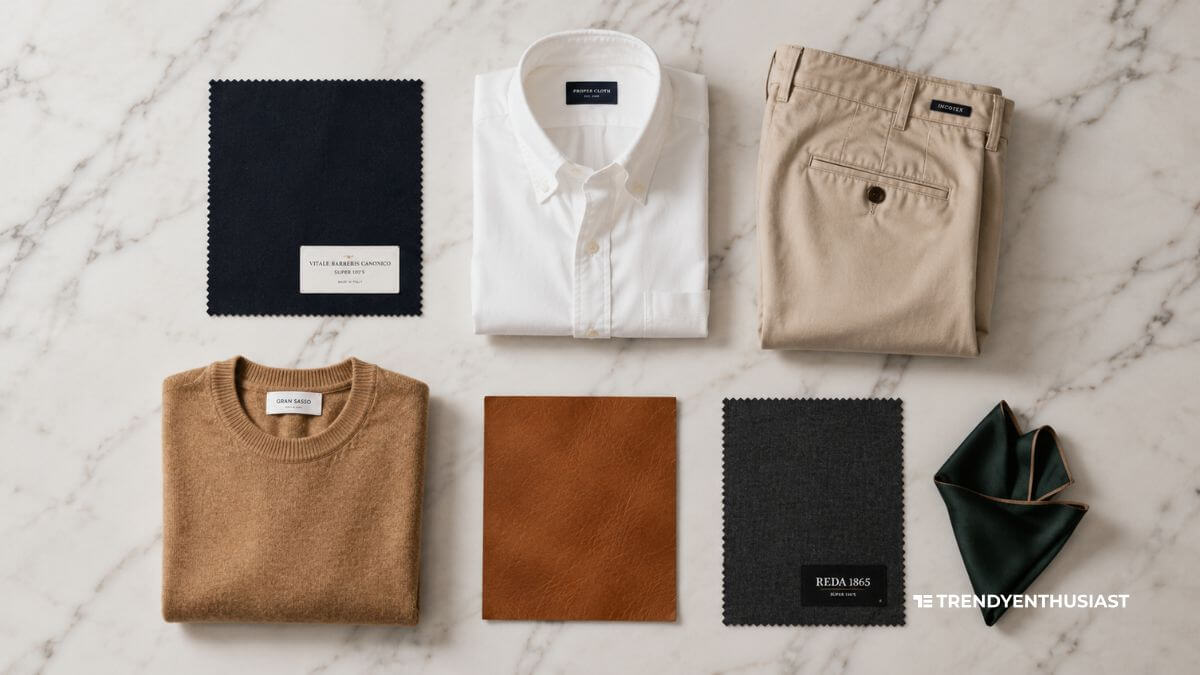
Navy. The single most useful colour in a man’s wardrobe. Navy works with almost everything — white, grey, camel, stone, brown, cream, black. It reads as formal in a suit, smart casual in a blazer, and relaxed in a knit. It does not date. It does not clash. It belongs in every category of the classy wardrobe.
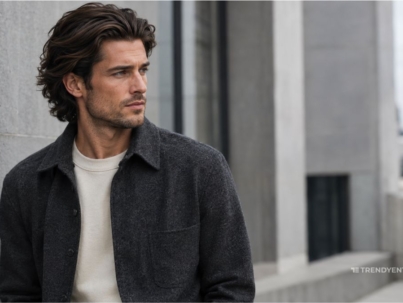
Charcoal and mid-grey. Grey is the neutral that navy cannot be — it reads as slightly lighter in spirit, more versatile across seasons, and equally effective in tailored and casual contexts. Charcoal anchors formal outfits. Mid-grey works through the spring and summer register.
White and off-white. The foundation of every classy outfit. A white dress shirt, a white t-shirt in a quality cotton, an off-white linen shirt — these pieces anchor every combination and create the clean contrast that elevates everything around them.
Camel and tan. The warm neutrals. Camel as a coat or knit, tan as a shoe or belt — these tones add warmth to a palette of cooler neutrals without disrupting the restraint. The camel coat is one of the most consistently classy single garments in men’s fashion, at any price point.
Stone and light grey. The summer neutrals. Stone chinos, light grey tailored trousers, linen in natural tones — these occupy the same restraint principle as their darker counterparts but breathe better in warmer weather.
Burgundy and forest green as accents. Used sparingly — a tie, a pocket square, a sock, a knitwear piece — these two colours add depth to the neutral base without introducing noise. Both belong to the classy register. Both should never dominate.
What to avoid: Bright orange, neon, heavy camouflage, most prints (the exception: a subtle check or stripe in tailored contexts), and any colour that draws attention to itself rather than to the man wearing it.
If classy style has a single non-negotiable, it is fit.
Not slim fit, not relaxed fit — correct fit. The distinction matters because both have their place, and neither is inherently more classy than the other. A relaxed-cut wool suit in charcoal that sits correctly on the shoulders and breaks cleanly at the shoe is classy. A slim-fit suit that pulls across the chest and bunches at the trouser seat is not — regardless of brand, fabric, or price.
Correct fit means:
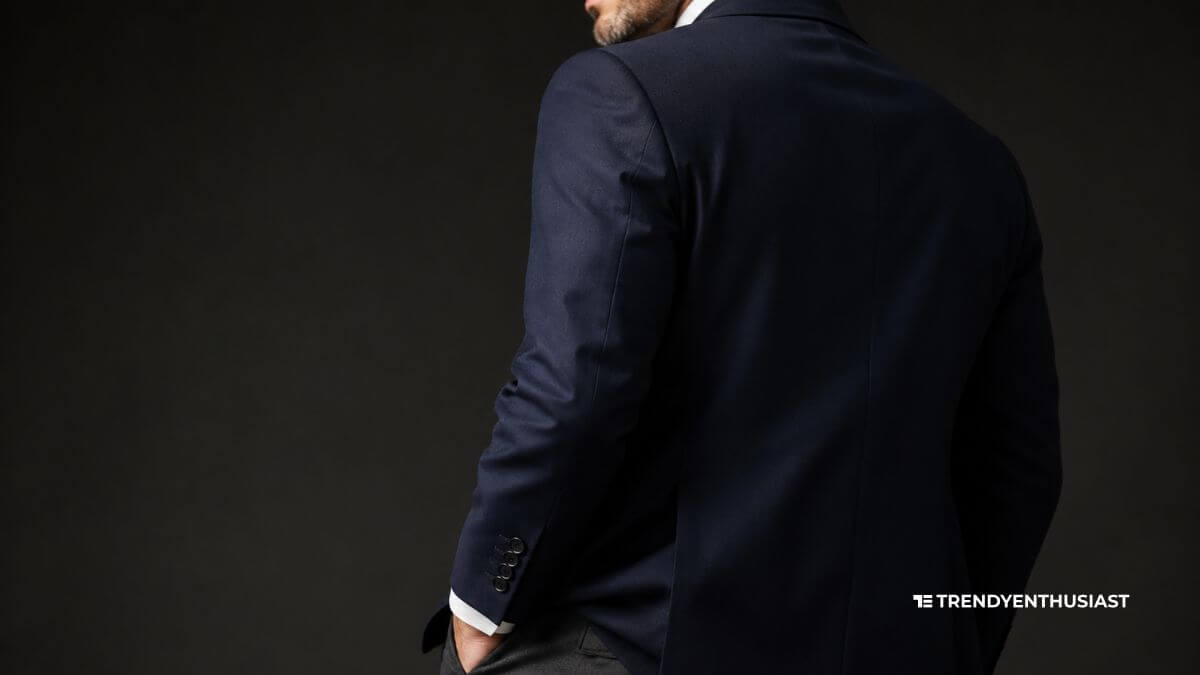
Shoulder seam sits at the point of the shoulder. Not behind it, not in front of it. This is the one measurement that cannot be altered after purchase, which is why it must be right before any other consideration.
Chest has ease without excess. The jacket should button cleanly with no horizontal pulling. You should be able to raise both arms to shoulder height without significant restriction. If it pulls across the chest, it is too small. If it drapes in excess folds, it is too large.
Trouser sits at the natural waist. Not on the hips, not belted down. The natural waist — the narrowest point of the torso — is where a trouser waistband belongs. A trouser worn at the correct rise changes the entire silhouette of the outfit.
Hem breaks correctly at the shoe. One clean break, no pooling. The trouser should touch the top of the shoe with a single, clean fold — not multiple breaks, not so short that the sock shows when standing.
Sleeves show shirt cuff. When a jacket is worn, 1.5 to 2 centimetres of shirt cuff should show below the sleeve. This detail is so consistent in well-dressed men that its absence is immediately visible.
Alterations are the most underused tool in men’s style. A mid-range suit altered to fit correctly will consistently outperform an expensive suit worn in the wrong size. Budget for alterations as a line item, not an afterthought.
The second component of looking expensive without spending it is fabric. Certain materials communicate quality — in drape, in texture, in how they behave across a long day — in a way that synthetic blends cannot replicate.
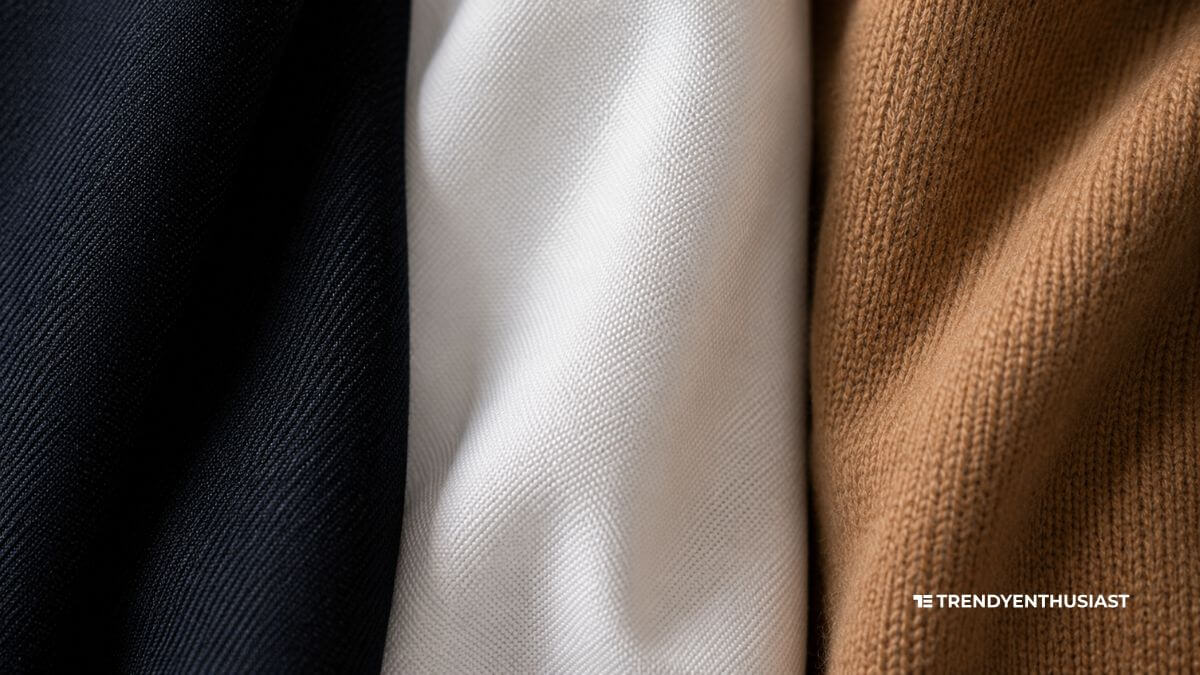
Wool. The backbone of the classy wardrobe. In suits, blazers, trousers, overcoats, and knitwear. Wool drapes, breathes, and holds its shape in a way that polyester cannot. A wool suit at a modest price point in a well-cut style will outperform a polyester suit from a luxury brand on every visible metric.
Cotton. Specifically 100% cotton in dress shirts, chinos, and casual pieces. Cotton breathes, presses well, and ages honestly — it softens with wear in a way that reads as quality rather than wear. The OCBD, the twill trouser, the poplin dress shirt — all cotton, all classy.
Linen. For warm weather. Linen in a suit, a shirt, or a trouser in summer carries an inherent elegance that no synthetic fabric achieves. It creases — and the creases are part of the character, not a flaw. A man in a linen shirt on a warm evening looks effortlessly correct. The same man in a polyester-blend “linen look” shirt does not.
Cashmere and merino. In knitwear specifically. A fine-gauge merino crewneck sits differently on the body than an acrylic equivalent — more fluid, more composed, more quietly expensive. Cashmere amplifies this further. Both are worth the investment for the pieces worn most frequently.
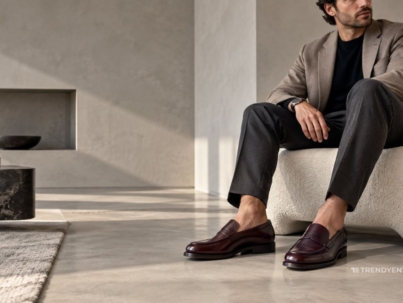
Suede and full-grain leather. In shoes and accessories. A leather shoe in a quality hide — vegetable-tanned, full-grain — develops a patina with wear that communicates age and care simultaneously. A synthetic shoe never achieves this. Suede in tan or mid-brown is one of the most consistently classy shoe materials available.
What to avoid: Polyester in any form that rubs against the skin. Shiny synthetic fabrics in suits or shirts. “Vegan leather” in belts and shoes — the material fails too visibly and too quickly to constitute value at any price.
Theory without application is useless. Here are five outfit formulas that consistently deliver the classy result across real occasions.
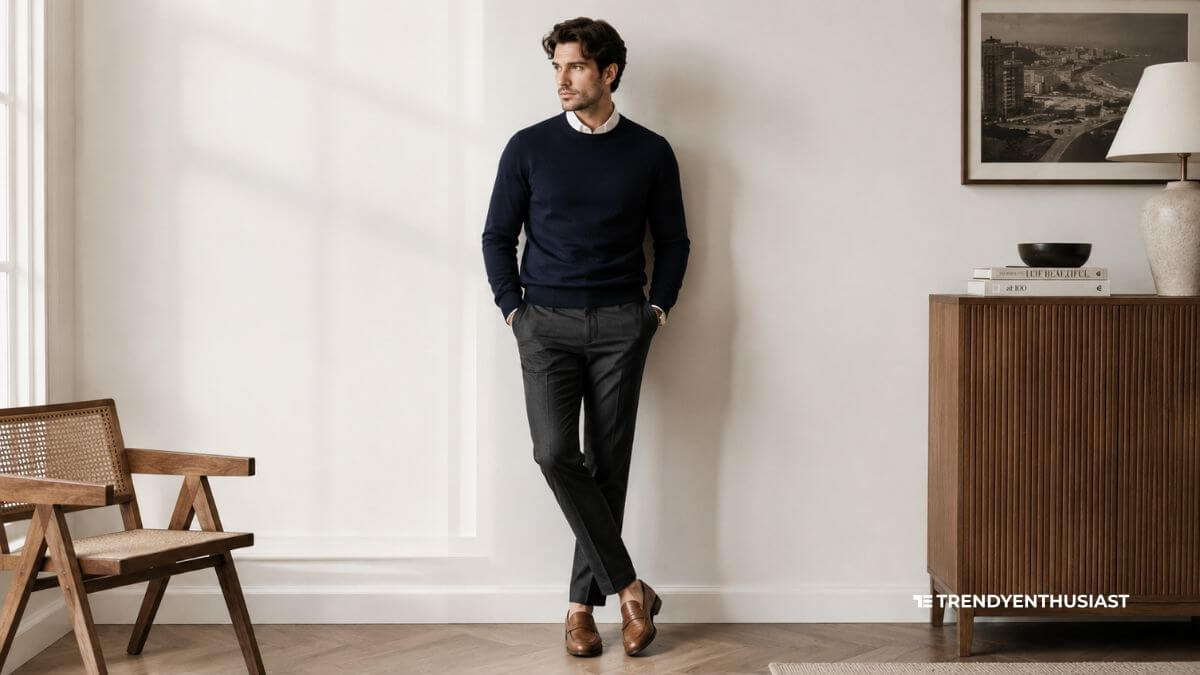
Slim charcoal wool trousers + white OCBD (tucked) + navy merino crewneck + tan leather loafers. No jacket required. The navy knit creates the structure a blazer would provide. The trouser and shirt beneath carry the formality. The loafer anchors the whole thing in the smart-casual register.
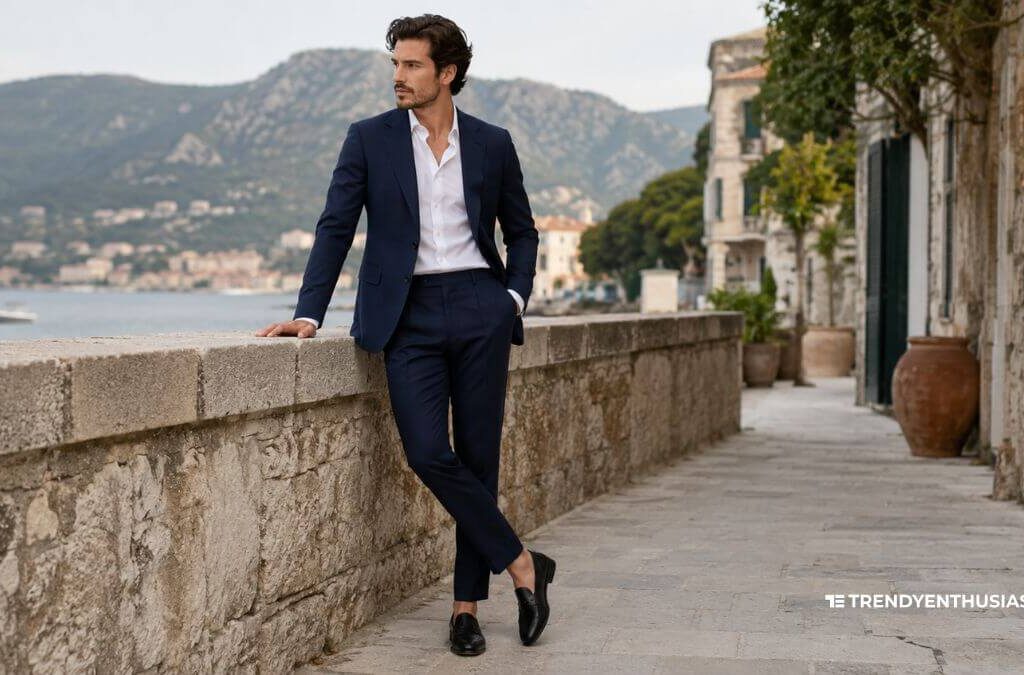
Slim navy suit (worn as separates or matched) + white dress shirt (no tie) + black penny loafers. The open collar on a well-ironed white shirt under a navy suit is one of the most reliable combinations in men’s style. Not trying to be formal. Not trying to be casual. Simply correct.
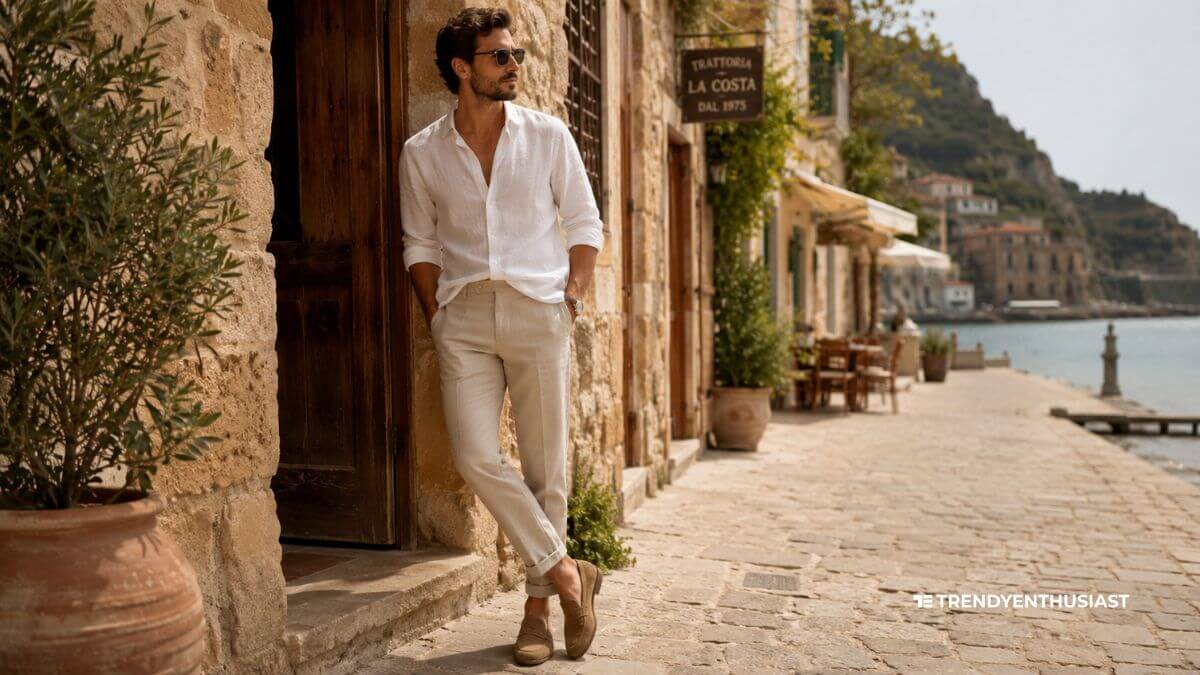
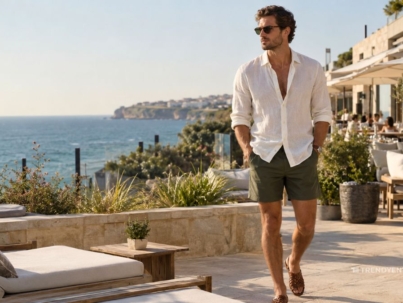
Stone chinos + white linen shirt (half-tucked) + tan suede loafers + no socks. Summer version of the classy casual. The stone and white palette, the suede loafer, the slight informality of the half-tuck — this combination reads as effortlessly considered without referencing any specific trend.
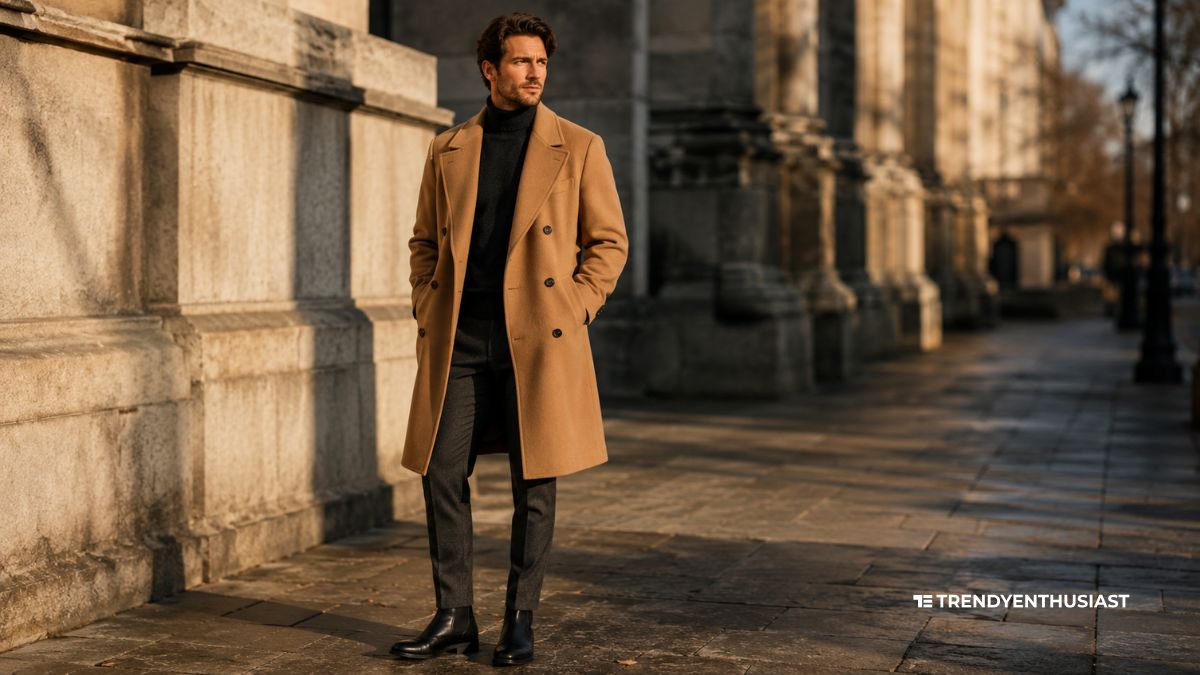
Camel overcoat + charcoal roll-neck + slim dark grey trousers + black Chelsea boots. The camel coat is the single garment most capable of elevating any outfit beneath it. The roll-neck in place of a shirt and tie removes formality while adding warmth and texture. The Chelsea boot closes the silhouette cleanly.
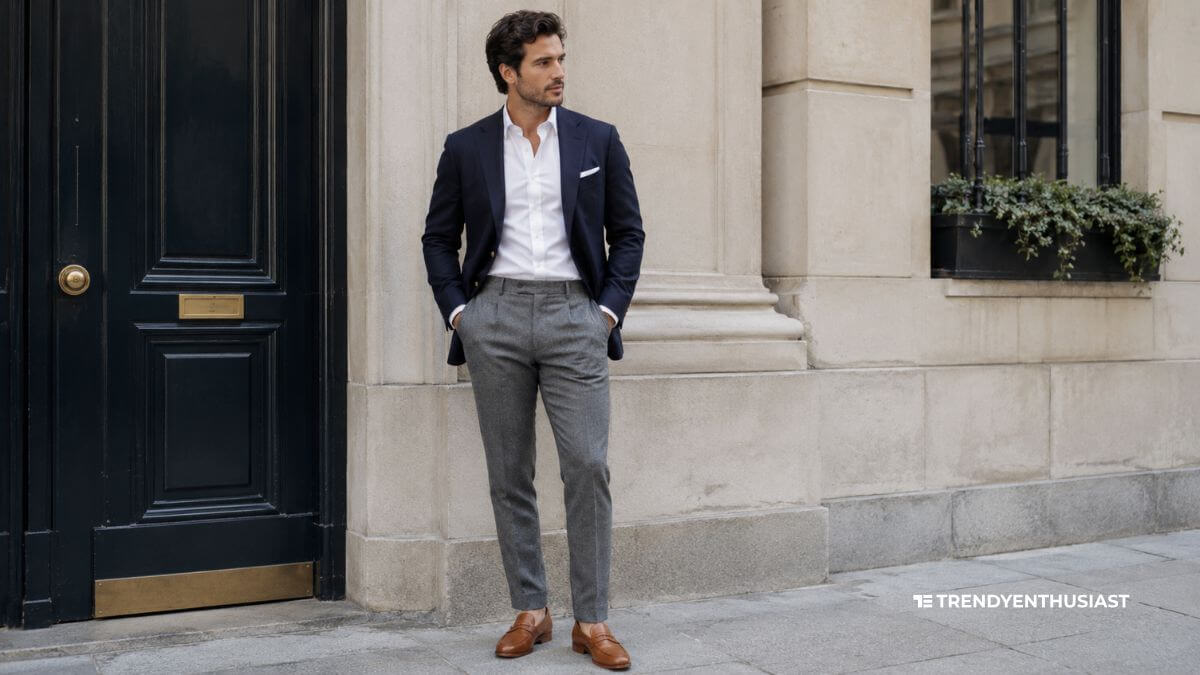
Navy blazer + white OCBD + slim grey flannels + tan leather loafers. The outfit that works for every context where the dress code is unclear. Smart enough for a business lunch. Relaxed enough for a Saturday dinner. This is the combination to reach for when the occasion is ambiguous and the answer needs to be unambiguously correct.
For occasions where a specific dress code is stated — and you want certainty that the formula above is appropriate — the Dress Code Decoder translates any dress code into a complete outfit with a formality rating. The guesswork is removed before it begins.
The negative definition is as useful as the positive one.
It is not expensive. Classy style has no minimum spend. A man in a £40 white t-shirt that fits correctly, slim navy chinos, and a pair of clean tan suede shoes looks classy. A man in a £2,000 suit that fits poorly does not.
It is not formal. Classy style spans every register from tailored to casual. The classy casual man in a linen shirt and loafers is as correctly dressed as the man in the navy suit — because both have read the context and responded to it intentionally.
It is not the same as conservative. Restraint is not the same as boredom. A forest green wool blazer in a well-chosen cut, worn with a white shirt and stone trousers, is restrained and interesting simultaneously. The colour works within the palette. The cut earns attention without demanding it.
It is not a list of brands. Brand names are the shortcut used by men who have not developed the eye to identify quality without a label. Classy style is independent of brand identification — which is exactly what makes it genuinely elevated rather than simply expensive.
Every outfit formula above works differently on different bodies. The proportions of a classy outfit — the jacket length, the trouser width, the collar height — must be calibrated to the body wearing them.
This is why men who understand their own frame dress better than men who follow formulas blindly. The stone chinos and white linen shirt combination looks effortless on a man who knows his proportions and has chosen the correct cut for his frame. On a man who has picked the standard cut because it was available, the same formula falls short.
The Body Shape Matcher maps your specific proportions to the silhouettes and pieces that work for your frame — building a 12-piece personalised capsule wardrobe around your body geometry rather than a generic template. If the formulas above are the destination, this tool is the route planner.
Classy style for men is a restrained, intentional approach to dressing that prioritises fit, a neutral colour palette, and quality fabric over trend items or expensive branding. The classy man’s wardrobe operates in navy, charcoal, white, stone, camel, and tan — colours that work together without requiring precise coordination. His clothes fit correctly — specifically at the shoulder, the chest, and the trouser hem — and are made from wool, cotton, or linen rather than synthetic alternatives. The result is an appearance that reads as considered and expensive without referencing any specific price point or trend cycle.
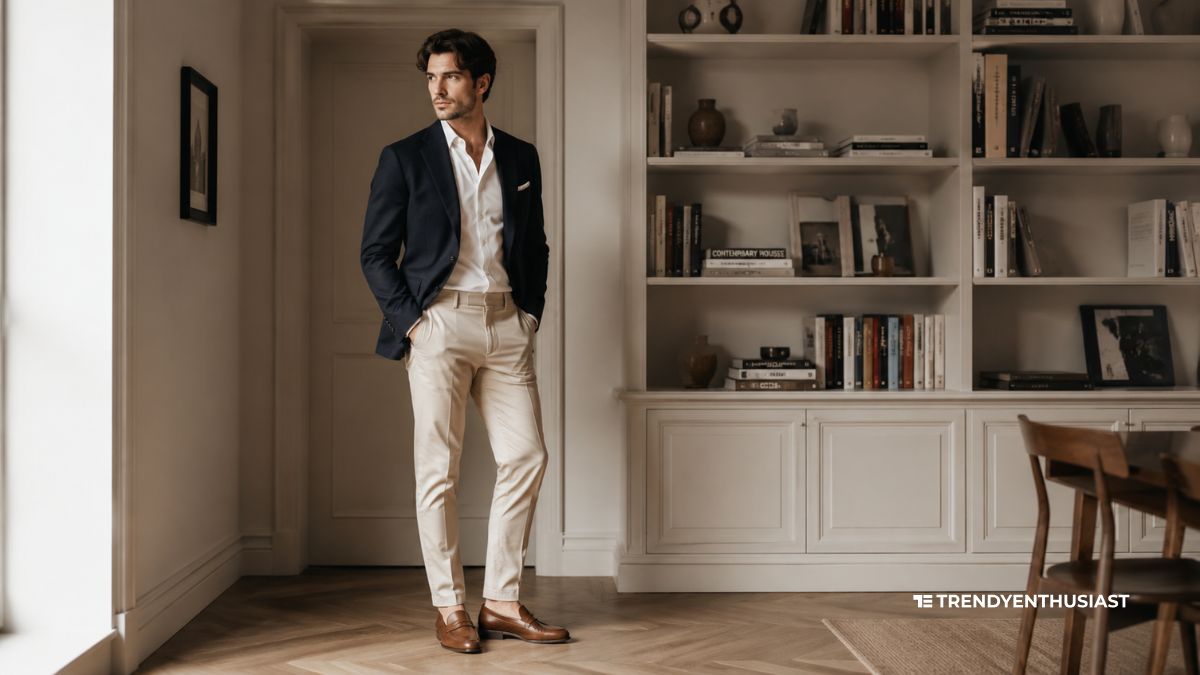
Classy style is achieved through fit and fabric rather than spend. A mid-range suit altered to fit correctly outperforms an expensive suit worn in the wrong size on every visible metric. The highest-return investments for a classy wardrobe are: a well-fitted navy blazer, white dress shirts in 100% cotton, slim trousers in grey or stone, and one pair of quality leather shoes in tan or brown. These four items, in the correct fit and fabric, produce the classy result regardless of brand or price.
The classy men’s colour palette is built around navy, charcoal, mid-grey, white, off-white, camel, stone, and tan. Burgundy and forest green function as accent colours — used in a single piece rather than dominating an outfit. These colours share two qualities: they work together without requiring precise colour matching, and none of them draws attention to itself. The palette produces coherent, restrained outfits across every season and occasion without requiring constant re-evaluation of what works with what.
Smart casual is a dress code — a defined range of formality between business dress and casual wear. Classy is a quality — a characteristic of how a man dresses across all dress codes. A man can dress classy in a smart casual outfit, a formal outfit, or a weekend casual outfit. The difference is that smart casual describes the register of dress; classy describes the standard of execution within that register. The classy smart casual man wears the dress code correctly and with precision. The non-classy smart casual man wears the same register without the fit, the palette coherence, or the occasion awareness that makes it read as intentional.
The most consistently classy shoes for men are leather loafers (penny or tassel) in tan or dark brown, Oxford shoes in black or dark brown, Derby shoes in brown, and Chelsea boots in black or tan. These shoes share a construction quality and formality range that suits the classy wardrobe. Suede in tan or mid-brown is particularly effective — it adds texture to neutral outfits without introducing colour. Clean, minimal leather trainers occupy the bottom of the classy acceptable range in casual contexts. Heavy-soled chunky trainers, branded athletic shoes, and synthetic-upper shoes are outside the classy register in any context.
Classy is not a destination. It is a practice — a daily set of decisions made with enough consistency that they eventually stop feeling like decisions and start feeling like instinct. That is when it becomes effortless. That is the point.
Next in the Sharp Wardrobe series: Men Fashion 2026: What Actually Matters This Year | Smart Casual Men Outfit (coming soon) | The Gentleman’s Guide to Styling Loafers
Founder and Editor of Trendy Enthusiast. Ali covers men's fashion, lifestyle, grooming, and the art of dining well - blending real experience with practical insight.
Connect on Instagram