Trendy Enthusiast

The Clothing Habits of Well Dressed Men: The Daily Rituals

clothing habits of well dressed men

The clothing habits that well dressed men follow consistently are: steaming or hanging garments immediately after wearing rather than letting them sit, rotating shoes daily rather than wearing the same pair every day, applying the rule of three to every outfit, maintaining a capsule system rather than an unmanaged wardrobe, and checking the full outfit in a mirror before leaving rather than assembling it from memory. 

Clothing habits impact confidence directly and measurably; not through some abstract psychological mechanism, but through the simple removal of friction.

A man who knows his clothes are clean, pressed, and ready does not spend any mental energy on uncertainty before he leaves the house. That absence of uncertainty is itself a component of how confident he feels and how confident he appears. 

Why Habits Matter More Than Wardrobe Size

There is a persistent myth in menswear content that looking well dressed is a function of what you own; more pieces, better brands, a bigger budget.

It is not. It is a function of what you do with what you own, repeated consistently enough that it stops requiring conscious effort.

A man with twelve pieces who steams them, rotates them, and checks the result in a mirror before leaving will look more consistently put together than a man with sixty pieces who treats his wardrobe as storage rather than a system. This is not a moral claim about minimalism.

It is an observable pattern: the men who are described as “always looking sharp” are, almost without exception, men who have built specific small habits into their routine; not men who simply own more clothes than everyone else.

The Daily Habits

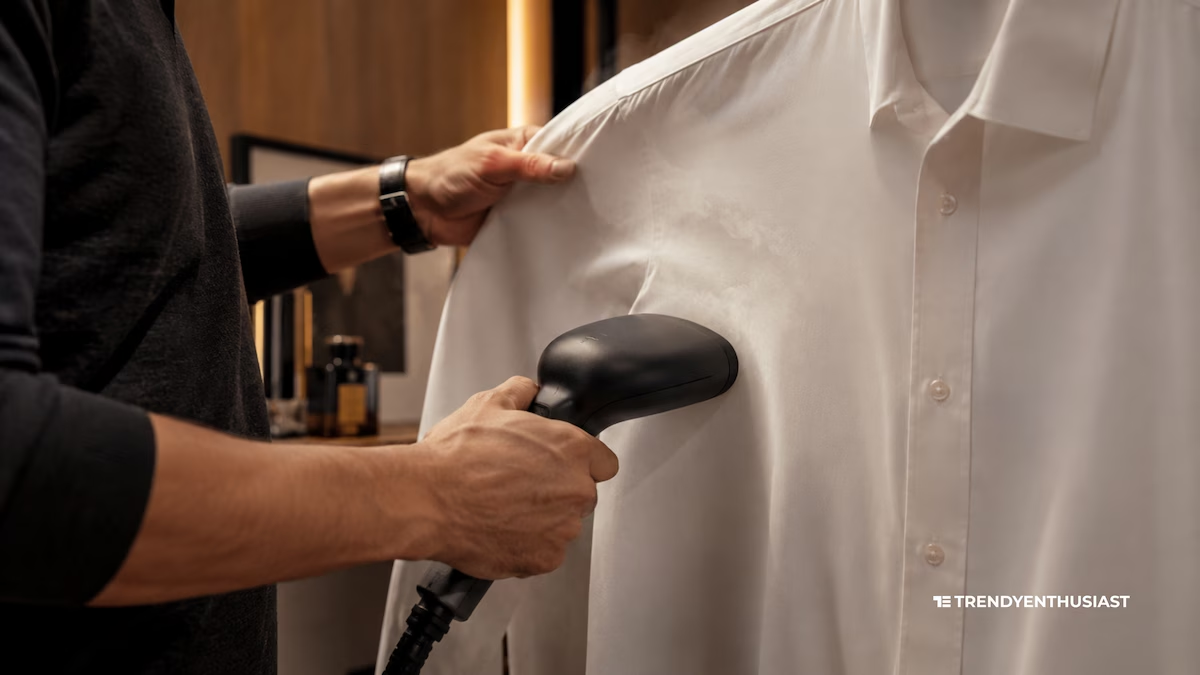
1. Garments Go on a Hanger or Into the Steamer the Moment They Come Off

This is the single highest-leverage habit on this list and the one most frequently skipped.

A shirt, jacket, or pair of trousers worn for a full day and then thrown over a chair or left on the floor develops creases that set overnight body heat and the weight of the fabric folding on itself work exactly like a suitcase compressing a suit during travel.

By morning, what would have been a light wrinkle requiring no attention has become a set crease requiring an iron or a steamer to fully release.

This single habit is the difference between a wardrobe of garments that always look freshly pressed and a wardrobe of garments that look slightly tired regardless of how expensive they were when purchased.

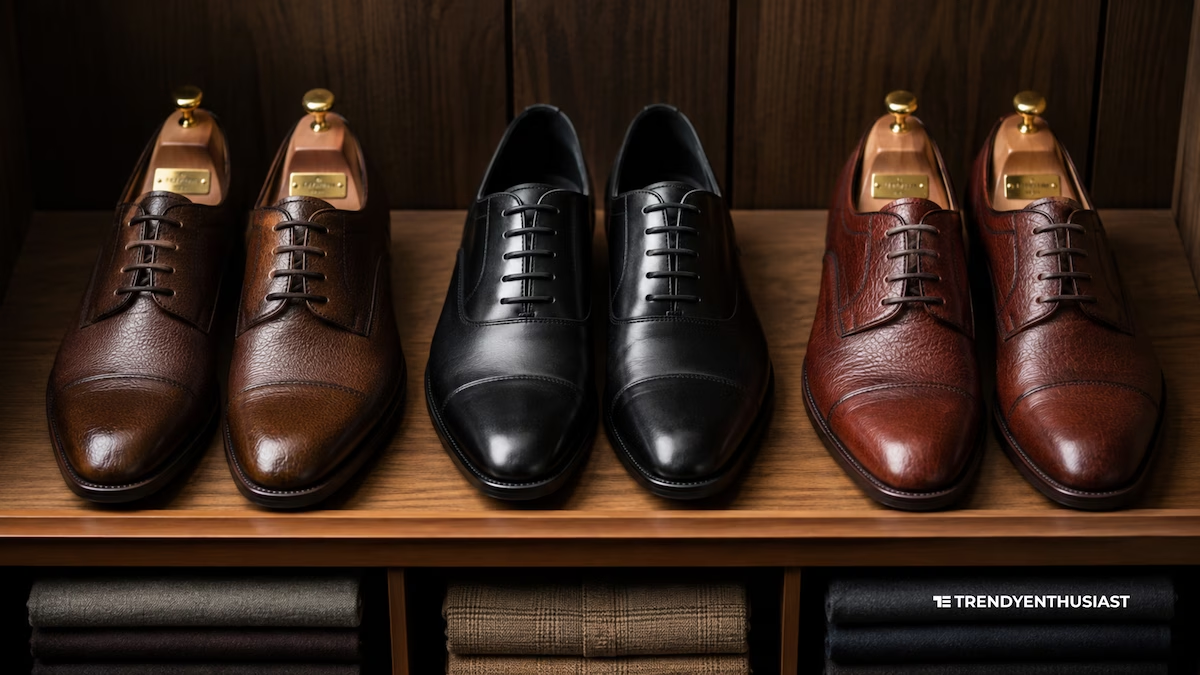
2. Shoes Are Rotated, Never Worn Two Days Running

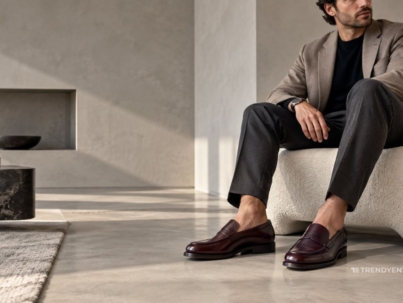
rotating shoes habit men — leather recovery shoe trees

Sharp men do not wear the same pair of shoes two consecutive days. This is not a style preference — it is a maintenance habit with a direct functional purpose.

Leather shoes absorb moisture from the foot throughout a day of wear. Worn again the next day before that moisture has fully evaporated from the interior, the leather softens prematurely, the shoe loses its shape faster, and the smell that develops from trapped moisture becomes a genuine problem far sooner than it would with a rotation system.

The habit: a minimum of two pairs of everyday shoes in rotation, ideally three — one worn today, while yesterday’s pair sits with cedar shoe trees inserted, drawing out the moisture and holding the shape. This is not about owning more shoes for the sake of variety. It is specifically about giving leather the recovery time it needs between wears.

The practical side effect, beyond shoe longevity: a man who rotates shoes always has a presentable pair ready, because no single pair is ever worn into visible decline from daily overuse.

3. The Rule of Three Governs Every Outfit Decision

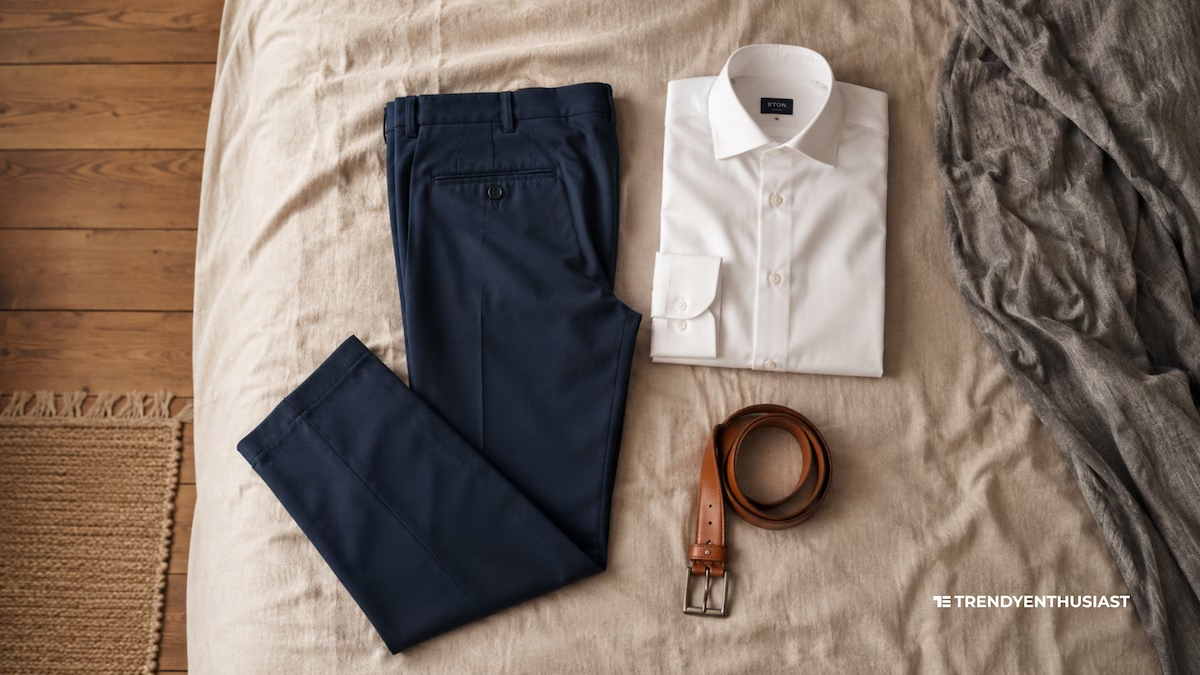
The rule of three is a simple discipline: every outfit should contain a maximum of three colours and a minimum of two textures, checked before leaving the house rather than assembled and hoped for.

Three colours — not four, not five — keeps an outfit visually coherent without requiring colour theory expertise. Navy, white, and tan. Charcoal, white, and brown. Stone, white, and dark green. The third colour is typically the accent — a watch strap, a sock, a pocket square — rather than another major garment.

Texture variation prevents an outfit built entirely in one colour register from looking flat. A navy knit against a navy trouser in the same flat finish reads as monotone in a way that the same two navy pieces in different textures — a textured knit against a smooth wool trouser — does not.

The habit is the check itself: before leaving, a thirty-second mental audit of colour count and texture variation, the same way a man checks he has his keys and wallet. It becomes automatic within a few weeks of conscious practice and from that point requires no further thought.

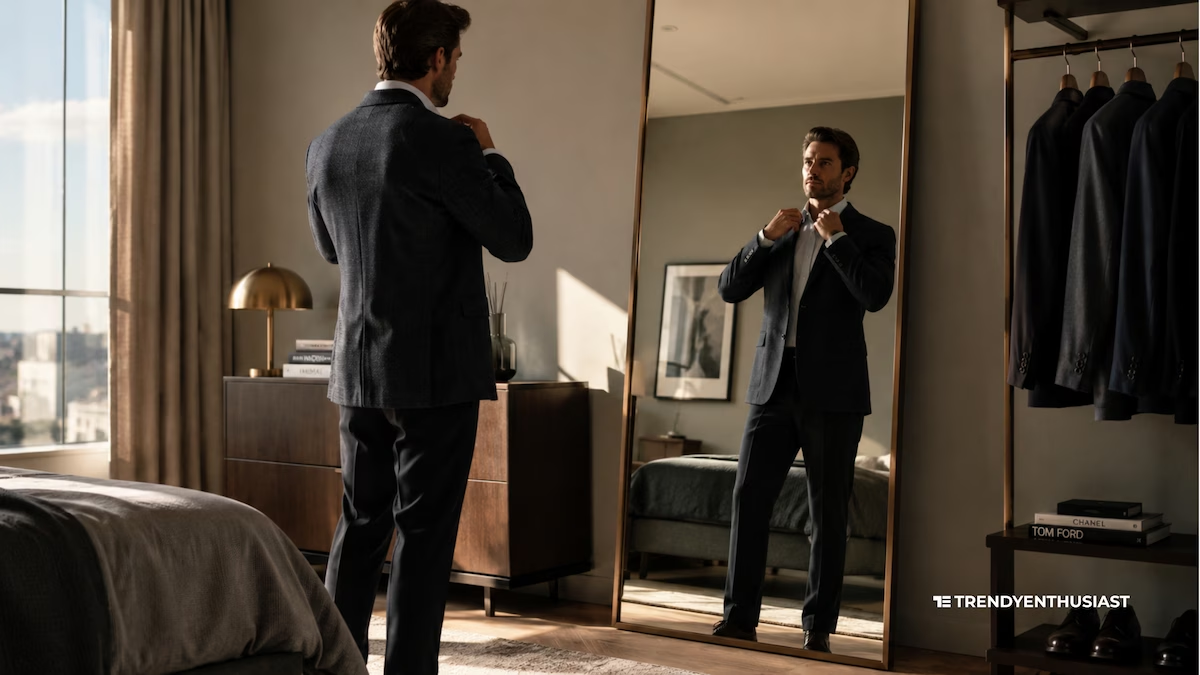
4. The Mirror Check Happens Every Time, Not Occasionally

Well dressed men check the complete outfit in a full-length mirror before leaving — every day, not only on days that feel important.

This sounds obvious and is, in practice, the habit most men abandon first. The logic of skipping it on an “ordinary” day is intuitive — why check an outfit for a day with nothing significant happening? The flaw in that logic is that the habit itself is what builds the eye for fit, proportion, and coherence that makes the high-stakes days easier. A man who only checks the mirror before important meetings has had no practice noticing the small things — a collar sitting slightly wrong, a trouser break that’s an inch too long — and is far more likely to miss them when it actually matters.

The habit, done daily regardless of the day’s importance, trains an eye that eventually catches these details automatically, without a conscious mirror check at all. That is the actual destination — not permanent vigilance, but an eye sharp enough that vigilance becomes unnecessary.

The Weekly Habits

5. The Capsule System Is Audited and Restocked, Not Left to Accumulate

A capsule wardrobe is not a one-time purchasing decision. It is a system that requires a weekly five-minute check: is anything missing a button, fraying at a cuff, or due for a wash before it’s needed again this week?

The habit is a Sunday-evening review — checking what’s clean, what’s pressed and ready, what needs attention before the coming week starts. This is the difference between a man who discovers a missing button at seven in the morning on the day he needs that shirt, and a man who caught it three days earlier with no time pressure attached to the fix.

The capsule system itself — a deliberately limited wardrobe where every piece works with multiple others — only functions as intended with this weekly maintenance habit attached. Without it, even the best-chosen capsule wardrobe degrades into the same unmanaged pile that a larger, less intentional wardrobe becomes.

6. Laundry and Dry Cleaning Run on a Schedule, Not a Crisis

clothing habits of well dressed men

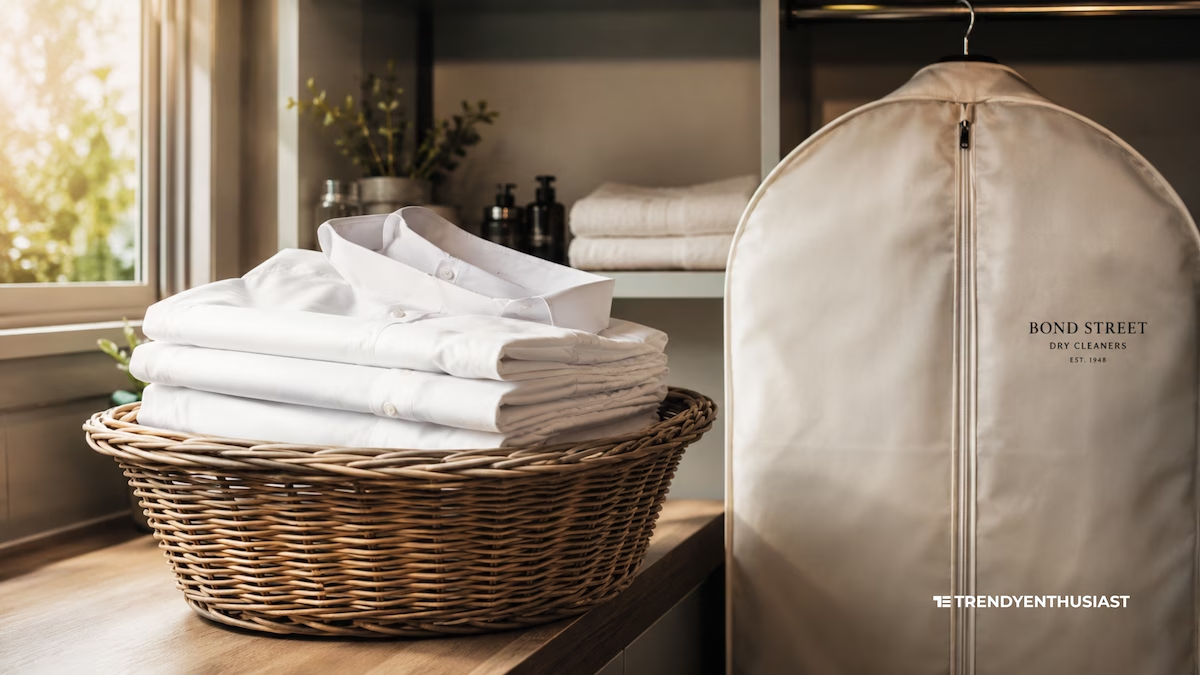
Sharp men do laundry and dry cleaning on a fixed weekly schedule rather than reactively, when the supply of clean clothes runs critically low.

The habit removes a specific failure mode: the Tuesday morning realisation that every white shirt is in the laundry basket. A fixed schedule — wash on Sunday, dry cleaning dropped off and collected on a consistent day — means the wardrobe’s clean-and-ready inventory never falls low enough to create that crisis. This is a logistics habit more than a style habit, but it has direct style consequences: a man who is never short of clean options never finds himself reaching for the least-appropriate available item out of necessity.

7. Grooming and Clothing Maintenance Happen as One Routine, Not Two

clothing habits of well dressed men

The well dressed men who maintain a consistent standard treat grooming and clothing care as a single weekly routine rather than two separate, occasionally remembered tasks.

The same Sunday evening that handles the capsule audit and the laundry schedule is the natural moment to also handle a haircut maintenance check, beard trim if applicable, and shoe polishing. Treating these as one combined ritual rather than clothing care on one day and grooming whenever it happens to come to mind produces the compounding effect that separates a consistently sharp man from one who is sharp in patches.

What Knowing Your Shape Has to Do With Any of This

Every habit above assumes the underlying wardrobe is correct for the body wearing it. A perfectly steamed jacket that doesn’t fit the shoulders correctly is still a poorly fitting jacket habits maintain what’s already right, they don’t correct what’s fundamentally wrong.

This is why the habit of knowing your shape comes before any of the daily rituals above can produce their full effect. The Body Shape Matcher maps your specific proportions to the silhouettes, cuts, and pieces that work for your frame; the foundation that the rule of three, the rotation system, and every other habit on this list builds on top of. Get the foundation right once. Maintain it daily after that.

How These Habits Compound Into Confidence

The connection between clothing habits and confidence is not abstract. It is mechanical, and it works in a specific, traceable way.

A man who has steamed his shirt the night before, rotated into a pair of shoes that still hold their shape, applied the rule of three without conscious effort, and checked the mirror on the way out spends zero mental energy on uncertainty about his appearance for the rest of the day.

This is the same mechanism behind quiet presence and dining authority covered elsewhere in this series: removing friction in one domain of a man’s life frees attention for everything else. The clothing habits described in this guide are not about appearing more confident through better clothes. They are about removing one entire category of background uncertainty so that confidence – built through the non-physical traits covered in Quiet Presence – has nothing competing with it.

The Habits, Not the Wardrobe, Are the System

Every principle in this guide assumes a wardrobe built on the framework covered in Classy Style Men  restraint, correct fit, quality fabric. That framework defines what to own. This guide defines what to do with it, daily and weekly, so that what you own performs at its actual capability rather than its average.

The same logic extends to how a man conducts himself beyond clothing at the table, in conversation, in the quiet moments that build a reputation over time. Table Manners for Men covers the equivalent daily-ritual approach applied to dining; both pieces sit within the same Confident Man framework: small, consistent, unglamorous habits that compound into a reputation for being a man who has his life in order.

The Confident Man series is now complete: How to Build Quiet Presence · Table Manners for Men · Dining Etiquette for Men · Clothing Habits of Well Dressed Men

Frequently Asked Questions

Well-dressed men consistently follow five core habits: hanging or steaming garments immediately after wearing rather than letting creases set overnight, rotating shoes daily to give leather recovery time between wears, applying the rule of three (maximum three colours, minimum two textures) to every outfit, maintaining a weekly capsule wardrobe audit to catch missing buttons or laundry needs before they become urgent, and checking the complete outfit in a mirror every day rather than only on important occasions. 

Clothing habits impact confidence by removing background uncertainty rather than through any abstract psychological effect. A man who has steamed his shirt, rotated into well-maintained shoes, and checked his outfit before leaving spends no mental energy wondering whether his appearance is working throughout the day. 

The rule of three is a daily styling discipline limiting any outfit to a maximum of three colours while requiring a minimum of two different textures. The third colour typically functions as an accent rather than a major garment, keeping the overall outfit visually coherent without requiring formal colour theory knowledge. Texture variation between at least two elements of the outfit prevents a single-colour combination from reading as flat or monotone. 

Rotating shoes allows leather to fully dry and recover between wears. Leather absorbs moisture from the foot throughout a day of wear, and worn again the next day before that moisture has evaporated, the leather softens prematurely, loses its shape faster, and develops odour from trapped moisture significantly sooner than a rotated pair would. 

No. The clothing habits that produce a consistently well-dressed appearance steaming garments immediately, rotating shoes, applying the rule of three, maintaining a weekly wardrobe audit, and checking outfits in a mirror daily require no specific budget and work identically regardless of wardrobe size or cost.

Ali Taimour

Ali Taimour

Ali Taimour is the founder and editor of Trendy Enthusiast, a men's digital publication dedicated to fashion, grooming, lifestyle, and culture.

Connect on Instagram
Shopping Basket