You're Probably Using Beard Oil Wrong - Here's How to Fix It
To use beard oil properly: apply two to four drops to your palms after washing your face, while the skin is still slightly damp. Rub your hands together to warm the oil, then work it through your beard from skin to tip – fingertips first to reach the skin underneath, then a beard comb to distribute evenly through the hair. Do this once a day, in the morning. That is the complete method.
Most men skip the skin contact, use too much, and apply to a dry beard. The oil sits on the surface, the beard looks greasy, and the skin underneath (which is what beard oil primarily exists to treat) receives nothing. This guide explains the technique correctly, once.
What Beard Oil Actually Does (And What It Doesn't)
Before technique, it’s worth understanding what you’re actually applying and why because the mechanics change how you use it.
Beard oil does two distinct jobs, and most men are only aware of one.
It conditions the skin underneath the beard
This is the primary function. Beard hair is coarser and denser than scalp hair, and it draws moisture from the skin below as it grows. Without intervention, that skin becomes dry, flaky, and itchy enough to make most men give up at three weeks. Beard oil replaces that lost moisture. It keeps the skin barrier intact and eliminates the itch that kills most attempts at a beard.
It softens and conditions the beard hair itself
Carrier oils penetrate the hair shaft to reduce brittleness and frizz. This is what makes a coarse, wire-like beard feel manageable and look healthy rather than dry and dishevelled.
What beard oil does not do: it does not make your beard grow faster. It does not replace a beard balm or wax for styling or hold. It does not work if it never reaches the skin. Those last four words are the source of almost every beard oil complaint.
The Right Time to Apply Beard Oil
Timing matters more than most grooming guides acknowledge.
Apply after washing - not to a dry beard
The window directly after washing the face or stepping out of the shower is when the skin and hair are most receptive to oil. Water opens the hair cuticle slightly, allowing the carrier oils to penetrate rather than sit on top. The skin, cleaned and slightly moist, absorbs the oil directly rather than having it bead on surface sebum.
This does not mean applying to a soaking wet beard. Pat it down first with a towel until it’s damp – not dripping, not dry. That is the correct moisture level.
Once a day is the baseline
For most men with a medium-length beard in a temperate climate, morning application after washing is sufficient. If you live in a cold, low-humidity environment or your skin is particularly dry, a lighter second application in the evening (three to four drops maximum) can be beneficial.
Do not apply to a completely dry beard mid-afternoon
In the hope of making up for a missed morning don’t apply to dry beard. The absorption is significantly reduced, and the result is typically a greasy-looking beard rather than a conditioned one. If you missed the morning window, wait until the next wash cycle.
How Much Beard Oil to Use
The single most common mistake. More is not better. More is just grease.
The amount correlates directly to beard length:
Beard Length
Drops
Stubble (1-3mm)
1-2 drops
Short beard (under 1 inch)
2-3 drops
Medium beard (1-3 inches)
3-4 drops
Long beard (3 inches+)
4-6 drops
Start conservative. You can always add a second drop if the beard still feels dry after working the oil through. You cannot take it back once you’ve over-applied. A correctly oiled beard looks healthy and has a slight, natural sheen. An over-oiled beard looks wet and feels heavy.
If you regularly need more than six drops to achieve coverage on a long beard, switch to a slightly heavier carrier oil blend – argan and jojoba are lighter; coconut and castor are heavier. The product may not be formulated for your beard density.
How to Apply Beard Oil: The Correct Method Step by Step
This is the technique. Follow the sequence.
Step 1: Wash and pat down
Wash your face as normal. Pat your beard with a towel until it’s damp – not dry, not dripping. The damp state is the target.
Step 2: Dispense the oil
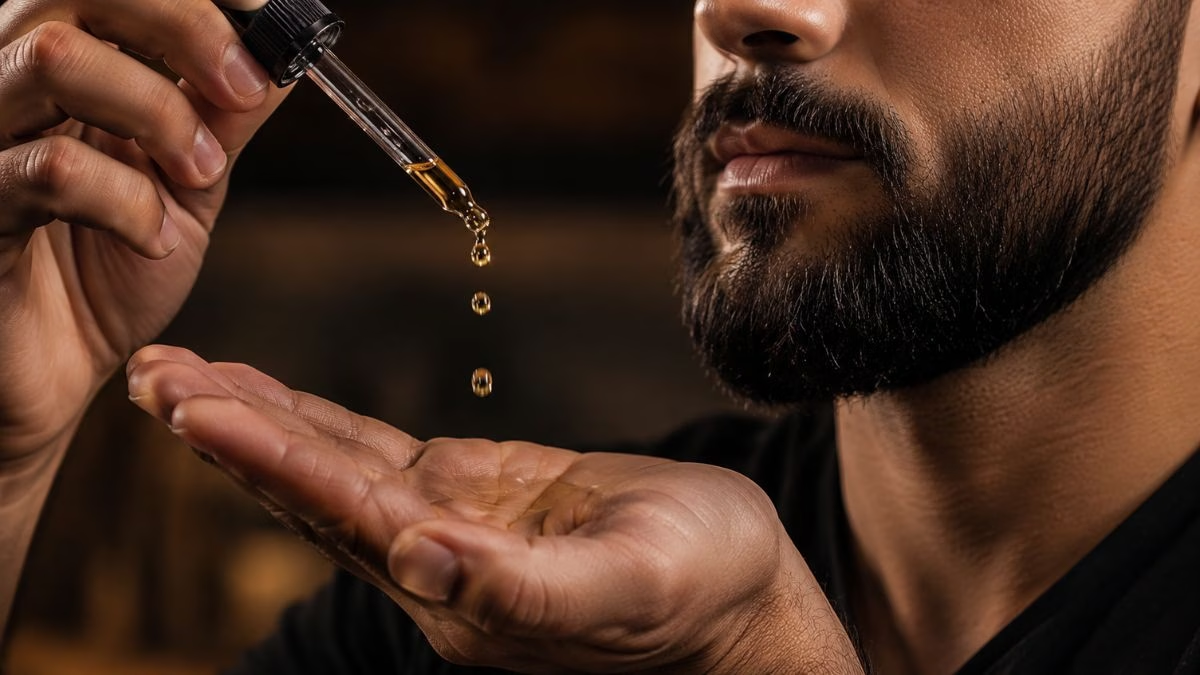
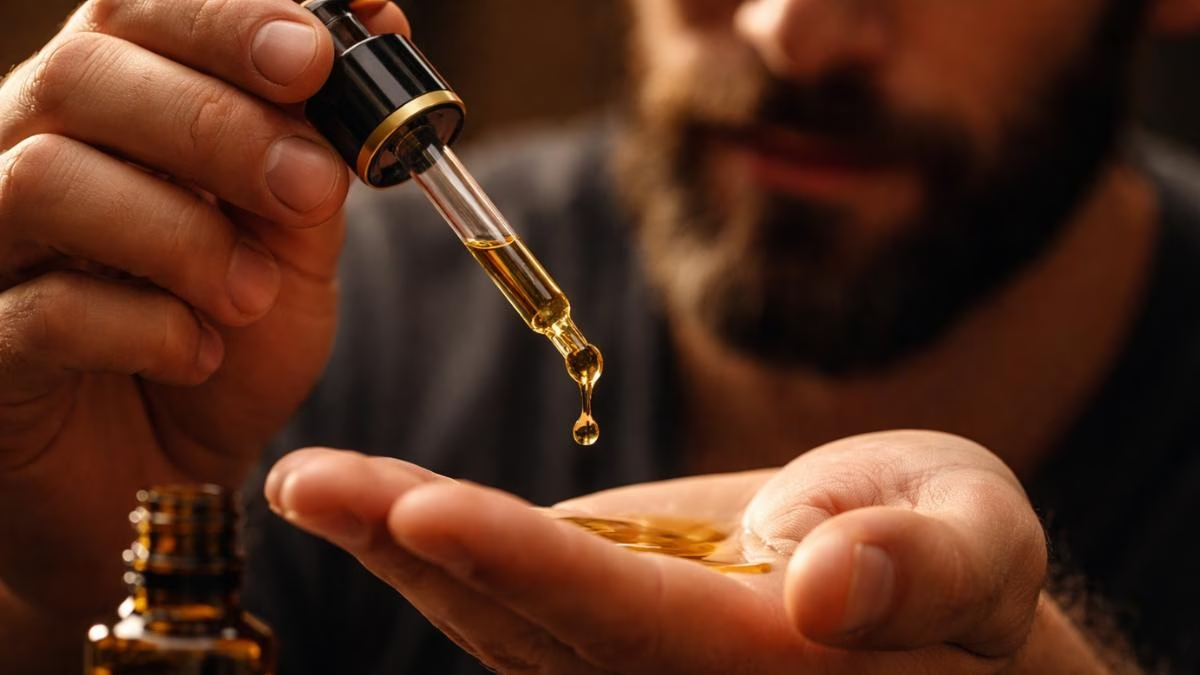
Drop the correct amount for your beard length into the palm of your non-dominant hand. If your bottle uses a dropper, dispense slowly – the difference between two and four drops is the difference between conditioned and greasy.
Step 3: Warm the oil
Rub your palms together for three to five seconds. This warms the oil and distributes it evenly across both hands. Cold oil applied directly is less fluid and doesn’t spread as well.
Step 4: Work from skin outward
Press your fingertips through the beard to the skin and work in a circular motion, as if massaging the skin underneath. This is the step most men skip entirely, it is the most important step. The oil must reach the skin. Spend five to ten seconds doing this properly across the cheeks, chin, and neckline.
Step 5: Work through the beard hair
Once the skin is covered, run your palms and fingers through the beard from root to tip, coating the hair. Work downward with the grain first, then upward briefly to reach any hairs growing against the grain.
Step 6: Comb through
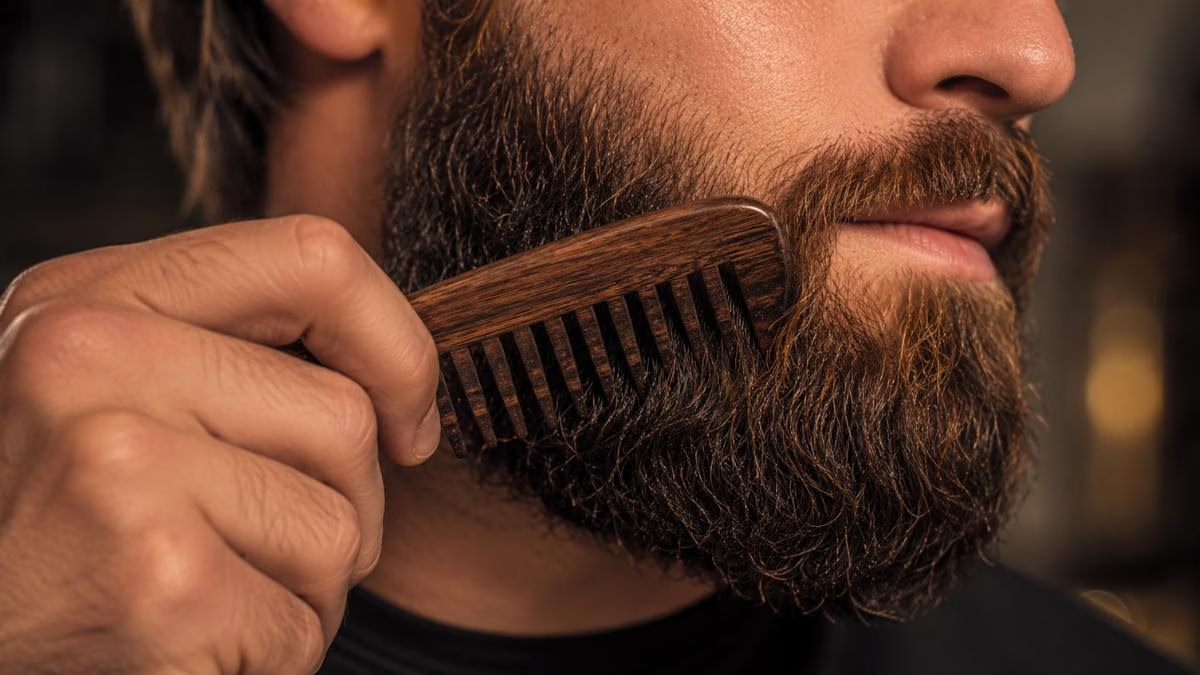
Use a wide-tooth wooden or horn comb (not a plastic brush) to distribute the oil evenly through the beard, detangle, and train the hair into shape. This step also ensures even coverage on longer beards where the hands alone can miss patches.
Total time: ninety seconds, done correctly.
For personalised hairstyle recommendations based on your face shape and hair type, the Hairstyle Matcher delivers a specific recommendation in under two minutes.
Choosing a Beard Oil: What the Ingredients Actually Mean
The market is saturated with beard oils at every price point. What actually matters is the carrier oil base and the fragrance load – not the branding.
Carrier oils to look for:
Jojoba oil – The closest match to the skin’s own sebum. Absorbs quickly, leaves no residue. Excellent for daily use and sensitive skin.
Argan oil– Rich in vitamin E and fatty acids. Conditions hair particularly well. Slightly heavier than jojoba.
Sweet almond oil – Lightweight, absorbs well, good general softener.
Grapeseed oil – Very light, odourless, excellent base for fragrance-forward blends.
Castor oil– Heavy and viscous. Effective for very coarse beards and longer lengths but can be thick for daily use alone. Usually blended.
What to avoid:
Mineral oil and petroleum-derived ingredients, they sit on the surface and do not absorb. They create the appearance of conditioning without any of the function.
Alcohol high in the ingredients list, it will dry out the hair and skin, defeating the entire purpose.
An overwhelming fragrance load, essential oils in high concentrations can irritate sensitive skin. If a beard oil lists more than two or three essential oils and they appear near the top of the ingredients, it’s fragrance-heavy. Apply to the wrist first if you have sensitive skin.
Try Style Score to get complete knowledge of whats going wrong.
Beard Oil vs Beard Balm: Which One Do You Actually Need
They serve different purposes, and the confusion between them causes men to use neither correctly.
Beard oil
It is a leave-in conditioner. Its job is moisture for the skin and the hair. It offers no hold, no shaping ability, no structure. If conditioning is all you need, oil is sufficient.
Beard balm
It is a leave-in conditioner plus a light styling agent. It typically contains the same carrier oils as a beard oil, with the addition of beeswax and shea butter. The wax provides a light hold that tames flyaways and keeps a longer beard sitting in shape throughout the day. It also sits on the hair surface slightly longer than a straight oil.
Which to use:
Stubble and short beards: oil only, there is nothing to shape.
Medium beards with some flyaway or directional issues: oil first, balm second.
Long beards: oil worked into the skin, balm through the hair to hold shape.
Think of them as primer and foundation, different tools, different jobs, used in sequence.
When to Expect Results
Beard oil works progressively, not immediately.
After three to five days of consistent, correct application, skin itch and flaking reduce noticeably. The beard hair begins to feel softer. After two to three weeks, the visual difference in beard health and texture becomes apparent to anyone looking at you.
Men who apply beard oil inconsistently rarely notice results and conclude the product doesn’t work. The product works. The application doesn’t.
One application per day, done correctly, every day. That is the entire commitment.
Common Mistakes (and the Fix for Each)
Applying to a dry beard: The oil sits on the surface. Fix: apply after washing, to a damp beard.
Skipping the skin: The main benefit is lost. Fix: fingertips through to the skin first, every time.
Using too much: Greasy result, potential breakouts on the skin around the beard. Fix: start with two drops, increase by one if needed.
Not combing after: Uneven distribution, patchy result on longer beards. Fix: always finish with a wide-tooth comb.
Expecting overnight results: Beard oil conditions progressively. Fix: daily application for two weeks before assessing.
Storing in a hot bathroom: Heat degrades the carrier oils. Fix: store in a cool, dark place – a bedroom drawer, not the shower shelf.
Beard oil is one piece of the puzzle — how you manage your hair and scalp, and the fragrance you layer over it, complete the picture. The full grooming system is at The Modern Man’s Grooming Guide.
Dispense two to four drops (depending on beard length) into your palm after washing your face while the beard is still damp. Rub your palms together to warm the oil, then press your fingertips through the beard to the skin and massage in a circular motion.
The correct amount depends on beard length: one to two drops for stubble, two to three for a short beard under one inch, three to four for a medium beard, and four to six for a long beard of three inches or more.
Both – but the skin comes first. The skin underneath a beard is where beard oil does its most important work, replacing the moisture that beard hair draws from it as it grows.
No. Beard oil does not stimulate hair follicles or accelerate growth. Its function is conditioning – keeping the skin healthy and the beard hair soft, manageable, and free of breakage.