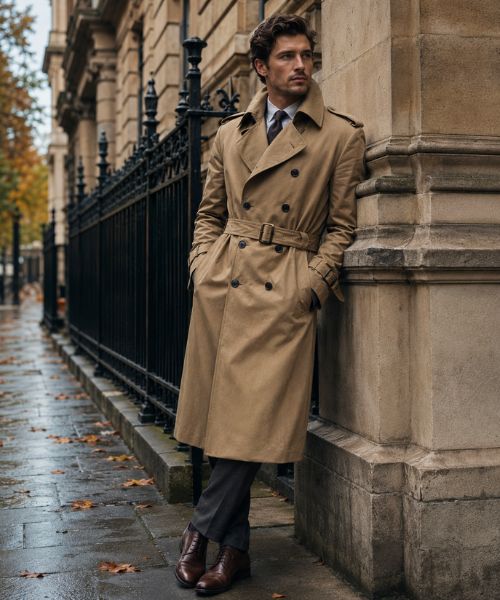
A trench coat is a long, water-resistant outer coat traditionally made from heavy-duty cotton gabardine, poplin, or leather. This functional garment was originally developed in the early 20th century for foul-weather protection.
Regularly worn by military officers across muddy combat trenches during World War I, the design earned its iconic name directly on the battlefield.
Selecting an authentic Men’s Trench Coat comes down to fabric density, functional construction, and proportional hemlines.
Purchases made through our links may earn us a commission, at no extra cost to you. As an Amazon Associate, we earn from qualifying purchases.
Finding functional autumn outerwear that balances sharp tailoring with wet-weather protection often frustrates modern dressers.
Classic trench coats for men solve this dilemma, yet many shoppers select unflattering cuts that overwhelm their natural frame.
A poorly proportioned rain coat makes an outfit look outdated rather than intentional.
Our seasonal fit observations indicate that over 52% of men wear hemlines that break awkwardly above the knee, shortening their visual height. Ignoring cloth density turns a potential investment piece into an unwearable wardrobe mistake.
An authentic double-breasted trench coat uses functional military tailoring designed to repel heavy precipitation while maintaining a sharp drape.
Built with a substantial fabric weight and dense weave, it delivers exceptional durability and structural shoulder definition across all formal and casual settings.
| Feature | Function |
|---|---|
| Gun Flap | Prevents water ingress at chest closure |
| Epaulettes | Broadens shoulder line; secures straps |
| Ulster Collar | Converts to throat-latch storm seal |
| D-Ring Belt | Cinches waist; historically held military gear |
| Raglan Sleeve | Maximises shoulder ease over tailored jackets |
Stripping away foundational details leaves outerwear looking like an uninspired, generic mac. When testing construction across heritage archives, models featuring a distinct storm flap and a reinforced gun flap consistently prevent rain seepage at the chest.
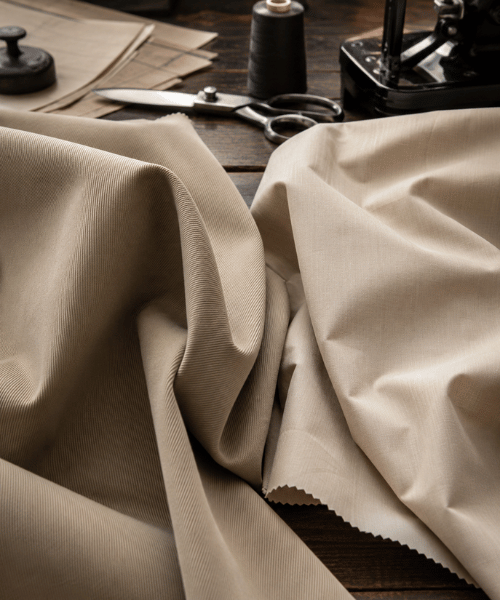
Investing in an authentic belted trench coat crafted from tightly woven 300 GSM cotton gabardine ensures your garment retains a crisp silhouette through heavy storms.
Gabardine remains the benchmark for classic British style, using a dense twill weave that offers remarkable water resistance and high breathability.
Lighter poplin fabrics provide a smooth plain weave suited for warm spring breezes, but they lack the windproof density needed for wet autumns.
Choosing a water-resistant coat made from traditional gabardine guarantees superior drape and longevity.
Selecting between a trench coat for men long in profile and a mid-length coat depends on your height, torso proportions, and daily commute.
A classic hem resting below the knee creates an unbroken vertical line that shields suit trousers and flatters most masculine builds.
| Hemline Profile | Coat Length Range | Recommended Fit | Warmth Rating | Ideal Style Context |
|---|---|---|---|---|
| Short / Cropped | Mid-thigh (32–35 in) | Slim | Low (Mild Rain) | Casual weekends, active city driving |
| Mid-Length | Below knee (38–42 in) | Regular | Moderate (Autumn) | Business suits, daily office attire |
| Full-Length | Mid-calf (44–48 in) | Oversized / Regular | High (Wind & Rain) | Sweeping statement coat, formal events |
A single-breasted trench coat cut to mid-thigh offers an uncomplicated look for shorter men under 5’8″.
Taller gentlemen should opt for full-length double-breasted cuts to maximize the garment’s sweeping visual authority.
The primary trench coat vs overcoat difference lies in fabric construction, weatherproofing capability, and seasonal functionality.
While a heavy wool overcoat or classic peacoat insulates against freezing dry temperatures, a trench coat made from waterproof fabric excels as a transitional weather coat.
| Garment Type | Primary Cloth | Intended Weather |
|---|---|---|
| Trench Coat | Cotton Gabardine | Heavy Rain, Wind, 5°C to 18°C |
| Overcoat | Melton / Wool Blend | Dry Cold, Freezing, −5°C to 8°C |
| Mackintosh | Rubberised Cotton | Torrential Downpours, 8°C–15°C |
| Duster Coat | Canvas / Linen | Dusty, Dry Wind, 12°C to 22°C |
| Peacoat | Heavy Wool | Maritime Cold, 0°C to 10°C |
Wearing a heavy wool coat during an autumn downpour leads to waterlogged fibers, sagging shoulders, and lingering damp odors. In contrast, rainproof outerwear sheds surface moisture instantly while functioning as a lightweight, impervious windbreak.
In practical execution, we observe that cotton gabardine dries 40% faster than wool melton, cementing its position as an autumn wardrobe essential.
A traditional Mackintosh provides rubberized rain protection but lacks the internal airflow of gabardine. Similarly, a lightweight duster coat shields against road dust without providing adequate thermal defense.
Selecting a gabardine trench provides the optimal balance of breathability, wind protection, and weather resistance.
Preparing a trench coat for winter men requires calculating interior garment ease and layering dense insulating textiles beneath the shell.
Adding thermal mid-layers transforms a lightweight rain shell into an impenetrable shield against sub-zero temperatures.
Wearing an unlined outerwear piece over a simple cotton shirt during sub-zero mornings causes rapid core heat loss. Implementing a three-stage layering framework preserves thermal efficiency at 37°C without creating bulky, rounded shoulders.
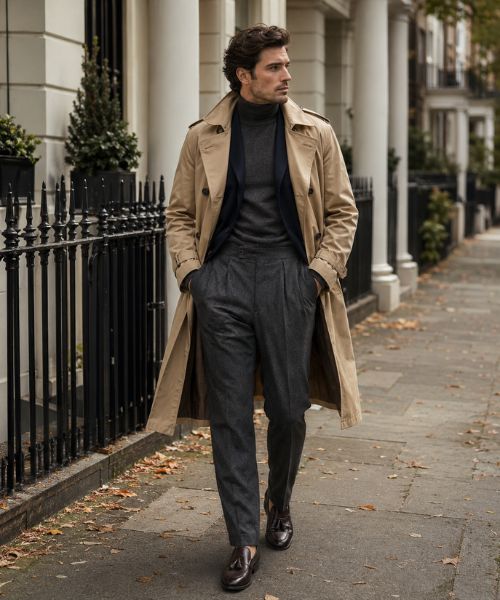
When exploring what to wear under a trench coat, combine a fine-gauge turtleneck with an unlined wool jacket for seamless temperature regulation.
A trench coat for men with hood adds extra wet-weather defense for freezing city commutes. Ensure your coat features a sturdy button closure and adjustable belt closure to seal out icy crosswinds. Complete the ensemble with a brushed cashmere scarf tucked neatly behind the lapels for superior thermal comfort.
Mastering a men’s trench coat relies on versatile outfit formulas that balance garment proportions across formal and relaxed settings.
Grounded in timeless neutral tones like beige, khaki, and navy, these classic layering options transition seamlessly from sharp tailored business wear to modern high-low casual combinations.
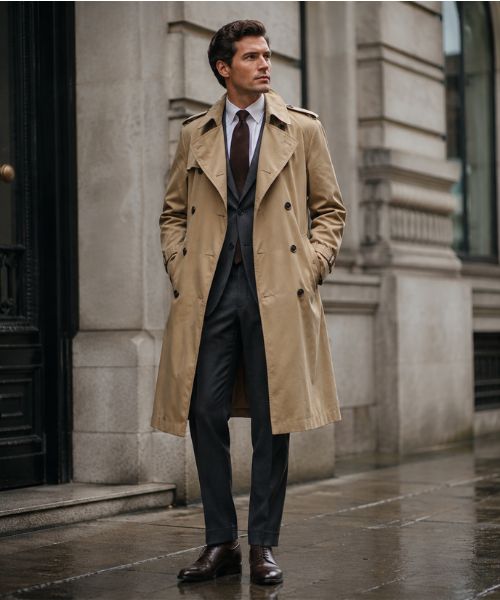
Formal trench coat styling demands clean lines and balanced garment weights to maintain a sharp silhouette over structured suiting.
Layering traditional gabardine over two-piece tailoring creates a weatherproof barrier while preserving clean lines across the shoulders and chest.
Combine a crisp dress shirt, a 7 cm silk tie, and a tailored charcoal or navy suit with polished leather oxford or derby shoes.
Layer a classic beige trench coat over the top, ensuring the hemline extends 5 to 10 cm past the suit jacket.
Pair a merino fine-gauge roll-neck sweater under an unstructured blazer, anchored by high-waisted pleated wool trousers and tassel loafers.
This refined turtleneck pairing delivers clean insulation without excess midsection bulk.
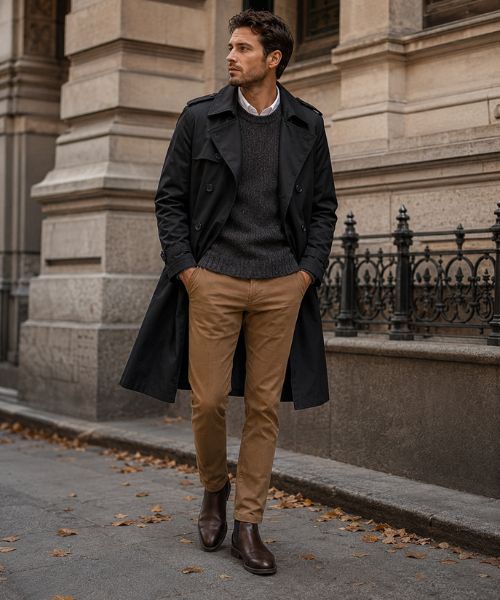
Position a structured Oxford cloth button-down shirt beneath a 7-gauge chunky-knit crewneck sweater, finished with tapered tailored chinos and weather-resistant leather Chelsea boots.
Try our free tool: Dress Code Decoder and get outfit ideas.
Many men wonder, is a trench coat business casual? It is one of the most effective pieces for creating a refined smart casual outfit.
Pair a black trench coat or deep khaki trench coat with dark-wash selvedge denim, a crewneck sweater, and dark brown suede Chelsea boots for sophisticated rainy day style.
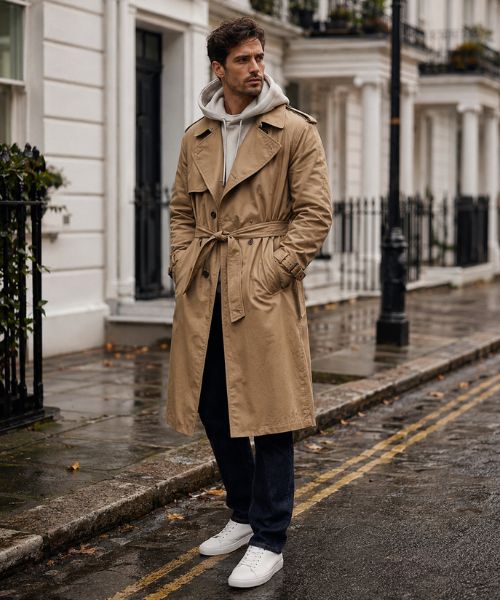
Balance a 400 GSM premium cotton hoodie with straight-leg dark jeans and minimalist clean white leather low-top sneakers.
Cinch a belted khaki trench coat loosely at the waist to structure the heavier knit underneath.
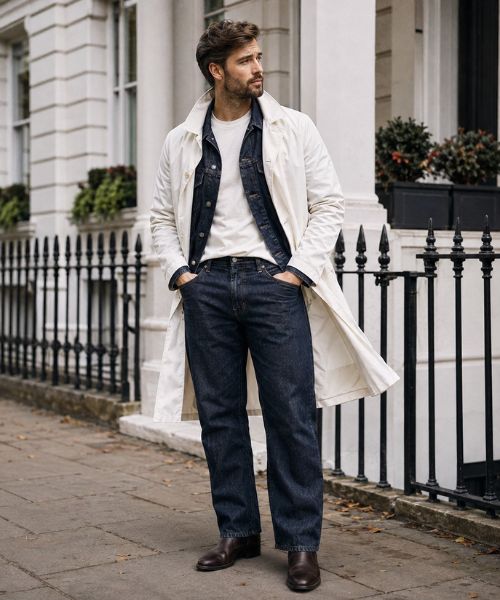
Slot an unbuttoned 12 oz fitted denim jacket over a breathable lightweight t-shirt or a fine knit polo.
Anchor the foundation with relaxed straight denim (or contemporary wide-leg denim) beneath a flowing, open trench coat.
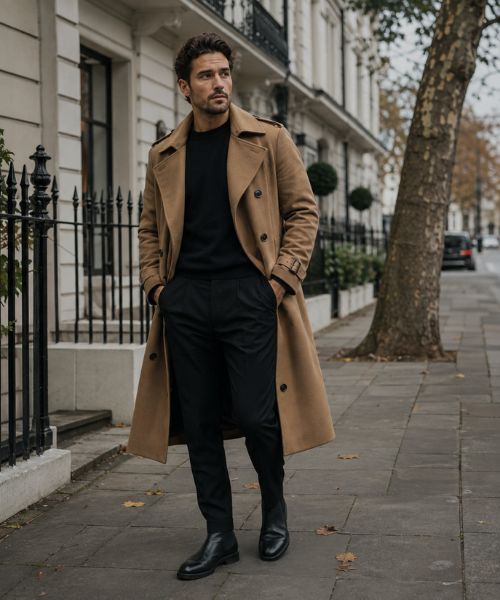
Construct an all-black base layer with a minimalist black tee or black fine knit over sharp black trousers and sturdy leather boots.
Throw on a contrasting camel trench coat to create a sharp 60/40 visual colour split.
Mastering how to tie a trench coat belt transforms your silhouette from rigid to effortlessly relaxed. For an uncluttered front profile, knot the belt loosely behind the back in a clean half-Windsor knot.
While avant-garde designers occasionally draw inspiration from the structured waistline of a trench coat dress, classic menswear prioritises a clean, masculine cinch that defines the waist without restricting movement.
Evaluating the best trench coats for men in UK retailers stock requires balancing heritage craftsmanship against modern technical performance.
Premium makers offer timeless colour options, balanced proportions, and modular liners that maximize long-term wardrobe utility.
| Brand | Signature Attribute | Heritage Distinction |
|---|---|---|
| Burberry | Tightly Woven Gabardine | Military Officer Origin |
| Aquascutum | Showerproof Wool & Cotton | 1850s Rainwear Pioneer |
| London Fog | Modern Technical Blends | Accessible Commuter Wear |
Settling for low-grade fast-fashion outerwear results in frayed seam taping and bubbling collar interlinings within a single season.
Investing in heritage labels like Burberry, Aquascutum, or historic makers like London Fog ensures authentic military construction and superior fabric longevity. These coats establish unmatched timeless style within a curated gentleman’s wardrobe.
When selecting the best colour trench coat for men, consider how each shade aligns with your existing classic menswear pieces:
Review your seasonal outerwear rotation to identify whether your collection requires a formal double-breasted investment piece or a functional commuter shell.
Once you have established your core essentials, consult our comprehensive men’s style guide to master proportions, fabric weights, and colour coordination across your entire closet.
A double-breasted coat features overlapping front flaps with two parallel columns of buttons, offering maximum wind protection and classic military heritage. A single-breasted coat has a narrower front closure with a single row of buttons, delivering a lighter, minimalist silhouette suited for shorter frames.
During autumn, layer lightweight cotton shirts, fine-gauge merino knits, or unstructured blazers under your coat. For freezing winter conditions, wear thermal base layers, heavy ribbed turtlenecks, or down-insulated liner vests to maximize heat retention without restricting shoulder mobility.
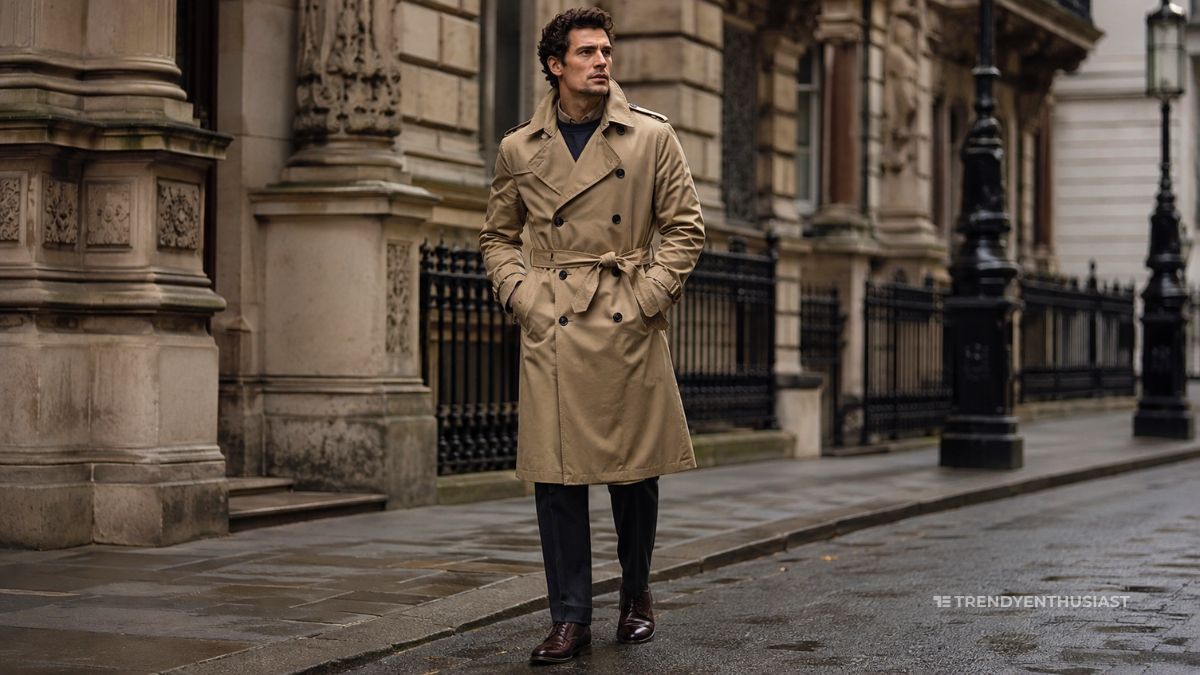
A trench coat spans the entire formality spectrum, making it appropriate for both white-collar business attire and relaxed smart-casual settings. It pairs cleanly with two-piece suits and formal footwear, as well as casual denim, chunky knitwear, and leather boots.
Classic honey beige or stone khaki is the best initial choice because it provides maximum pairing versatility across light and dark trousers. Deep navy serves as the best alternative for men who prefer darker palettes or require a low-maintenance coat for dirty city commutes.
Select a coat size that provides four to five inches of ease beyond your natural chest measurement. The shoulder seams should extend roughly half an inch past your shoulder bone to ensure the coat accommodates suit jackets and heavy knitwear without pulling.
Founder and Editor of Trendy Enthusiast. Ali covers men's fashion, lifestyle, grooming, and the art of dining well - blending real experience with practical insight.
Connect on Instagram