Mens Messy Hairstyles: Every Style That Works and Exactly Who It Works For

The best messy hairstyles for men in 2026 are the textured crop, messy quiff, bedhead cut, French fringe, and tousled side part. Each works differently depending on hair type, face shape, and lifestyle and each requires a specific technique and product to look intentional rather than simply unkempt.
The difference between a messy hairstyle that reads as effortlessly sharp and one that reads as a man who did not brush his hair is entirely in those three variables: cut, product, and technique.
I have worn versions of most of these styles over the years. I have also watched most men around me default to whatever their hair does when they run a hand through it and call that a style. It is not. This guide covers every messy hairstyle worth wearing, which one suits your specific situation, and how to get it right from the barber appointment to the morning routine.
Why Messy Hairstyles Are Worth Understanding Properly
There is a version of this topic that is everywhere i.e Pinterest boards, Instagram galleries, “50 messy hairstyles” listicles with stock photographs and zero practical guidance.
This is not that version.
The reason messy hairstyles deserve proper attention is that they are simultaneously the most achievable and the most frequently mishandled style category in men’s grooming. Achievable because the finish is, by definition, imperfect – there is no razor-sharp edge to maintain, no precise parting to hold, no immaculate surface that shows every flaw. Mishandled because “messy” is interpreted by most men as an instruction to do nothing, when it is actually an instruction to do something specific and then stop.
Every messy hairstyle in this guide has a structure – a cut built by a barber with specific technique and a styling method that creates the deliberate disorder. Neither the cut nor the method is complicated. Both are specific.
The 5 Best Messy Hairstyles for Men
1. The Textured Crop
I wore a textured crop for most of my late twenties and it earned more unsolicited compliments than any other haircut I have had. Not because it is dramatic or striking. Because it is quietly, consistently correct.
The textured crop is a short to medium length cut typically one to two and a half inches on top, where the barber has used point-cutting or texturising shears to build movement and separation into the hair itself. The fringe falls forward with deliberate irregularity. The sides are tapered or faded to create a clean frame. The overall result reads as sharp without being polished, modern without being fashionable, and effortless without being accidental.
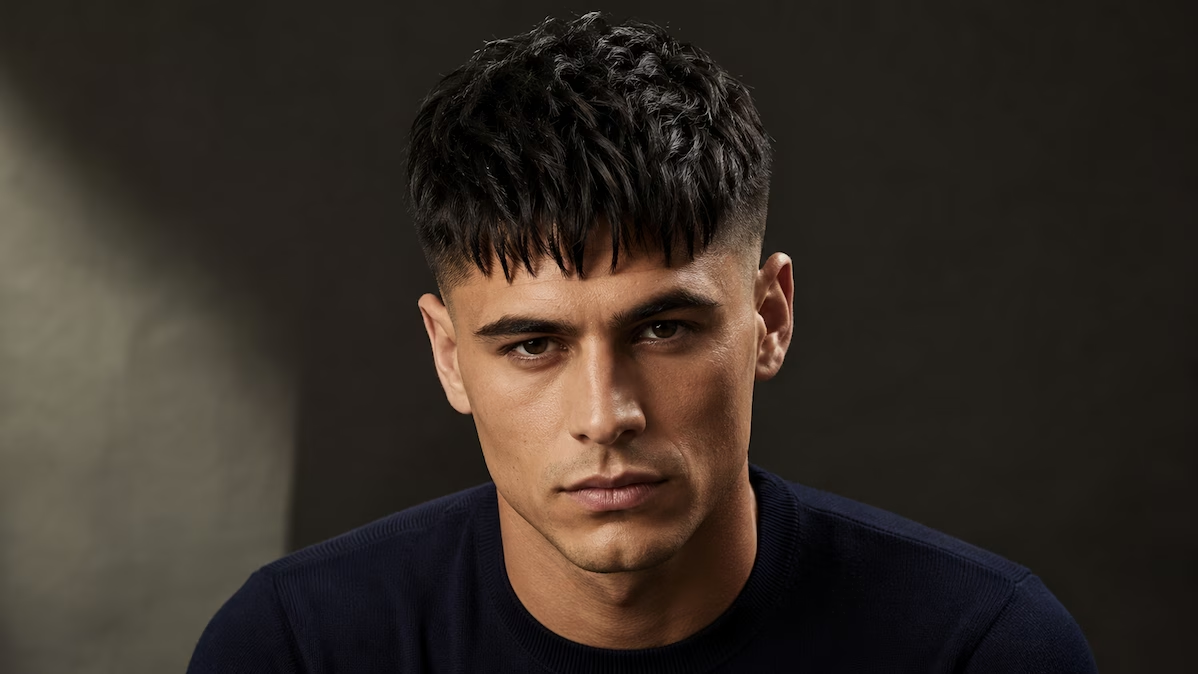
Hair type: Works best on straight to lightly wavy hair. On wavy hair the natural texture does most of the work. On straight hair, sea salt spray applied before blow-drying builds the texture the cut needs to perform.
Face shape: Oval, round, and heart-shaped faces. The forward-directed fringe creates horizontal interest that suits most face shapes, and the taper at the sides keeps the proportions balanced.
Lifestyle fit: Every context. The textured crop is the one messy hairstyle that works without adjustment from a Monday morning meeting to a Friday evening out. It is the navy blazer of hairstyles reliable, versatile, never wrong.
How to style it: Apply a small amount of matte clay to dry hair, work through with fingers from back to front, push the fringe forward and slightly to one side, and leave it. Resist the urge to refine. The imperfection is the point.
What to tell the barber: “Textured crop, point-cut through the fringe and top section, low to mid taper on the sides, two inches on top.” Show a reference photograph.
2. The Messy Quiff
The quiff – hair swept upward and backward from the front – becomes something entirely different when executed with texture rather than polish.
Where the classic quiff uses a pomade to create a smooth, structured sweep, the messy quiff uses a matte clay or paste to build volume with visible separation and movement between sections. The shape of the quiff is there, the height at the front, the backward direction, the contrast with the shorter sides. The finish is not. It looks like the hair fell into position rather than being placed.
I went through a period of wearing the polished version and found it required too much maintenance to hold through a full day. The messy version holds better, requires less product, and reads as more relaxed and contemporary. Most men in 2026 who are wearing a quiff are wearing the textured version , the polished one has moved back toward the formal end of the spectrum.
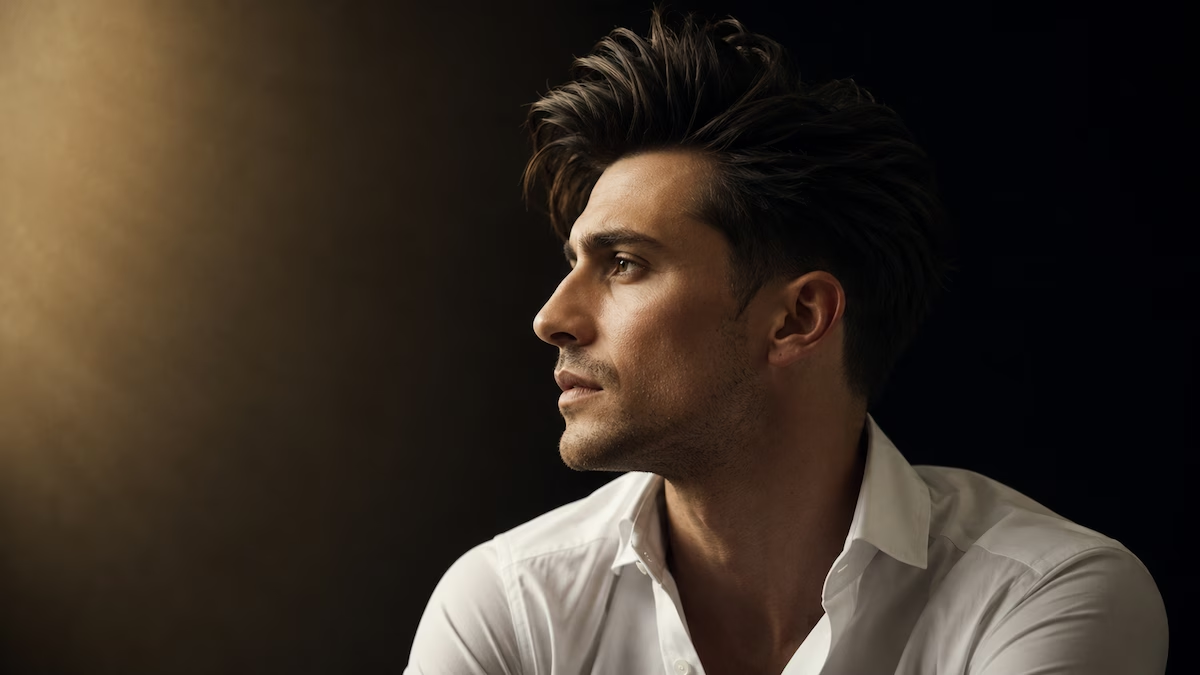
Hair type: Straight and wavy hair both work well. Thicker hair benefits from the messy quiff specifically the volume that can overwhelm a polished finish becomes an asset in the textured version.
Face shape: Oval and square faces primarily. The upward direction of the quiff adds vertical height beneficial for square and oval proportions, less ideal for longer faces where height amplifies length.
Lifestyle fit: Smart casual through to business casual. Not a conservative formal environment the deliberate texture signals too much informality. Everywhere else, it works.
How to style it: Blow dry upward and backward from the front to build the height into the structure first. Apply matte clay to dry hair, work through with fingers, and pull sections apart at the tips rather than smoothing them together. The separation is what makes it messy rather than simply styled.
For the complete breakdown of every quiff variation classic, textured, high, soft, and disconnected and which face shape each one suits, the Quiff Hairstyle for Men guide covers every version in detail.
3. The Bedhead Cut
The bedhead cut is the most counterintuitive style on this list – it looks like it requires the least effort and actually requires the most considered approach to execute correctly.
The reference point is obvious: hair that has dried naturally after washing, shaped by sleep, carrying the memory of wherever it ended up. The version worth wearing takes that reference point and refines it the right length, the right texture cut from the barber, the right minimal product until the result looks exactly like the reference but never appears accidental.
I find this style most compelling on men with naturally wavy or lightly curly hair, where the natural movement of the hair does the structural work and the styling reduces to enhancement rather than construction. On straight hair it is achievable but requires more technique e.g the blow-dry must build the directional movement that wavy hair produces naturally.
The bedhead cut typically runs two to three inches on top, with significant internal texture built in by the barber through point-cutting and potentially razor work. The sides can be anything from a natural taper to a mid fade, the contrast level is a personal choice rather than a requirement of the style.
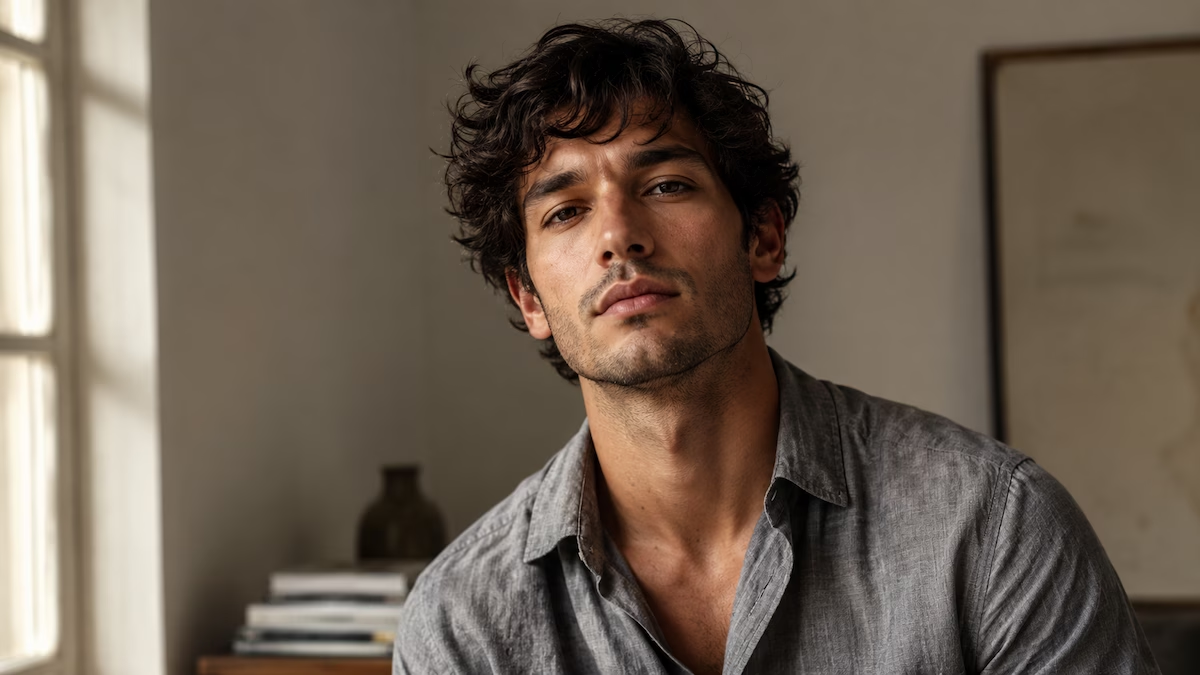
Hair type: Best on wavy and lightly curly hair. Achievable on straight hair with the right blow-dry technique. Difficult on very fine hair that lacks the body to hold the shape.
Face shape: Oval, square, and oblong faces. The bedhead cut adds width rather than height the volume distributes across the top rather than concentrating at the front making it one of the few messy styles that works well on longer face shapes.
Lifestyle fit: Creative industries, weekend wear, casual professional environments. It reads as relaxed and confident rather than considered and precise, a different register from the textured crop, equally legitimate, more context-specific.
How to style it: The less you do, the better. Apply a small amount of texturising paste or lightweight clay to slightly damp hair. Work through with fingers in no particular direction. Let it dry without touching it. If a section sits awkwardly, adjust it once with a single finger redirecting, not a full re-style. The goal is hair that looks like it dried this way. Any visible evidence of styling undermines the result.
4. The French Fringe
The French fringe or French crop messy is the style I return to most often when I want the appearance of zero effort without the reality of it.
It is a short to medium crop where the fringe falls forward across the forehead with deliberate natural irregularity. Not cut in a straight line. Not styled to one side. Not swept back or pushed up. Just falling – with the texture cut into it by the barber distributing it across the forehead in a way that looks like the hair simply ended up there.
The French approach to appearance the refusal to look like you are trying, the insistence on a certain relaxed correctness is embedded in this hairstyle more than any other. It is the style that most consistently produces the “what is he doing differently” reaction from people who cannot identify the specific element they are responding to.
The key technical detail that separates a good French fringe from a bad one is the texture work in the fringe itself. A fringe cut straight across with scissors and then pushed forward is not a French fringe – it is a bowl cut pushed down. A fringe where the barber has used texturising shears or point-cutting to break up the line, creating individual sections that fall at slightly different lengths and angles, is a French fringe. The difference is entirely in the barber’s technique, which is why the brief matters so much.
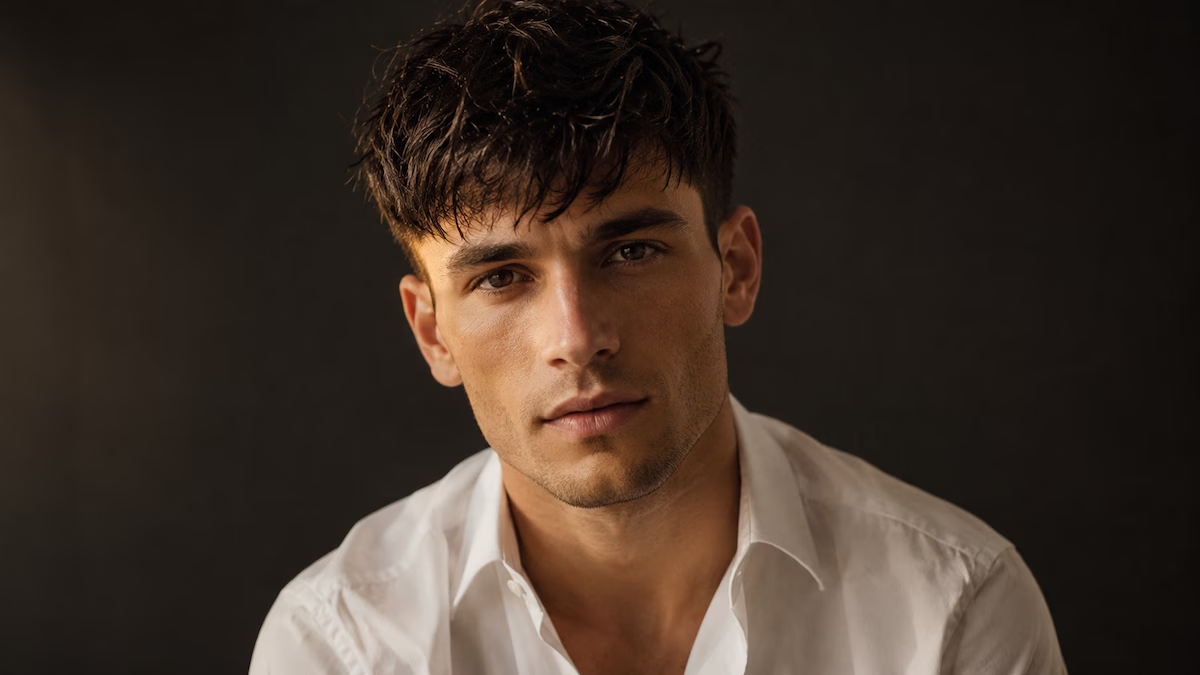
Hair type: Straight, wavy, and lightly curly hair all work. On wavy and curly hair the natural movement creates the fringe’s irregularity without additional product.
Face shape: Oval, square, and heart-shaped faces. The forward fringe creates horizontal width at the forehead beneficial for most face shapes, slightly less ideal for very wide foreheads where the fringe adds further visual width.
Lifestyle fit: The most versatile of the five styles. The French fringe reads as casual in a casual context and deliberately considered in a formal one. It is the only messy hairstyle on this list that works in a conservative professional environment without adjustment.
How to style it: Apply almost nothing. A small amount of lightweight paste to slightly damp hair (less than you think) worked through the fringe with fingers. Allow to air dry or use a diffuser on low heat. Do not blow dry aggressively or the fringe will lose the natural fall that defines the style.
5. The Tousled Side Part
The tousled side part is the oldest style on this list and the one that requires the most precise balance between structure and disorder.
A conventional side part – hair combed cleanly to one side along a defined line – is a formal, polished style. The tousled version takes that structure and softens it: the part is present but not razor-sharp, the hair on the longer side has movement and texture rather than lying flat, and the overall impression is of a man who started with a clean part and lived in it for a few hours.
It is a style that reads as effortlessly classic rather than deliberately modern – the hairstyle equivalent of a slightly rumpled Oxford cloth shirt that looks better for being worn.
The key to getting this right is the product. A heavy pomade makes it a formal style. A matte clay applied lightly makes it a tousled one. The same cut, the same part, a different product produces an entirely different result.
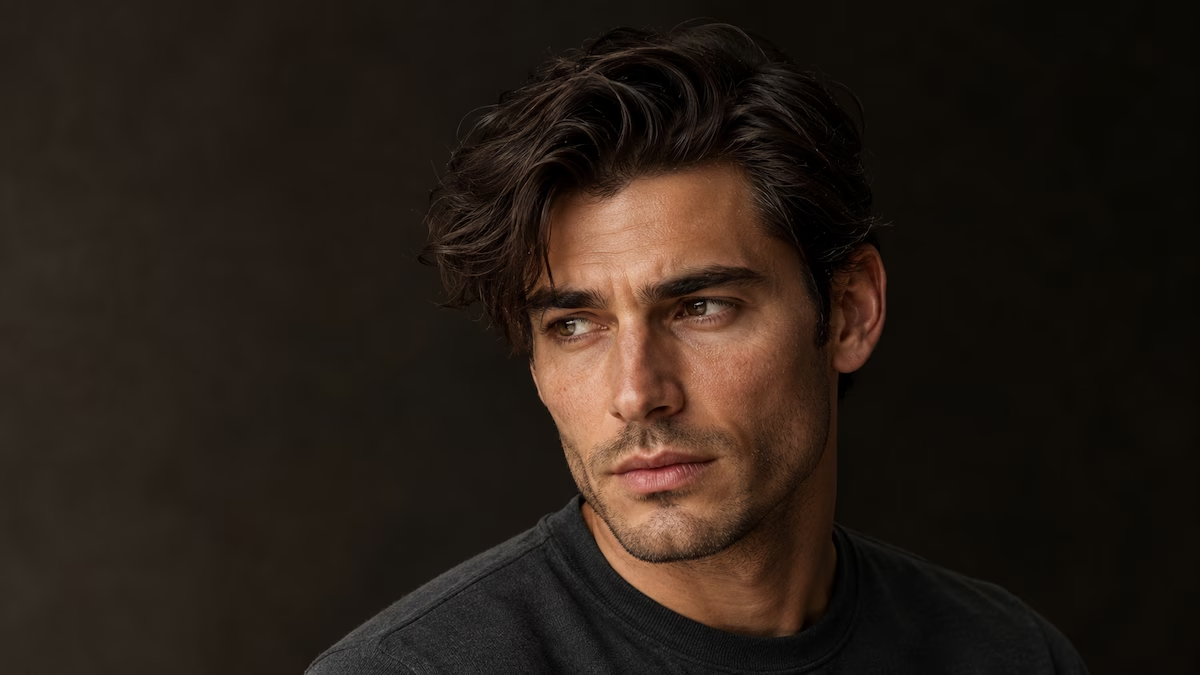
Hair type: Best on straight and slightly wavy hair. On very thick or curly hair the side part is harder to hold throughout the day and the tousled finish can tip into dishevelled.
Face shape: Oval, square, and oblong faces. The side part creates asymmetry that suits most face shapes. On round faces the directional nature of the part adds visual length rather than width.
Lifestyle fit: The broadest lifestyle range of the five styles. A well-executed tousled side part works from a formal office environment to a weekend brunch with equal effect. It ages well it suits men in their twenties and their forties equally naturally.
How to style it: Apply matte clay to dry hair, create the part with a comb once, then put the comb down and use fingers for the rest. Run fingers through the longer side to disrupt the flatness and create movement. Leave one or two sections slightly forward rather than uniformly swept back. The tousled effect comes from breaking the precision of the part without losing the overall direction.
Which Messy Hairstyle Suits Your Hair Type
| Hair Type | Best Options | Avoid |
|---|---|---|
| Straight | Textured crop, tousled side part | Bedhead (needs more technique) |
| Wavy | All five work | Nothing — wavy is the ideal texture |
| Lightly curly | Bedhead, French fringe | Messy quiff (curl fights the direction) |
| Thick | Messy quiff, textured crop | French fringe without significant thinning |
| Fine | French fringe, tousled side part | Bedhead (lacks body to hold shape) |
Which Messy Hairstyle Suits Your Face Shape
| Face Shape | Best Options | Why |
|---|---|---|
| Oval | All five | Versatile proportions suit every direction |
| Round | Messy quiff, textured crop | Adds height and vertical length |
| Square | Textured crop, French fringe, tousled side part | Softens angular jaw |
| Oblong | Bedhead, tousled side part | Adds width, avoids adding height |
| Heart | Textured crop, French fringe | Breaks up forehead width |
Not sure which face shape you have? The Hairstyle Matcher at Trendy Enthusiast takes your face shape, hair type, and lifestyle context and gives you a specific personalised recommendation, before you sit in the barber’s chair.
The Product Guide for Messy Hairstyles
The universal rule: matte finish, applied to dry hair, with fingers not a comb.
Shine destroys the messy aesthetic. Any product with a glossy finish i.e pomade, wax, gel immediately makes the hair look deliberately styled, which is the precise impression the messy hairstyle is designed to avoid.
Sea salt spray: The foundation layer. Applied to damp hair before blow-drying, it adds grip, texture, and the natural separation that the styling builds on. Essential for straight hair. Optional for wavy and curly. Never applied to dry hair it works through the drying process, not after it.
Matte clay: The most versatile finishing product for messy hairstyles. Medium hold, zero shine. Apply a small amount to dry hair, emulsify between palms, work through with fingers. The amount matters enormously, start with less than feels necessary. A correctly applied matte clay is invisible in the hair. Too much looks like product.
Texturising paste: Lighter than clay, more flexible hold. Better for finer hair or for the bedhead and French fringe styles where the product should virtually disappear into the hair.
Lightweight cream: For wavy and curly hair types. Defines the natural movement without the hold or matte finish of clay. Applied to damp hair and scrunched in never raked through with a comb.
The complete product guide including carrier oil ingredients to look for and what to avoid is in the beard oil and grooming technique guide which covers the broader grooming philosophy that applies to every product in the routine.
Maintaining Messy Hairstyles: The Honest Timeline
Every messy hairstyle requires regular barber visits to stay intentional rather than genuinely unkempt.
Textured crop: Every 3-4 weeks. The texture points and fringe shape begin to soften beyond four weeks.
Messy quiff: Every 2-3 weeks. The taper at the sides and the top length both need maintaining for the style to hold its character.
Bedhead cut: Every 3-4 weeks. The most forgiving in terms of growth the style becomes slightly longer and more voluminous rather than degrading in shape.
French fringe: Every 3 weeks. The fringe length is the critical variable once it grows past the natural fall point the style stops working.
Tousled side part: Every 3-4 weeks. The side length and taper are the maintenance priority, not the top length.
Between visits, a dry shampoo applied at the roots absorbs oil and refreshes the texture of any of these styles without washing. Try Style Score and get to know your complete look score.
The Groomed Man Cluster: All Five Styles Work Together
These messy hairstyles do not exist in isolation. They are one element of a complete grooming picture and each element reinforces the others.
The right haircut frames the face. The right beard maintenance frames the haircut. The right taper level on the sides completes the composition.
For the complete technical guides:
The full messy haircut philosophy, the distinction between intentionally undone and actually unkempt is in Messy Haircut Men: The Art of Looking Undone on Purpose.
For the taper or fade that frames every messy hairstyle on this list, The Taper Haircut for Men: Low, Mid and High covers every option and face shape match.
The right hairstyle is one decision in a broader grooming system — how you maintain your scalp, your beard, and your fragrance all shape the same overall impression. The complete guide is at The Modern Man’s Grooming Guide.
Frequently Asked Questions
The five best messy hairstyles for men are the textured crop, messy quiff, bedhead cut, French fringe, and tousled side part. The textured crop is the most universally wearable — it works across virtually every lifestyle context and most hair types. The messy quiff adds height and suits rounder face shapes. The bedhead cut is best on wavy hair. The French fringe is the most effortless-looking of the five. The tousled side part works across the widest age range and formality spectrum. The right choice depends on hair type, face shape, and lifestyle context.
A messy hairstyle has deliberate structure — a cut built by a barber with specific texture technique, styled with the right product to create controlled disorder. An untidy hairstyle lacks structure and reads as neglect rather than intention. The distinction is visible: a proper messy hairstyle has defined texture separation, volume in the right places, and a directional quality that looks natural but is engineered. Unstyled hair sits flat, clumps, and lacks the multi-dimensional quality that makes the messy look appear considered.
The French fringe and tousled side part are the best messy hairstyles for fine hair. Both styles rely on direction and movement rather than volume and texture — which fine hair struggles to produce and maintain. Sea salt spray applied before blow-drying is essential for fine hair in any messy style, adding grip and the appearance of texture that fine hair cannot produce naturally. The bedhead cut and messy quiff are more challenging on fine hair — both require body and volume that fine hair lacks without significant product support.
The key is matte product applied sparingly to dry hair, worked through with fingers rather than a comb. Comb creates alignment and smoothness — the opposite of what a messy hairstyle needs. Fingers create separation and texture. Apply less product than feels necessary, pull sections apart rather than smoothing them together, and then stop. The most common mistake is continuing to style after the result has been achieved — every additional adjustment risks tipping the look from intentional to over-worked.
Matte clay is the most versatile product for most messy hairstyles — medium hold, zero shine, applied to dry hair with fingers. Sea salt spray used on damp hair before blow-drying builds the texture foundation that finishing products work on. Texturising paste is a lighter alternative to clay, better for fine hair or for styles where the product should be almost invisible. Lightweight styling cream works best on wavy and curly hair. Avoid any product with shine — gloss immediately makes messy hair look deliberately styled and undermines the effortless quality the style requires.
The Groomed Man series: Beard Oil · Quiff Hairstyle · Taper Haircut · Messy Haircut · Oily Hair