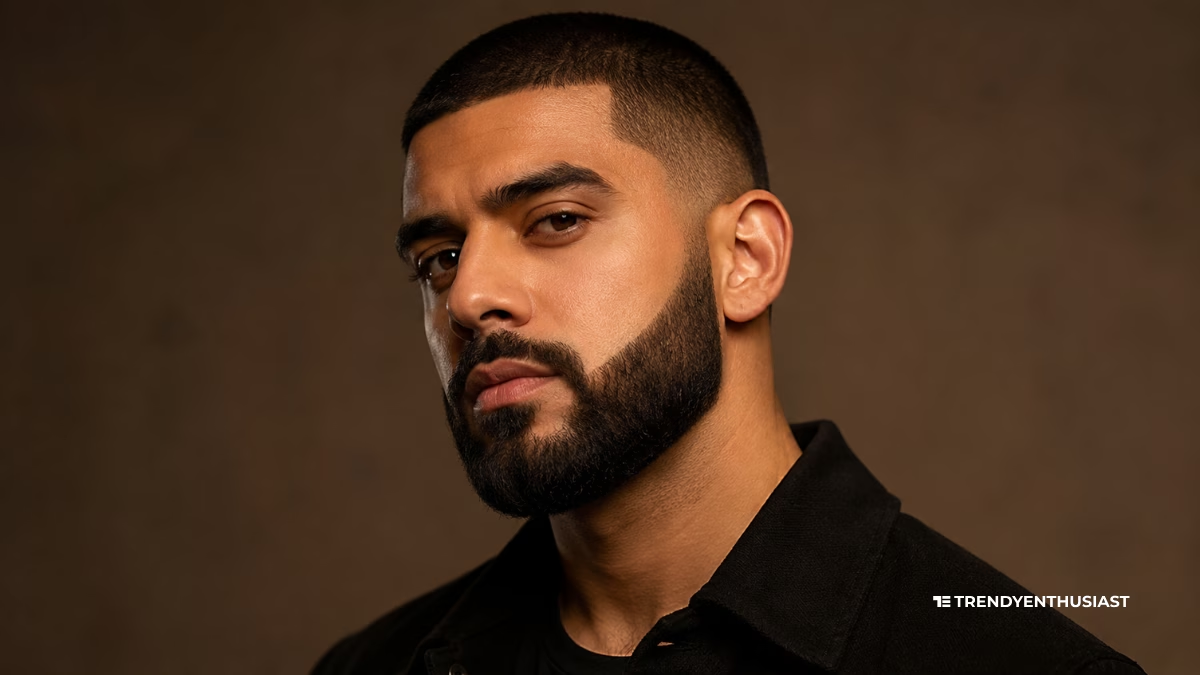
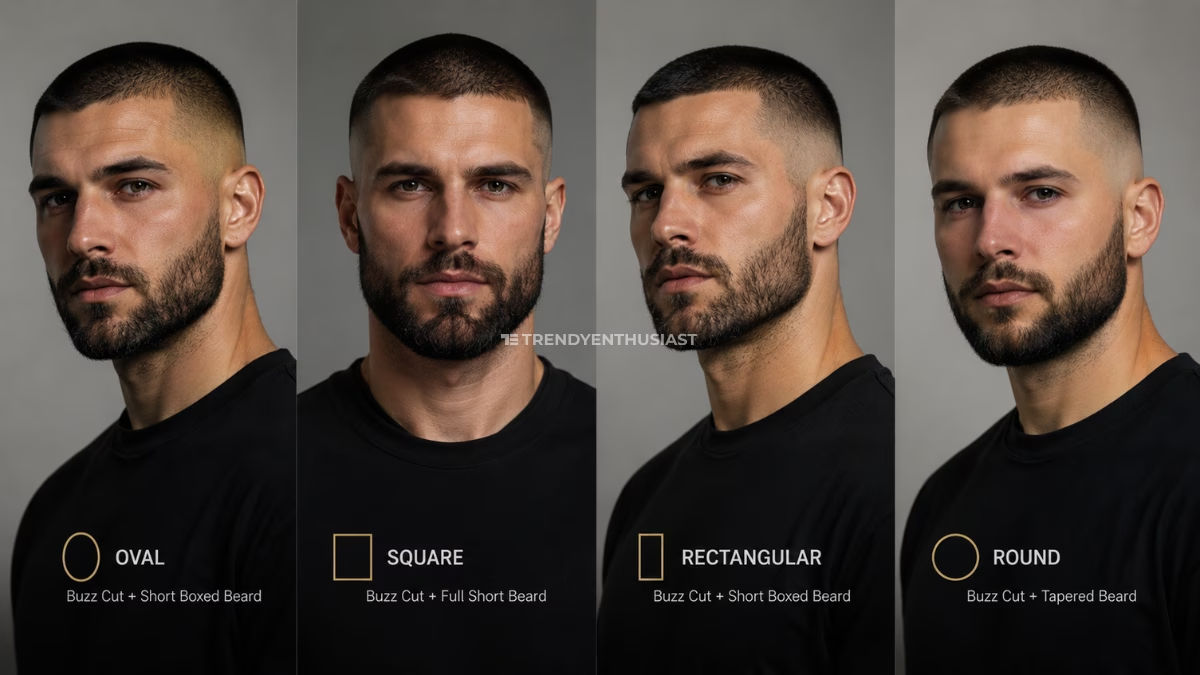
A buzz cut with beard works because the two do opposite jobs: the buzz cut clears everything away from the top of the head, and the beard becomes the only place left for hair to add shape and character. Get the pairing right and the contrast looks deliberate. Get the beard length wrong for the guard number, and the same haircut looks unfinished instead of intentional.
Most guides treat “buzz cut and beard” as a single fixed look. It isn’t. A guard 0 induction cut with beard needs a completely different beard length and edge-up than a longer, textured guard 4 buzz cut does and the shorter the hair on top, the less room there is for a beard that isn’t clearly shaped.
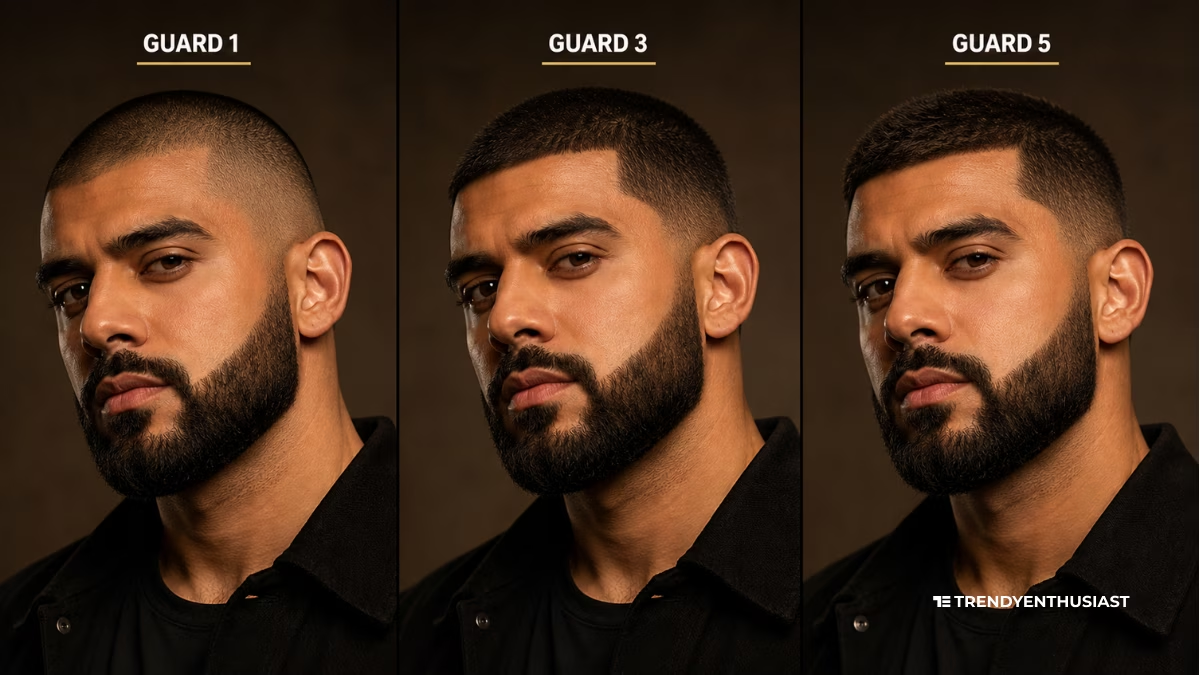
Quick answer: The shorter the buzz cut, the more defined the beard needs to be. Guard 0–1 pairs best with a short, sharply lined beard (stubble to 1cm). Guard 2–3 gives more flexibility, working with stubble through a short boxed beard. Guard 4–5 can carry a fuller beard, since there’s already length on top to balance against.
Not sure which buzz cut length suits your face shape before adding a beard into the mix? The Hairstyle Matcher accounts for both.
Why the Pairing Works
A buzz cut removes almost all visual information from the top of the head, there’s no length, no part, no texture to draw the eye. That’s precisely what makes a beard read as more prominent alongside it: with nothing competing for attention above the hairline, the beard becomes the defining feature of the whole look. This is the same principle that makes a bald head and beard combination work, just with a small amount of length left on top instead of none.
The trade-off is that a buzz cut gives a beard nowhere to hide. A soft, undefined jawline that would blend into longer hair is fully exposed next to a guard 1 or 2. This is why beard definition matters more here than with almost any other haircut pairing.
Buzz Cut Guard
Best Beard Length
Why
0–1
Stubble to 1cm, sharply lined
No length on top to balance against, so the beard needs a defined edge to look intentional
2–3
Stubble to short boxed beard
The most flexible pairing - some length on top allows more beard variation
4–5
Short to fuller beard
Existing texture on top balances a fuller beard without overwhelming the look
Bald
Fuller, deliberately shaped
Zero length on top means the beard carries the entire style - shape is essential
Buzz Cut with Beard by Guard Number
Guard 0–1 (Induction/Burr Cut) with Beard
The shortest buzz cuts need the most defined beard to balance them. A buzzed head with beard at this length works best with a beard that has a sharp, clean edge-up, the beard line at the cheek and neck should look as intentional as the guard number does. Stubble (2–5 days) through a short 1cm beard both work; anything longer starts to look mismatched against skin-close hair.
Guard 2–3 with Beard
This is the most common buzz cut and beard combination and the most forgiving. There’s enough length on top to soften the contrast slightly, which means the beard has more room to vary (from light stubble to a short boxed beard) without looking out of proportion. A low fade with a beard at this guard range is one of the most requested combinations in the barbershop.
Guard 4–5 with Beard
With more length left on top, the beard can carry more volume too. A fuller beard pairs naturally here since the haircut itself already has some texture and isn’t relying entirely on the beard for visual interest. This is the guard range where a longer, fuller beard looks most balanced rather than overwhelming a bare scalp.
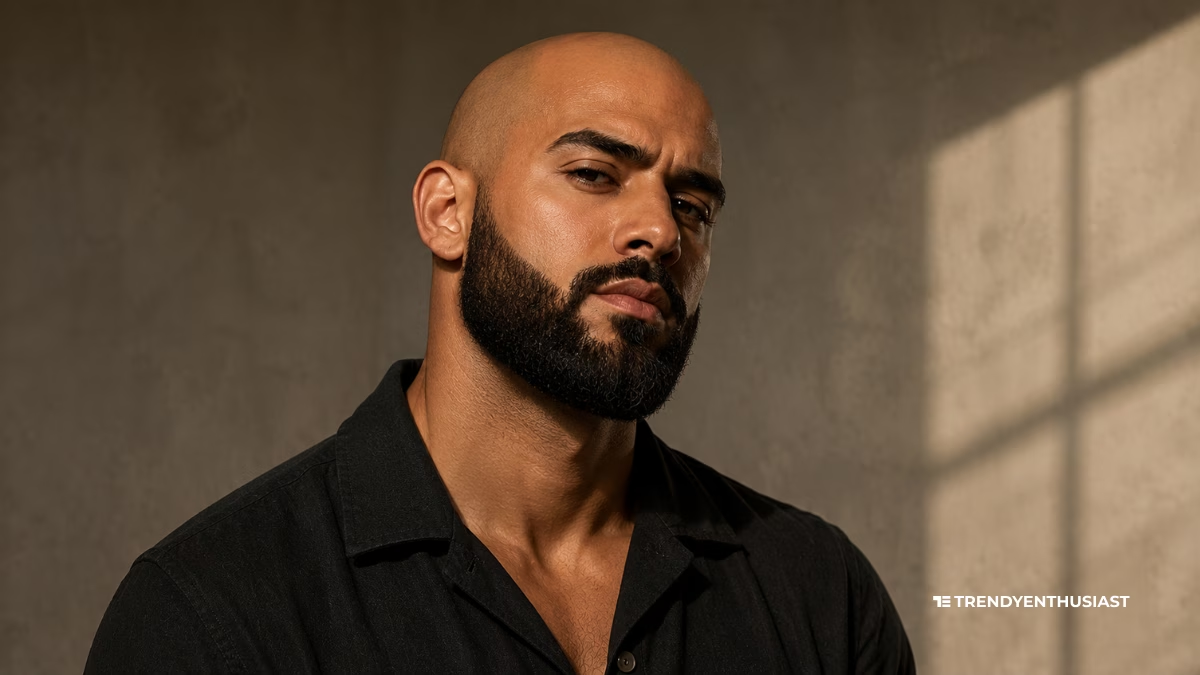
Bald Head and Beard: The Zero-Length Version
Bald head with beard is the logical endpoint of a buzz cut and beard pairing, guard 0 taken all the way to a fully shaved or closely shaved head. The same rule applies, just more so: with zero length up top, the beard needs to be deliberately shaped, not just grown out. A well-defined beard for shaved head with a crisp neckline and cheek line reads as a complete style. Left unshaped, the same combination can look unfinished rather than minimalist.
Men managing hair loss often find this combination solves two problems at once, a shaved or closely buzzed head removes the thinning/full-density contrast a receding hairline creates, and a full beard shifts visual weight downward, away from the hairline entirely.
Your Vibe
How Do You Want to Come Across?
Sharp, effortless, bold, or classic? The matcher adapts to your style identity.
Beard Fade: Extending the Buzz Cut Fade into the Beard
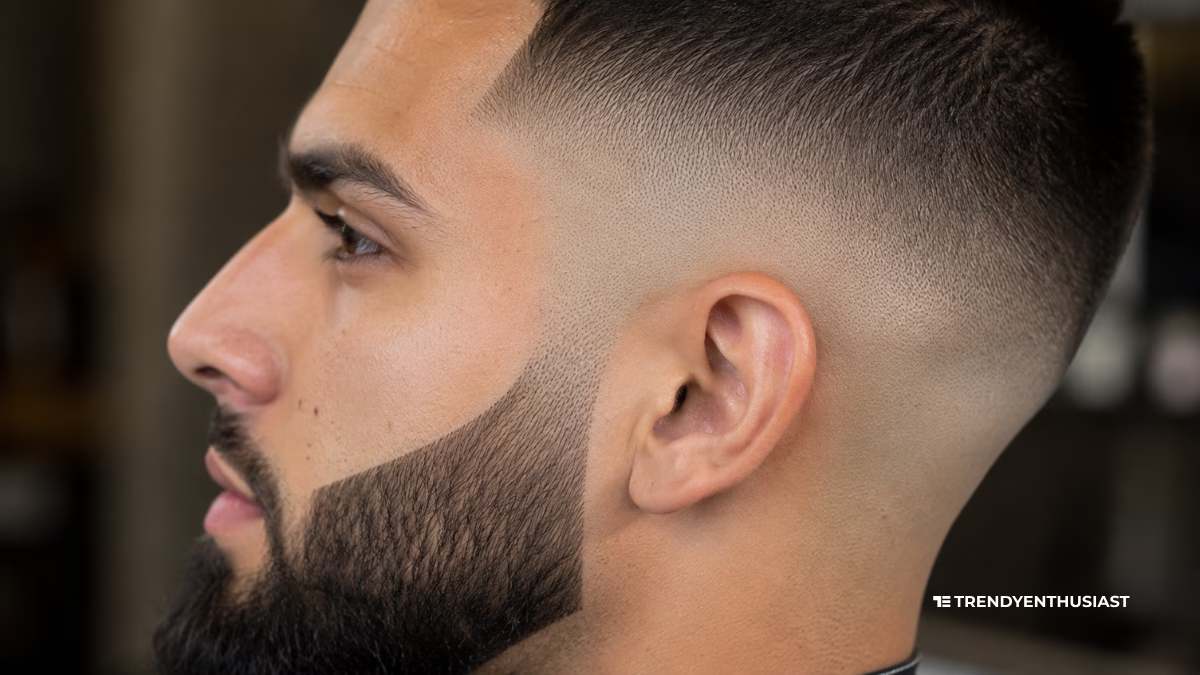
A beard fade (also called a faded beard) blends the sides of the beard down toward the neckline the same way a hair fade blends down toward the ear and pairing it with a buzz fade creates one continuous line of contrast from the top of the head down through the jaw.
Low fade beard: the fade starts low, near the jawline subtle, works with almost any buzz cut guard number.
Mid fade with beard: more visible contrast, pairs well with a mid fade buzz cut for a matched look on both.
Skin fade beard: the most dramatic version, fading the cheek line down to skin, best matched with a buzz cut that has a skin fade of its own, so the two fades read as one connected style rather than two competing ones.
The general rule: match the beard fade height to the buzz cut fade height. A skin fade on top with an undefined beard edge looks disconnected; a skin fade on both looks like one cohesive cut. For the wider grooming routine a buzz cut fits into, see the Modern Man’s Grooming Guide and the Groomed Man Planner to build out a full maintenance schedule.
How to Ask Your Barber for a Buzz Cut and Beard
Give the guard number for the buzz cut first – “a number 2 all over.”
Specify the beard length separately – don’t assume the barber will default to a length that matches. “Keep the beard at a 5mm” or “stubble length” removes ambiguity.
Say whether you want the beard faded to match – “fade the beard the same as the sides” ties the two together.
Ask for a defined edge-up – regardless of beard length this is what makes a short buzz cut and beard combination look intentional rather than just short and unshaven.
Mention your face shape if relevant – a barber can adjust both the buzz cut and the beard shape together for better overall balance.
Barber Ready
Know Exactly What to Say
No more awkward explanations. Get a tailor-made barber brief you can copy and paste.
A buzz cut and a beard grow at different rates, which means they fall out of sync with each other faster than either one alone. The buzz cut needs a trim every 2–4 weeks depending on guard length; a defined beard edge needs touching up every 1–2 weeks to keep the line sharp, even if the beard itself isn’t being shortened.
Trim the beard edge weekly even between full buzz cut appointments, this is what keeps the pairing looking maintained rather than grown-out.
Use beard oil daily, particularly with a shorter buzz cut, since there’s no hair on top to distract from a dry, patchy-looking beard.
Match trim schedules where possible – booking both together keeps the proportions consistent rather than letting one grow out further than the other between visits.
Round face: pair a high or skin fade buzz cut with a beard that has more length at the chin, this adds vertical length the same way the fade does.
Square face: a tapered buzz cut with a beard kept closer to the jawline, rather than extended at the chin, avoids over-emphasizing an already strong jaw.
Rectangle face: keep the beard fuller at the sides rather than the chin, to avoid adding further length to an already long face.
Diamond face: a beard with volume at the jawline balances a narrow chin against wider cheekbones.
It depends on the guard number. Shorter buzz cuts (guard 0–1) pair best with a short, sharply defined beard, since there’s no length on top to balance against. Longer buzz cuts (guard 4–5) can carry a fuller beard.
Yes. Pairing a short buzz cut or shaved head with a full, well-defined beard is one of the most effective combinations for a receding hairline, since it shifts visual attention toward the jaw and away from the hairline.
It’s not required, but matching the beard fade height to the buzz cut fade height creates one connected line of contrast rather than two separate styles competing for attention.
The buzz cut needs a trim every 2–4 weeks depending on guard length. The beard edge should be touched up weekly to keep the line sharp, even between full buzz cut appointments.
It’s the shortest version of the same principle, guard 0 taken to a fully shaved head. The same rule applies: the less hair on top, the more defined the beard needs to be.