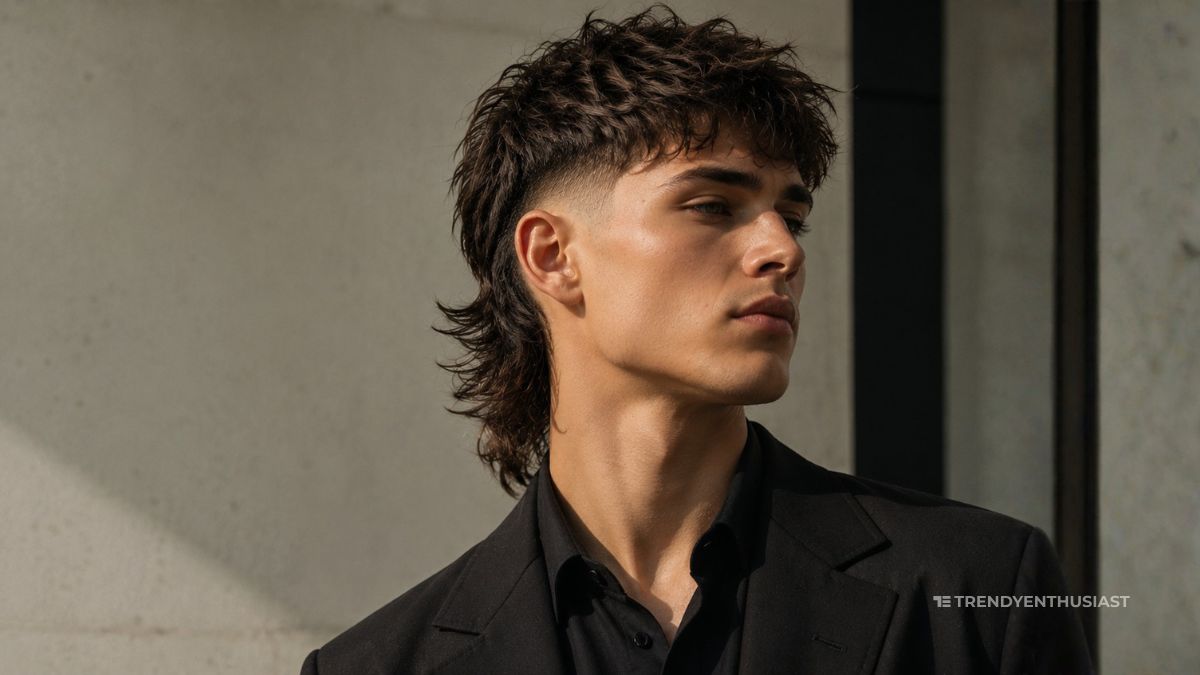
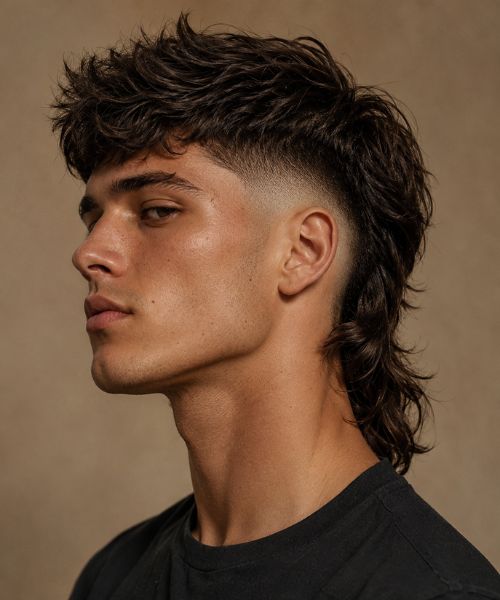
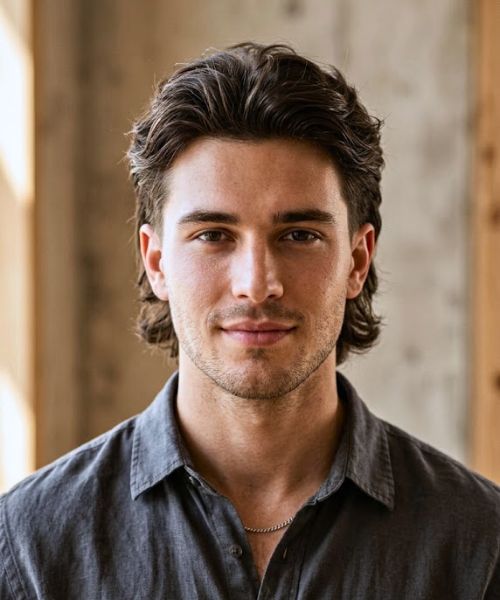
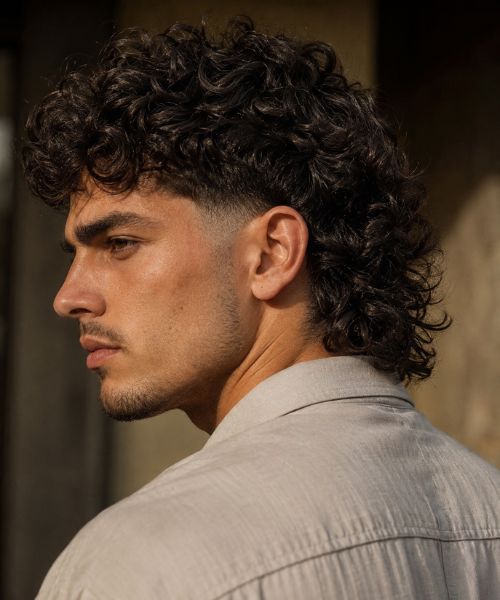
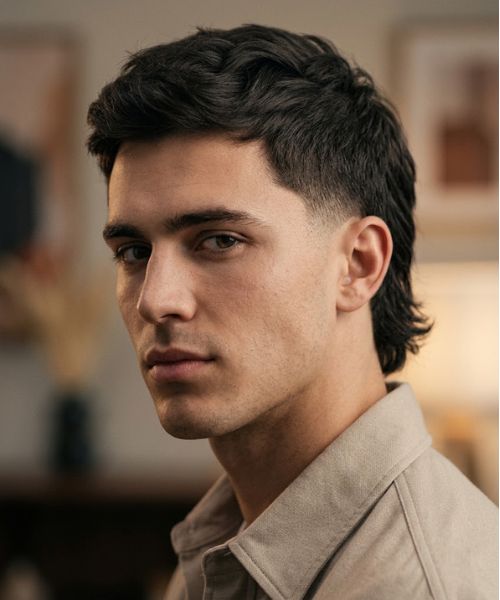
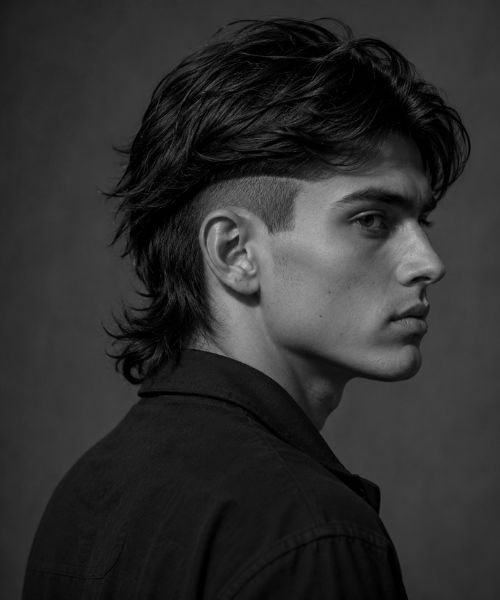
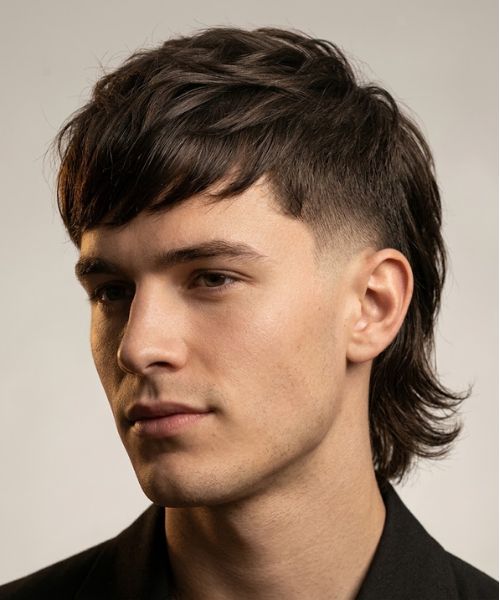
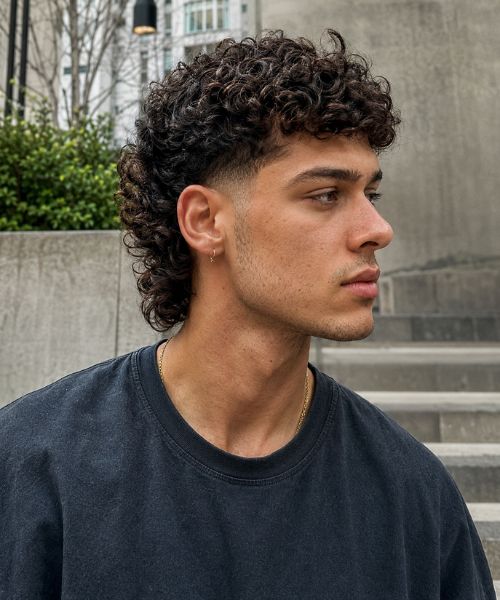
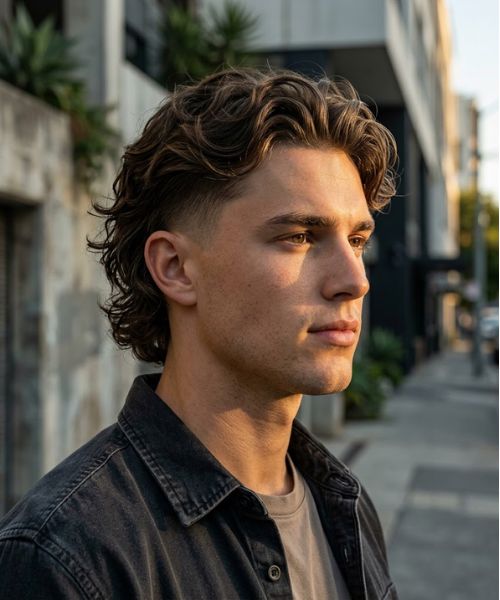
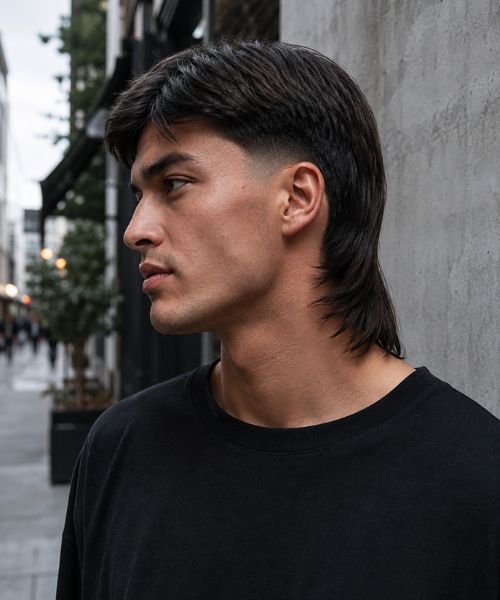
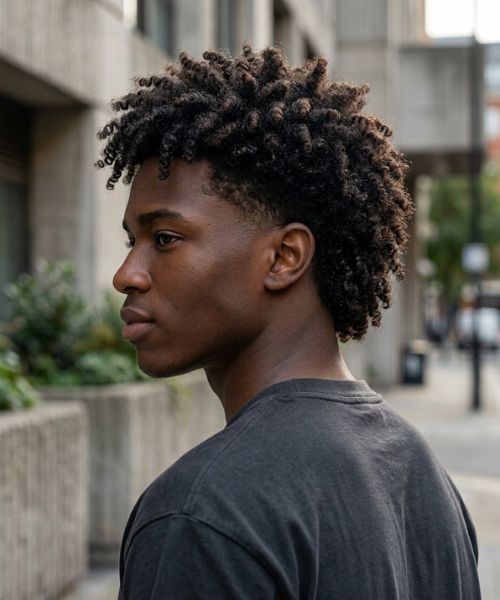
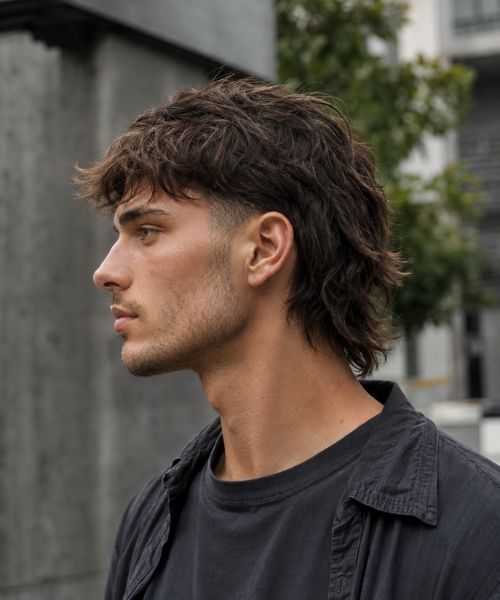
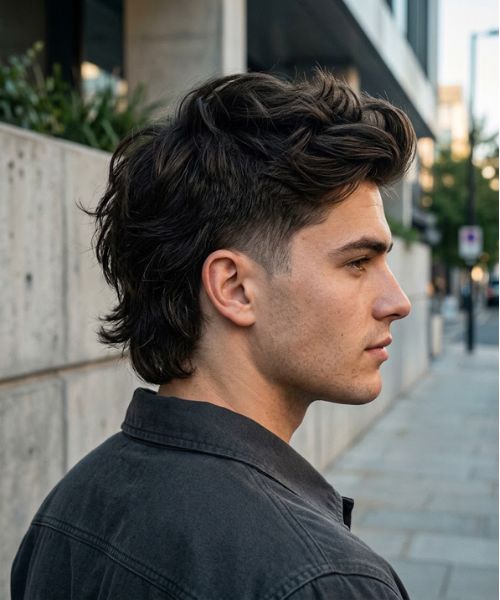
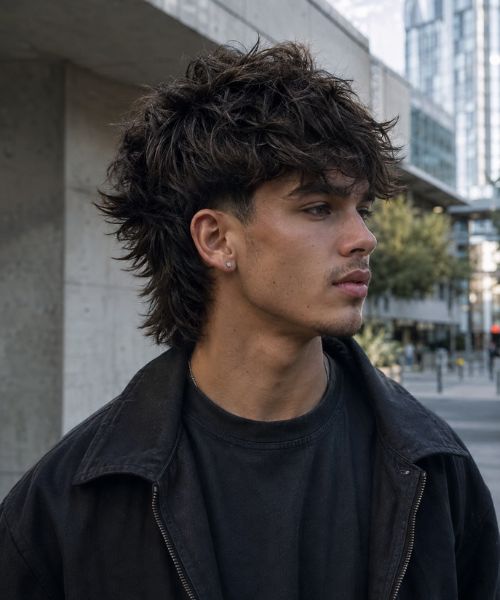
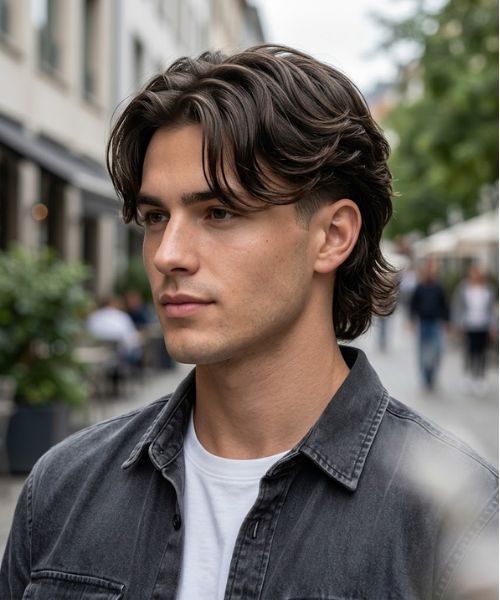
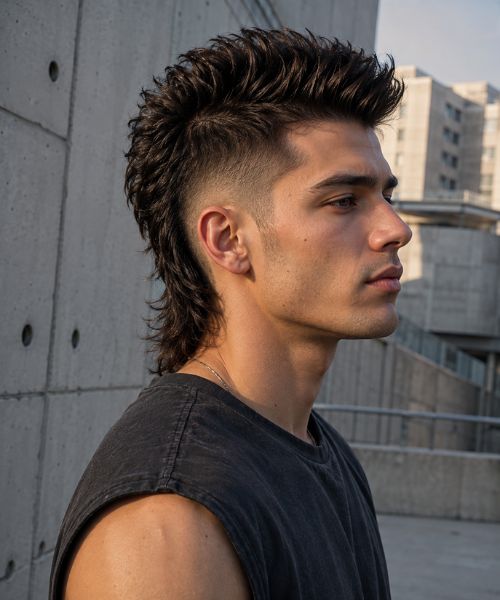
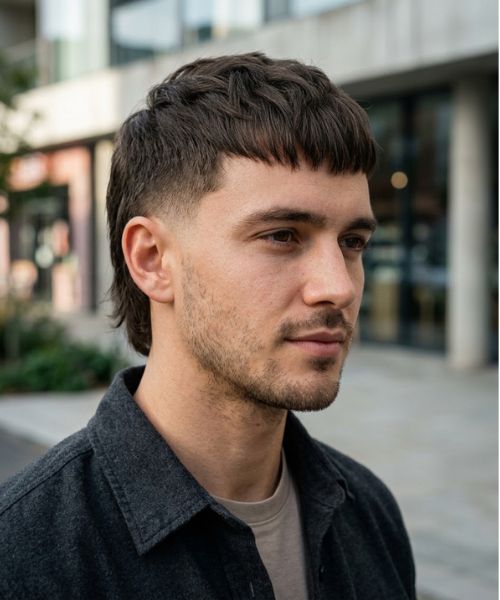
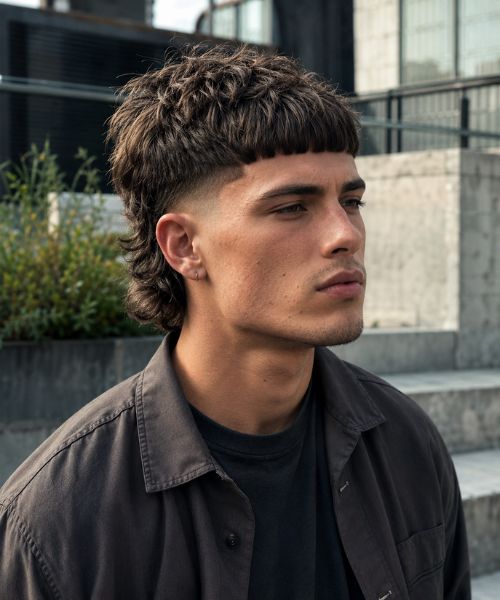
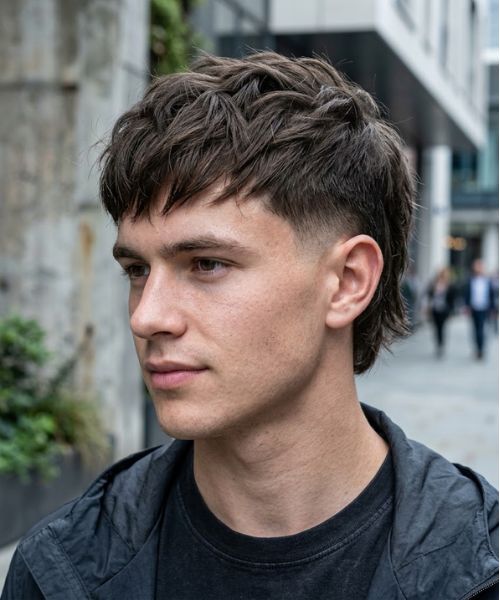
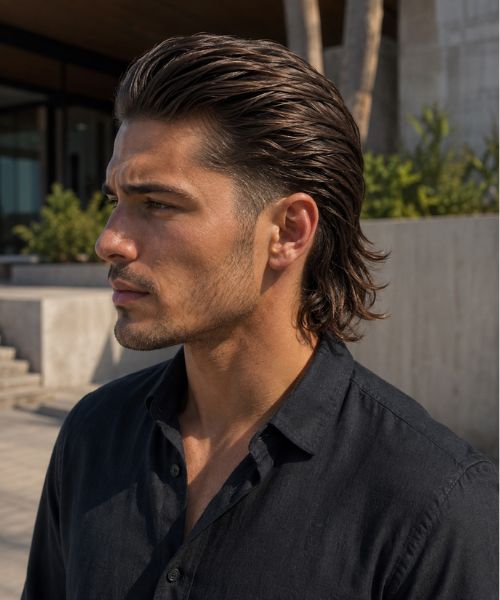
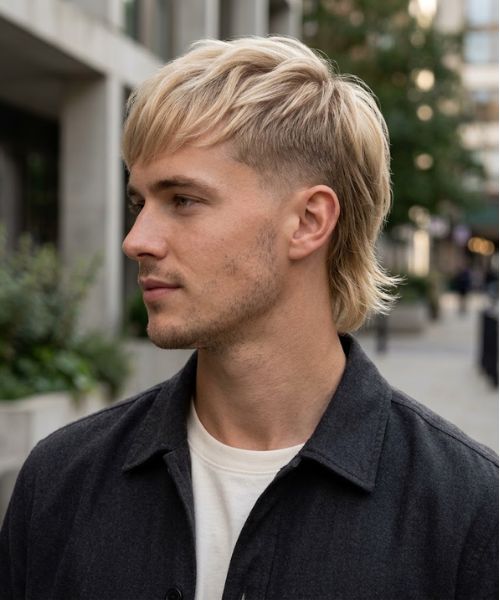
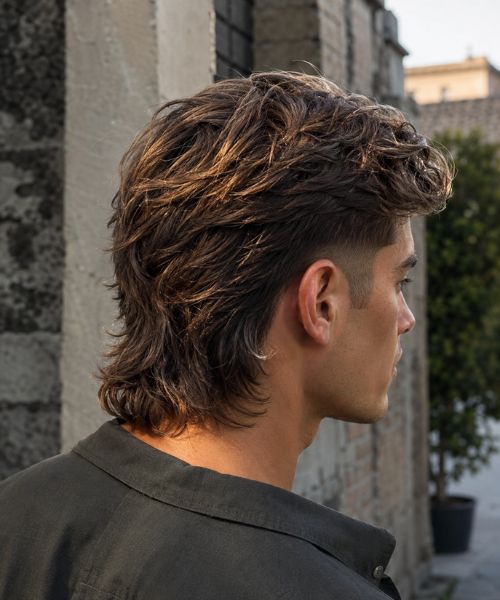
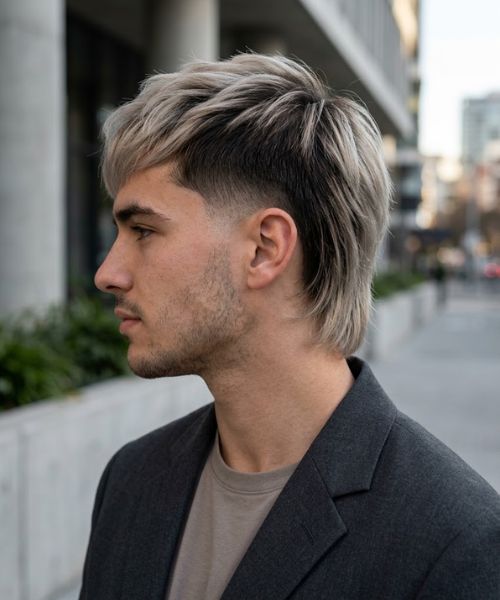
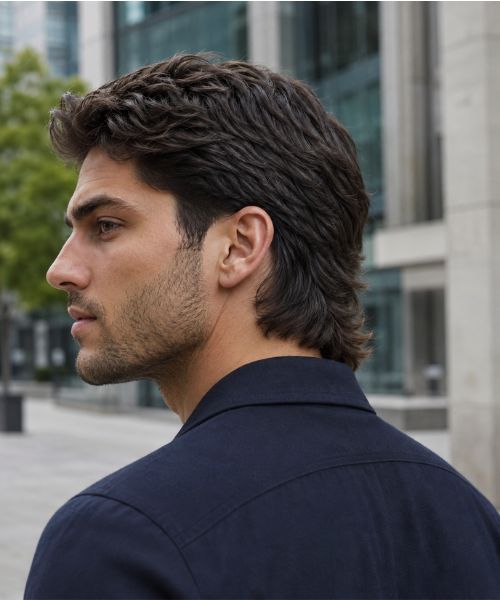
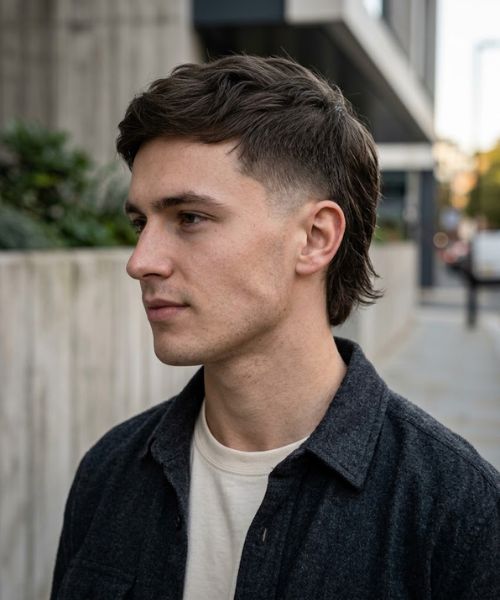
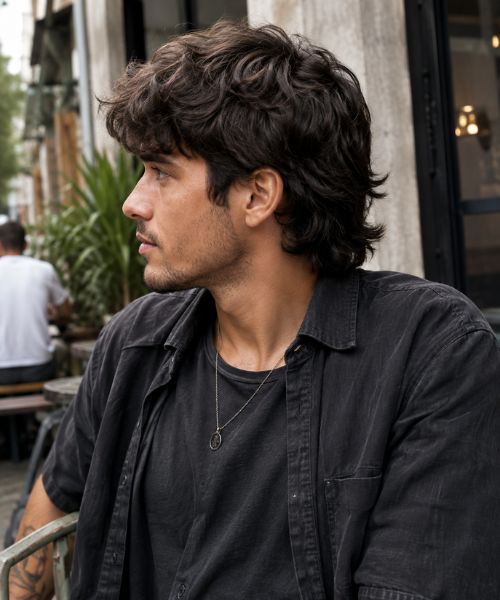
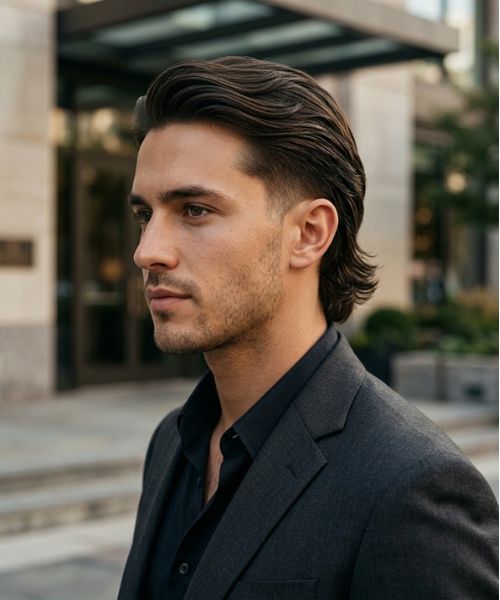
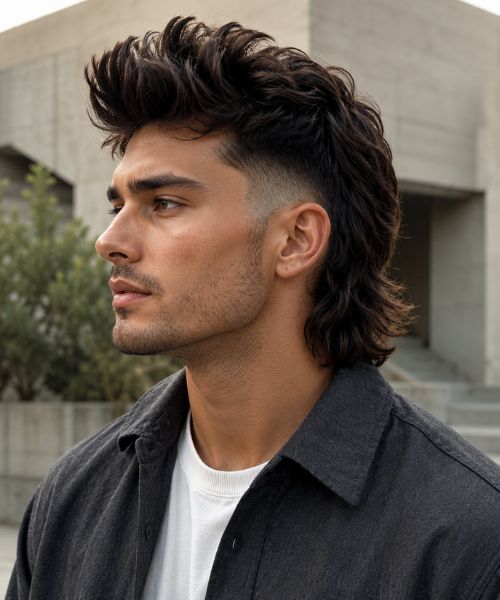
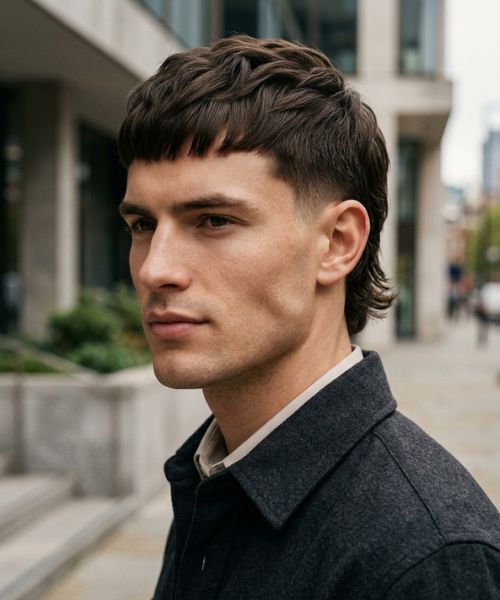
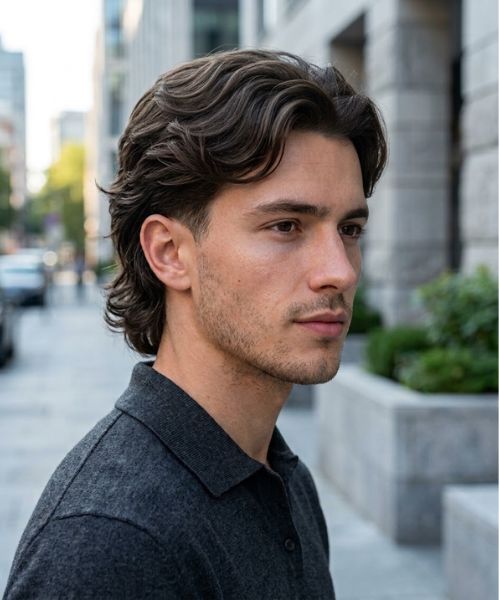
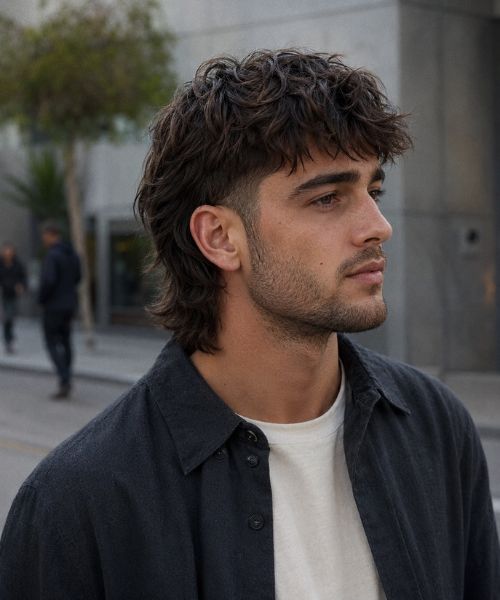
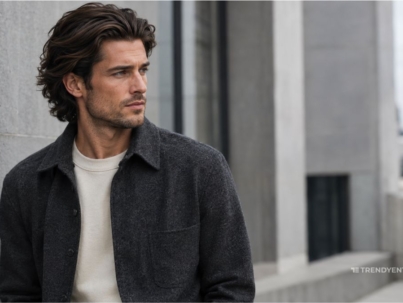
A low mullet keeps the fade tight to the neckline, the crown flat, and the length at the back doing all the work instead of the sides.
It reads as the most office-safe branch of the mullet family, the version that survives a Monday meeting and a Saturday night out without a second cut.
The low mullet isn’t a single haircut. It’s a construction rule: keep the side fade under temple height and let texture, length, colour, and top shape stay open.
What Makes a Mullet "Low"?
A low mullet is defined by fade placement, not length at the back. If you’re still working out what a mullet actually is before narrowing down to this variation, the short version is short and faded at the front and sides, long at the back.
The silhouette reads softer, because the side length blends into the back rather than cutting off sharp.
If you’ve read our piece on the full modern mullet family, low mullets sit at the low-maintenance end of that spectrum, the same territory as a soft taper rather.
By Fade and Taper Height
Every cut in this group shares the same fade placement rule near the ear and jawline. What changes is the texture and finish layered on top of that base.
1. Low Skin Fade Mullet
The sides fade all the way to bare skin, but the fade starts low near the ear instead of climbing toward the temple. You get the sharp contrast of a skin fade with a smaller faded area to maintain.
Suits straight to wavy hair and works on most face shapes since the low placement keeps attention on the back length rather than the sides.
Styling note: Blow-dry the crown for lift, then finish the back with a light pomade for shine without weighing down the length.
2. Low Taper Mullet
No skin shows anywhere. The sides get shorter gradually toward the bottom without ever reaching zero, giving the softest transition in the entire low mullet category.
Best for men who want to grow a mullet without a visible line marking each haircut. Suits fine to medium hair density.
Styling note: Minimal product needed, a small amount of matte cream through the length keeps it looking intentional rather than unstyled.
3. Low Burst Fade Mullet
The fade curves around the ear in a rounded shape instead of a straight line, but stays low against the neckline.
This is currently the most requested fade shape for mullets according to barber-facing style guides, and the low version keeps it wearable for professional settings. Suits curly and wavy textures particularly well.
Styling note: Diffuse-dry the back to preserve curl pattern, add texture clay only at the crown.
4. Low Drop Fade Mullet
The fade line dips downward behind the ear before levelling out, adding curvature around the back of the skull.
Kept low, this reads as the subtlest version of a drop fade mullet, most visible from directly behind rather than from the side. Suits rounder head shapes needing extra back definition.
Styling note: Ask your barber to keep the drop shallow if you want the curve barely noticeable at low height.
5. Low Undercut Mullet
Instead of a graduated fade, this uses a hard, visible line, but positioned low near the nape rather than higher up.
Gives a graphic, disconnected contrast while keeping most of the side hair intact above the line. Suits thick, straight hair that holds a crisp line well.
Styling note: Comb the top hair over the undercut line for a seamless look, or push it back to expose the contrast intentionally.
6. Low Razor Fade Mullet
A razor is used instead of clippers to create the fade, producing an ultra-fine, almost feathered transition at the bottom of the neckline.
Suits men who want precision without the harsh edge of a machine fade. Works on straight and wavy hair alike.
Styling note: Requires more frequent maintenance than a clipper fade since razored edges soften faster.
By Hair Type and Texture
Fade placement stays the same across this group; the defining feature is how the natural hair texture is worked with rather than against.
7. Low Curly Mullet
Tight curls sit on top and at the back while the sides stay faded low near the ear. The curl pattern does most of the visual work here, adding volume without extra layering.
Similar in spirit to the curly mullet already covered in the modern mullet family, but with the fade kept deliberately subtle.
Styling note: Apply curl cream to damp hair and diffuse dry, skip brushing to avoid frizz.
8. Low Wavy Mullet
Natural waves flow into a longer back while a low fade keeps the sides neat without fighting the texture.
Reads more relaxed than a curly mullet, closer to beachy than structured. Suits straight-to-wavy hair transitioning into a fuller texture.
Styling note: Sea salt spray on damp hair, scrunch upward while drying for definition.
9. Low Straight Hair Mullet
Sharp, clean lines throughout, since straight hair holds the low fade’s edge better than any other texture.
This is the version that photographs cleanest and reads most “barbered” rather than grown-out. Suits fine to medium straight hair.
Styling note: Blow-dry with a paddle brush for smoothness, finish with a light-hold cream.
10. Low Coily Mullet
Sides fade low and close, while the crown and back keep their natural coil pattern for volume without heat styling.
Barbers typically cut coily hair slightly longer than the target length since shrinkage reduces visible length once dry. Suits Afro-textured hair specifically.
Styling note: Use a leave-in conditioner before any styling product to prevent dryness at the ends.
11. Low Fine Hair Mullet
Fine hair needs the low fade’s minimal contrast to avoid looking thin against a harsh line. Layering at the crown adds the illusion of density the hair doesn’t naturally have.
Suits men managing lower hair density who still want the mullet silhouette.
Styling note: Root-lifting mousse before blow-drying adds the volume fine hair loses by midday otherwise.
12. Low Thick Hair Mullet
Thick hair carries a low fade with the most natural contrast of any texture group, since there’s more volume above the line to set off the closer sides.
Suits men who want maximum length retention at the back with minimal thinning at the sides.
Styling note: A heavier clay or paste is needed to control thick hair’s natural bulk through the day.
By Top Styling and Silhouette
Fade height stays low across this group; each cut is defined by what happens on top and at the crown.
13. Low Wolf Cut Mullet
Shaggy, heavily layered volume through the crown paired with a low-faded side, blending wolf cut texture with mullet structure.
Reads younger and more textured than a standard low mullet. Suits medium to thick hair that holds layered volume.
Styling note: Texture powder at the roots lifts the crown without extra length needed.
14. Low Curtain Mullet
Soft curtains frame the face at the front while the low-faded sides keep the profile clean beneath.
Face-framing length up top contrasts with the tight back-of-neck fade. Suits wavy to curly hair with natural fringe movement.
Styling note: Blow-dry the fringe outward and away from the face, scrunch sea salt spray through for hold.
15. Low Mullet Mohawk
A raised centre strip runs from front to back, faded low at the sides for the most dramatic silhouette in the low-mullet group despite the subtle fade height.
Suits straight or wavy hair with enough length to hold a lifted strip.
Styling note: Molding paste or freeze spray locks the raised section in place through the day.
16. Low French Crop Mullet
A blunt, straight fringe at the front combines with a longer, textured back and a low fade at the sides.
Splits the difference between a classic French crop and a full mullet. Suits straight hair that holds a blunt fringe shape.
Styling note: Point-cut the fringe ends rather than a straight blunt line for a softer finish.
17. Low Edgar Mullet
A sharp, straight-line fringe pairs with a low-faded side and a longer, often wavy back.
Named after the sharply defined fringe style popular in barbershop culture. Suits thick, straight hair that can hold a crisp fringe edge.
Styling note: Texture clay through the fringe only, keep the back product-light to preserve movement.
18. Low Textured Crop Mullet
Choppy, piece-y texture on top contrasts against the smooth low fade beneath, giving a modern, undone finish rather than a sleek one.
Suits medium-density hair that responds well to point-cutting.
Styling note: Apply a matte paste and scrunch upward from the ends rather than combing through.
19. Low Slick Back Mullet
The top is combed straight back and held in place, while the sides stay low-faded beneath for a formal, buttoned-up silhouette.
This is the version that suits smart-casual and business settings best. Suits straight to wavy hair with medium length on top.
Styling note: A strong-hold pomade applied to damp hair keeps the slick-back shape through a full day.
By Colour and Finish
Fade height and structure stay consistent here; colour treatment changes the overall read of the cut.
20. Low Blonde Mullet
A low-faded side paired with lightened or fully blonde length at the crown and back, creating contrast through colour rather than through the cut alone.
Suits men with naturally lighter hair or those committed to regular colour maintenance.
Styling note: Purple shampoo every second wash keeps blonde tones from turning brassy between salon visits.
21. Low Highlighted Mullet
Subtle highlights run through the top and back length while the low fade stays a single natural tone.
Adds dimension without the full commitment of an all-over colour change. Suits brunette and dark-blonde base colours.
Styling note: Request face-framing highlights specifically if you want them to catch light during everyday movement.
22. Low Two-Tone Mullet
The low-faded sides are left natural while the longer top and back are dyed a contrasting shade, most commonly seen with darker roots fading into a lighter or vivid back section.
Suits men wanting a bold statement confined to the back, invisible from the front.
Styling note: Root touch-ups are needed every four to six weeks to maintain the contrast line.
By Occasion and Maintenance Level
This group is organised by how the cut performs day-to-day rather than by a structural difference, since fade height, texture, and top styling can all combine within it.
23. Low Maintenance Business Mullet
A low taper, minimal top texture, and a conservative overall length combine into the most workplace-appropriate version of any mullet.
Suits men who want the silhouette without drawing attention in client-facing roles.
Styling note: Keep back length at collar height or shorter to stay within most formal dress codes.
24. Low Fade Grow-Out Mullet
Designed specifically for the transition period while growing a mullet from a shorter cut, the low fade minimises how obvious regrowth looks between barber visits.
Suits anyone in months one through three of the grow-out process.
Styling note: A light styling cream through the awkward in-between lengths keeps things looking deliberate rather than unfinished.
25. Low Weekend Mullet
A slightly rougher, less-groomed version of the low mullet meant for off-duty days, styled with minimal product for a lived-in finish.
Suits any hair type since the whole point is reduced effort.
Styling note: Air-dry rather than blow-dry, add a small amount of texture spray only if the ends look flat.
26. Low Formal Mullet
The same low fade base, but the top is styled sleek and controlled for events requiring a sharper presentation, closer in spirit to the slick-back version above but with less product intensity for daytime wear. Suits straight to wavy hair.
Styling note: A light-hold gel keeps the formal shape without the heavier, wet-look finish of a strong pomade.
By Face Shape Pairing
Every version above can be adjusted for face shape by changing crown volume and fringe length, without altering the low fade itself.
27. Low Mullet for Round Faces
Added height and volume at the crown elongates a round face, so this version keeps the top longer and more textured while the low fade stays tight and unobtrusive at the sides.
Styling note: Root-lift the crown specifically, avoid adding width at the sides through styling product.
28. Low Mullet for Square or Angular Faces
Structured, defined top styling complements strong jaw and cheekbone lines rather than competing with them, pairing well with the Edgar or textured crop variations above. Suits thick, straight to wavy hair.
Styling note: Keep the fringe line sharp and intentional rather than soft or textured.
29. Low Mullet for Long Faces
Softer, looser layering through the crown avoids adding extra height that would stretch a longer face further, making the curtain or wavy variations the better fit within this group. Suits wavy to curly textures.
Styling note: Avoid root-lift products entirely, focus styling effort on the sides and back instead.
30. Low Mullet for Oval Faces
The most flexible face shape for this cut, since nearly every top styling variation above works without adjustment. Suits any hair type or texture.
Styling note: Use this flexibility to prioritise whichever maintenance level fits your routine, since face shape isn’t the limiting factor here.
Low Mullet vs Regular Mullet Fade Height
Fade Height Comparison
Fade Height
Where It Sits
Maintenance
Best For
Low Fade / Low Taper
Near ear and jawline
Lowest, stretches to 5–6 weeks
Office settings, low-maintenance grow-out
Mid Fade
Temple height
Moderate, every 3–4 weeks
Everyday wear, visible but balanced
High Fade
Near the crown
Highest, every 2–3 weeks
Bold statement styling
The full breakdown of all three heights, plus fade shapes like burst and drop, lives in our Mullet Fade guide.
How to Ask Your Barber for a Low Mullet
Specify three things clearly:
The fade height (“low, near the ear, nothing above jawline”)
The back length you want to keep
Whether you want a graduated fade or a hard undercut line
“Low mullet” alone leaves room for interpretation, since low can describe fade placement or the overall low-maintenance styling approach.
If you want a barber-ready script built around your specific hair type and face shape, the Hairstyle Matcher generates one you can take straight to your appointment.
Maintaining a Low Mullet
Low fades and tapers are the most forgiving mullet maintenance category. Most barbers recommend a trim every five to six weeks.
Wash with a clarifying shampoo weekly to prevent product buildup at the crown, and use a hydrating conditioner on the length to keep the back from drying out between cuts.
If you’re building a complete grooming routine around the cut, our Men’s Grooming Guide covers the daily habits that keep any mullet variation looking intentional.
A low mullet is a mullet haircut where the side fade or taper stays close to the ear and jawline, below temple height, keeping the sides subtle while the back retains its length and the top keeps its natural volume.
Yes. A low fade or taper grows out more gracefully than a mid or high fade because there’s less faded surface area, often stretching to five or six weeks between trims instead of three or four.
They describe the same fade placement. “Low mullet” is sometimes used more broadly to mean any low-maintenance version of the cut, while “low fade mullet” refers specifically to the fade height near the ear.
Yes. Curly and coily textures pair especially well with a low mullet since the reduced fade height lets the natural curl pattern at the crown and back do the visual work without competing with a sharp side contrast.